Resources
Buyer guides from Jingdezhen
Ten guide collections on sourcing, craft and selling Chinese porcelain, written by our export team.
Browse all guides ↗ Resources
Buyer guides from Jingdezhen
Ten guide collections on sourcing, craft and selling Chinese porcelain, written by our export team.
Browse all guides ↗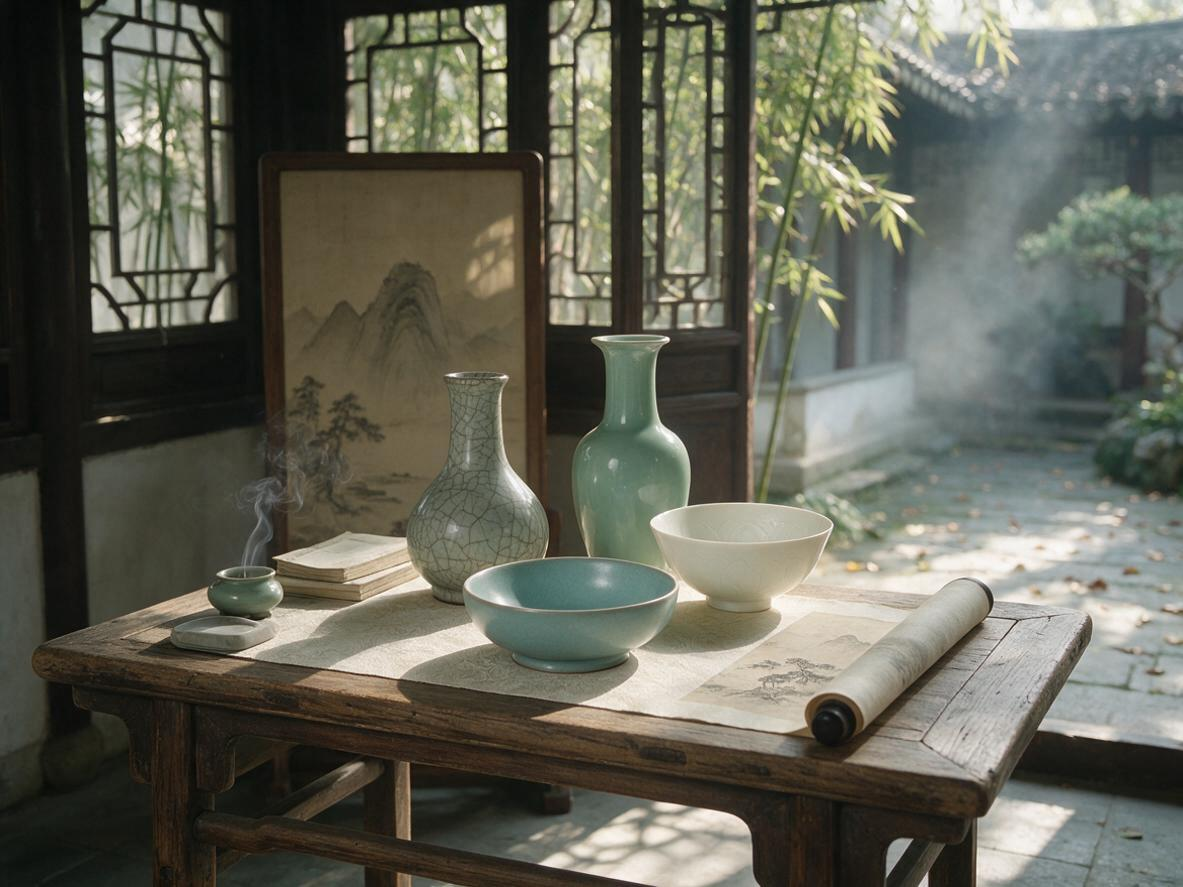
Northern and Southern Song
From 960 to 1279, each great kiln perfected one ware: Ru and Guan celadon for the court, carved Ding white, Longquan green, Jian tea bowls and the first fine porcelain at Jingdezhen.
Song · 960–1279
960 to 1279
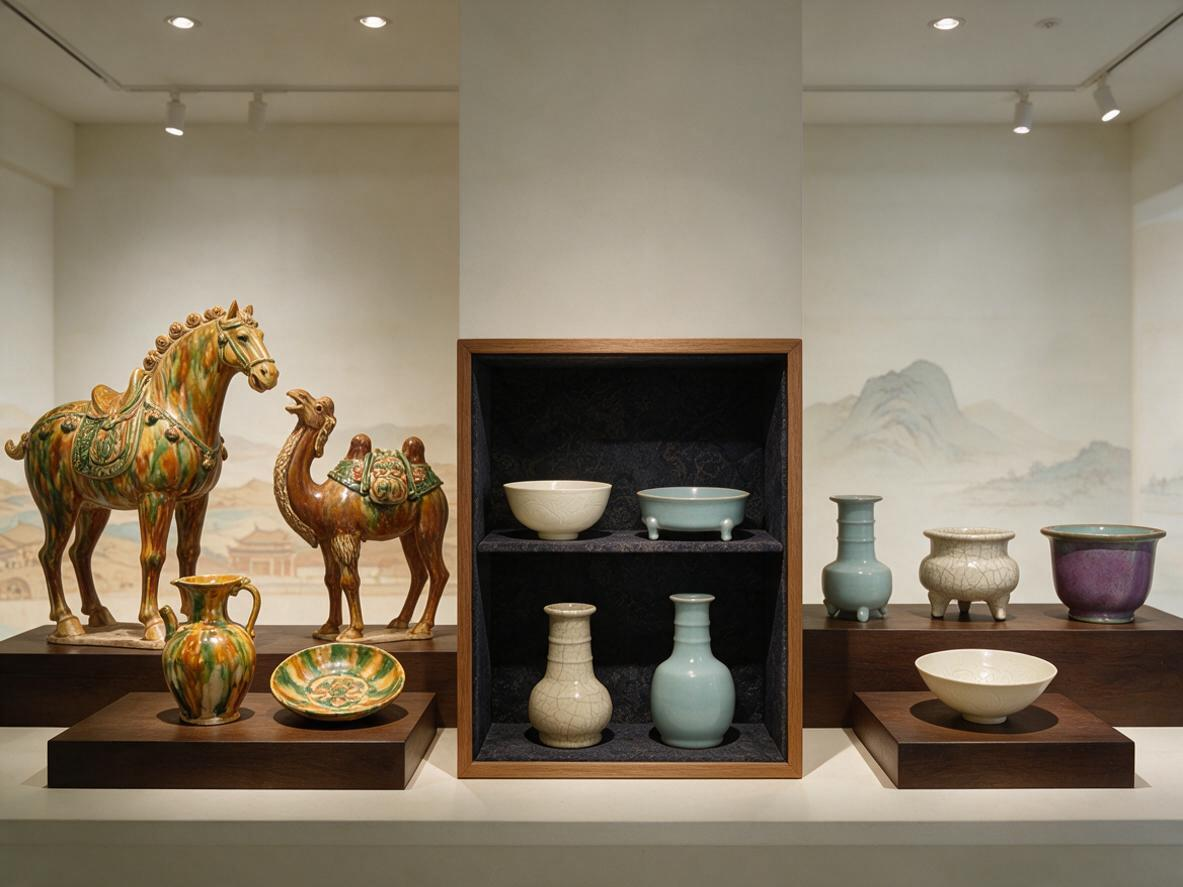
The Song ruled from Kaifeng until 1127, when the Jin took the north, then from Hangzhou until 1279. Its emperors and officials collected ancient bronzes, painted, wrote poetry and drank whisked tea, and they wanted ceramics that repaid close looking. Kilns across the country answered with one specialty each. Ding in Hebei made thin, ivory-white porcelain; Ru in Henan a blue-green glaze for the palace; Jun, also in Henan, opalescent blues; Longquan in Zhejiang deep green celadon; Jian in Fujian iron-black tea bowls; and Jingdezhen a translucent porcelain under a faintly blue glaze called qingbai. Shapes stayed simple so that color and texture could carry the piece: lobed cups, meiping vases, brush washers and tripod incense burners modeled on bronze.
Dates · 960–1279 | Centers · Kaifeng and Hangzhou; Ding, Ru, Jun, Longquan, Jian and Jingdezhen kilns | Signature · monochrome glazes, crackle, carved white ware, qingbai
Four Song advances
Each change came from a different kiln, and each set a standard later potters measured themselves against.
01
Late in the Northern Song, the Ru kilns in Henan made a small run of blue-green wares for the palace. After the move south, the court set up its own Guan kilns in Hangzhou, a model the Ming imperial kiln later followed.
02
Southern Song potters at Longquan and the Guan kilns dipped a thin body again and again, firing between coats, until the glaze could be thicker than the clay beneath it. The result was the deep, soft green Europe later called celadon.
03
Ding potters in Hebei fired bowls upside down on stepped supports, so more fit in each kiln and walls could stay thin. The bare rims were bound in metal, and carved or molded lotus and peony filled the wells.
04
Song tea was whisked to a white froth, and contests judged how long it held. Jian kilns in Fujian made heavy iron-black bowls streaked like hare’s fur to show it off, and Japanese monks carried them home as tenmoku.
Held in collections
Each piece can be read by eye alone: the bare rim, the depth of the green, the streaks in the black.
Ivory-white porcelain with a lotus carved freehand in the well and an unglazed rim once bound in metal. Fired mouth-down, it shows how thin a Ding wall could be. Northern Song, 11th–12th century.
A tall vase in thick blue-green glaze, with a phoenix-head handle on each side of the neck. Vases like this crossed to Japan, where the finest Southern Song green was named kinuta celadon. Southern Song, 13th century.
A conical bowl of iron-rich stoneware, its black glaze streaked with fine brown lines where iron crystallized in the kiln. The heavy wall kept whisked tea warm. Southern Song, 12th–13th century.
Later collectors named five Song wares as the finest. Each is still recognized by its glaze, and four of the five are fired in our own kilns in Jingdezhen today.
How each of these glazes forms in the kiln is explained in our guide to Chinese porcelain glazes.
| Kiln | Where | How to recognize it | Made today |
|---|---|---|---|
| Ru | Henan, for the Northern Song court | Opaque sky-blue glaze, sparse fine crackle, tiny spur marks on the base | Ru ware, fired in our own kilns |
| Guan | Hangzhou, for the Southern Song court | Thick, layered blue-green or gray glaze over a dark body, with crackle | In our Celadon Legacy Series |
| Ge | Location still debated, linked to Zhejiang | Gray-green glaze crossed by dark and golden crackle lines | Ge ware, fired in our own kilns |
| Jun | Yuzhou, Henan | Thick opalescent blue with purple and red copper splashes | Jun ware, fired in our own kilns |
| Ding | Quyang, Hebei | Ivory-white porcelain, carved or molded, with a bare rim from firing mouth-down | Carved white porcelain |
Carried forward
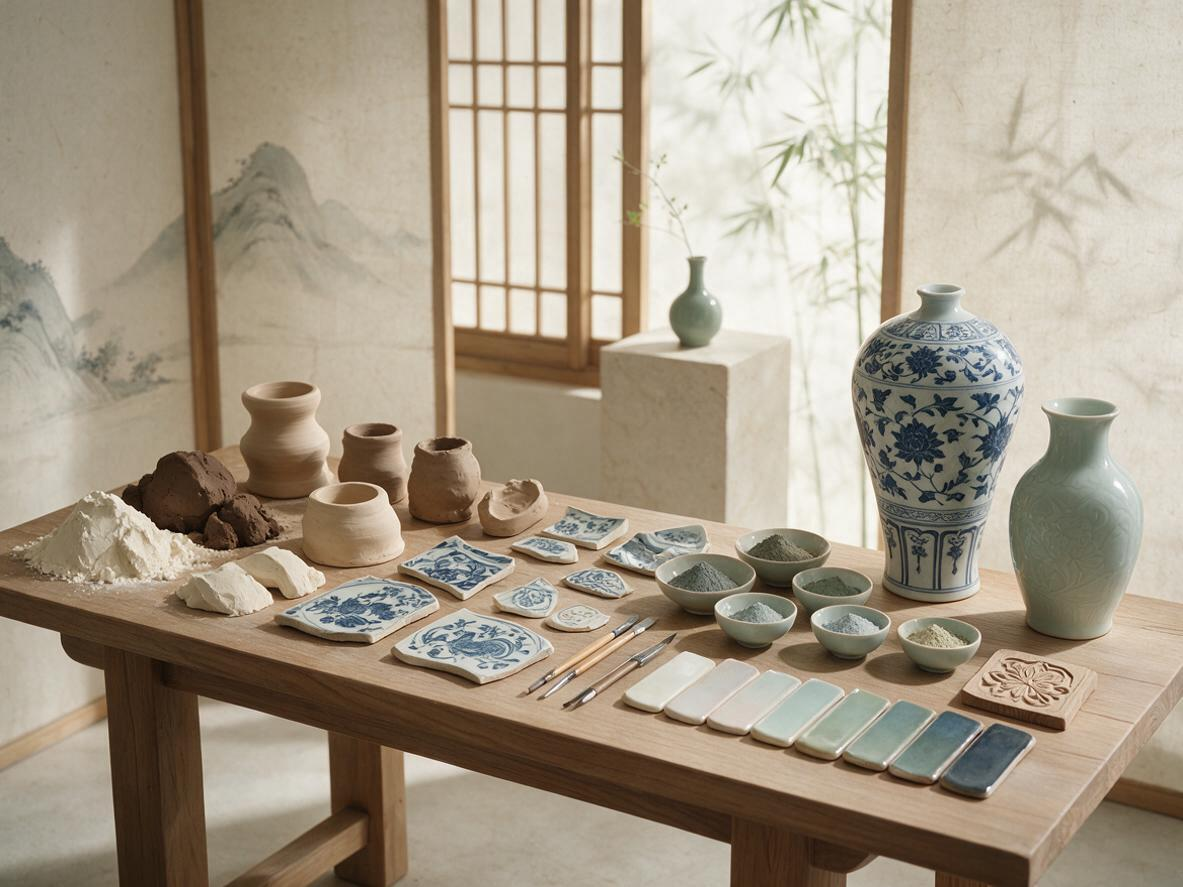
Song-style celadon from our Celadon Legacy Series is thrown, glazed and fired in our own Jingdezhen workshops, in a reducing flame at about 1,300 °C. Ru, Ge and Jun are fired in the same kilns by the kiln team that knows each glaze, and every piece is inspected at our Jingdezhen headquarters before packing. How reduction turns iron green and copper purple is shown load by load on our kiln firing page. Our six designers can also redraw a Song shape for a new range through one of our development routes.
Firing in one of our four natural-gas kilns, Doufunong.
01
Song-style celadon tea ware and vases, thrown and trimmed by hand at Doufunong and fired in reduction. The plum blossom tea cup (PP-020) and a full celadon dinner service (PP-021) are in stock today.
02
PP-001 carries a thick gray-green Ge glaze with a dense dark crackle. We fire it in-house, inspect it in Jingdezhen, and a single cup ships from stock.
03
PP-018 is a small lobed cup in moon-white Jun glaze, streaked with copper purple that pools inside. Our kiln team fires it in reduction, as the Jun kilns of Henan did.
Asked about the Song
Keep exploring
All eight eras
Eight chapters, from cave pottery to today.
Commission in Song style
Send a museum photo, your own sketch or a piece you already sell, and tell us where it will be used. Lin Wan replies within 1–2 business days with who would make it, how it would be sampled and what it would cost.
hejiang@knockingcn.com · WhatsApp +86 197 1171 3584