The body
The foot shows the fire
Turn a piece over. The bare ring of clay at the foot shows the color and grain of the body, and the line where the glaze stops shows how the piece was glazed and fired.
Resources
Buyer guides from Jingdezhen
Ten guide collections on sourcing, craft and selling Chinese porcelain, written by our export team.
Browse all guides ↗
Eight eras of Chinese ceramics
Twenty thousand years of clay, glaze and fire in eight chapters, each linked to the pieces our Jingdezhen workshops make from it now.
Jingdezhen has made porcelain for more than a thousand years, longer than any other town in the world, and for most of that time it supplied the imperial court. The hills around it gave porcelain stone and kaolin, the forests gave fuel and the rivers carried finished ware to the coast. Over the centuries every stage of the work became a specialty with its own masters, from clay refining to throwing, painting and firing.
Why Jingdezhen
Reading a piece
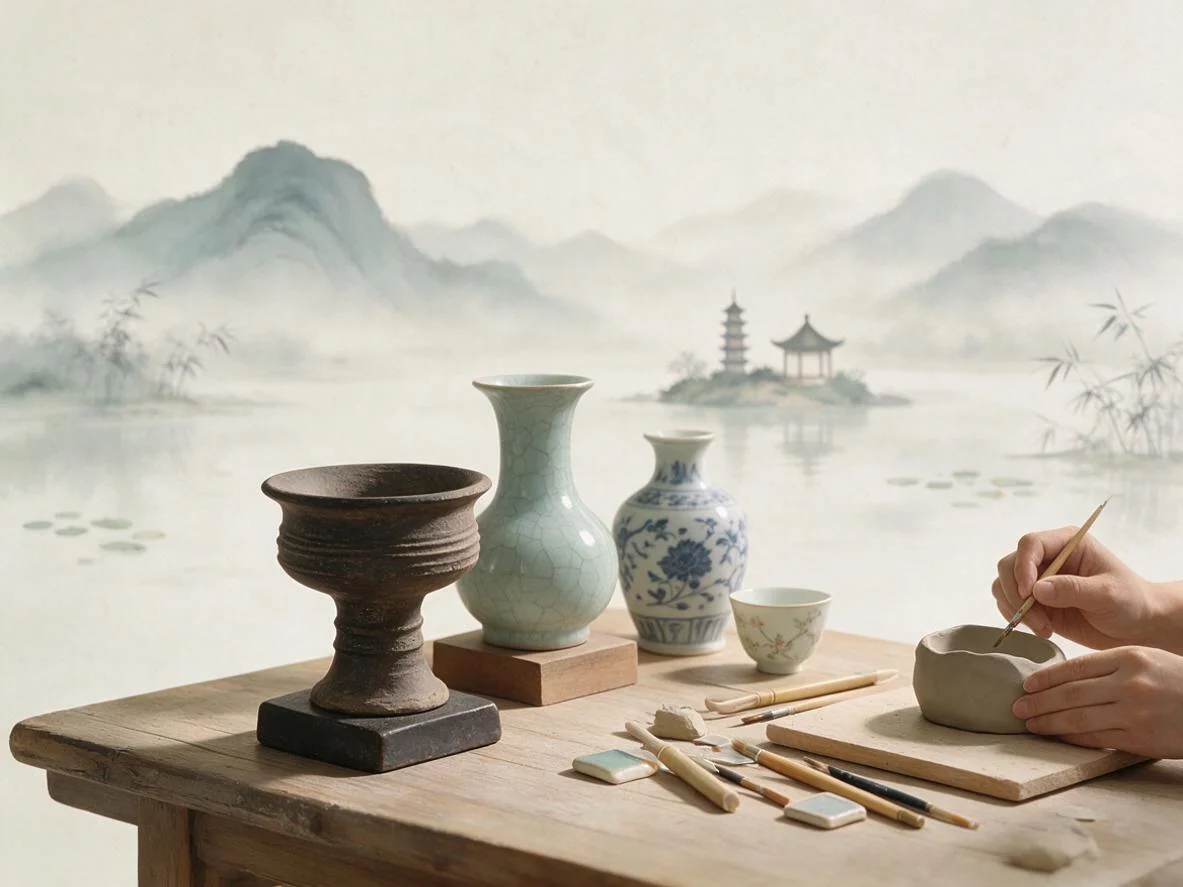
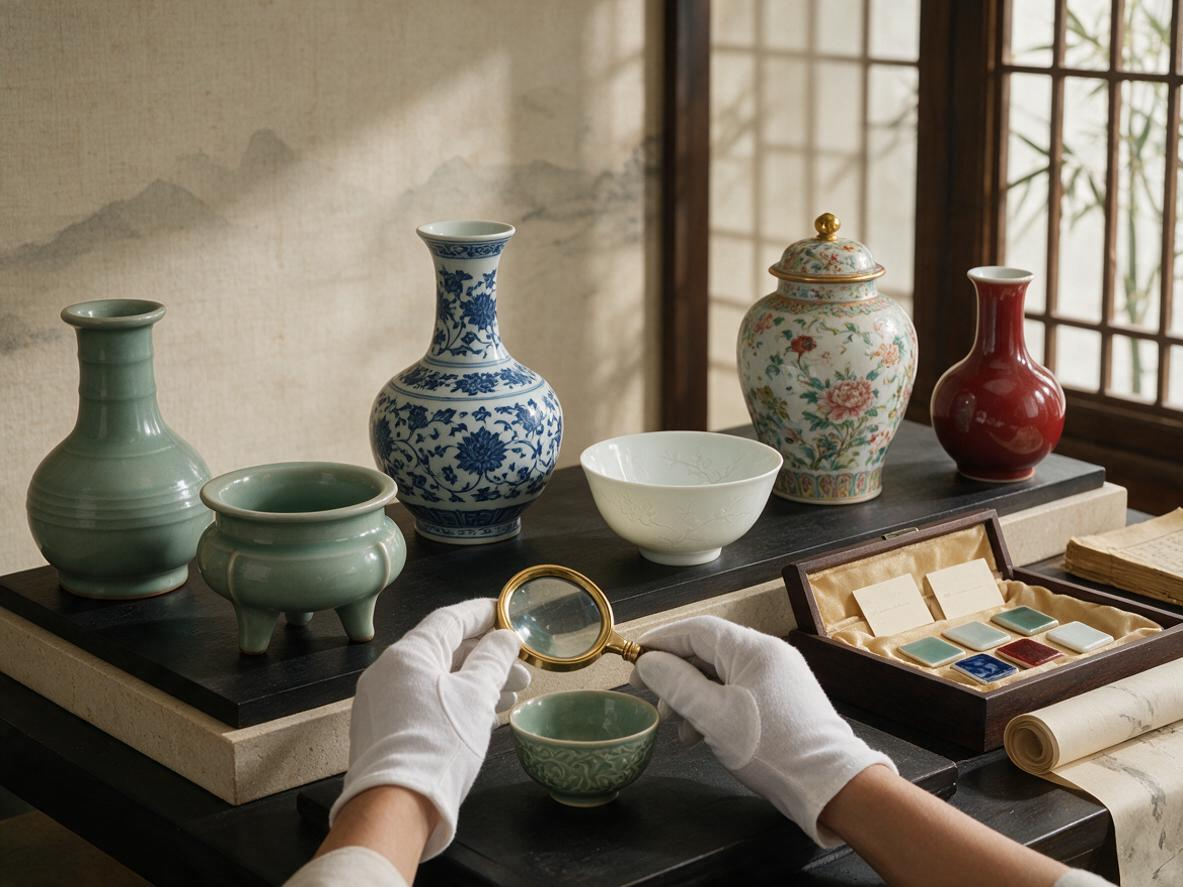
Three details date a Chinese porcelain design: how the foot is cut, which motifs are painted, and what mark sits on the base.

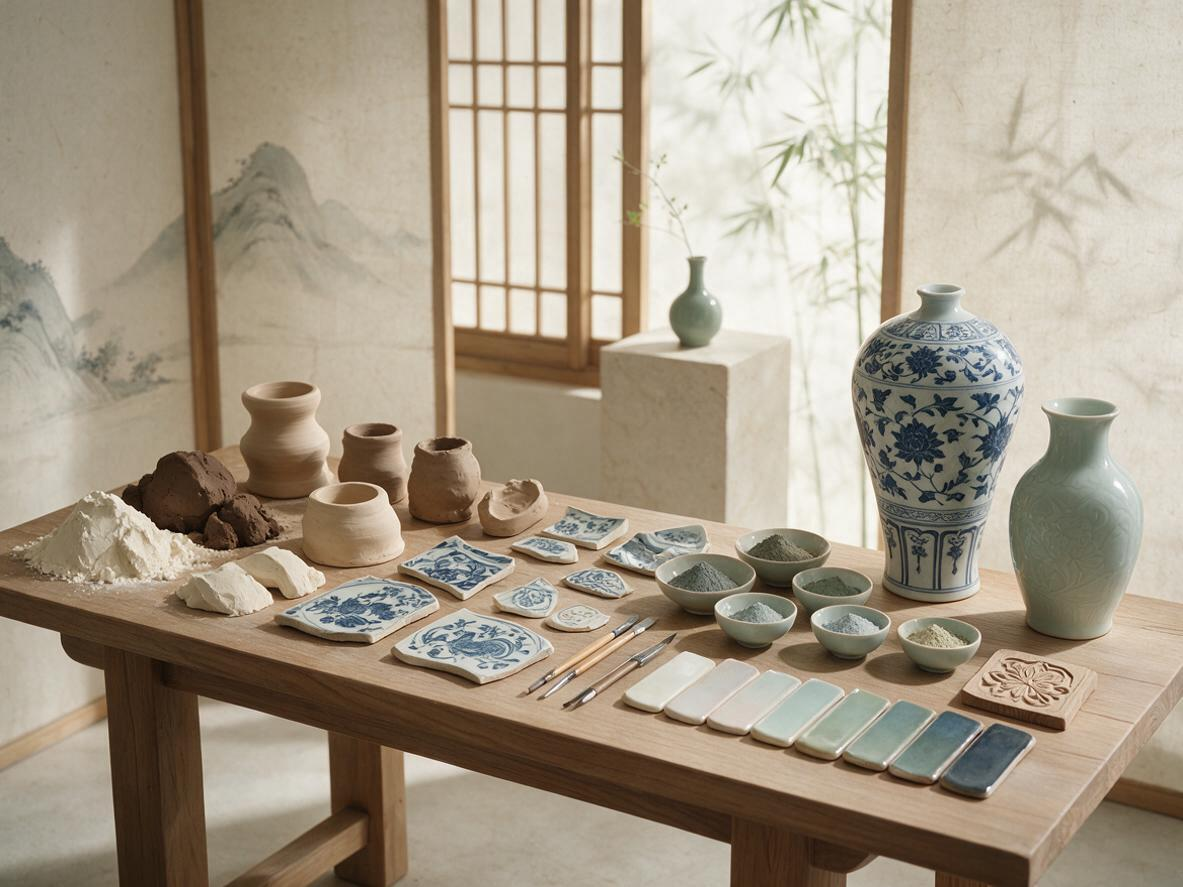
The body
Turn a piece over. The bare ring of clay at the foot shows the color and grain of the body, and the line where the glaze stops shows how the piece was glazed and fired.
The motif
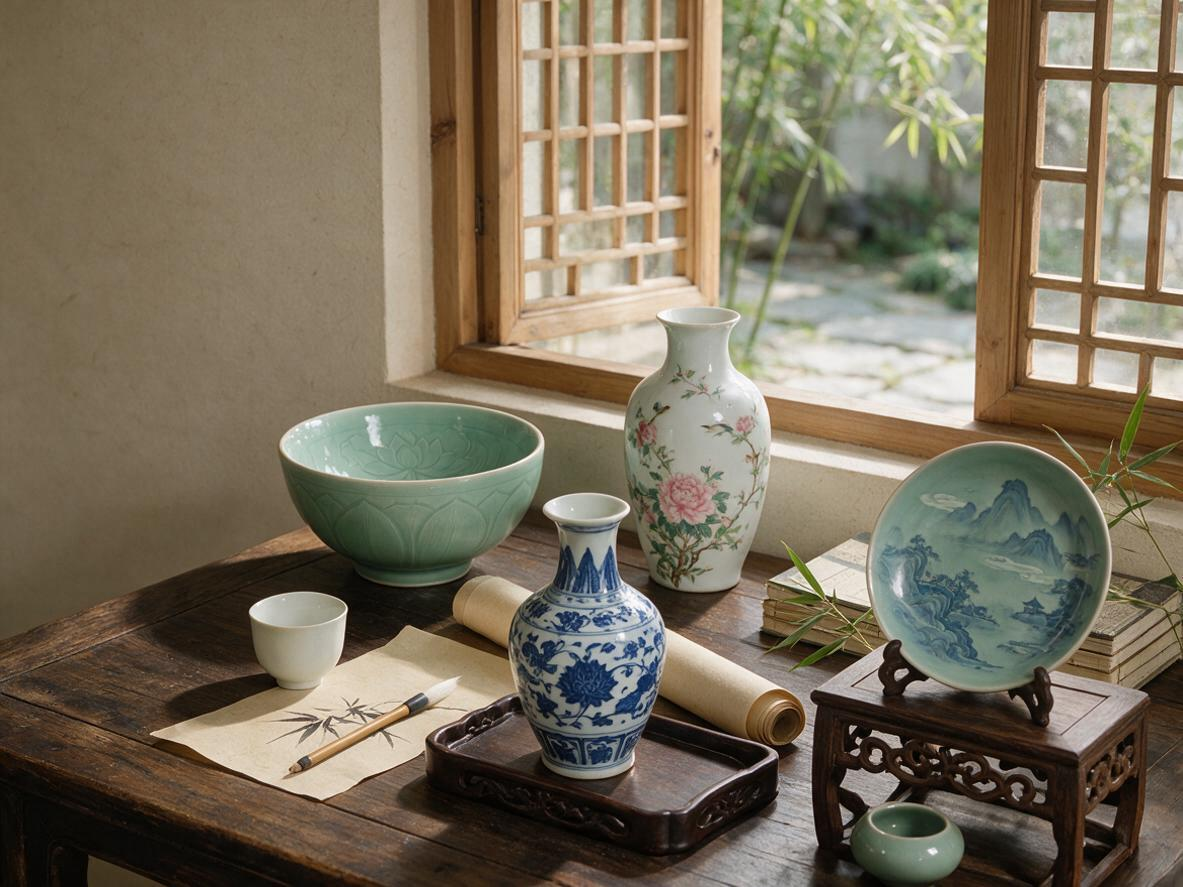
Bats stand for fortune because both are pronounced fu; fish wish for surplus, yu; peonies promise wealth and rank. Buyers in China still read these meanings at a glance, so a motif is never only decoration.
The mark
From the early fifteenth century, imperial porcelain carried the emperor's reign mark in cobalt on its base. The same place can carry your brand today, engraved, painted under the glaze or fired on as a decal.
Most marks are read top to bottom and right to left. A six-character reign mark names the dynasty, the emperor’s reign title and the words nian zhi, “made in the year of.” Marks were copied for centuries, out of respect and for the market, so specialists read the body at the foot, the color and the drawing first, and the mark last.
Pieces from our workshops are new work. Your own mark, logo, date or dedication can be painted or fired on the base.
| Mark | What it says | What to know |
|---|---|---|
| Six-character reign mark | Dynasty, reign title and "made in the year of," for example Da Ming Xuande nian zhi | Written in two or three columns in regular script. Used regularly on imperial ware from the Xuande reign (1426–1435) on |
| Four-character reign mark | Reign title and "made in the year of," without the dynasty | Common on smaller pieces and on wares from private kilns |
| Seal-script mark | The same words in square, archaic seal characters | Used alongside regular script under Yongzheng, and the usual imperial form under Qianlong |
| Copied reign mark | An earlier emperor's reign, such as a Chenghua mark on a later cup | Common from the Qing onward. It honors a style; it does not date the piece |
| Hall mark | The name of a hall or studio, usually ending in tang | Made for a private owner, a workshop or a court building rather than for the emperor's use |
| Iron-red seal mark | A square seal stamped or painted in red over the glaze | Frequent on late Qing and twentieth-century porcelain |
| Place or maker mark | "Jingdezhen," a factory name, or "Made in China" | Twentieth-century and modern marks, naming a maker rather than a reign |
From the first fired pots to today’s Jingdezhen workshops, each chapter covers one era and the forms it left for buyers to order now.


01 / 08The timeline
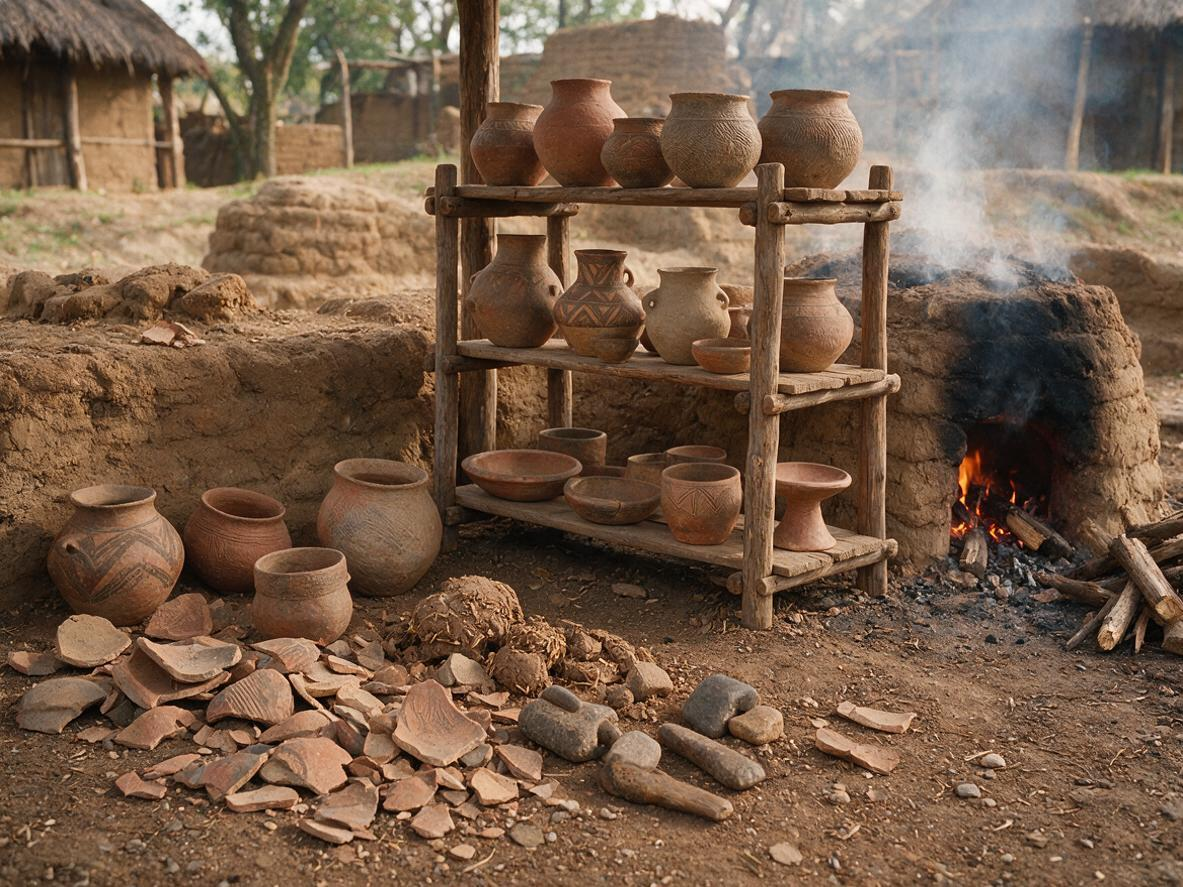
From 20,000-year-old cooking pots to painted Majiayao jars, Longshan eggshell cups and the first glazed stoneware of the Shang.
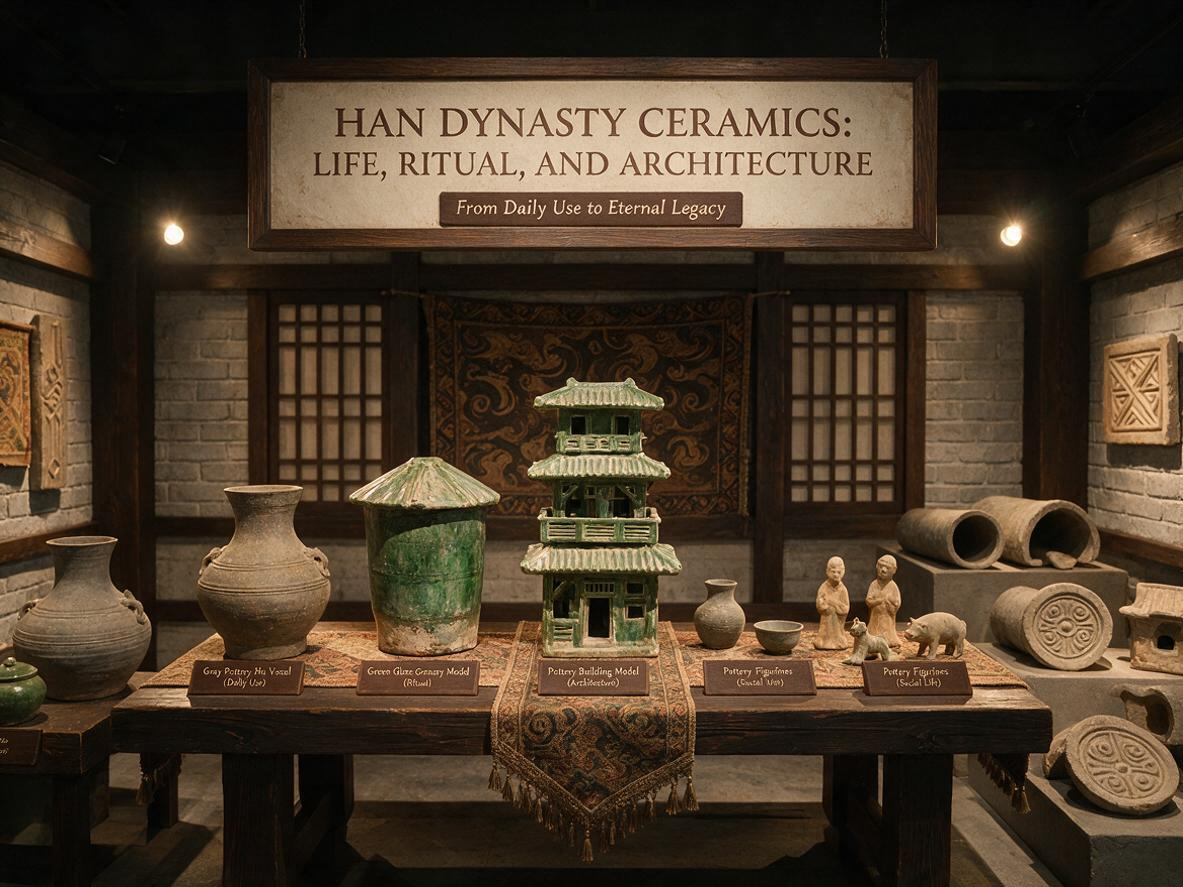
Lead-glazed tomb models in green and amber, molded roof tiles, and the first mature celadon, fired in Zhejiang at the end of the dynasty.
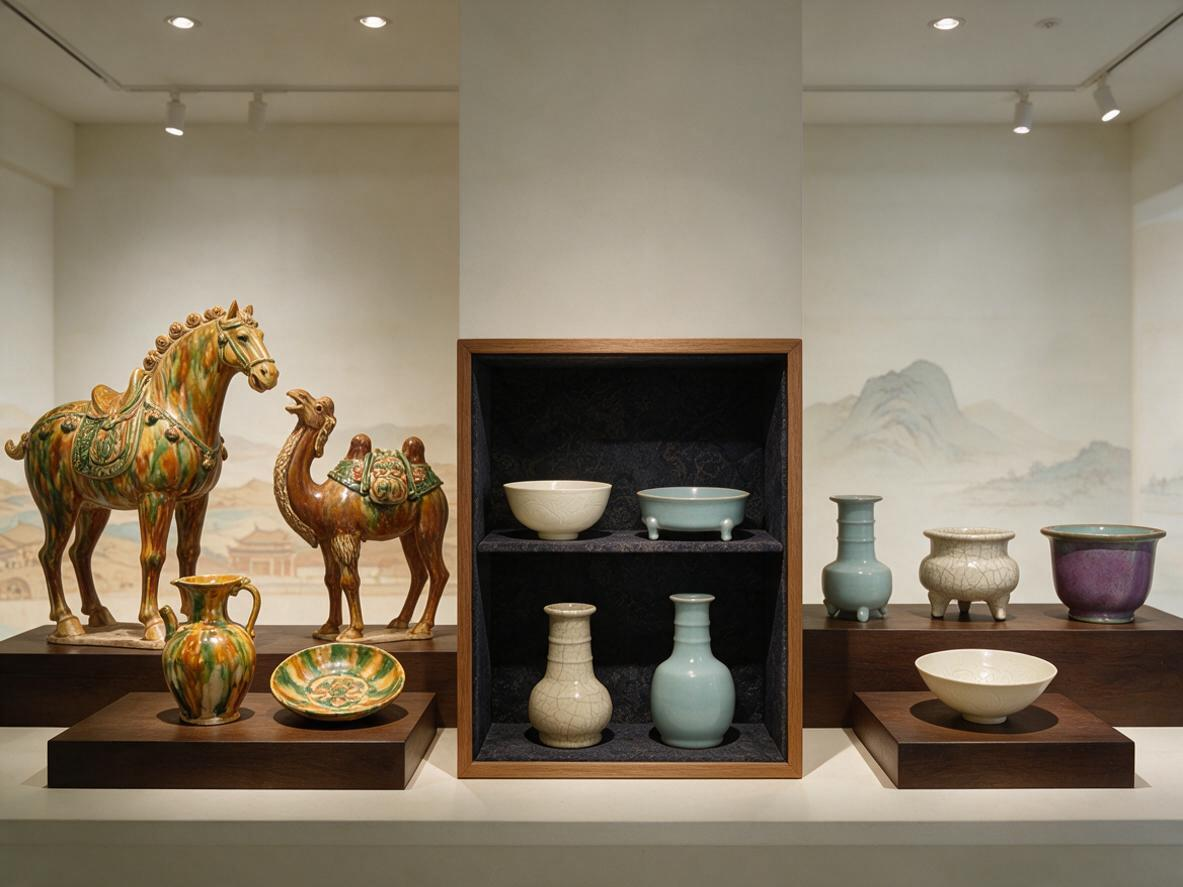
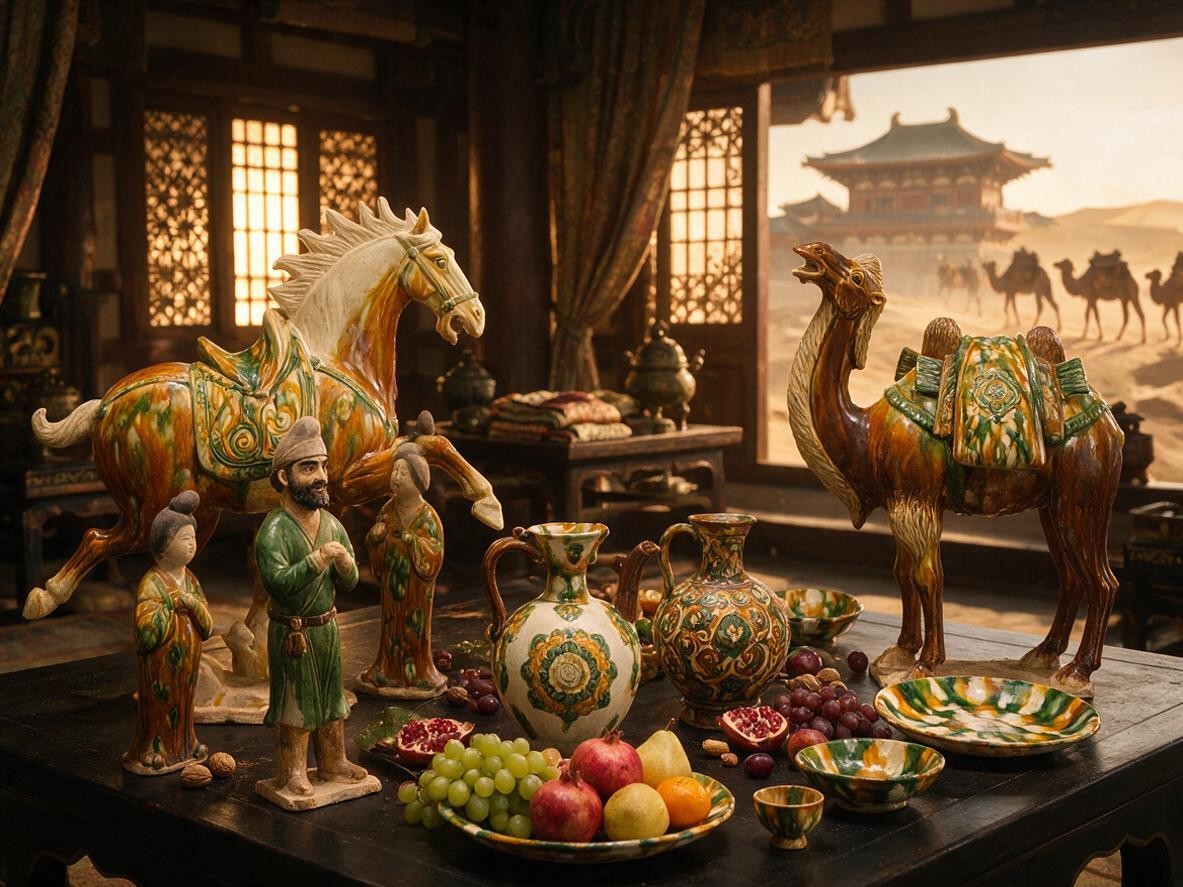
Sancai horses and camels, Xing white porcelain, Yue celadon for the tea table, and Changsha bowls painted under the glaze for Indian Ocean trade.
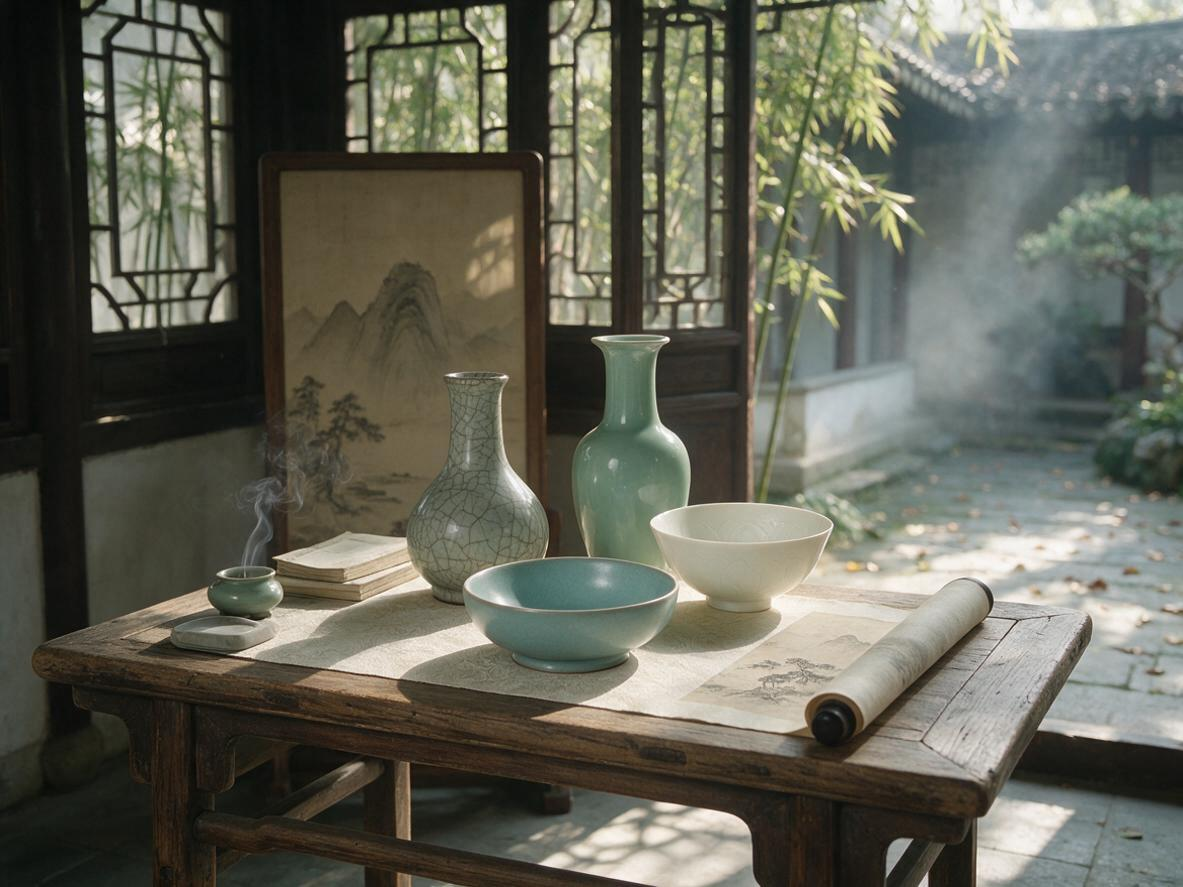
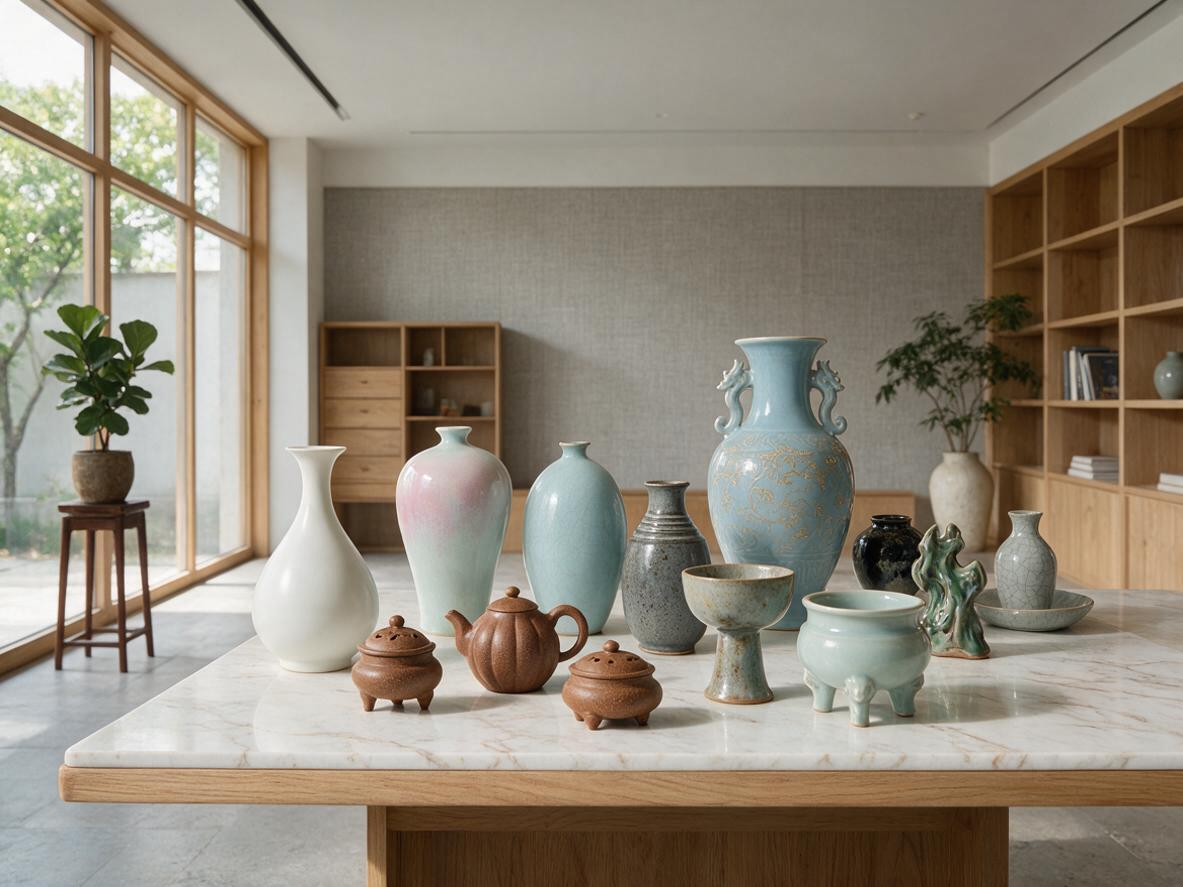
Ru, Guan, Ge, Jun and Ding wares, with Longquan celadon and Jingdezhen's bluish qingbai: single glazes judged by depth, crackle and tone.
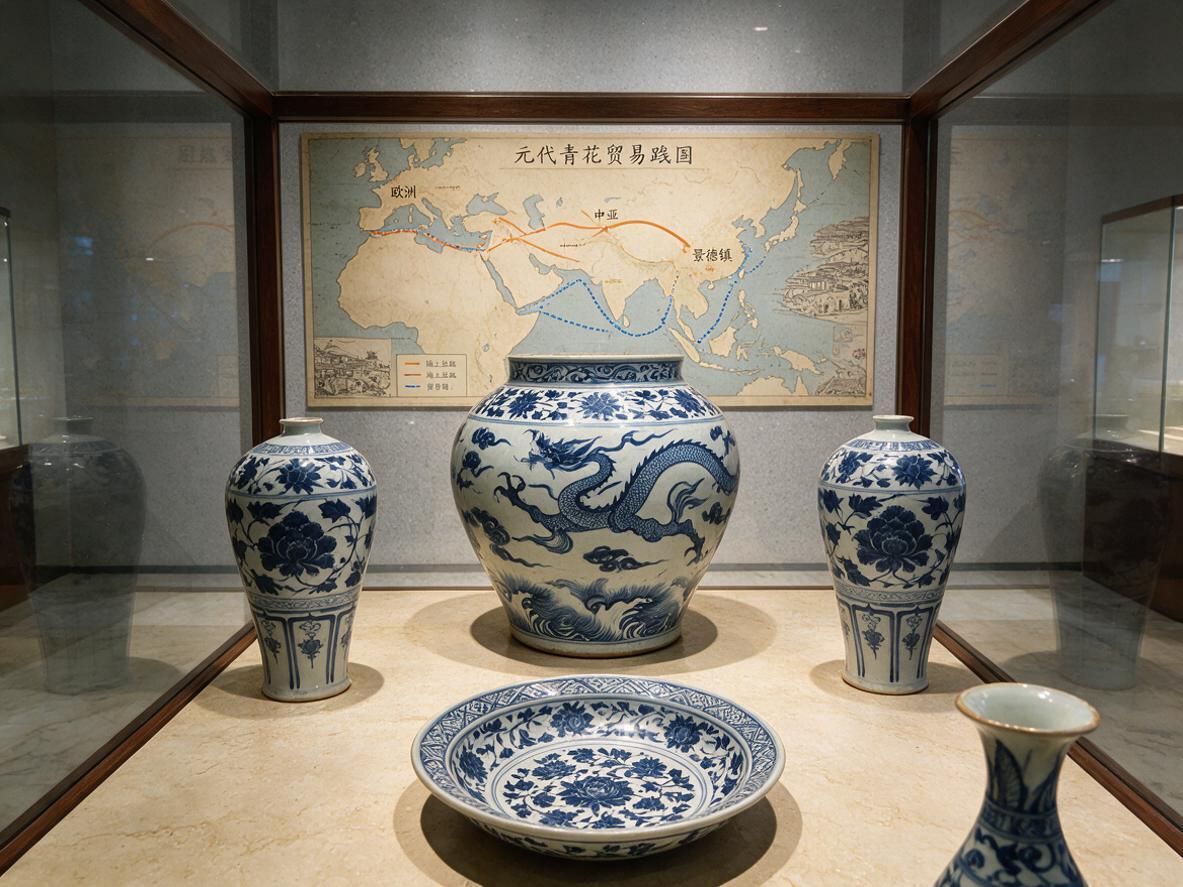
Kaolin made larger forms possible and imported cobalt covered them in dense blue painting, much of it shipped to Persia and the Middle East.
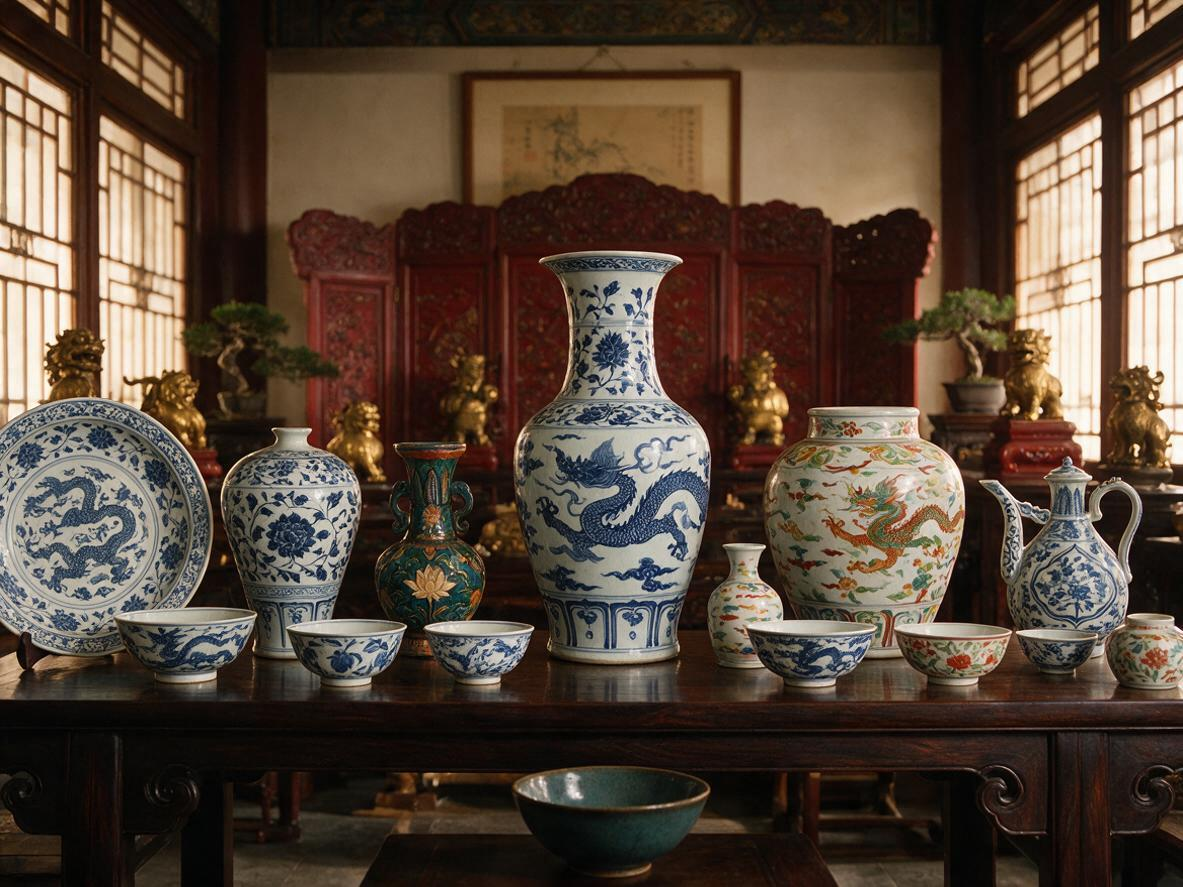
The court's own kiln set the standard for blue and white, copper red, Chenghua Doucai and Wucai, while export porcelain sailed for Europe.
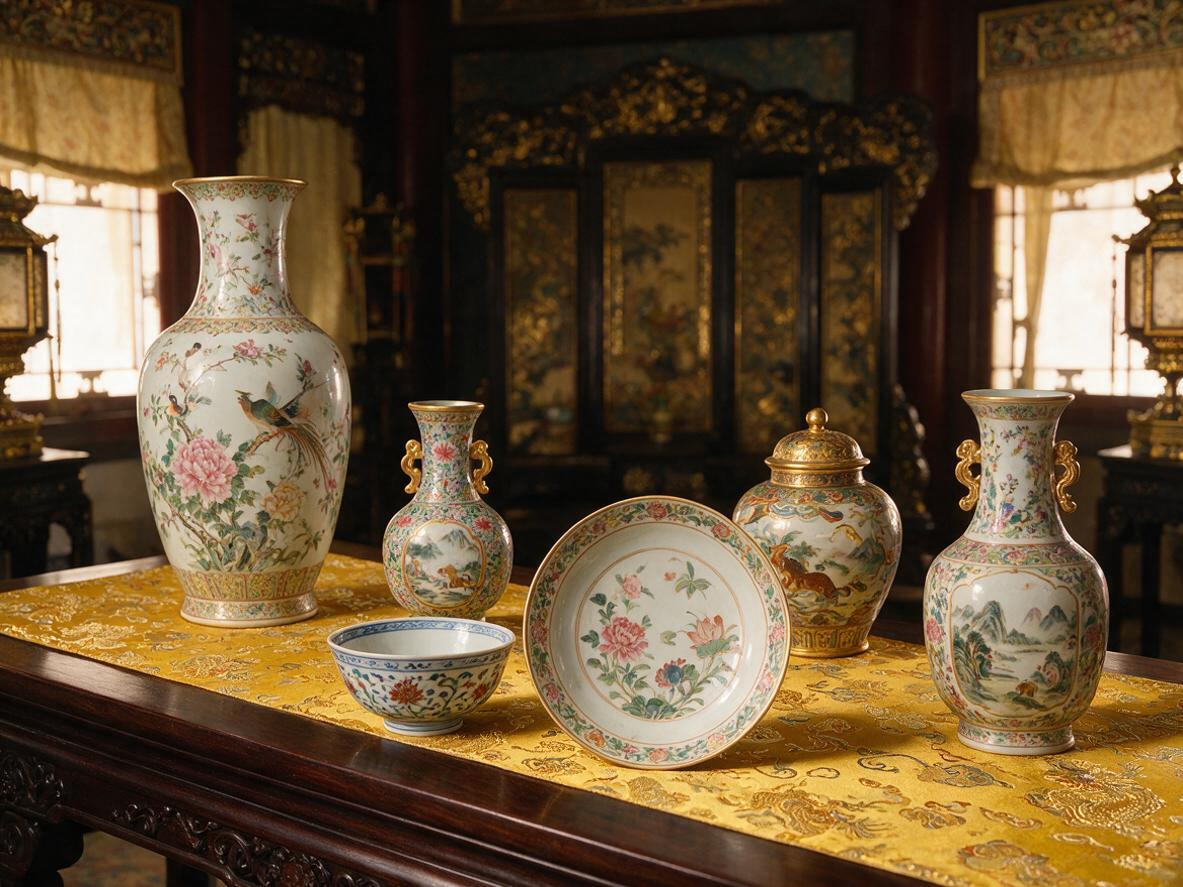
Falangcai from the palace workshops in Beijing, famille rose under Yongzheng, and monochrome glazes fired with exact control in Jingdezhen.
Jingdezhen workshops revive historic glazes, train new artisans and make porcelain for studios, hotels, retailers and collections around the world.
Turning points
Tang lead glazes ran freely in amber and green over earthenware. Song potters chose one high-fired glaze, laid it thick and let tone, crackle and pooling carry the whole piece.
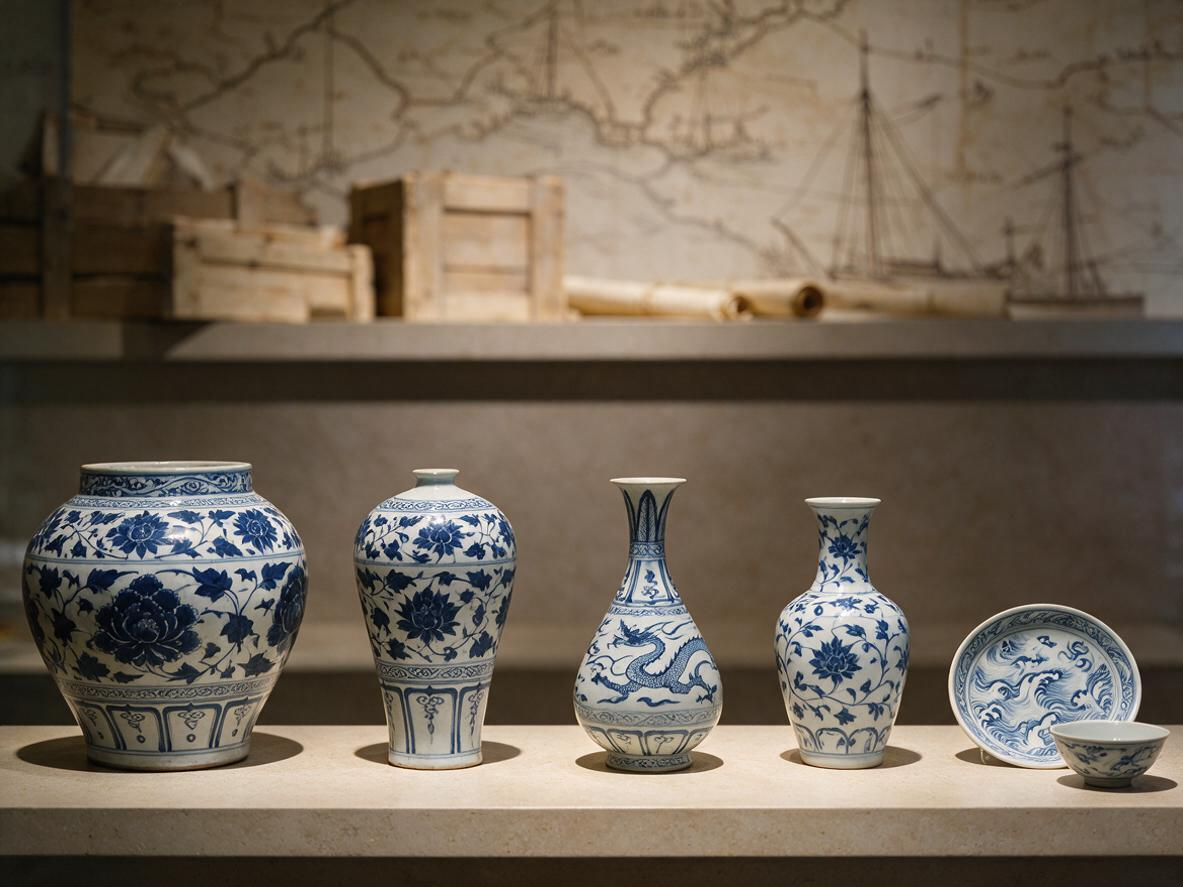
Yuan blue and white was large and densely painted, much of it for Middle Eastern buyers. The Ming imperial kiln refined the cobalt, the drawing and the forms for the court.
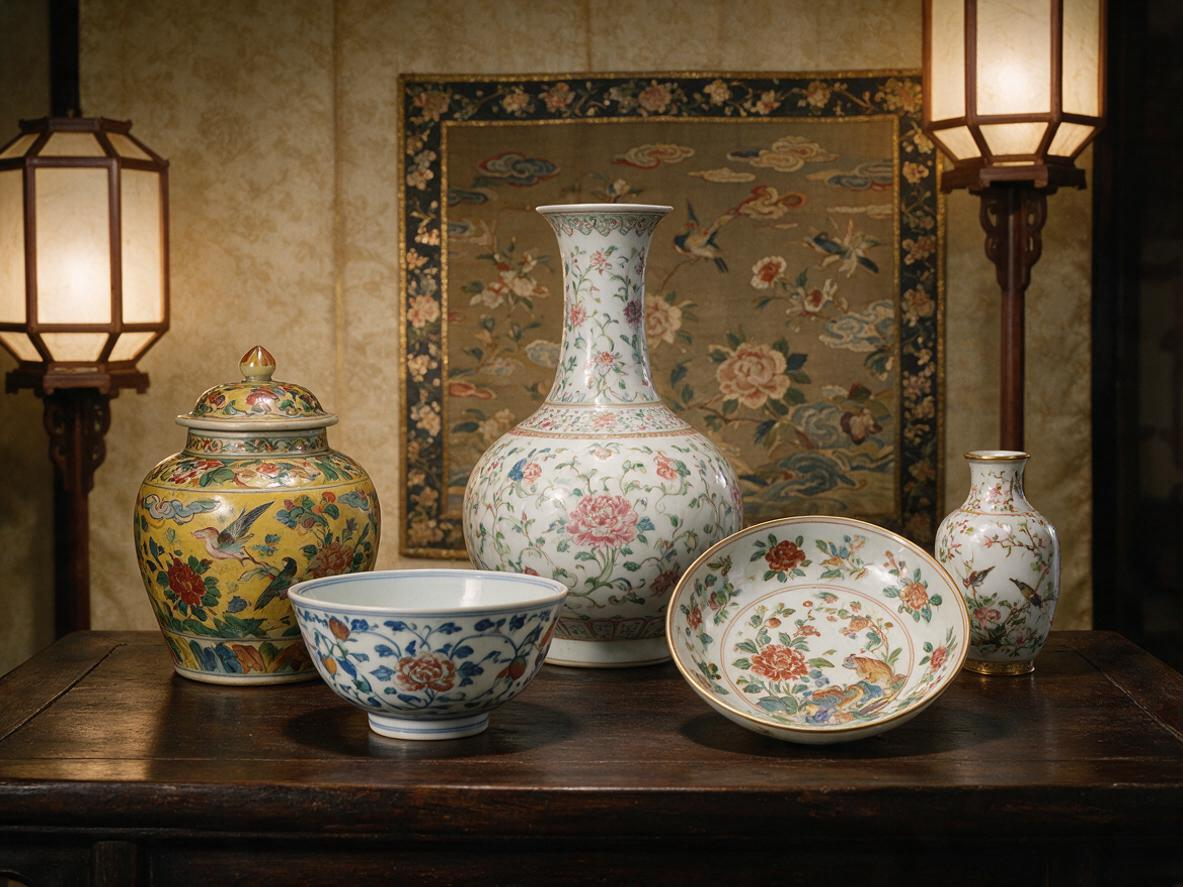
Ming Wucai and Doucai filled painted outlines with flat enamel color. Qing famille rose added an opaque white to the palette, so color could be blended and shaded on porcelain for the first time.
Then and now
Each of our four collections draws on particular chapters of the timeline. Start from the era you admire and follow it to pieces you can order, sample or adapt.
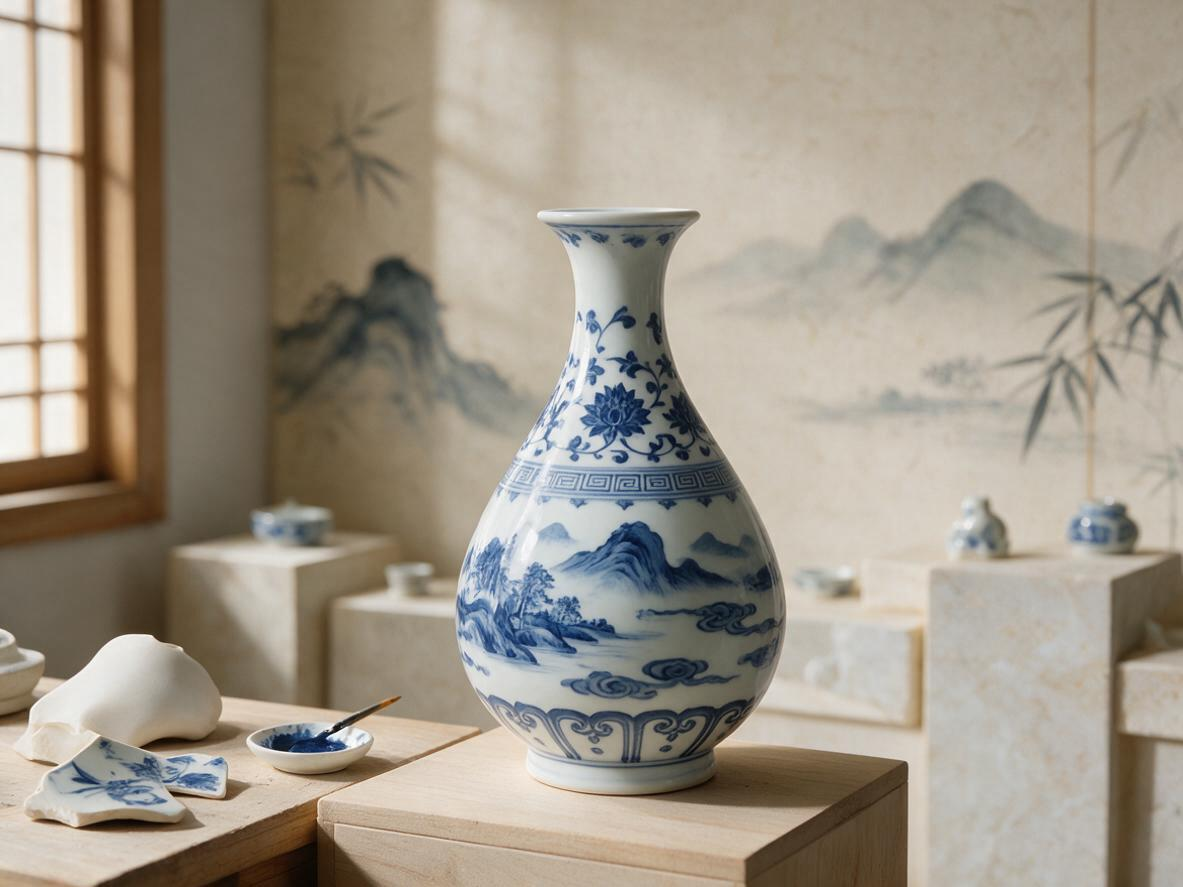
Cobalt painted on raw porcelain and fired once, as Jingdezhen has done since the Yuan, from ginger jars and covered vases to tea sets and hotel tableware.
Cobalt pieces to order →
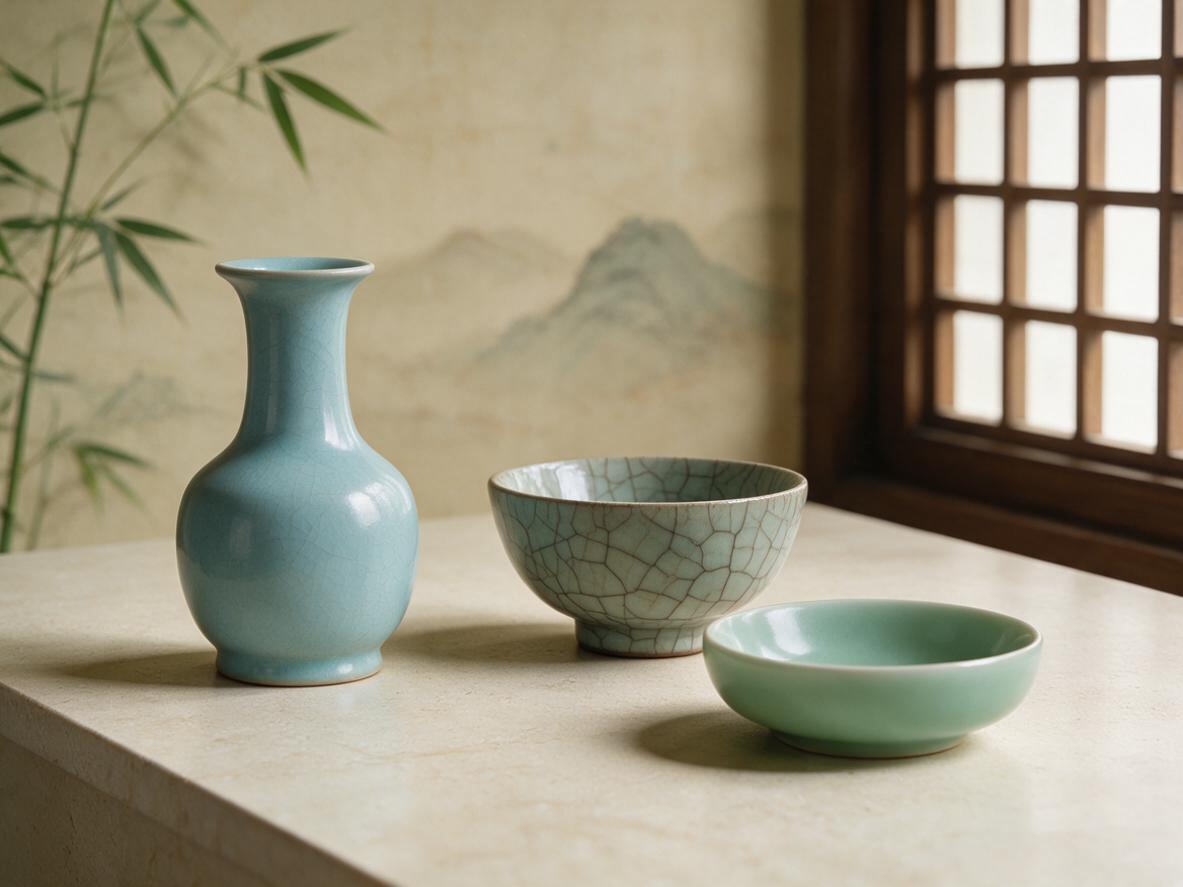
Iron in a reducing flame, first mastered at the Yue kilns and perfected under the Song: celadon, Ru, Ge and Jun, all fired in our own Jingdezhen kilns.
Celadon pieces to order →
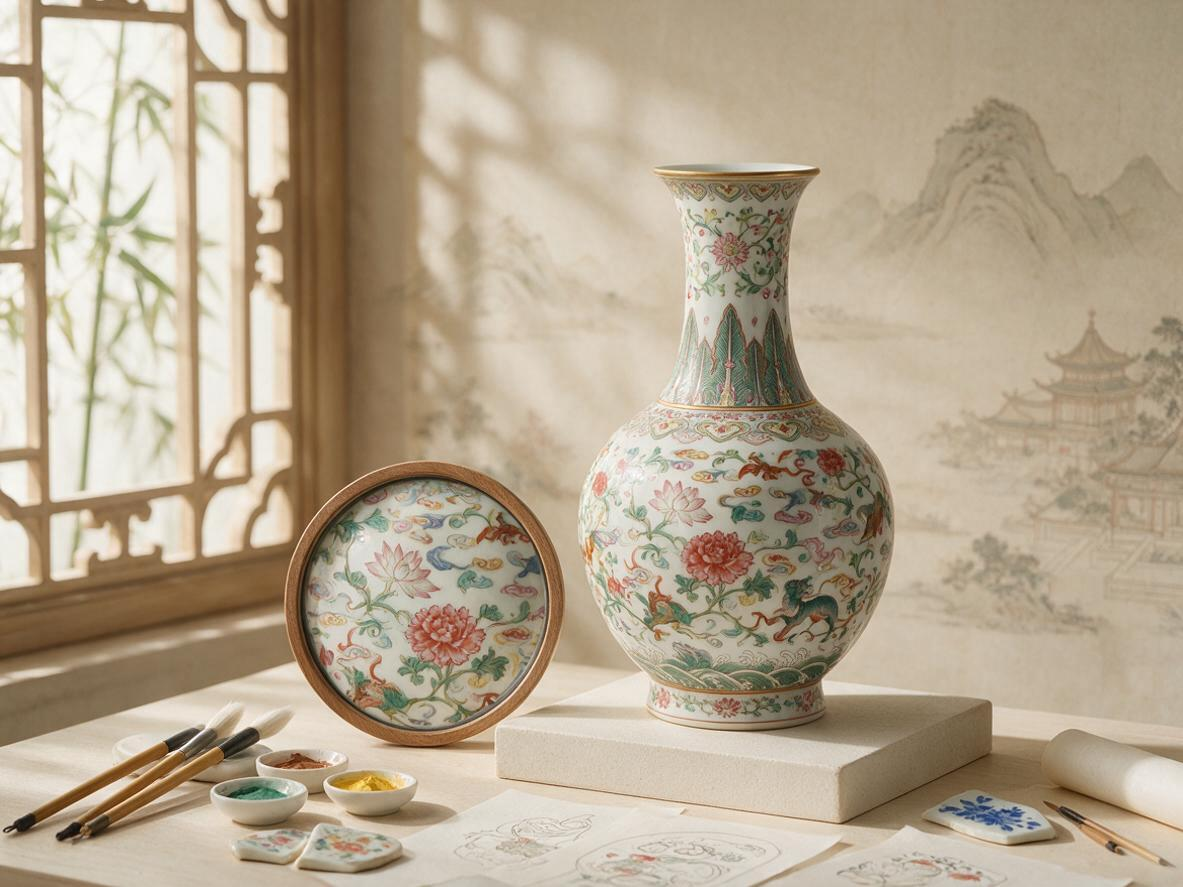
Ming Wucai and Doucai and Qing famille rose and Falangcai, painted in enamel and fixed in a second firing, with Tang Sancai horses and jars alongside.
Painted pieces to order →
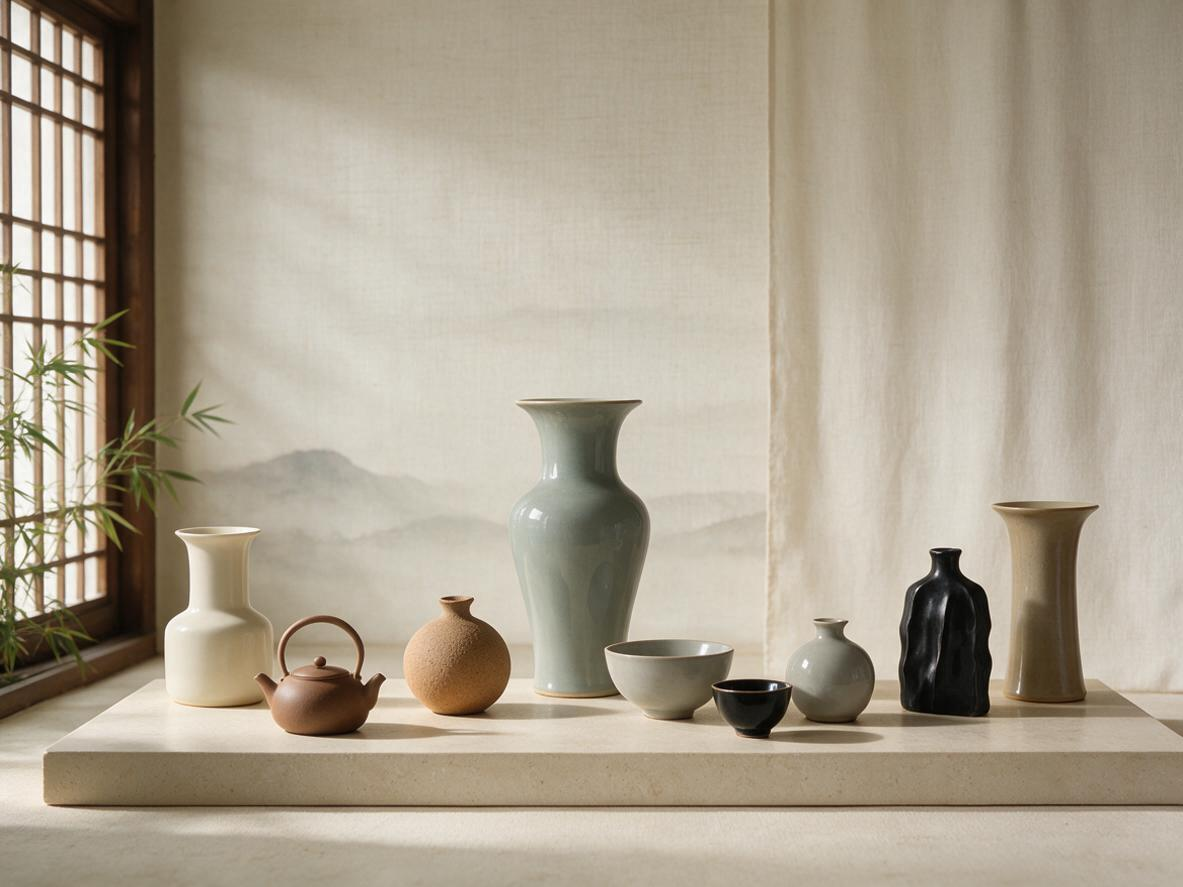
The plain white of Tang Xing bowls and the single glazes of the Song, carried into monochrome glaze, pure white and geometric forms for modern interiors.
Modern pieces to order →History questions
Neither. They are new pieces, made today in our Jingdezhen workshops, in the styles each era made famous. Our designers redraw historic forms and motifs for modern sizes and uses, and every piece is sold as contemporary work. Respecting the tradition, for us, means adapting it for today.
Three things met there: porcelain stone and kaolin in the surrounding hills, timber and rivers for fuel and transport, and a court that ordered from its kilns for nearly a thousand years. Specialists for every stage settled in one town, and it still works that way. Our clay comes from the Yaoli and Gaoling Village areas.
Start from the room or the shelf. Song glazes suit calm tea rooms and minimalist interiors; Yuan and Ming blue and white reads at a distance in lobbies and stores; Qing enamels suit gifts and collector programs. Send your setting and market, and we suggest a shortlist across periods.
Start at the top right and read down each column, then move left. In a six-character reign mark the first two characters name the dynasty, such as Da Ming or Da Qing, the next two the emperor's reign title, and the last two, nian zhi, mean "made in the year of." A four-character mark leaves out the dynasty.
Usually a seal mark in iron-red enamel, painted or stamped over the glaze. Red seal marks appear on imperial porcelain from the late Qing and became common on twentieth-century pieces, so on their own they point to a later date rather than an early one.
From the timeline to your order
Send a museum photo, the setting and the quantity. Our designers adapt the form and pattern for today, and Lin Wan replies within 1–2 business days with the route, a sample plan and a price.