Resources
Buyer guides from Jingdezhen
Ten guide collections on sourcing, craft and selling Chinese porcelain, written by our export team.
Browse all guides ↗ Resources
Buyer guides from Jingdezhen
Ten guide collections on sourcing, craft and selling Chinese porcelain, written by our export team.
Browse all guides ↗KKCN collection
Celadon is a high-fired glaze that takes its jade-green color from iron, perfected in Song dynasty China. The Celadon Legacy Series covers four Song glazes made in Jingdezhen: celadon, Ge, Ru and Jun ware, all fired in KKCN’s own kilns. Pieces run from gongfu tea cups to dinner services and display vases, in stock from 1 piece.
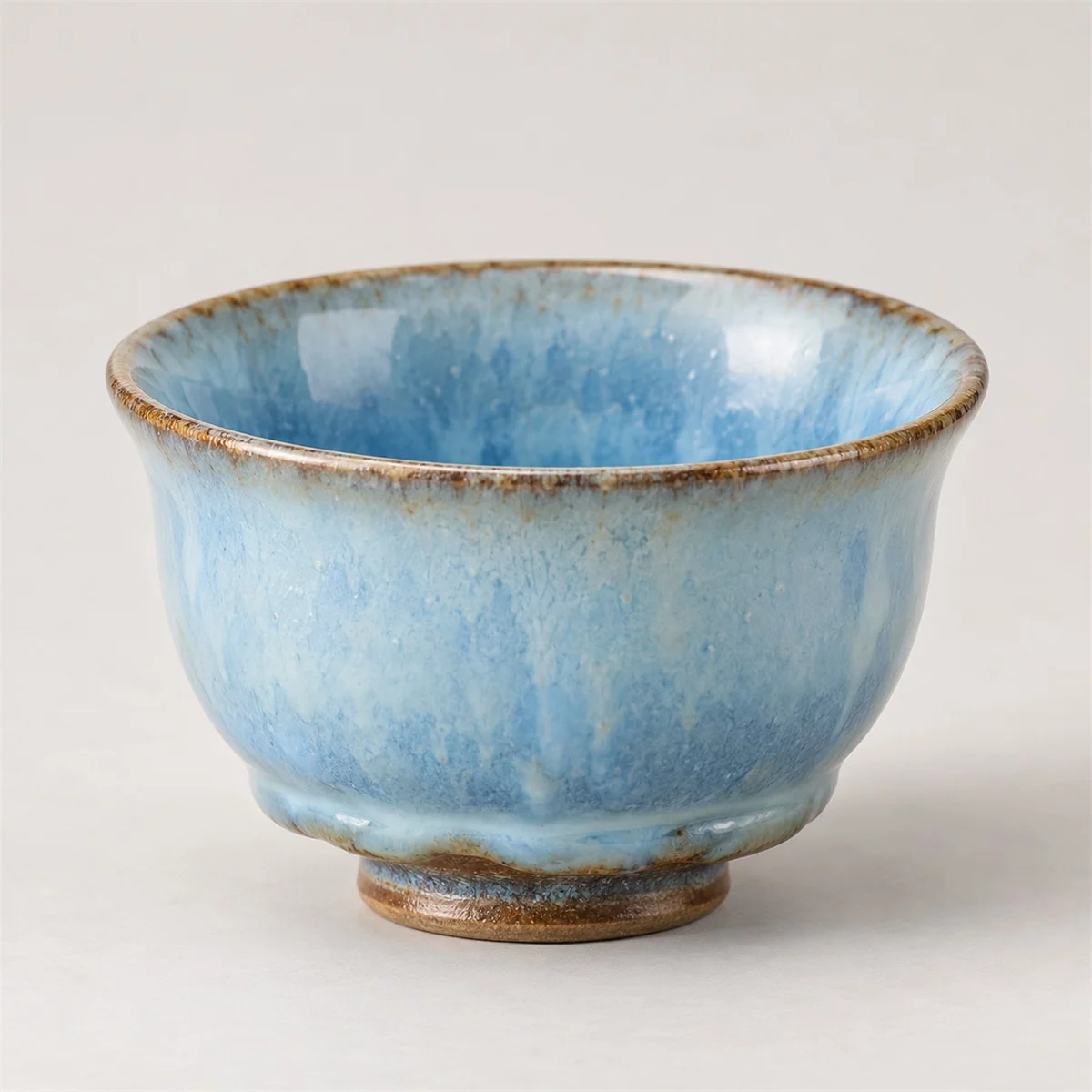
Celadon Legacy Series · Jun Ware
A thick sky-blue Jun glaze covers this small tea cup, milky where it pools and thinning to a darker edge at the rim. We fire it in our own Jingdezhen kilns and hold it in Los Angeles and Toronto stock for quick reorders.
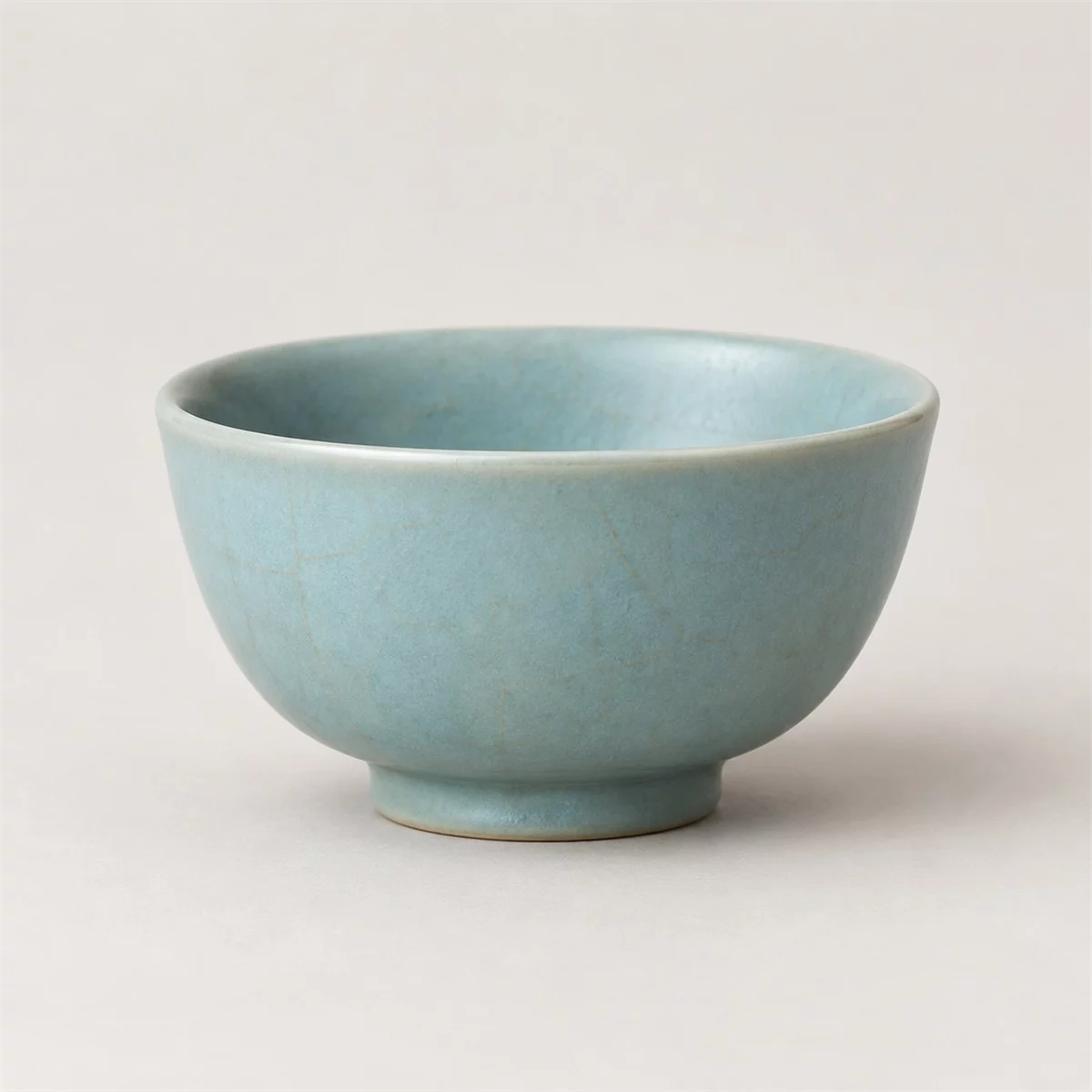
Celadon Legacy Series · Ru Ware
This small tea cup is glazed in opaque sky-blue Ru and fired in reduction in our own Jingdezhen kilns. It is the single cup from our Ru tea ware, held in Los Angeles and Toronto stock so tea shops can sell it by the piece and restock fast.
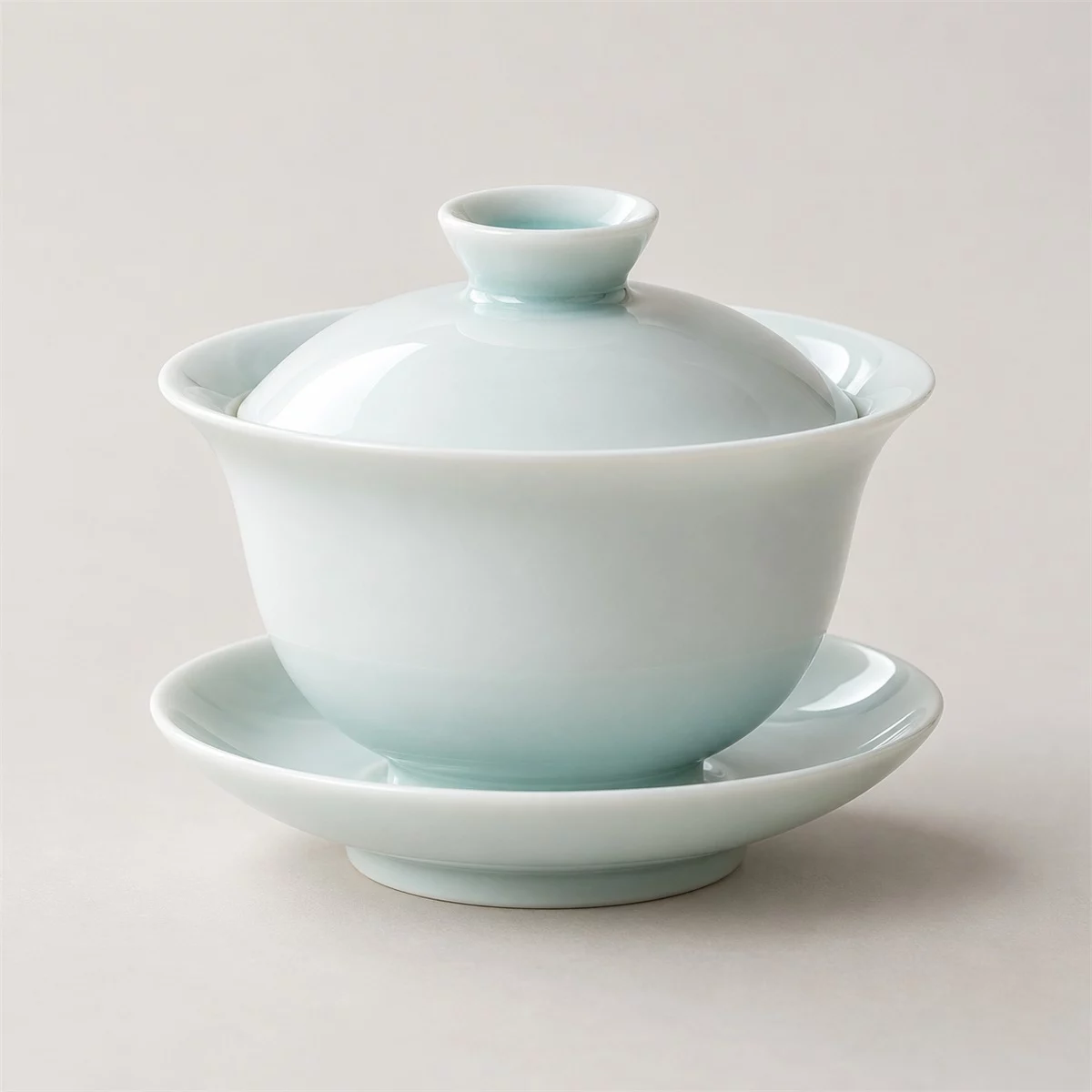
Celadon · Celadon Legacy Series
This gaiwan is bowl, lid and saucer in pale yingqing glaze, thin enough at the rim to let light through. We make it in our Jingdezhen factory and hold it in Los Angeles and Toronto stock for tea shops that need it reordered fast.
Celadon · Celadon Legacy Series
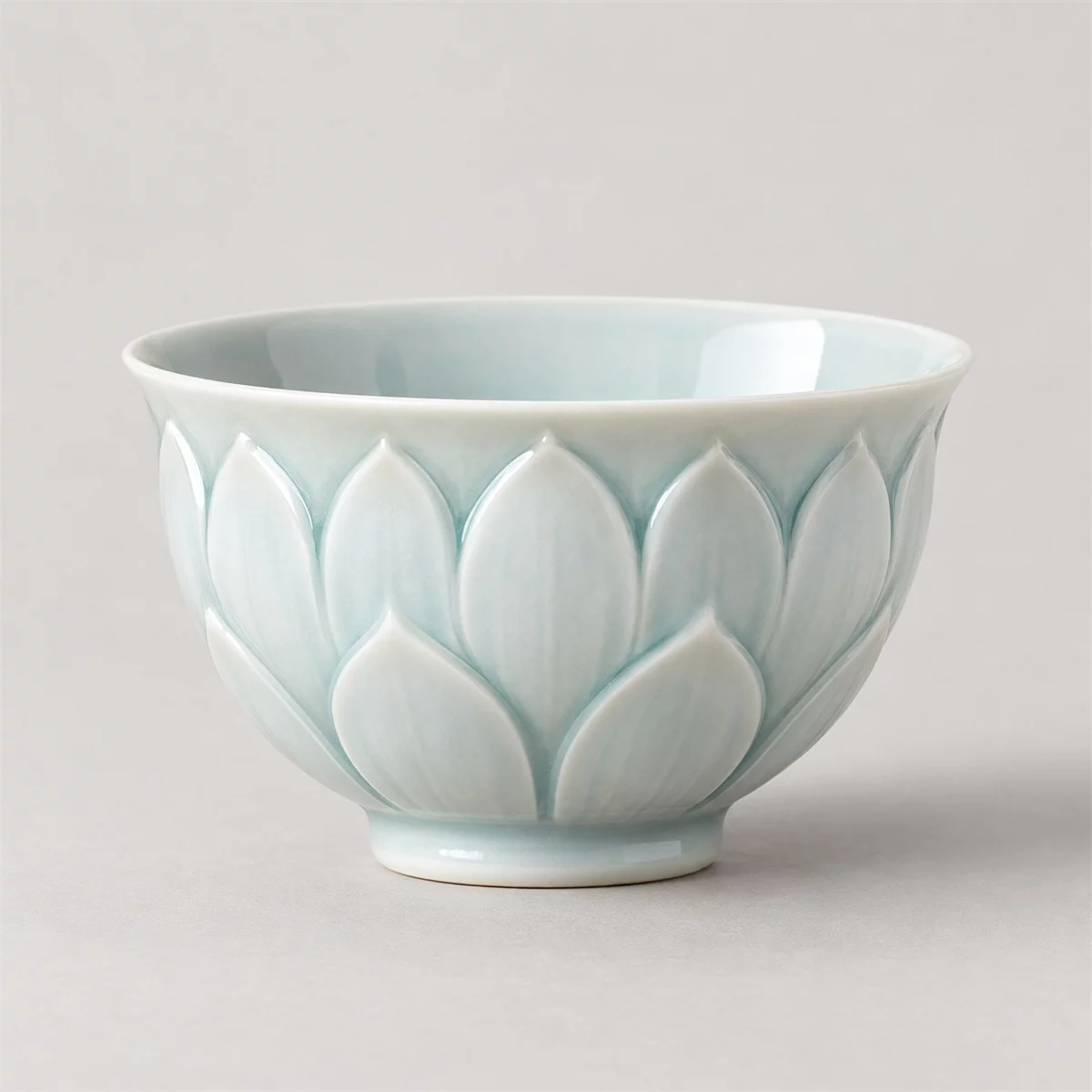
Lotus petals rise around the wall of this small tea cup, and the pale yingqing glaze pools blue in every groove between them. We make it in our Jingdezhen factory, stock it in Los Angeles and Toronto, and pack it singly or as a six-cup gift box.
Celadon · Celadon Legacy Series
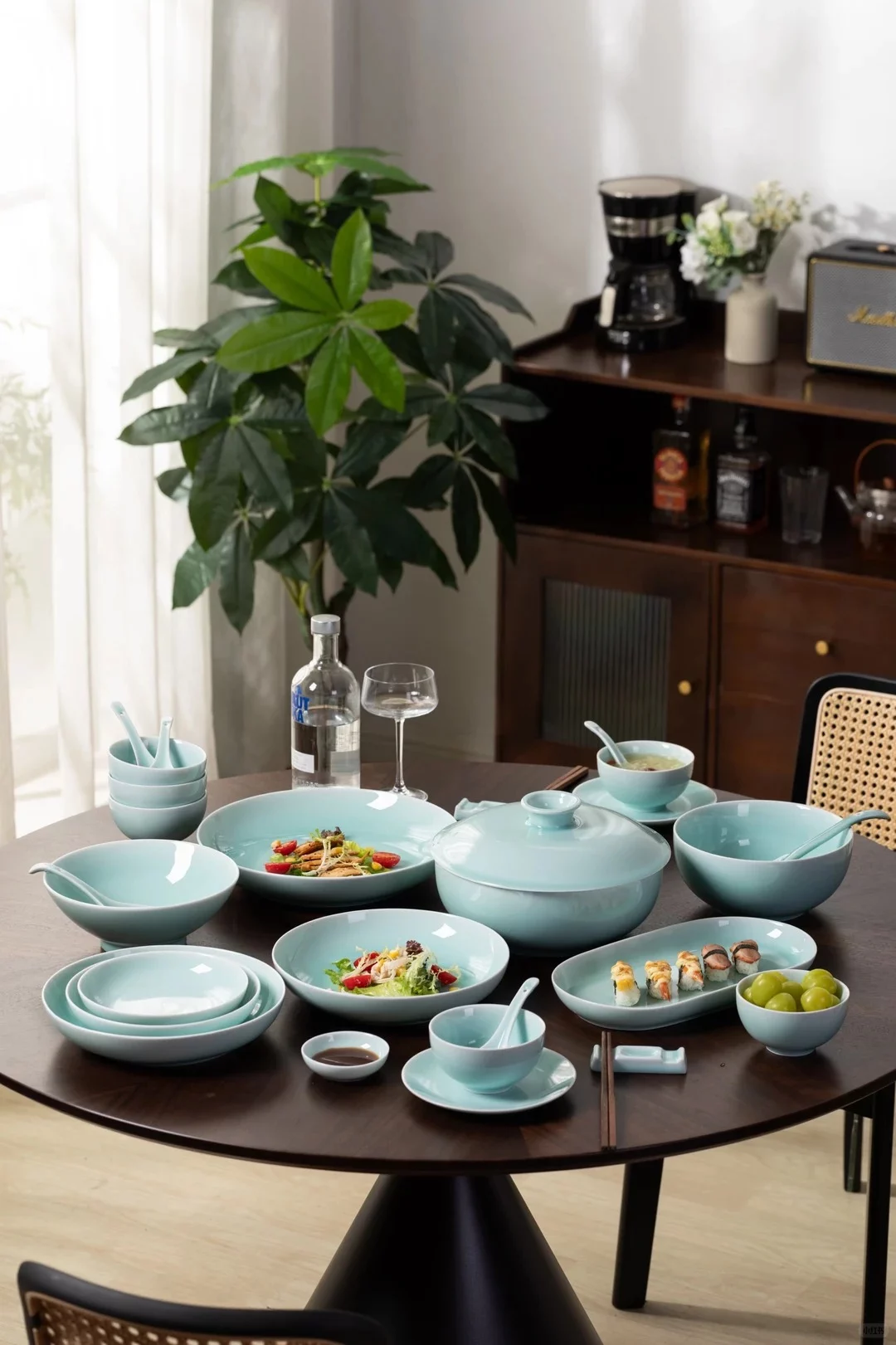
Made for restaurants and hotel dining rooms, this celadon dinner service runs from rice bowls and plates to an oval platter and a covered tureen, all in one pale blue-green glaze. Our Jingdezhen factory sells it by the piece, so a kitchen can start small and add to it.
Celadon Legacy Series · Jun Ware
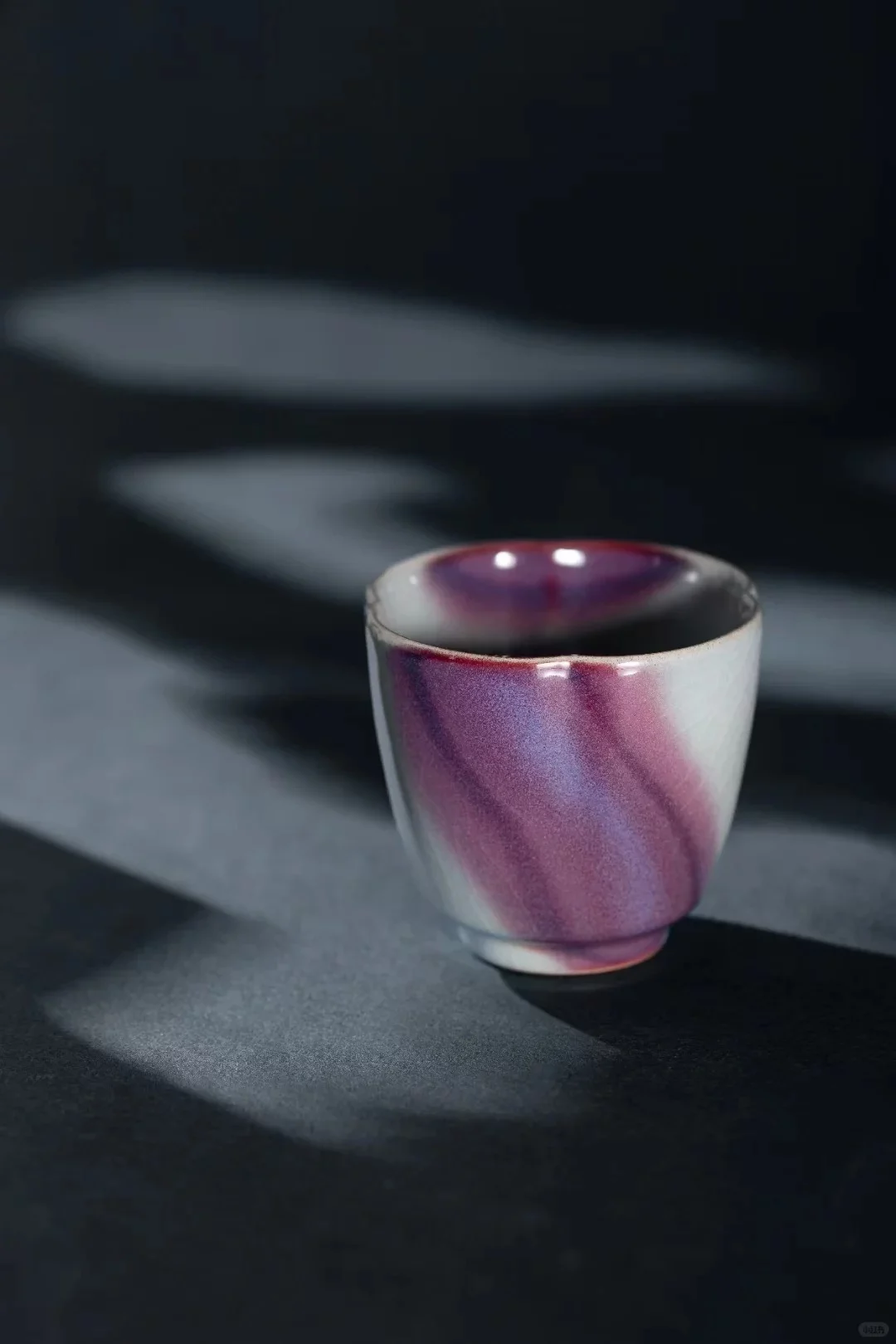
Diagonal streaks of copper purple cross a moon-white Jun glaze on this small lobed tea cup, and more purple gathers in the bowl. We fire it in our Jingdezhen factory, and each firing gives every cup its own streaks.
Celadon Legacy Series · Jun Ware
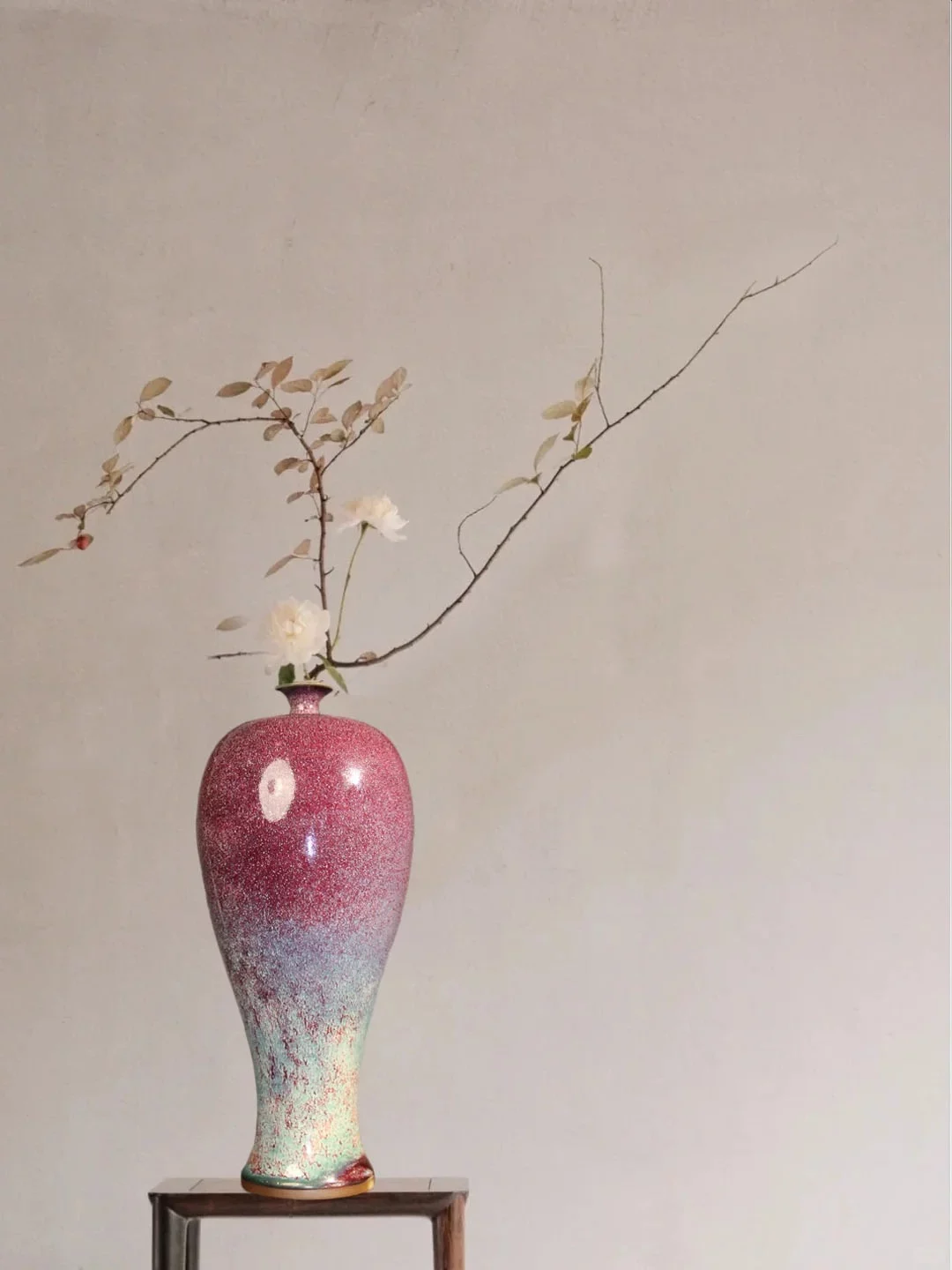
A meiping vase with a small mouth, broad shoulders and a long tapering body, glazed in Jun that shifts from crimson-purple through lavender blue to turquoise and cream. Fired in our Jingdezhen factory, it is made to the height your room calls for.
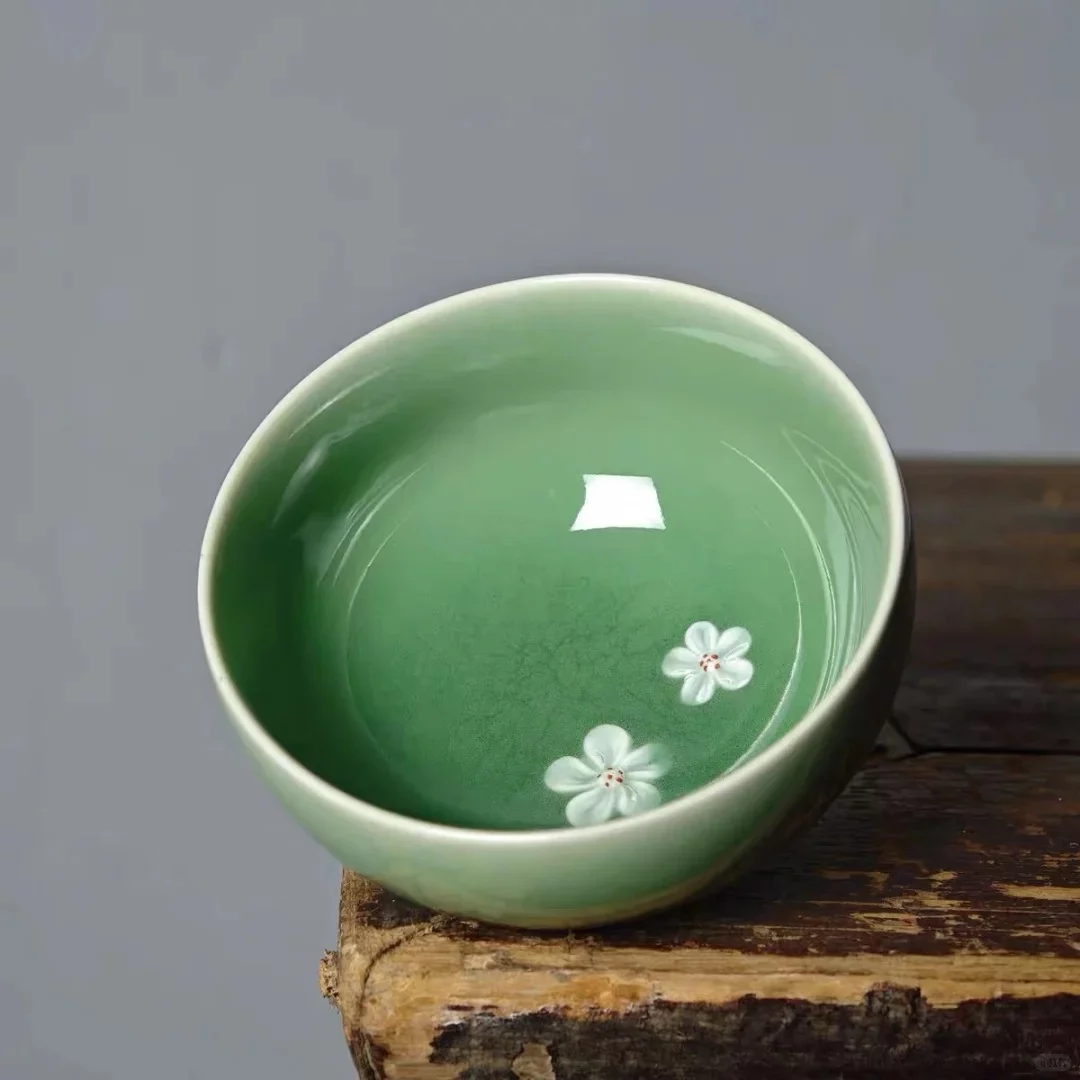
Celadon · Celadon Legacy Series
This deep round celadon tea cup has two white plum blossoms raised in the well, under a jade-green glaze with a fine crackle. We make it in our Jingdezhen factory, and tea shops order it wholesale by the case, in this green or their own.
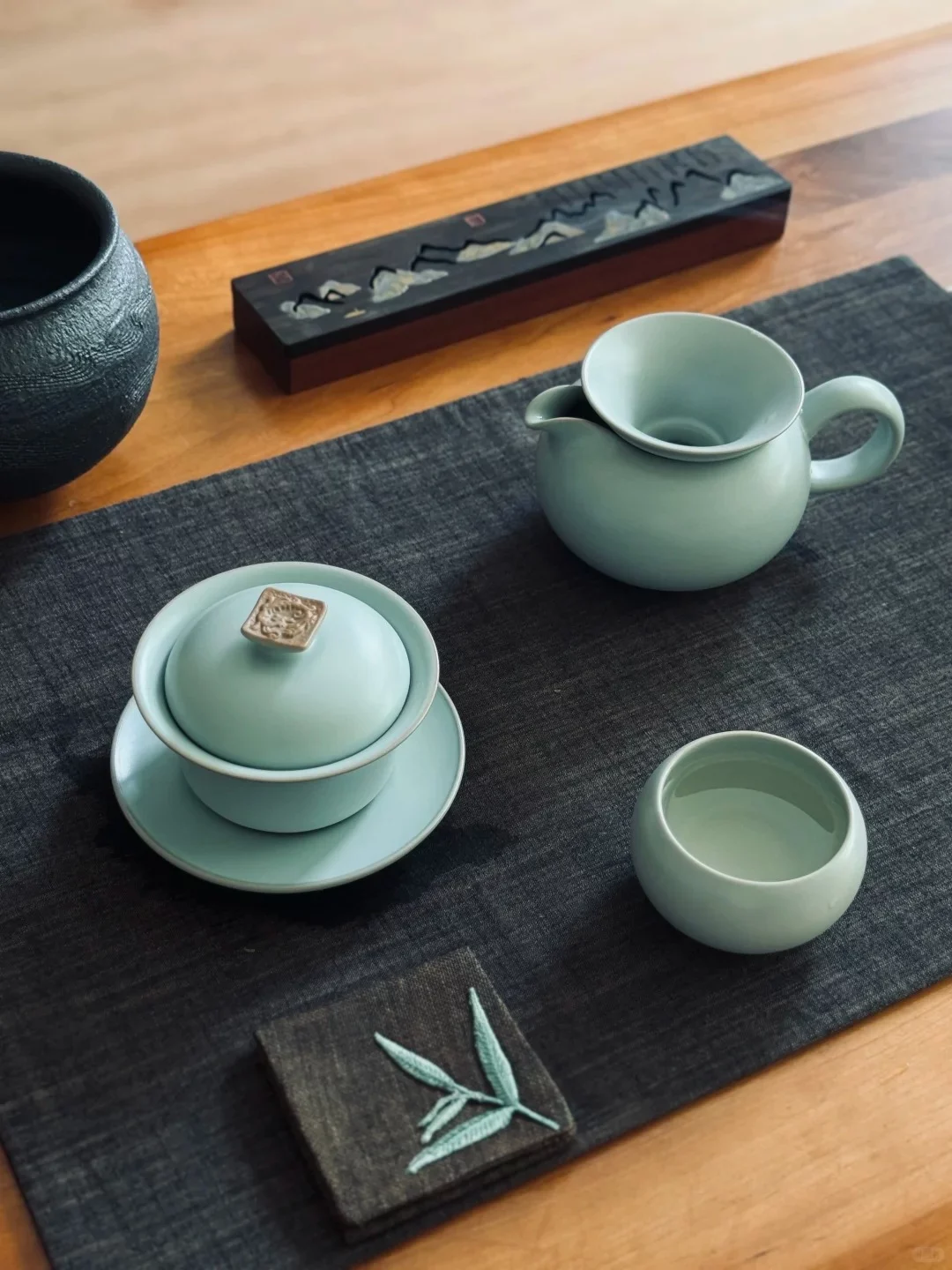
Celadon Legacy Series · Ru Ware
One opaque sky-blue Ru glaze covers every piece of this set: a gaiwan and saucer, a pitcher and a cup. Our Jingdezhen factory fires it in reduction, and the set can grow to as many cups as your table needs.
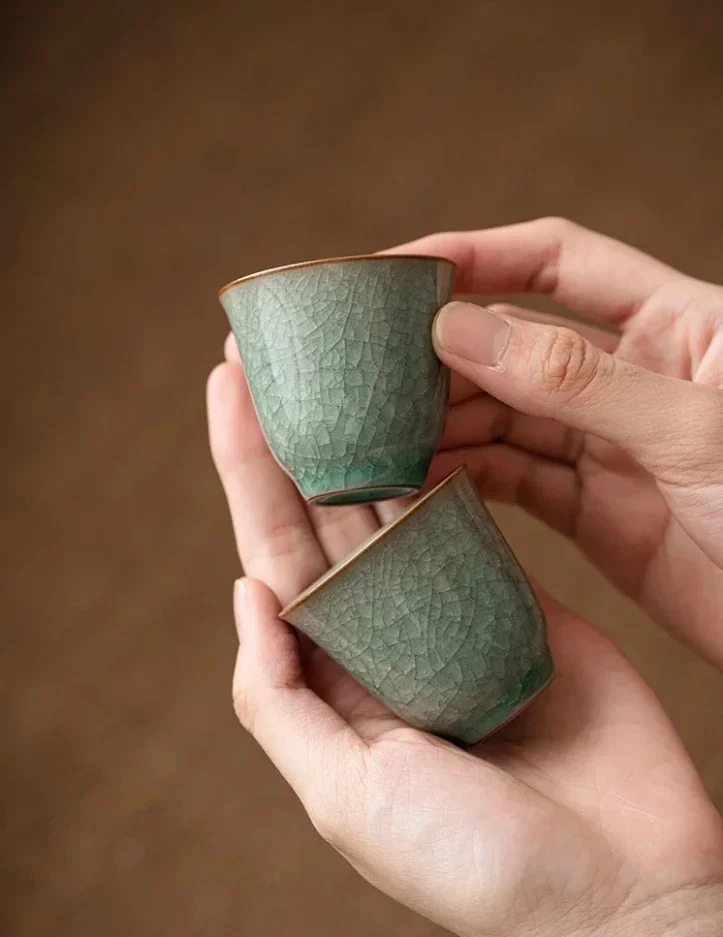
Celadon Legacy Series · Ge Ware
Ge glaze is fired to crack, and on this small tapered tea cup the thick gray-green surface breaks into a dense dark net with finer golden lines between. We fire it in our Jingdezhen factory under a reduction flame, and you can order it as shown or with a finer or bolder crackle.
All four glazes come out of the same Song tradition, and all four are fired at high temperature in a reducing kiln, where a flame starved of oxygen turns the iron and copper in the glaze into color. That shared history is about where the resemblance stops. Set a celadon cup beside a Jun cup and you are looking at two different ideas of what a glaze is for.
Celadon is the steady one. Its jade green comes from a trace of iron, and it pools darker wherever the glaze runs thick, in a carved line or around the foot, so relief carving and plain, generous forms show it best. It changes little from one firing to the next. That is why it carries dinner services and the tea ware buyers reorder every season.
Ru ware is quieter still. The glaze is opaque, a soft sky blue with a waxy sheen and a sparse, fine crackle, and it looks most at home on small forms: gaiwans, cups, a pitcher. Ge ware turns the idea around. Its thick gray-green glaze is covered in a web of dark and golden lines, and the crackle is the whole decoration, so the forms stay simple and let it work. Tea slowly darkens the finer lines, which many tea drinkers prize.
Jun ware is the wild card. A milky ground somewhere between moon-white and sky blue carries copper splashes that fire purple or crimson, and no two pieces leave the kiln alike. It makes a striking display vase or a single statement cup. A matched set of twelve is another matter.
So the choice usually comes down to the room. For a hotel tea room, celadon or Ru keeps a set uniform across reorders. For a gallery shelf or a lobby, Jun and Ge give each piece a face of its own. Kiln-changed glazes of this kind went into the thirty one-of-a-kind pieces KKCN made for Art Space Milano, a case told in full on Craftsmanship & Production.
All four are fired in reduction at 1,280–1,330 °C in our own Jingdezhen kilns. How each glaze forms, and what to write into a specification for it, is in our guide to Chinese porcelain glazes.
Who makes it
Celadon is glazed and fired in KKCN's own workshops in Jingdezhen. Ge, Ru and Jun pieces are fired there too, by kiln teams who specialize in each glaze, and are inspected and packed at KKCN's headquarters. Every order passes three inspection levels led by Li Qiusheng, a municipal-level intangible-heritage inheritor of traditional firing techniques.
Custom orders
Process
Choose a reference or send your own design.
Approve a fired sample or photos before production.
Inspected, packed and shipped from Jingdezhen.
FAQ
Celadon and Ru. Both fire to a steady color, so a gaiwan, a pitcher and a dozen cups still look like one set when you reorder a year later. Celadon sits well with wood and daylight; Ru's opaque blue reads softly under warm lamps. Ge and Jun work better as one or two feature pieces on the shelf than as the tea service itself.
Ge always does: the crackle is the decoration, with wide dark lines and finer golden ones. Ru often carries a sparse, fine crackle, and celadon can be made smooth or crackled to order. Jun is usually smooth. Crackle forms because the glaze shrinks more than the body as the kiln cools, so the lines sit inside the glaze, not on the surface.
Celadon and Ru are used every day in tea rooms and on hotel tables. Ge's crackle picks up tea stain over time, which tea drinkers prize, but it is the wrong choice for a white dinner service. Jun's thick, flowing glaze suits vases, bowls and cups better than flat plates. Food-contact test reports are listed on Quality Control.
Order minimums, samples and shipping are covered on Samples & Quotations and Packing & Shipping. Technique names on this page are defined in our Chinese porcelain glossary.
Send a photo, a sketch or a size, and we will tell you which reference comes closest or quote it as a custom piece.
Product inquiry
Share the PP numbers, quantity, destination and any customization. We reply within 1–2 business days.