Resources
Buyer guides from Jingdezhen
Ten guide collections on sourcing, craft and selling Chinese porcelain, written by our export team.
Browse all guides ↗ Resources
Buyer guides from Jingdezhen
Ten guide collections on sourcing, craft and selling Chinese porcelain, written by our export team.
Browse all guides ↗Home » Products » Celadon Legacy Series » Jun Ware
KKCN collection
Jun ware is a thick, opalescent Song glaze, first made at the Jun kilns of Henan, in which copper fires to purple and crimson over a milky blue ground. KKCN makes its Jun pieces in its own Jingdezhen kilns, from small tea cups to display vases. Every piece is in stock as pictured and can be made in your form and palette.
Celadon Legacy Series · Jun Ware
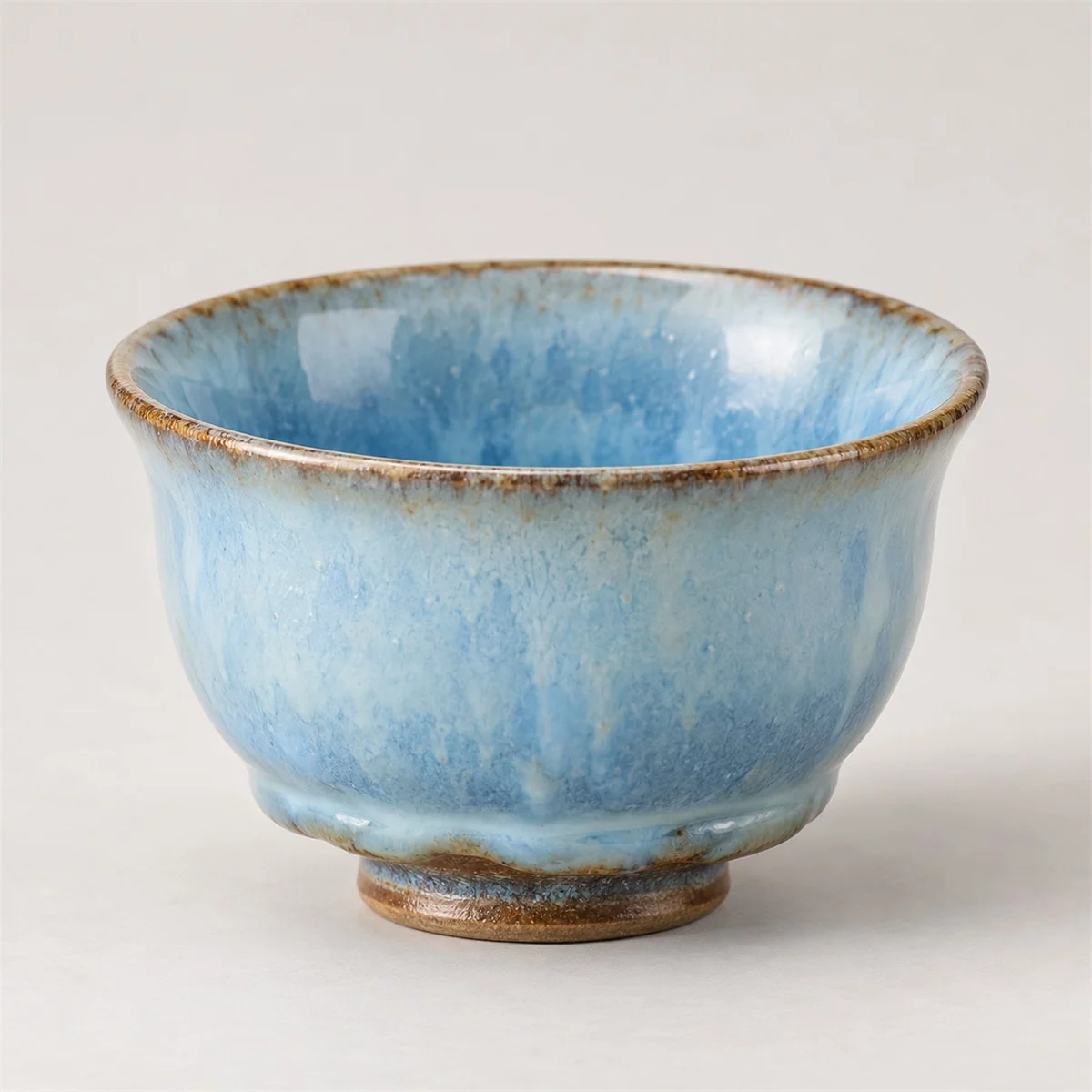
A thick sky-blue Jun glaze covers this small tea cup, milky where it pools and thinning to a darker edge at the rim. We fire it in our own Jingdezhen kilns and hold it in Los Angeles and Toronto stock for quick reorders.
Celadon Legacy Series · Jun Ware
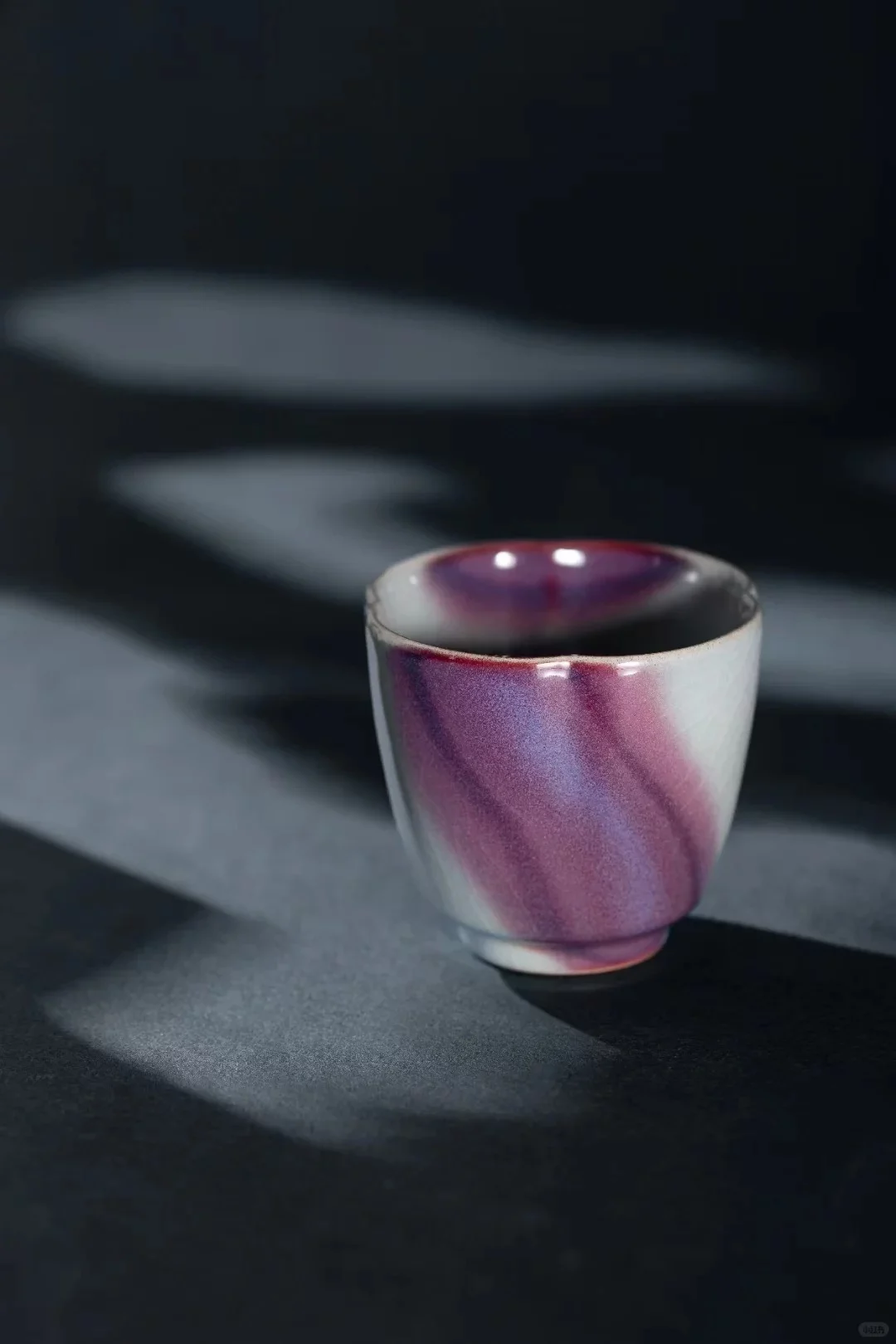
Diagonal streaks of copper purple cross a moon-white Jun glaze on this small lobed tea cup, and more purple gathers in the bowl. We fire it in our Jingdezhen factory, and each firing gives every cup its own streaks.
Celadon Legacy Series · Jun Ware
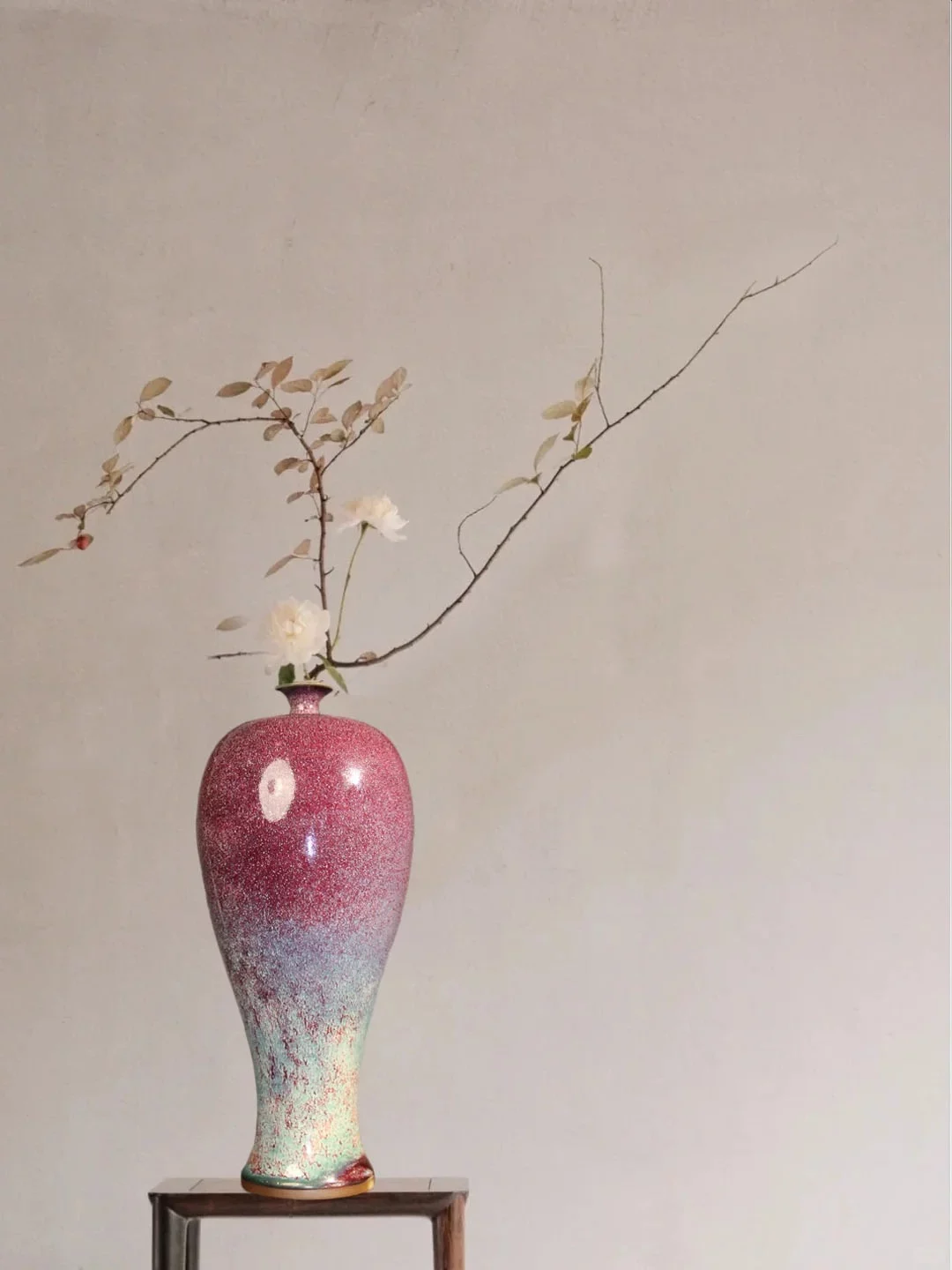
A meiping vase with a small mouth, broad shoulders and a long tapering body, glazed in Jun that shifts from crimson-purple through lavender blue to turquoise and cream. Fired in our Jingdezhen factory, it is made to the height your room calls for.
A Jun glaze goes on in several thick coats, far heavier than celadon, and it does most of its work after the kiln door closes. At full heat it melts and slides down the form. As it cools it separates into countless tiny glassy droplets, and those droplets scatter light. That scattering, not a blue pigment, is what gives Jun its milky sky-blue ground. Where copper has been brushed or splashed on, the low-oxygen flame turns it purple or crimson, and the color bleeds softly into the blue around it.
A real Jun glaze leaves evidence behind. At the lip it runs thin enough for the iron-rich body to show through as a brown line. Lower down it gathers thick above the foot, often in a rolled edge. Look closely and you may find earthworm tracks: fine, wandering lines where the glaze cracked as it dried, then flowed back together in the firing. A sprayed finish shows none of this.
Chinese potters have a word for the whole process, yaobian, "kiln transformation." The kiln, not the painter, finishes the color, and that changes how Jun is ordered. You choose the ground, from moon-white to deep blue, decide how much copper you want, and pick the form. Our kiln team then fires a small group of samples and you approve the range they show, from the palest to the most splashed. Vases, bowls, flowerpots and cups suit the glaze best, because it needs a slope to travel on. On a flat plate it has nowhere to go.
How a Jun glaze runs and why each piece differs is covered in our buyer's guide to Chinese porcelain glazes.
Who makes it
Jun ware is fired in KKCN's own kilns in Jingdezhen by a team that specializes in Song glazes, then inspected and packed at KKCN's headquarters. Every order passes three inspection levels led by Li Qiusheng, a municipal-level intangible-heritage inheritor of traditional firing techniques.
Custom orders
Process
Choose a reference or send your own design.
Approve a fired sample or photos before production.
Inspected, packed and shipped from Jingdezhen.
FAQ
The glaze is still moving when the kiln reaches full heat. Small differences in glaze thickness, the piece's place in the kiln and the flame around it change how far the copper spreads and how deep the blue goes. KKCN fires a group of samples, marks the palest and the most splashed, and ships the order within that agreed range.
Moon-white is the palest, almost gray-white with a blue haze, and suits calm interiors and tea rooms. Sky blue is the classic Jun color and the easiest to keep consistent across a set. Purple and crimson splashes make each piece a one-off, which suits a lobby, a gallery shelf or a single gift more than a matched service.
The blue is made by light scattering inside the glaze, so it shifts with the light falling on it. Daylight brings out the blue; warm lamps push the copper splashes toward red. Before a display order, put the approved sample where the pieces will stand and judge it there, at the time of day guests will see it.
The name comes from Junzhou, today Yuzhou in Henan, where the Song dynasty kilns that made this glaze stood. It now names the glaze family itself: a thick, opalescent blue with copper splashes that the kiln turns purple or crimson. Ours is made and fired in our own kilns in Jingdezhen.
It falls inside the same approved range rather than matching piece for piece. We keep the glaze record free for three years after your last order, so a reorder is fired from the same recipe and sorted against the same approved limits.
Order minimums, samples and shipping are covered on Samples & Quotations and Packing & Shipping. Technique names on this page are defined in our Chinese porcelain glossary.
Send a photo, a sketch or a size, and we will tell you which reference comes closest or quote it as a custom piece.
Product inquiry
Share the PP numbers, quantity, destination and any customization. We reply within 1–2 business days.