Resources
Buyer guides from Jingdezhen
Ten guide collections on sourcing, craft and selling Chinese porcelain, written by our export team.
Browse all guides ↗ Resources
Buyer guides from Jingdezhen
Ten guide collections on sourcing, craft and selling Chinese porcelain, written by our export team.
Browse all guides ↗Home » Products » Celadon Legacy Series » Ru Ware
KKCN collection
Ru ware is an opaque, sky-blue Song dynasty glaze with a soft sheen and, often, a sparse fine crackle. KKCN fires its Ru pieces in its own Jingdezhen kilns, then checks and packs them in-house. The tea set in the grid is in stock as pictured, and gaiwans, pitchers and cups can be made to order in your tone and size.
Celadon Legacy Series · Ru Ware
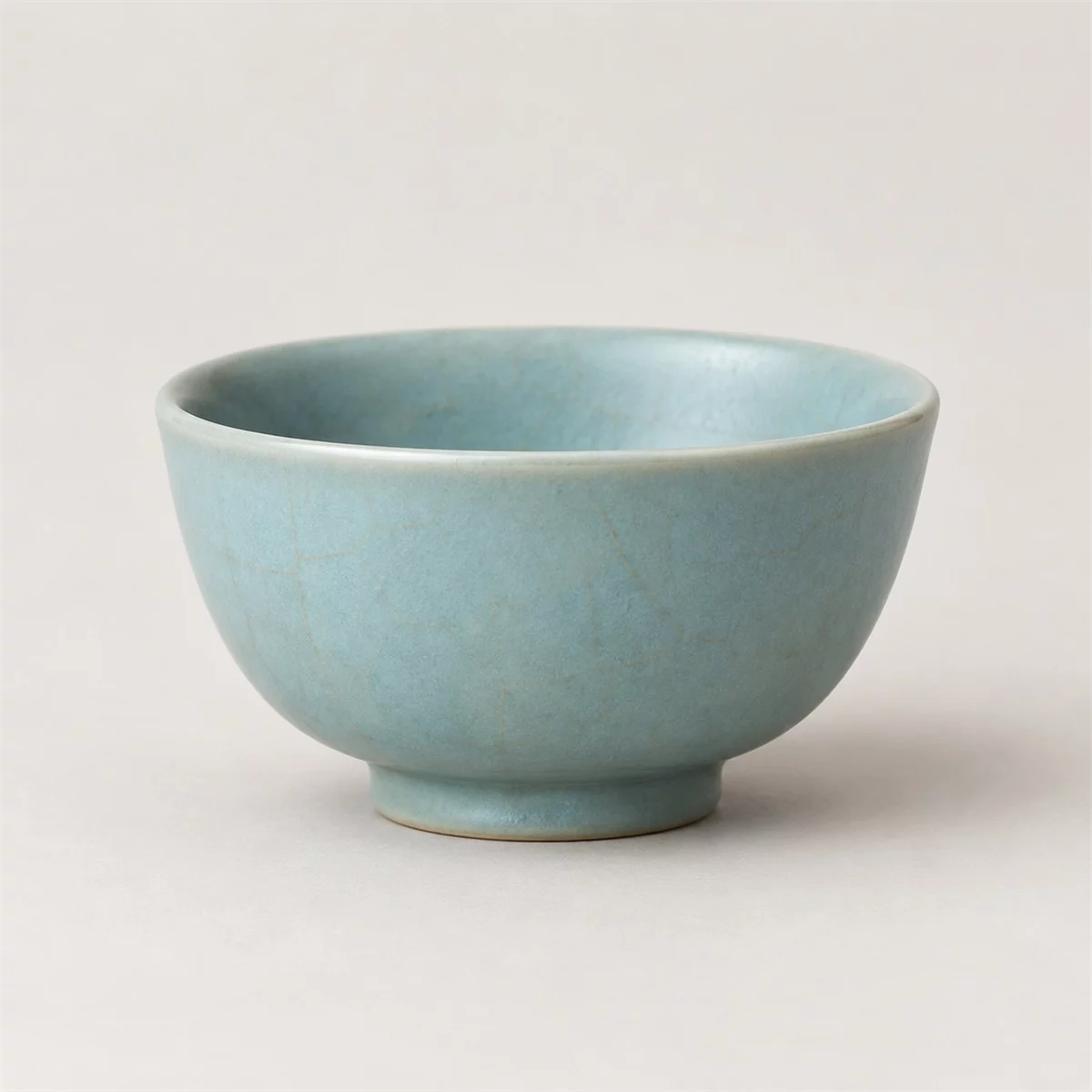
This small tea cup is glazed in opaque sky-blue Ru and fired in reduction in our own Jingdezhen kilns. It is the single cup from our Ru tea ware, held in Los Angeles and Toronto stock so tea shops can sell it by the piece and restock fast.
Celadon Legacy Series · Ru Ware
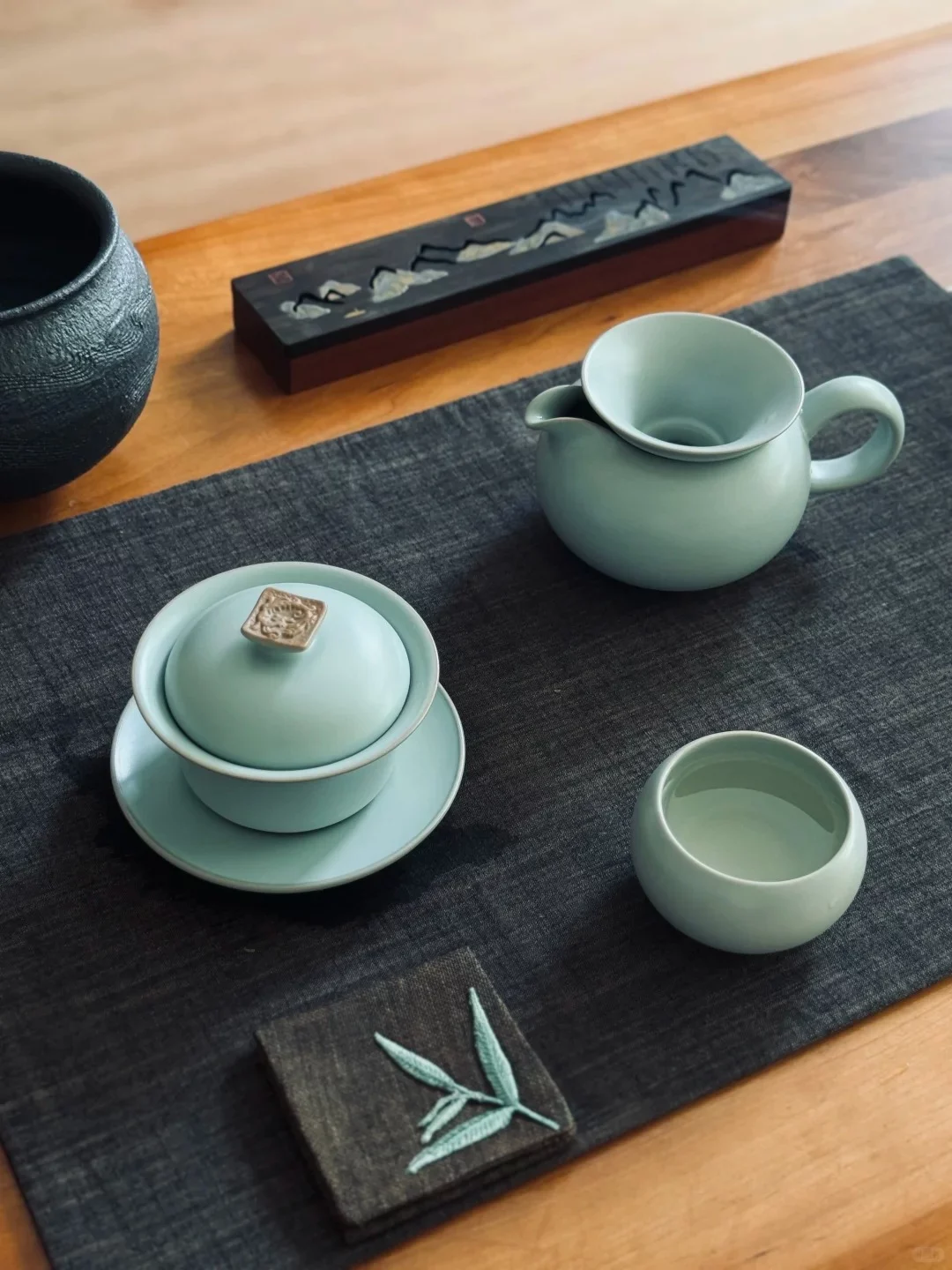
One opaque sky-blue Ru glaze covers every piece of this set: a gaiwan and saucer, a pitcher and a cup. Our Jingdezhen factory fires it in reduction, and the set can grow to as many cups as your table needs.
Ru ware was made for the Northern Song court for only a few decades around 1100, at kilns near Ruzhou in Henan, and fewer than a hundred pieces from those years are known to survive. That scarcity explains why the name still carries weight. The rest is down to the glaze.
Ru belongs to the celadon family, but it does not look like celadon. Celadon is glassy and green. Ru is opaque, a quiet blue that drifts toward gray-green in some lights, with a sheen closer to wax or polished jade than to glass. Chinese potters describe the color with an old phrase, "the blue of the sky after rain," and it fits: pale, cool, a little clouded, never bright. Look closely and you will often find a few fine crackle lines under the surface, sometimes only three or four across a whole cup.
Song Ru pieces were glazed all over, foot included, and fired standing on tiny spurs that left marks the size of sesame seeds on the base. Collectors still turn a Ru cup over to look for them.
Today the glaze is at its best on small, plain forms that get handled every day: a gaiwan, a pitcher, a set of cups, a water jar on the tea table. Large pieces lose some of the softness, and painted decoration has no place on it. For a tea room ordering a full service, Ru is the easy choice, because the color stays calm from cup to cup and holds steady across reorders. The Ru tea set shows that in a single box.
Ru, Ge, Jun and celadon are compared side by side in our Chinese porcelain glaze guide.
Who makes it
Ru pieces are fired in KKCN's own Jingdezhen kilns, reviving the Song Ru glaze on a body made for it. Each set comes to KKCN's headquarters, where glaze tone, sheen and the fit of every lid are checked before packing. Every order passes three inspection levels led by Li Qiusheng, a municipal-level intangible-heritage inheritor of traditional firing techniques.
Custom orders
Process
Choose a reference or send your own design.
Approve a fired sample or photos before production.
Inspected, packed and shipped from Jingdezhen.
FAQ
Hold them to the light. Celadon is translucent and glossy, and its green deepens wherever the glaze runs thick, so carving and edges show through it. Ru is opaque, so the color stays even over the whole form, and the surface has a soft, satin sheen instead of a shine. Ru also leans blue where celadon leans green. Side by side, celadon looks like glass and Ru looks like stone.
Yes. Ru is a high-fired glaze, and a Ru tea set is meant to be used, not kept behind glass. Hand washing keeps the sheen at its best, and any fine crackle lines will take on a little tea color over the years, slowly and evenly. Food-contact test reports for KKCN's daily-use glazes are listed on Quality Control.
Usually, yes. Send one or two pieces, or a clear photo with a color card beside it, and our kiln team fires a row of glaze tiles around that tone. You pick the closest, and the run is held to it. Ru's opaque glaze varies less from firing to firing than celadon or Jun, so a matched tone tends to stay matched on reorders.
Look for an opaque, waxy sky blue rather than glassy green, a sparse fine crackle, and glaze that covers the foot, with tiny spur marks on the base where Song pieces stood in the kiln. Fewer than a hundred Song Ru pieces are known, so almost all Ru on the market is later work in the Ru style. Ours is new work, sold as new work.
Our reference set is a gaiwan with lid and saucer, a pitcher and a cup. The gaiwan holds 100–220 ml and the cups 50–150 ml. Tea rooms usually add cups to match their seating, and a teapot can replace the gaiwan.
Order minimums, samples and shipping are covered on Samples & Quotations and Packing & Shipping. Technique names on this page are defined in our Chinese porcelain glossary.
Send a photo, a sketch or a size, and we will tell you which reference comes closest or quote it as a custom piece.
Product inquiry
Share the PP numbers, quantity, destination and any customization. We reply within 1–2 business days.