Resources
Buyer guides from Jingdezhen
Ten guide collections on sourcing, craft and selling Chinese porcelain, written by our export team.
Browse all guides ↗ Resources
Buyer guides from Jingdezhen
Ten guide collections on sourcing, craft and selling Chinese porcelain, written by our export team.
Browse all guides ↗Home » Products » Celadon Legacy Series » Celadon
KKCN collection
Celadon is a high-fired green glaze colored by a trace of iron and fired in a low-oxygen kiln. KKCN glazes and fires its celadon in its own Jingdezhen workshops, on tea cups, plates, bowls and full dinner services. Every piece in the grid is in stock as pictured, and the shade, crackle and form can be made to your order.
Celadon · Celadon Legacy Series
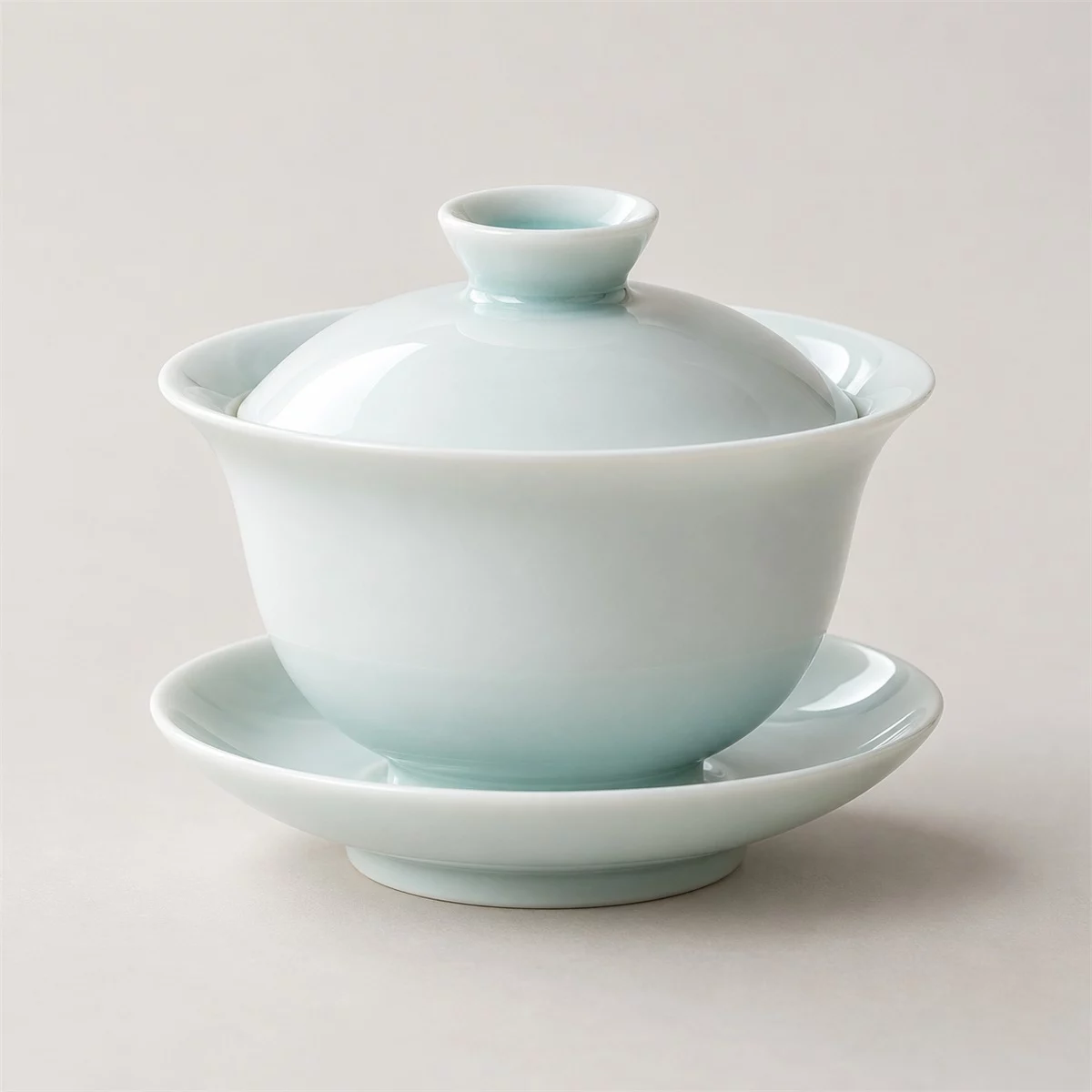
This gaiwan is bowl, lid and saucer in pale yingqing glaze, thin enough at the rim to let light through. We make it in our Jingdezhen factory and hold it in Los Angeles and Toronto stock for tea shops that need it reordered fast.
Celadon · Celadon Legacy Series
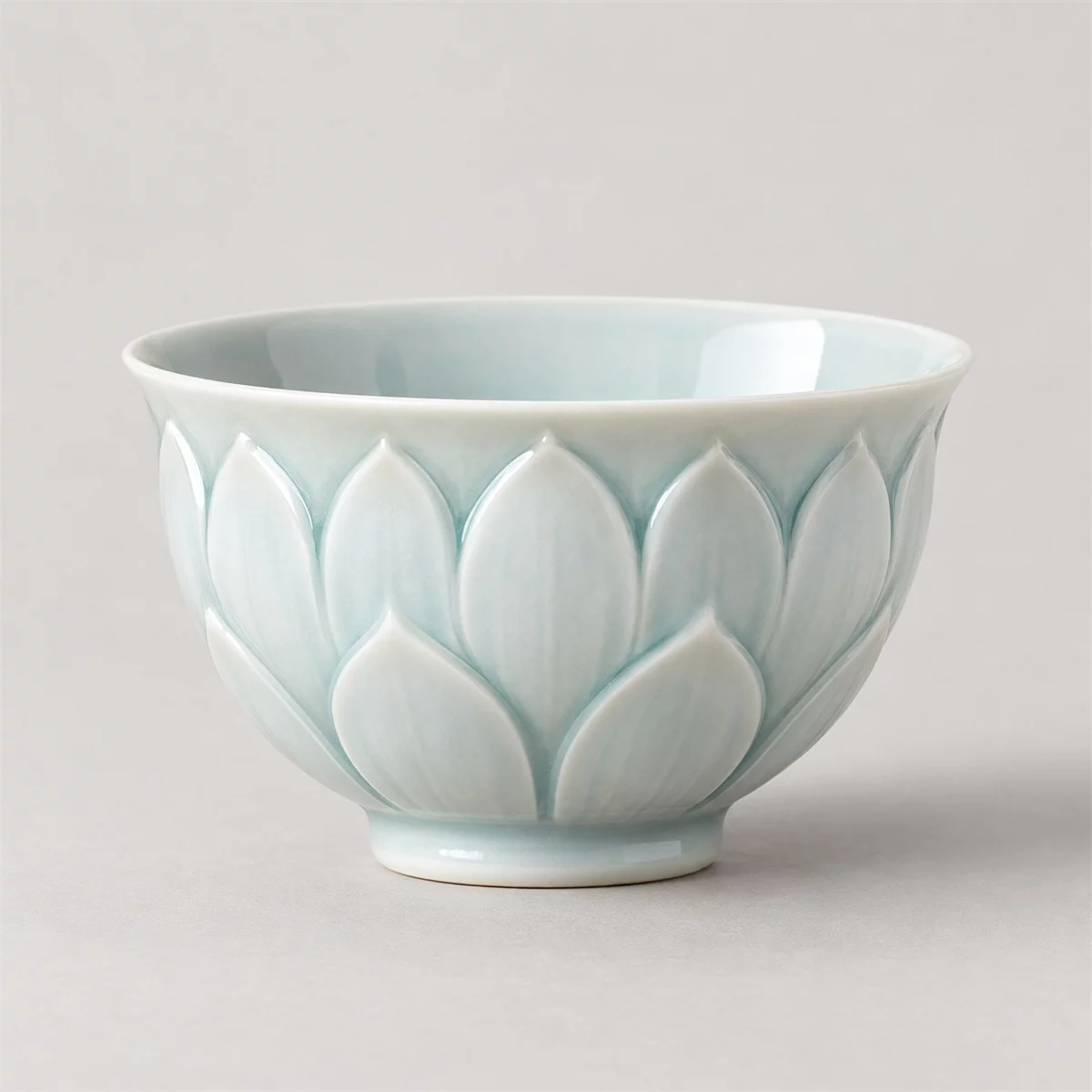
Lotus petals rise around the wall of this small tea cup, and the pale yingqing glaze pools blue in every groove between them. We make it in our Jingdezhen factory, stock it in Los Angeles and Toronto, and pack it singly or as a six-cup gift box.
Celadon · Celadon Legacy Series
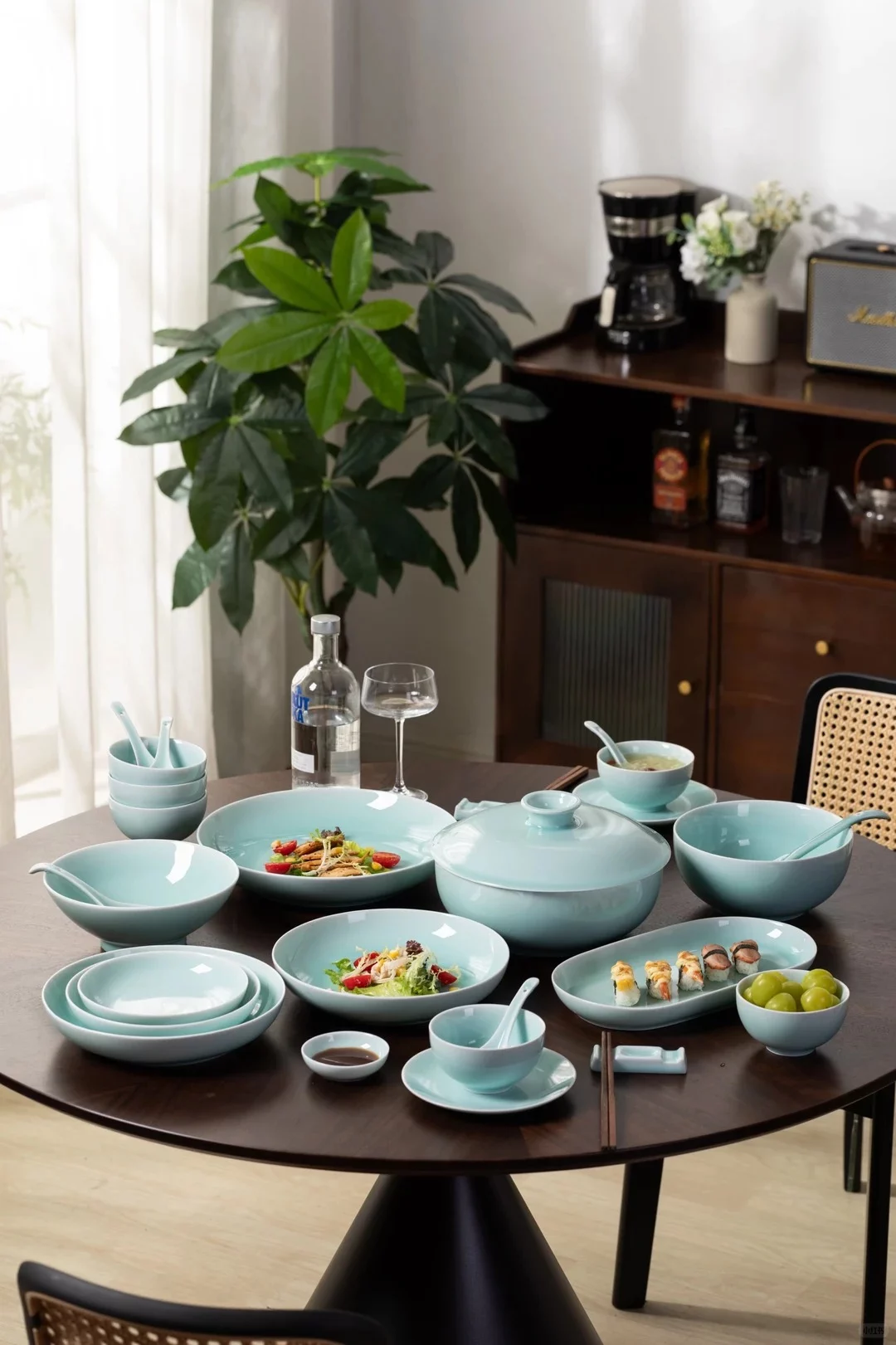
Made for restaurants and hotel dining rooms, this celadon dinner service runs from rice bowls and plates to an oval platter and a covered tureen, all in one pale blue-green glaze. Our Jingdezhen factory sells it by the piece, so a kitchen can start small and add to it.
Celadon · Celadon Legacy Series
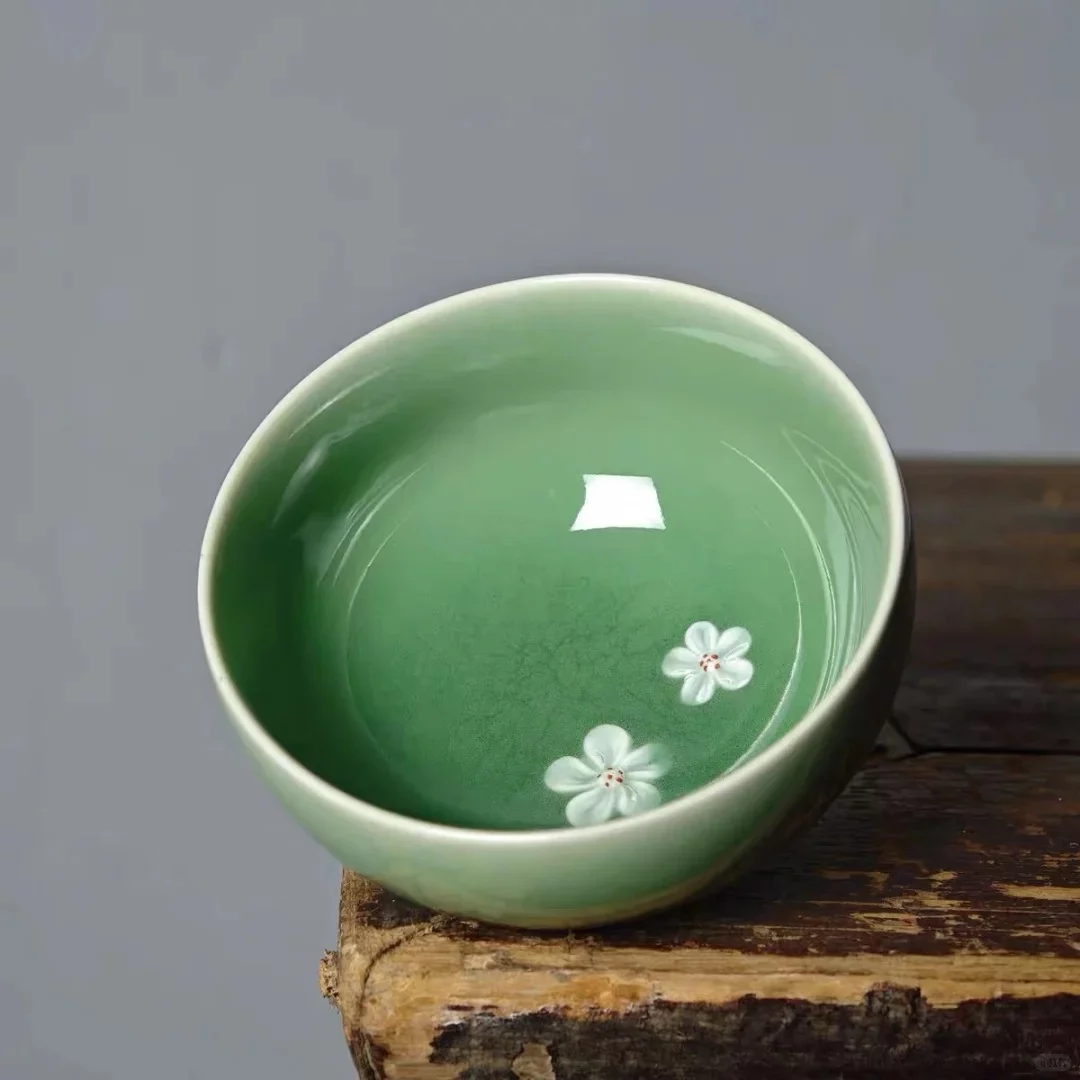
This deep round celadon tea cup has two white plum blossoms raised in the well, under a jade-green glaze with a fine crackle. We make it in our Jingdezhen factory, and tea shops order it wholesale by the case, in this green or their own.
Ask five buyers for "celadon green" and you will get five different swatches, from a cool, watery blue-green to an olive that is nearly moss. None of them is wrong. The color is not mixed in a pot and brushed on. It comes out of the kiln, and three things decide where it lands.
The first is iron. A celadon glaze holds only a small amount, and a little more pushes the fired color from pale sea green toward a deeper jade. The second is thickness. Glaze laid on heavily fires darker than glaze laid on thin, so a deep tea bowl reads greener than a flat plate dipped in the same bucket. The third is the air in the kiln. Fired at about 1,300 °C with the oxygen cut back, the iron turns green; let too much air in and the same glaze comes out yellowish, closer to straw than jade.
For a buyer, those three dials become a practical decision. A tea shop selling cups one at a time can live with gentle variation, and plenty of its customers prefer it. A restaurant laying forty tables cannot. Its dinner plates have to sit next to bowls ordered six months later, so the shade is fixed on fired sample tiles first, and the run is held between the palest and deepest pieces you approve. The glaze recipe goes into the piece's craft file, so a reorder starts from the same mix.
That is the real difference between the two references here. The plum blossom tea cup is a cup people pick up and notice. The dinner service is built to disappear into a room, plate after plate in one even tone. Ordering tea ware as a range.
How iron and a reducing kiln give celadon its green, and how the tone is approved, is covered in our guide to Chinese porcelain glazes.
Who makes it
Celadon is glazed and fired in KKCN's own workshops in Jingdezhen, in kilns fired in reduction for every celadon load. The glaze tiles, samples and production run all come out of the same kilns. Every order passes three inspection levels led by Li Qiusheng, a municipal-level intangible-heritage inheritor of traditional firing techniques.
Custom orders
Process
Choose a reference or send your own design.
Approve a fired sample or photos before production.
Inspected, packed and shipped from Jingdezhen.
FAQ
Small changes in glaze thickness and kiln atmosphere move the color, even with the same recipe. A piece near a burner or a thickly dipped bowl will fire a little deeper. For a matched order, the approved samples mark the lightest and darkest acceptable green, and every piece in the run is sorted against them before packing. Pieces outside that range are not shipped.
Smooth, for anything that meets sauces, oil or coffee every day. Crackle lines sit inside the glaze, and over time they take up whatever is served on them, which looks charming on a tea cup and tired on a white-tablecloth plate. Crackled celadon suits gongfu cups, tea bowls and vases, where a slowly darkening network is part of the appeal.
Celadon is a high-fired glaze, fused to the porcelain at about 1,300 °C, so it is hard and nonporous once fired, much like a white porcelain glaze. For heavy service, choose forms with a rolled or slightly thicker rim, which resist chipping better than a fine, flared lip. Food-contact test reports for KKCN's daily-use glazes are listed on Quality Control.
Both, depending on the glaze and the kiln. More iron and a thicker coat push it toward jade green, while a thin glaze fired in strong reduction leans blue-green. Yingqing, the pale blue-white glaze on our lotus-petal cup, sits at the palest, bluest end.
Celadon is a glaze, not a body. It has been fired on stoneware and on porcelain for centuries. Ours goes on Jingdezhen porcelain, which is why the cups are light in the hand and the glaze looks clear rather than muddy.
Order minimums, samples and shipping are covered on Samples & Quotations and Packing & Shipping. Technique names on this page are defined in our Chinese porcelain glossary.
Send a photo, a sketch or a size, and we will tell you which reference comes closest or quote it as a custom piece.
Product inquiry
Share the PP numbers, quantity, destination and any customization. We reply within 1–2 business days.