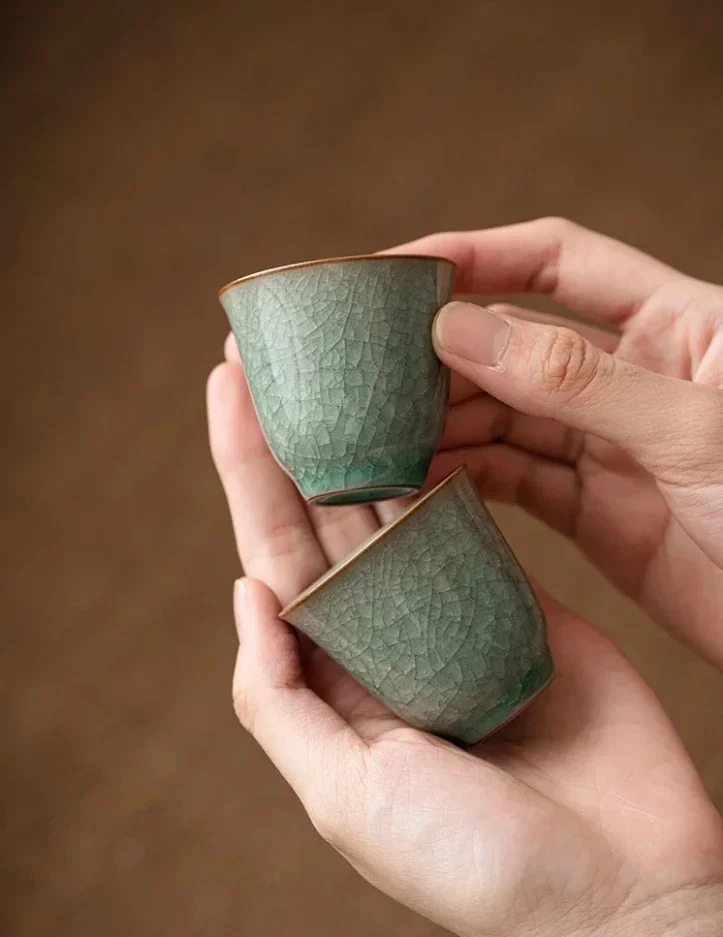
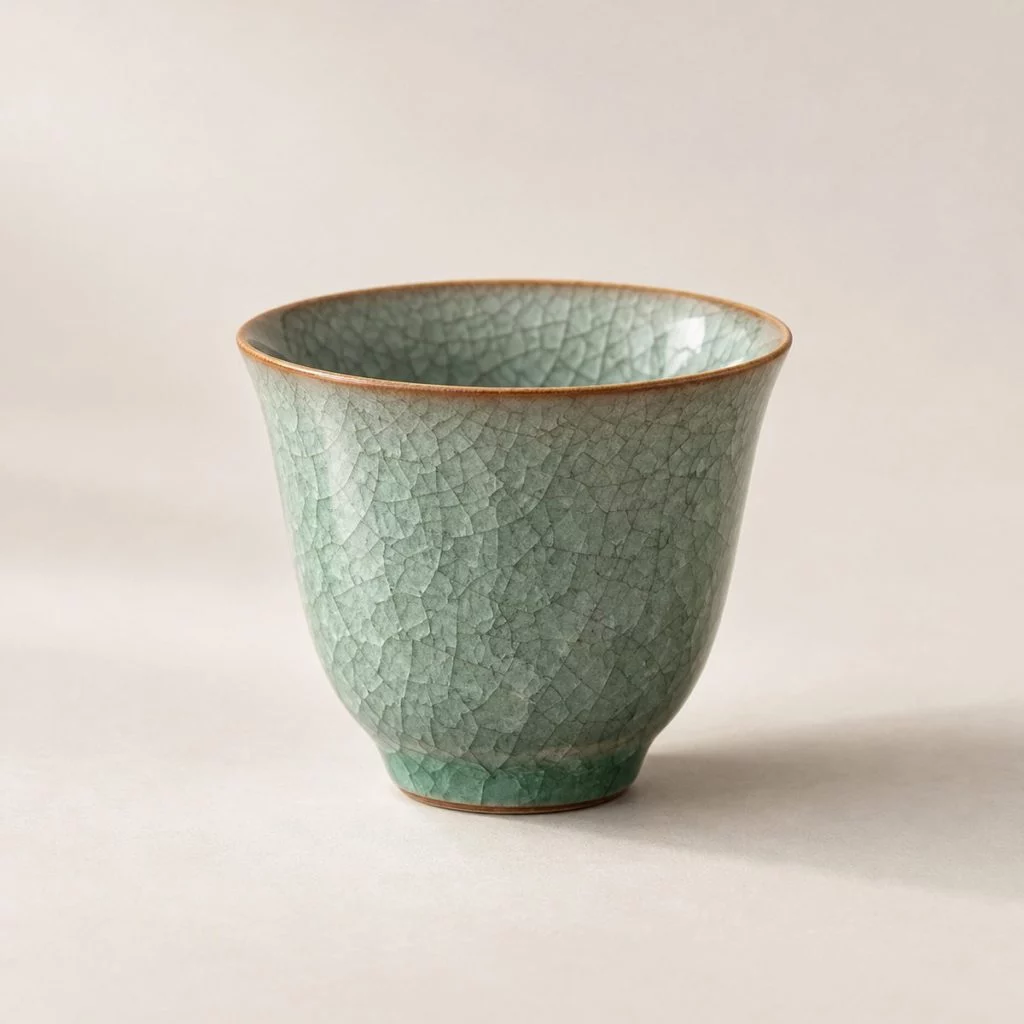
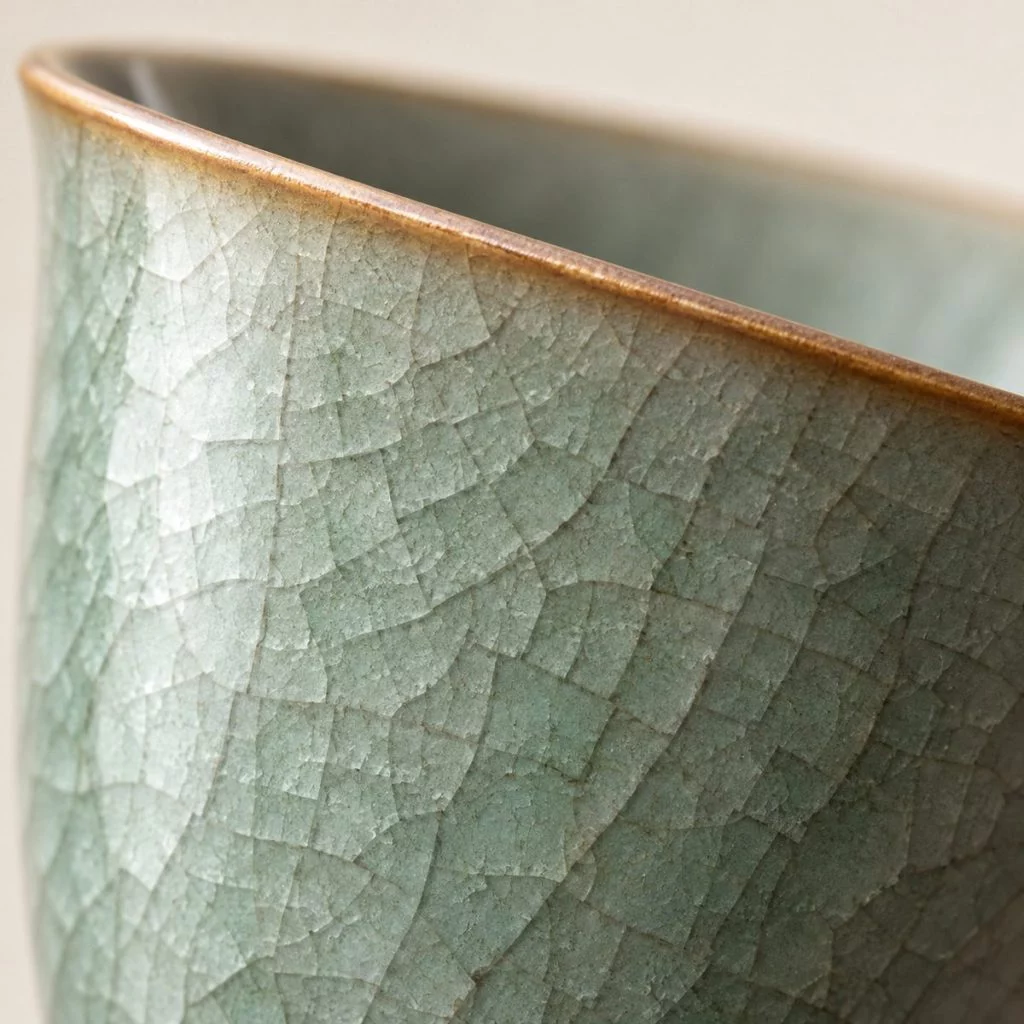
Why is the crackle so dense on a cup this small?
On a large vase, Ge crackle opens into wide plates the size of a thumbnail. On this cup it is far tighter. The wall is small and tightly curved, and a curved surface breaks into smaller pieces as the glaze pulls against it, so the dark network here is close to a fine mesh, with golden hairlines filling the gaps.
The taper plays its part too. The cup narrows to a small foot, so the glaze lies thickest low on the wall and thins toward the lip. Lower down, the gray-green deepens and the lines read darker against it. Near the rim the color lightens, and the edge itself turns brown.
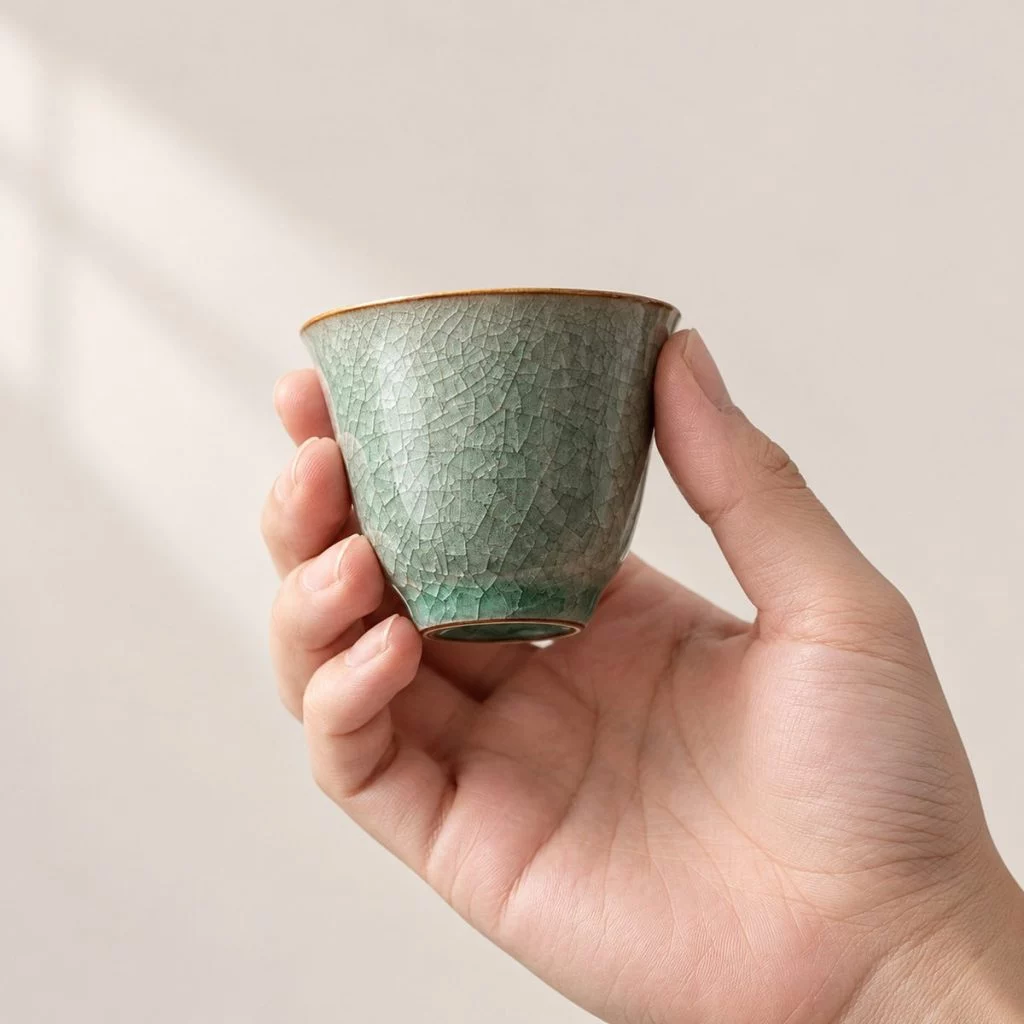
In the hand it is a two-sip cup, the size gongfu tea is poured into, and that is where its character comes from over time. Every pour reaches into the finer lines. After a few months of daily use the golden network is plainly darker than on the day the cup arrived, and no two cups darken at quite the same pace.
The cups are fired in our own kilns in Jingdezhen, and each one is checked in Jingdezhen for a sound rim and a steady foot before it is wrapped.
How Ge ware’s crackle forms as the glaze cools is explained in our guide to Chinese porcelain glazes.