The purple runs where the glaze ran
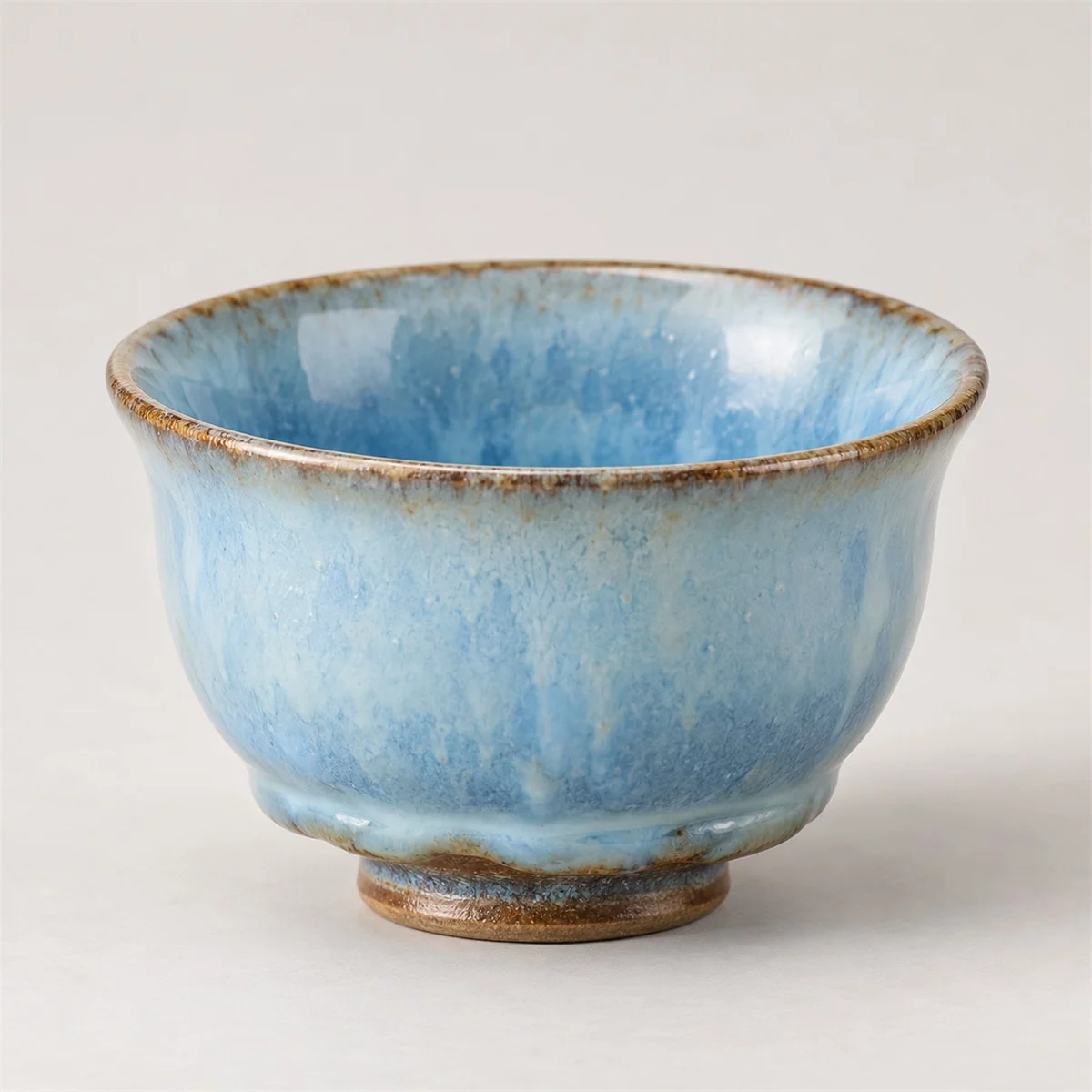
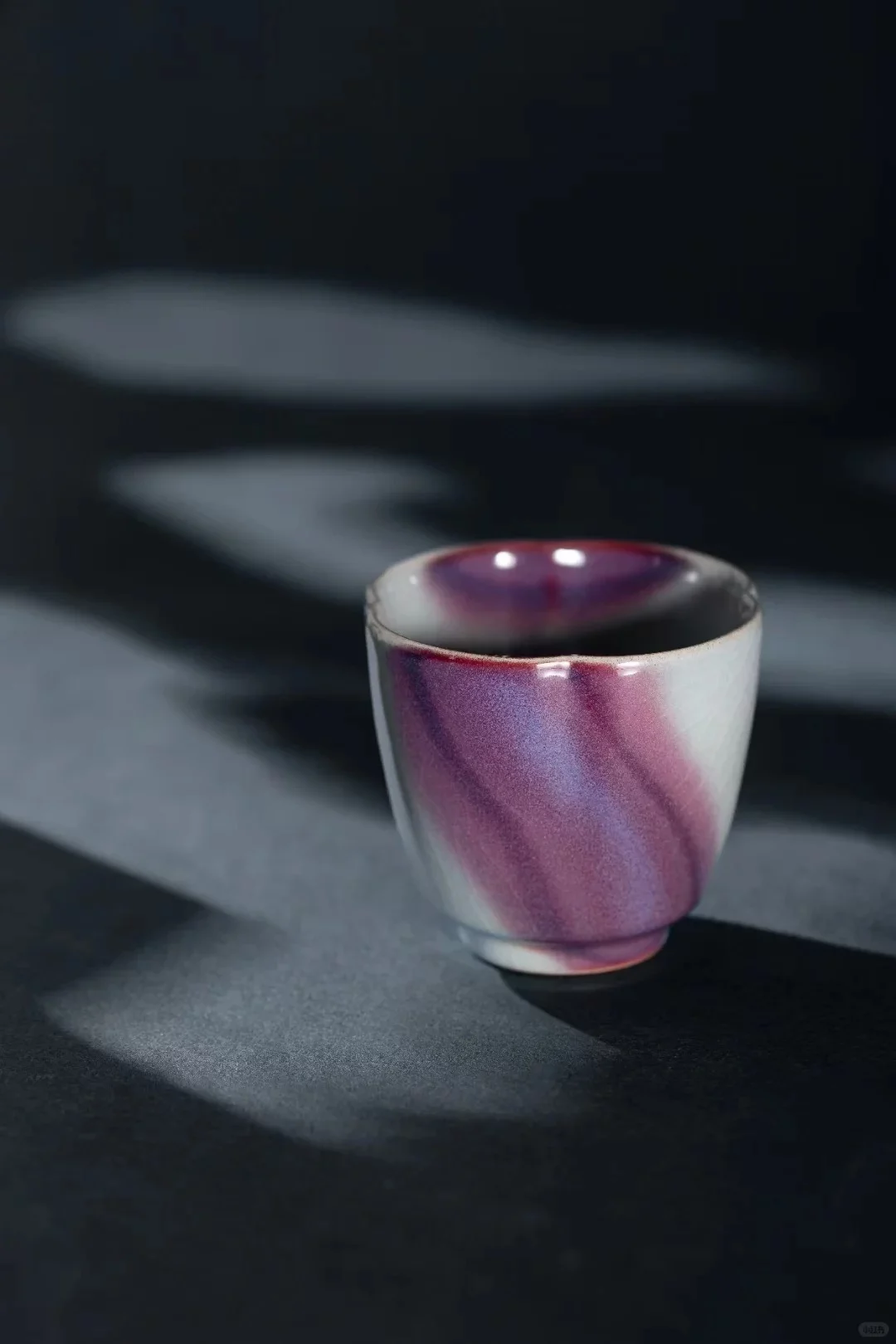
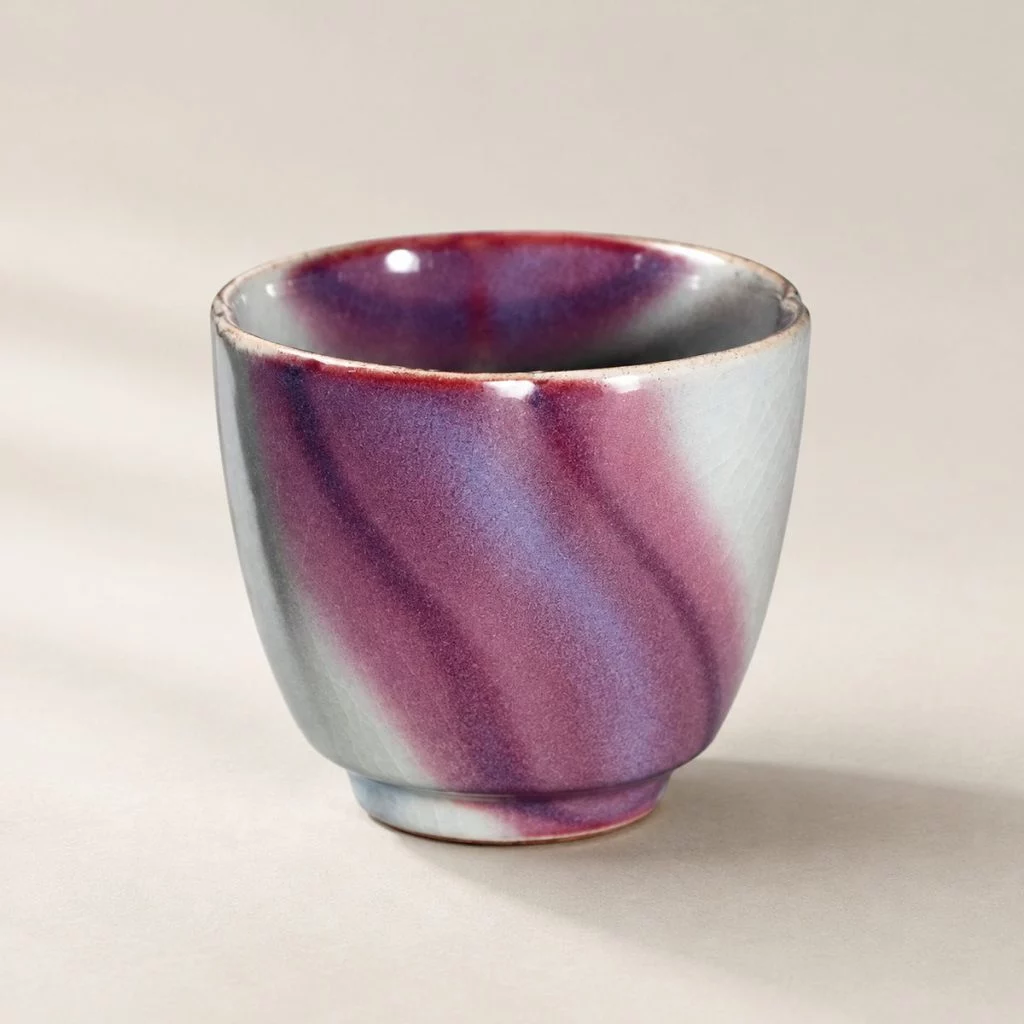
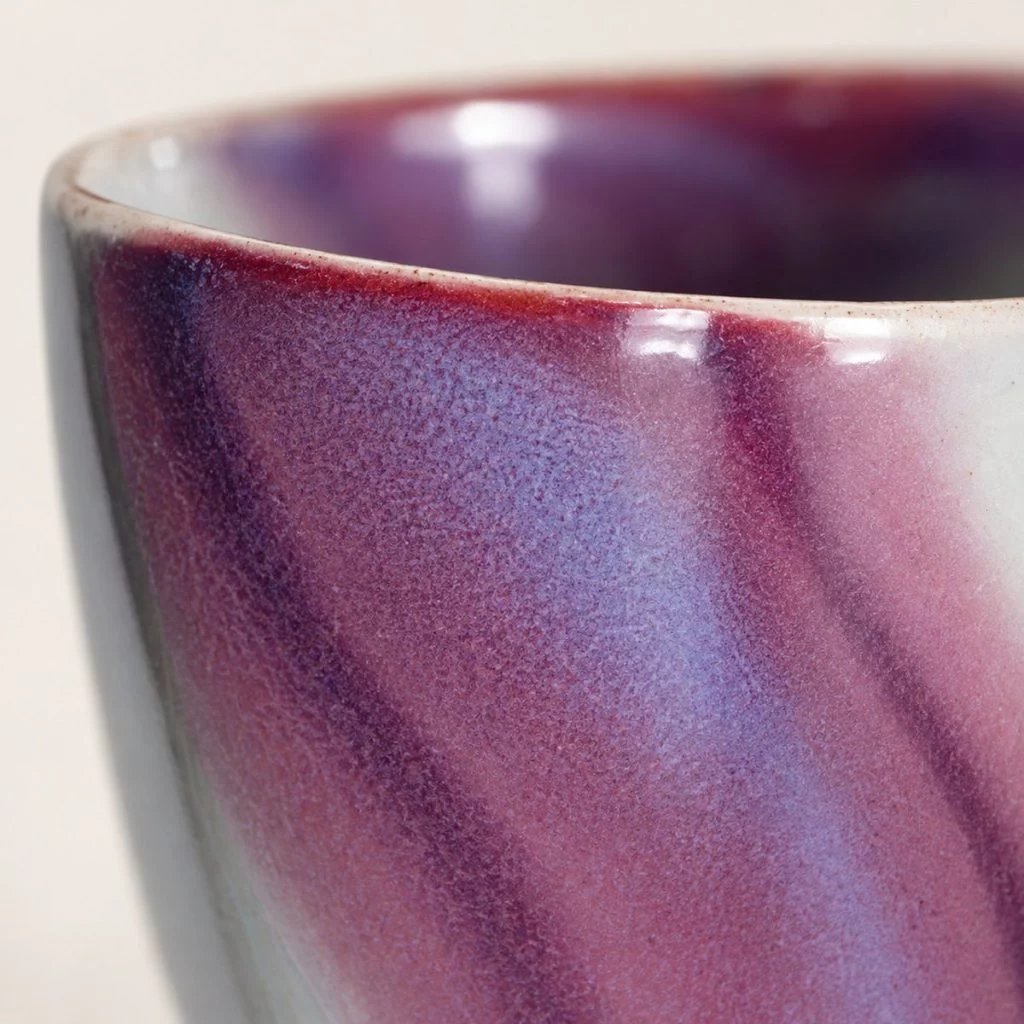
Copper goes onto the raw glaze in diagonal strokes before firing. As the thick Jun glaze melts, the strokes soften and drift downward, so each streak ends in a blurred tail instead of a hard edge. Inside the cup the glaze slides to the bottom and takes copper with it, which is why the well is the most purple part of the piece.
The ground is moon-white, the palest of the Jun colors, with a gray-blue haze wherever the glaze lies thick. Against it the purple reads strongly, even in a dim tea room.
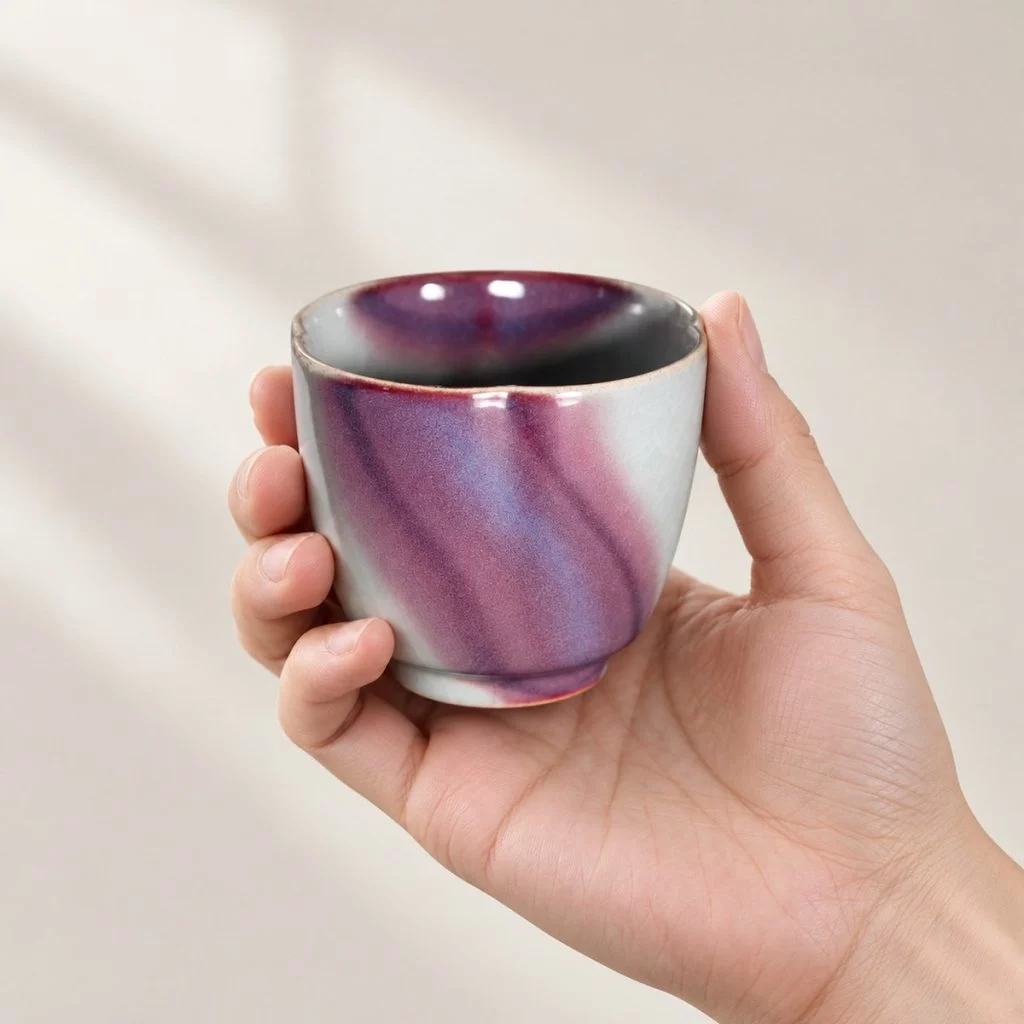
The lobed rim does two jobs. It breaks the lip into a row of shallow arcs, so the brown line where Jun runs thin shows as a scalloped edge, and it gives the cup a petal shape that sits easily against the mouth.
No two cups come out the same. Our own kilns in Jingdezhen fire each batch in reduction, and the fired cups are sorted against the approved sample before packing. Order twenty and you get twenty cups that clearly belong together, with the streaks falling differently on each.
Why no two Jun cups match, and how buyers approve a glaze range, is explained in our guide to Chinese porcelain glazes.