Resources
Buyer guides from Jingdezhen
Ten guide collections on sourcing, craft and selling Chinese porcelain, written by our export team.
Browse all guides ↗ Resources
Buyer guides from Jingdezhen
Ten guide collections on sourcing, craft and selling Chinese porcelain, written by our export team.
Browse all guides ↗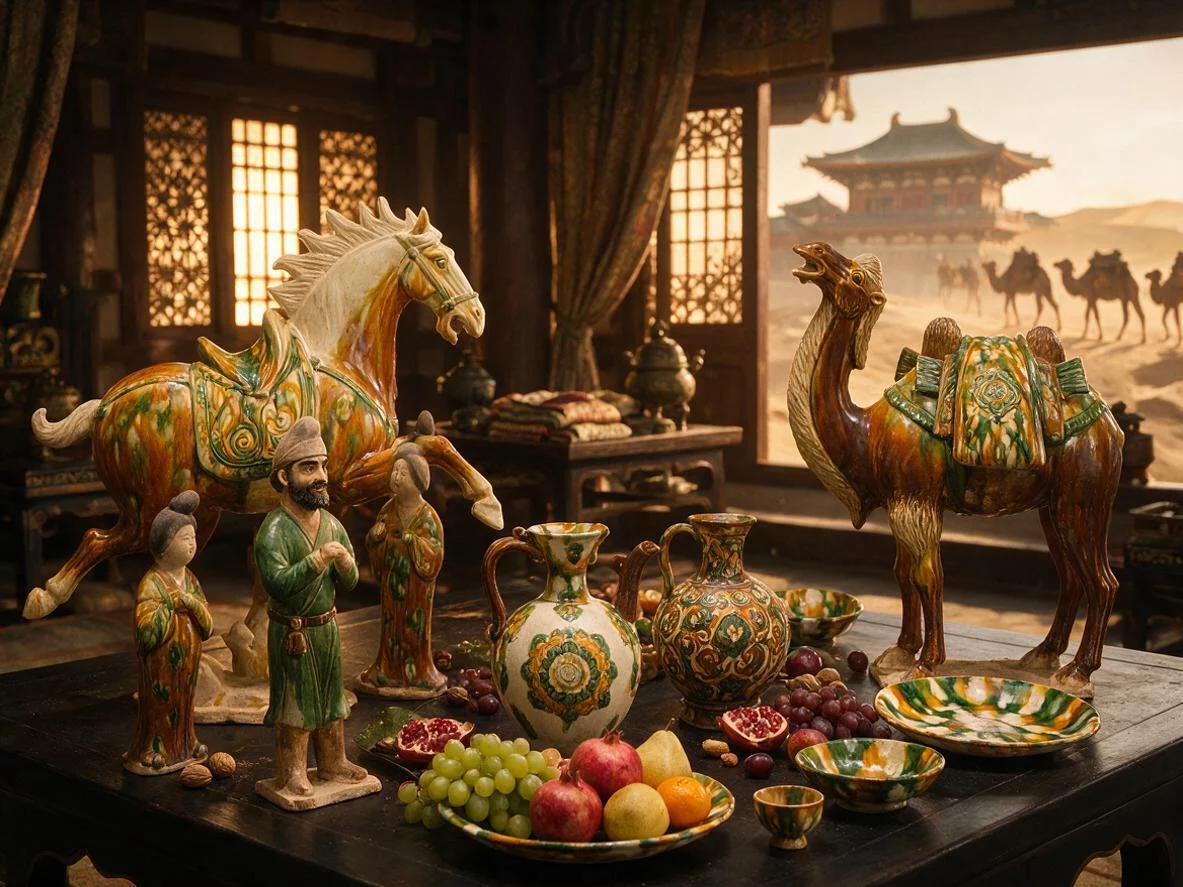
Silk Road color
In three centuries of open trade, Tang potters glazed tomb horses in amber and green, perfected white porcelain in the north and jade-green celadon in the south, and shipped painted bowls across the Indian Ocean. KKCN, a Jingdezhen ceramic factory, still supplies Sancai horses in those Tang forms.
618 to 907
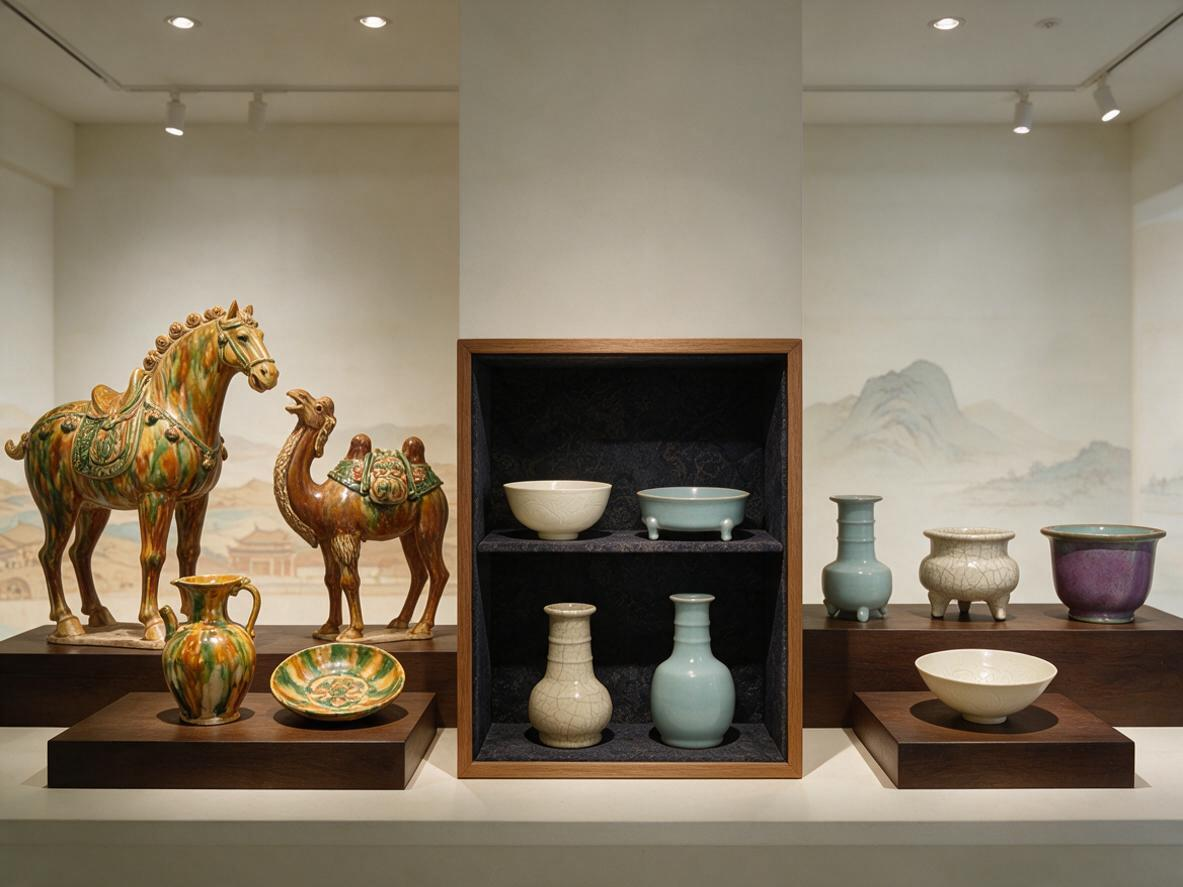
Tang China’s capital, Chang’an, drew merchants, envoys and musicians from Central Asia, Persia and beyond, and its potters recorded them. For the tombs of officials and aristocrats, kilns such as Gongxian in Henan made Sancai: earthenware horses, Bactrian camels, grooms and guardian figures covered in low-fired lead glazes of amber, green and cream, sometimes with a costly imported cobalt blue. Away from the tombs, two high-fired traditions matured. Xing kilns in Hebei made a white porcelain that the tea writer Lu Yu compared to silver and snow; Yue kilns in Zhejiang made a celadon he likened to jade and ice. In Hunan, the Changsha kilns brushed birds, flowers and short poems onto their bowls and sent them to markets as far away as the Persian Gulf.
Dates · 618–907 | Centers · Gongxian in Henan, Xing in Hebei, Yue in Zhejiang, Changsha in Hunan | Signature · Sancai, white porcelain, Yue celadon, painted Changsha bowls
What Tang potters added
01
Tomb horses and camels were molded in sections, joined, then glazed and fired at a low heat. The largest stand well over half a meter tall, with saddles, tassels and harness picked out in color.
02
Xing potters refined a body and clear glaze white enough to rival silver tableware. Northern white porcelain led directly to the Ding wares of the Song and proved that white could be the whole design.
03
Yue kilns thinned and refined their green glaze for tea bowls, and Lu Yu ranked them first in The Classic of Tea. The finest, known as secret-color ware, were reserved for the court.
04
Changsha painters brushed iron and copper pigments onto the body, in browns and greens, often with a line of verse. It is among the earliest large-scale painting under the glaze in China, the order of work cobalt later followed.
Look closely
Look at the rider, saddlebags and stretched neck, each molded separately and joined, and at the amber and green glazes running down the flanks. Camels like this record the caravans that reached Chang’an.
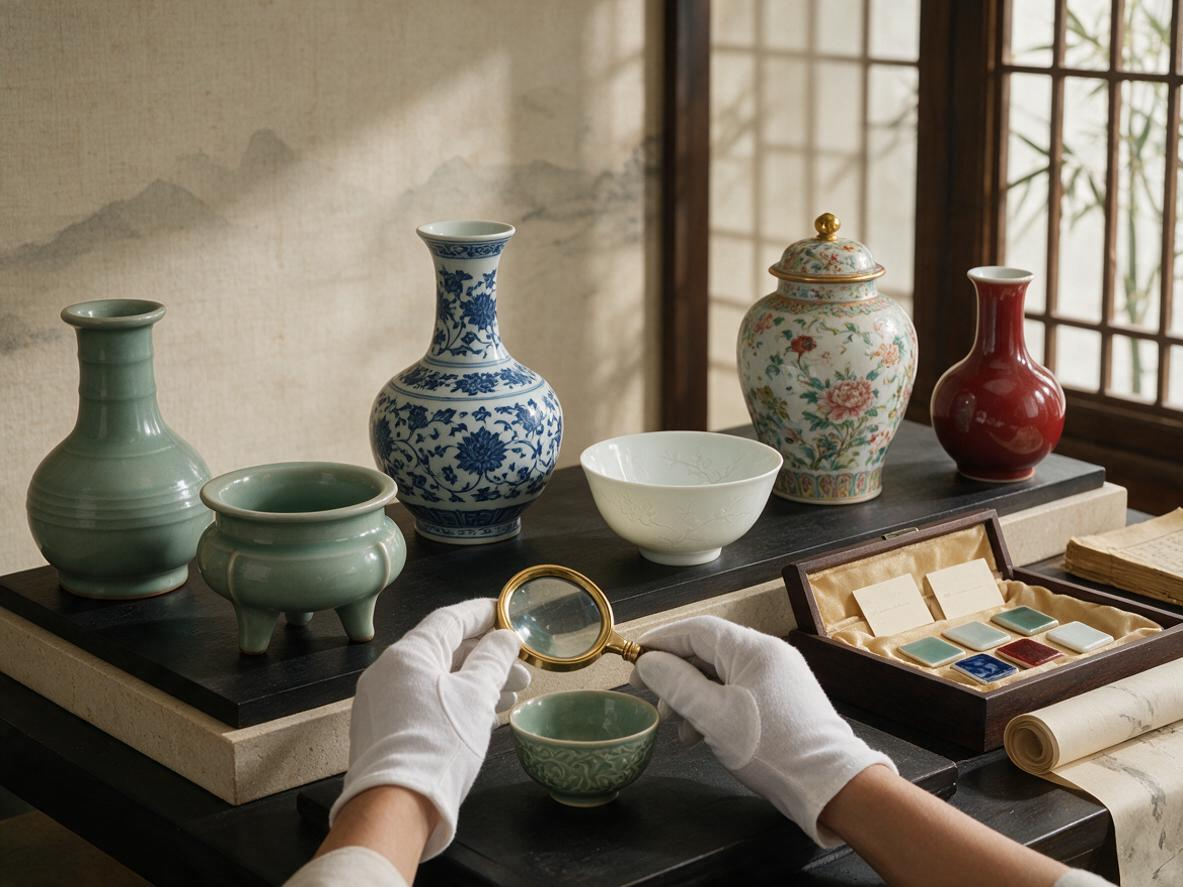
Look at the rolled rim and the even white glaze ending in a neat line above the foot. The bowl is plain on purpose: the whiteness of body and glaze does all the work.
Look at the quick brown and green strokes of the bird and the short spout. Wares like this filled the Belitung shipwreck, lost in the ninth century with about 57,500 Changsha bowls aboard.
Tang potters worked in three very different traditions at once: colorful lead glazes for tombs, white ware in the north and green ware in the south. These are the features to look for.
| Feature | What to look for |
|---|---|
| Sancai glaze | Amber, green and cream lead glazes, sometimes cobalt blue, left to run and stopping short of the base |
| Sancai body | Buff or pinkish earthenware, low-fired, with the lower part left bare |
| Forms | Horses, camels, grooms, guardians and court ladies, plus jars and dishes |
| White in the north | Xing ware, a fine white porcelain from Hebei |
| Green in the south | Yue ware, a gray-green celadon from Zhejiang |
| Painted under the glaze | Changsha ware from Hunan, painted in brown and green under the glaze and widely exported |
Carried forward
Each Tang tradition has a counterpart in what we make today. We make Sancai-glazed horses, jars and display dishes in our own workshops, alongside Tang-form earthenware horses in custom finishes, and every piece is inspected in Jingdezhen. The Xing ideal of plain white lives on in our undecorated white porcelain, thrown and trimmed by hand in the Doufunong workshops. And the Changsha painter’s habit of brushing color onto the body before the glaze goes on is still how our cobalt and copper decoration is applied.
Glazing and painting in our Doufunong workshop.
01
The Silk Road horse in cream, amber and cobalt glazes, and the Chang’an horse, a Tang form with a custom crackle finish, both made in our workshops.
02
Undecorated white porcelain tea sets and tableware, thrown and trimmed by hand in Jingdezhen and ready to order plain or carrying your mark on the base.
03
Cobalt and copper are still brushed onto the raw body before glazing, the order of work Changsha painters used, then sealed under clear glaze in one high firing.
Tang ceramics questions
Before and after Tang
Commission a Tang piece
Send a photo of the Tang piece you admire and say where it will stand or be used. We reply within 1–2 business days with the route that suits it, Sancai glaze, plain white or painted, and a sample plan.