
Resources
Buyer guides from Jingdezhen
Ten guide collections on sourcing, craft and selling Chinese porcelain, written by our export team.
Browse all guides ↗
Request a Quote
Craft & Materials 04
Where the color sits, under the glaze, in it or on top, decides how a piece looks, how long the decoration lasts and how much a painter's time it costs. These guides explain each method in a buyer's terms.
The basics
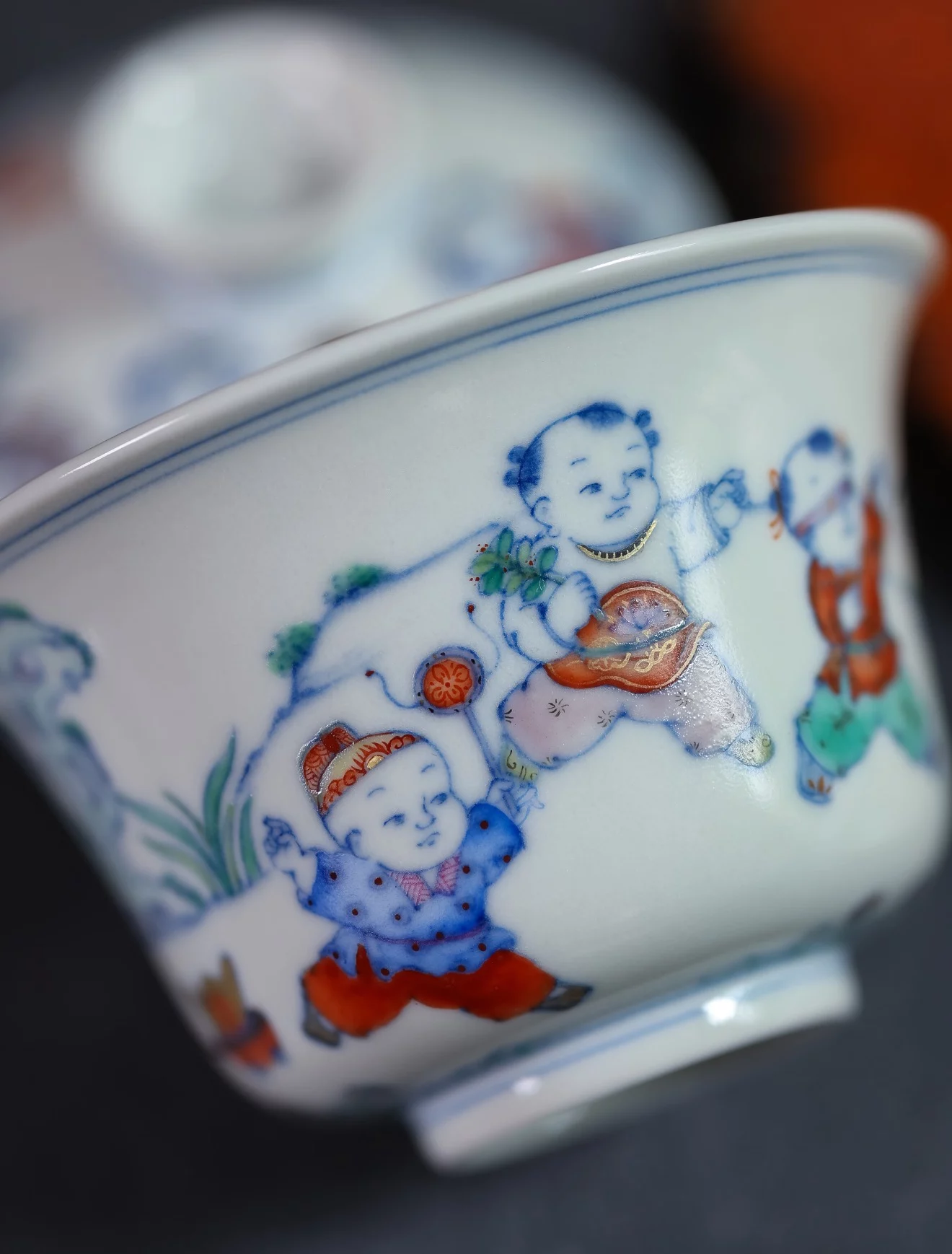
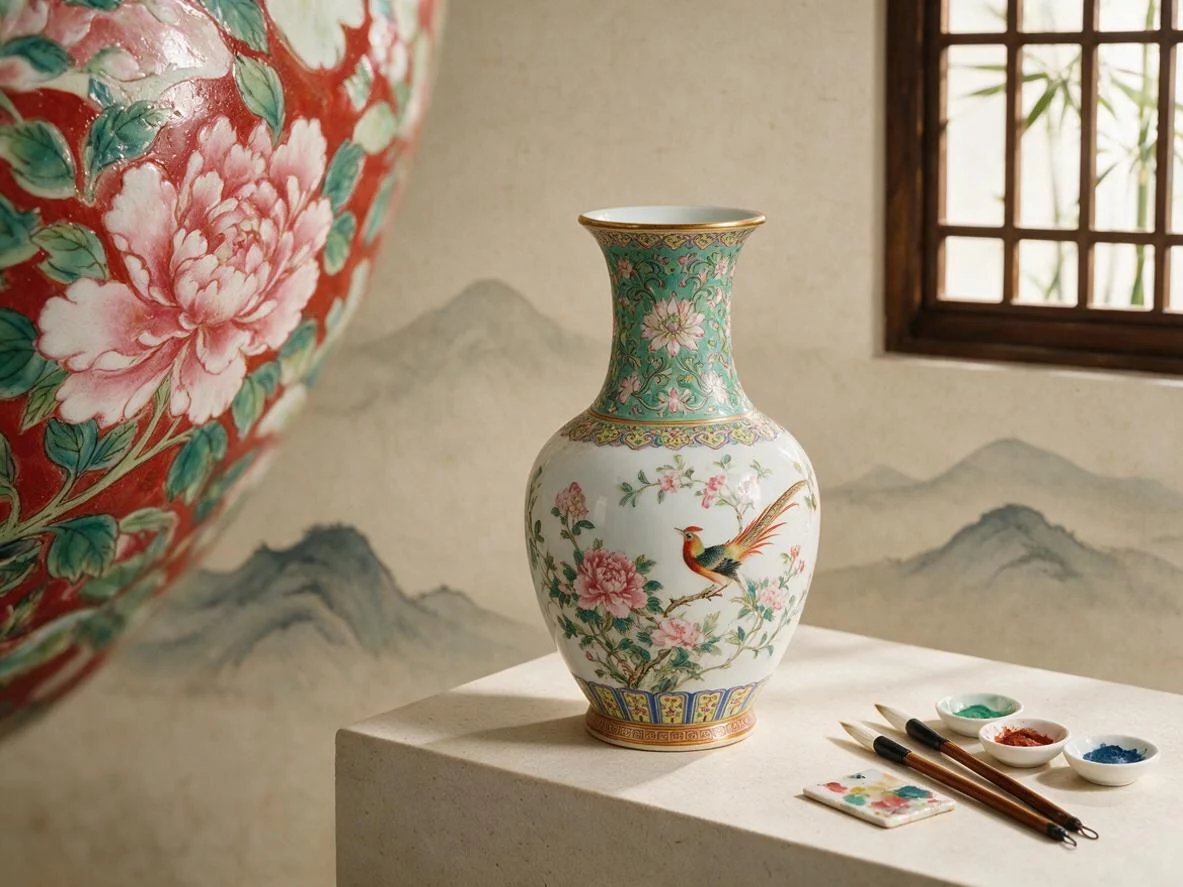
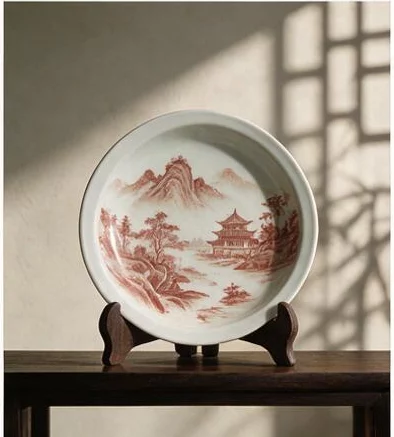
Every decoration on porcelain is defined by where it sits against the glaze. Cobalt blue and copper red are painted on the raw clay and sealed under the glaze in one firing at 1,280–1,330 °C, so they never wear. An in-glaze decal sinks into the glaze at 1,220–1,280 °C. Overglaze enamels, the colors of famille rose, falangcai and wucai, sit on top and are fixed at 780–850 °C.
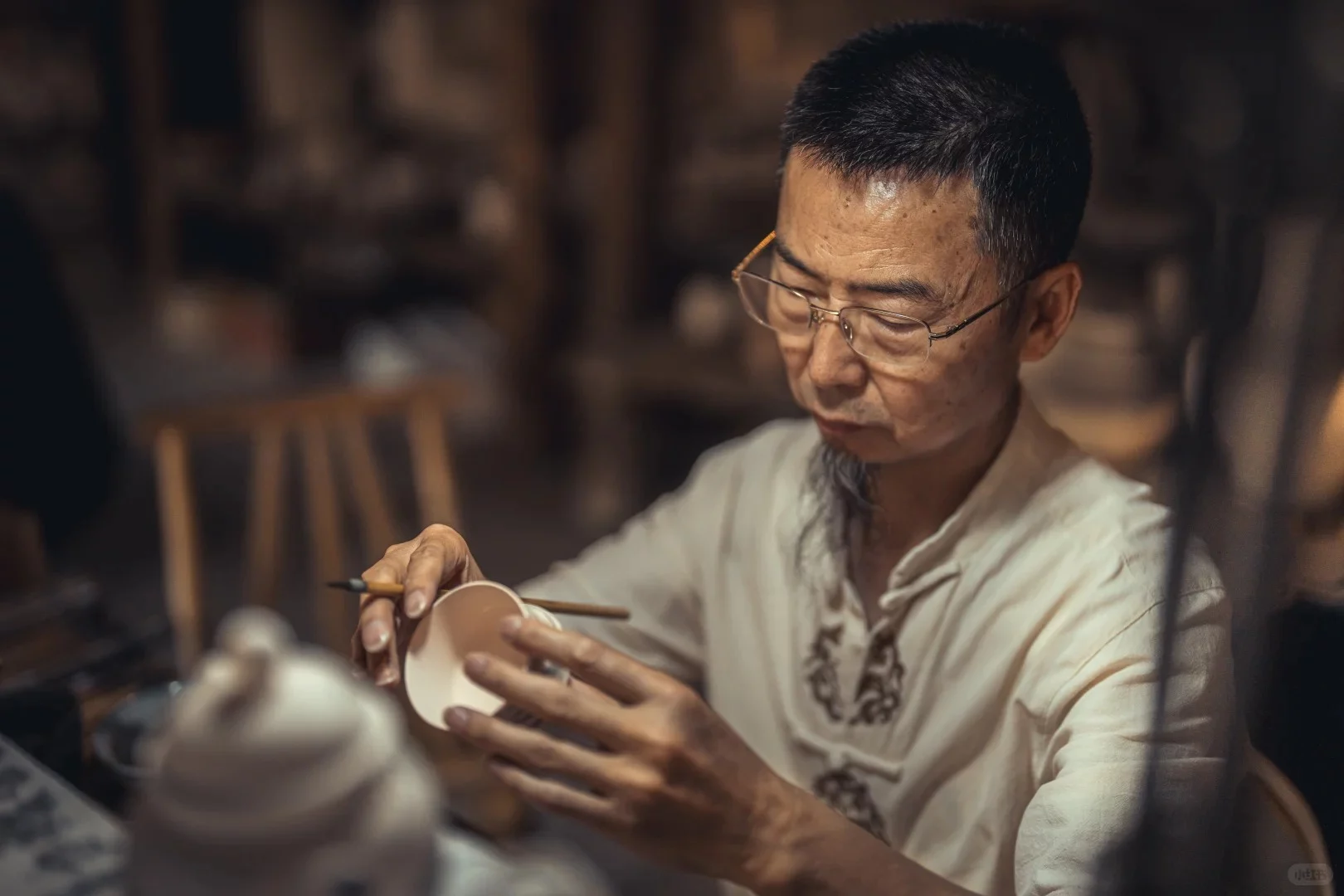
The second choice is hand or print. Hand painting is priced by the hours a design takes, and the fill is where most of them go; each piece varies slightly, and that variation is part of what a buyer pays for. A decal repeats exactly and costs far less: a decal tea cup runs about USD 1.20–2.60 FOB Shanghai at 500 pieces.
Many good products combine the two, a printed border with a painted center, or a decal logo beside a hand-drawn motif. Whatever the mix, painted color is approved on a fired sample on your own form, never on a color chart, because enamels look nothing like their fired color in the pot.
Relative price per piece, and how closely a second batch will match the first.
For a small cup, decal runs about $1.20–2.60 FOB, hand-painted blue and white $3.80–7.50, and hand-painted enamel $7.80–14.00 or more.