Wholesale tea ware from Jingdezhen covers gaiwans, cups, fair cups and full gongfu sets, bought by the piece or by the carton from the town that has made porcelain for more than a thousand years. KKCN sells its tea ware references from 1 piece, mixes them in one order from 10 pieces, and makes your own version from 50 pieces per style.
This guide is for the buyers who order tea ware as a range rather than as a single gift: tea shops, tea rooms, boutique hotels, online sellers and lifestyle stores. It walks through how the way tea is served decides the shape, which glaze suits which tea and which customer, how to place a first order a shop can sell through, and what changes when your name goes under the foot.
Start with how the tea will be served
A tea shop that sells loose leaf to people who brew at home needs different pieces from a tea room that pours for guests all afternoon. The first sells the vessel, so the piece has to look right on a shelf and feel right in the hand of someone who has never used one. The second uses the vessel, so it has to survive a long day of hot water, quick rinsing and stacking on a tray.
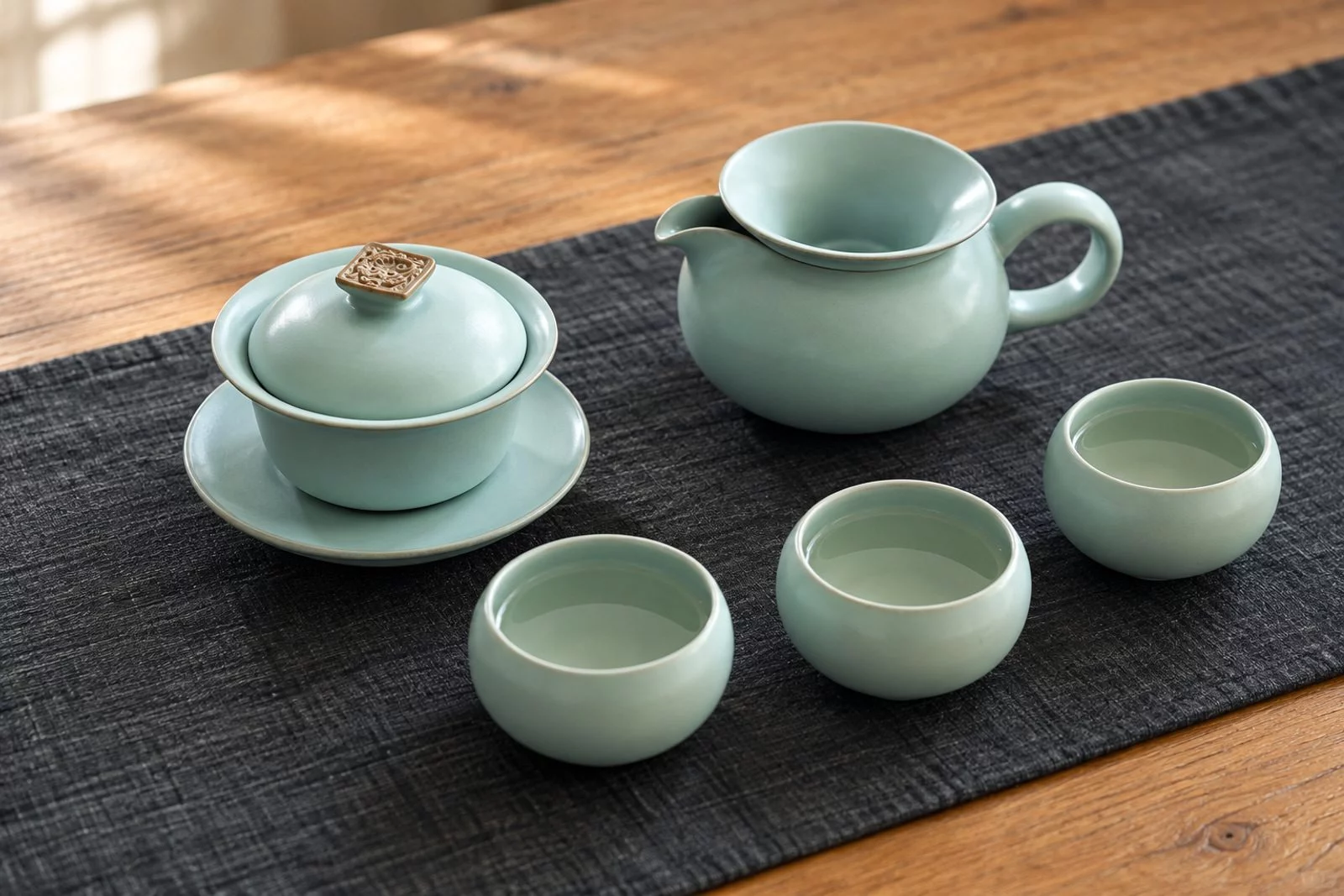
The form follows from there. A gaiwan, the lidded bowl on a saucer, brews and serves in one piece and suits shops that sell oolong, green and white tea to customers who like to watch the leaves. A gongfu set adds a fair cup and a row of small cups, usually well under 100 ml each, for brewing in many short infusions. Larger cups with a foot or a handle suit hotel rooms and Western tea service, where one pour fills one cup. Most first orders mix the three: a gaiwan or two as the anchor, cups in several glazes around it, and one boxed set for gifting.
Match the glaze to the tea and the customer
Glaze changes how a tea looks in the cup. A pale celadon or a plain white interior shows the true color of a green or white tea, which matters to buyers who judge a leaf by its liquor. Crackle glazes such as Ge and Ru take on tea in their lines over months of use, so the cup slowly becomes the owner’s own; some customers want that, and a shop should say so on the shelf card. Painted enamel styles are bought more for the gift than for the tea, and they sell best boxed.
| Line | Shows best | Sells to | A reference to start from |
|---|---|---|---|
| Celadon | green and white teas, daily cups | tea shops, tea rooms | PP-020 Plum Blossom Celadon Tea Cup |
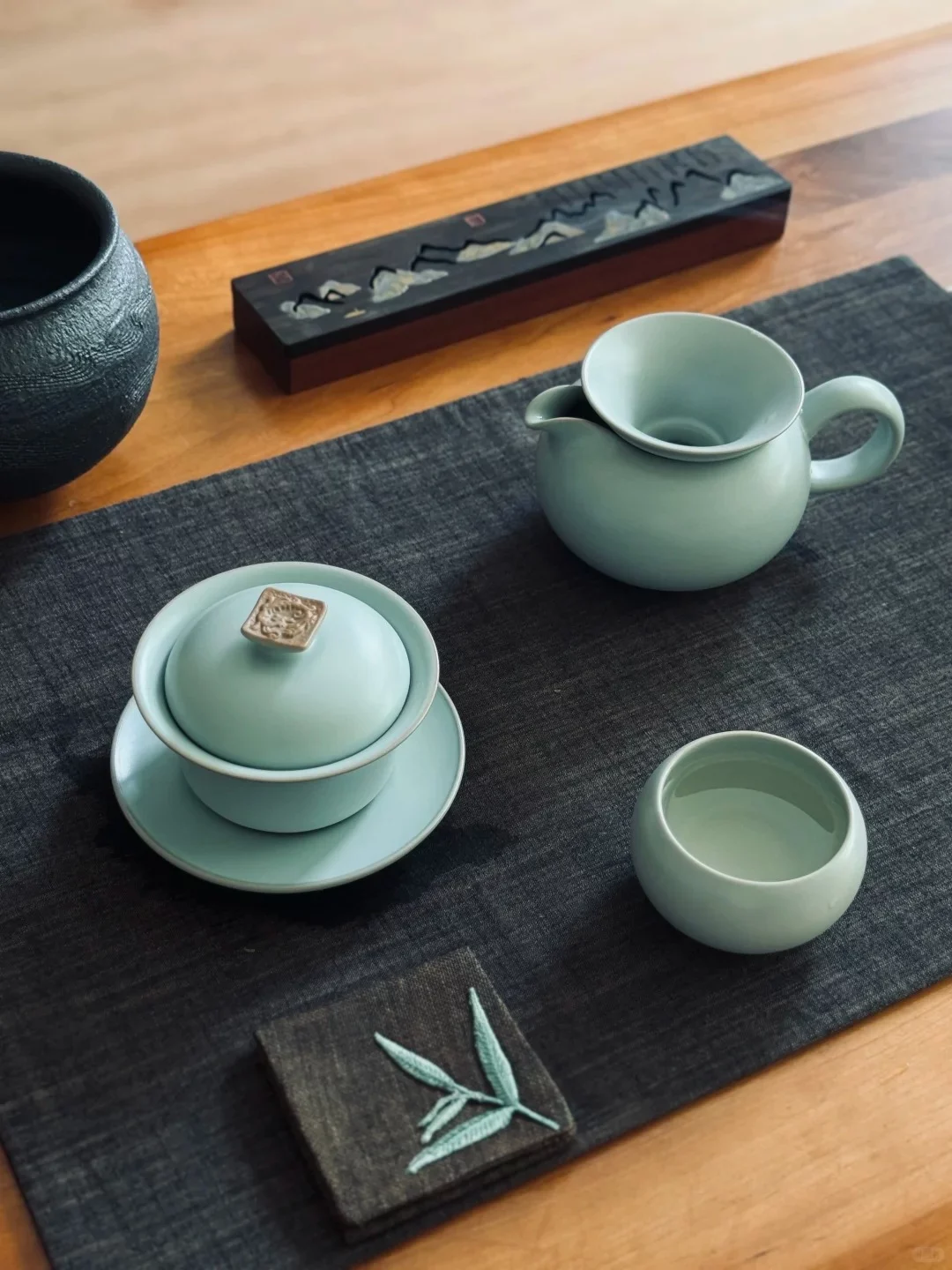
| Ru ware | oolong, a full set on display | specialist tea shops, gift buyers | PP-008 Ru Ware Tea Set |
| Ge ware | dark oolong and pu’er, collectors | specialist tea shops | PP-001 Ge Ware Crackle Tea Cup |
| Jun ware | one statement cup per customer | gift shops, galleries | PP-018 Jun Ware Purple Swirl Cup |
| White porcelain | any tea; carving glows when lit | design stores, hotels | PP-012 Translucent Carved Flower Cup |
| Blue and white, underglaze red | hotel and tea-room service | boutique hotels, tea rooms | PP-017 Blue-and-Red Lotus Scroll Gaiwan |
| Famille rose | boxed gifts | gift programs, lifestyle retail | PP-014 Flying Apsara Tea Set, PP-015 Mottled Pink Gaiwan |
| Doucai | small, finely painted gift sets | collectors, cultural gifts | the two doucai gaiwan sets in the category |
Celadon, white porcelain, blue and white, underglaze red and the enamel styles are made in our own Jingdezhen workshops. Ru, Ge and Jun are fired in our own kilns too, and every piece is inspected and packed with the rest of the order. Who makes each line.
A first order a shop can sell through
The safest first order is small and mixed. Order one of each reference you are considering to see them in hand, then build the opening order from 10 pieces across the lines that worked, in the counts you expect to sell in the first season. Every piece is checked against its reference by Li Qiusheng’s inspection team before it is packed, and gaiwans ship boxed with the lid seated in its own bowl, so the lid a customer lifts in your shop is the one matched to that bowl.
Reorders matter more in tea ware than almost anywhere else, because customers come back to complete a set. Keep the PP number of every piece you stock on your own list. A reorder quoted by PP number is made and checked against the same reference, which is how a cup bought next spring sits beside one bought this year.
When your name goes under the foot
Private label tea ware starts at 50 pieces per style. The usual route is a proven KKCN form with your mark added: a name or logo in cobalt under the glaze on the foot, your own glaze color, or a painted band left open for lettering, as on the PP-004 Private-Label Landscape Tea Cup. A new form or pattern is drawn by our designers and sampled on a fired piece in 15–30 business days before anything is produced. Branded gift boxes are sampled with the piece, so the cup and the box are approved together. Private label and custom pieces.
Testing, timing and the season
Our daily-use glazes are tested for lead and cadmium release; ask which report covers the pieces on your list, and we will name it from those listed on Quality Control. How to read a lead and cadmium report.
Tea ware sells to a calendar. Gift sets peak before Lunar New Year, Mid-Autumn and the year-end holidays, and August to December is also our busiest season in the kilns. In-stock samples take 3–7 business days, express replenishment 3–7 business days by DHL, FedEx or UPS, and sea freight 25–45 days depending on the port. A private-label range for the holidays should have its sample signed before the summer, so production and the sea crossing still leave time on your shelves.
Send the teas you sell and the pieces you want.
A list of references, a photo of your shelf or a description of how you serve is enough. Lin Wan replies within 1–2 business days with a mixed first order and a timeline for your season.