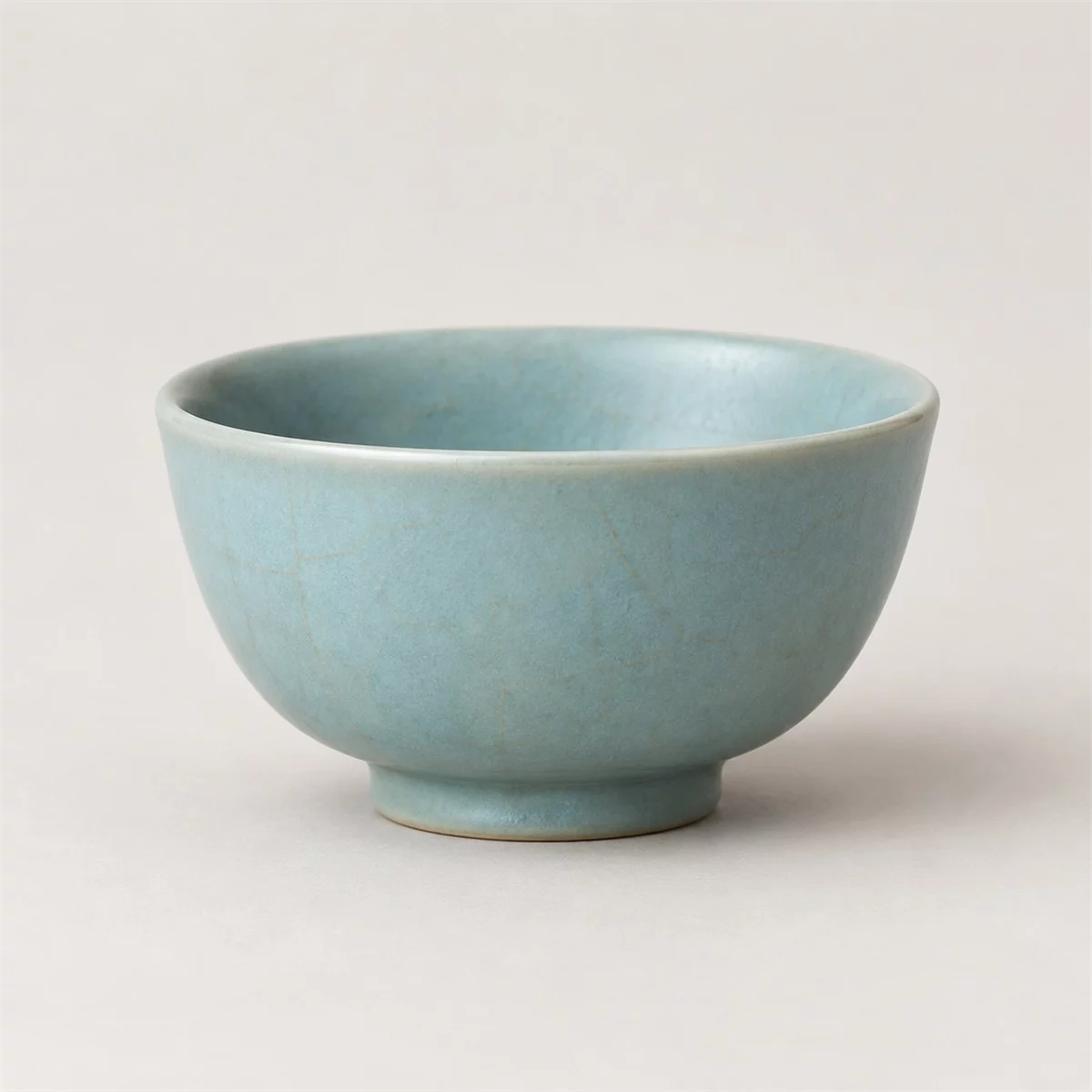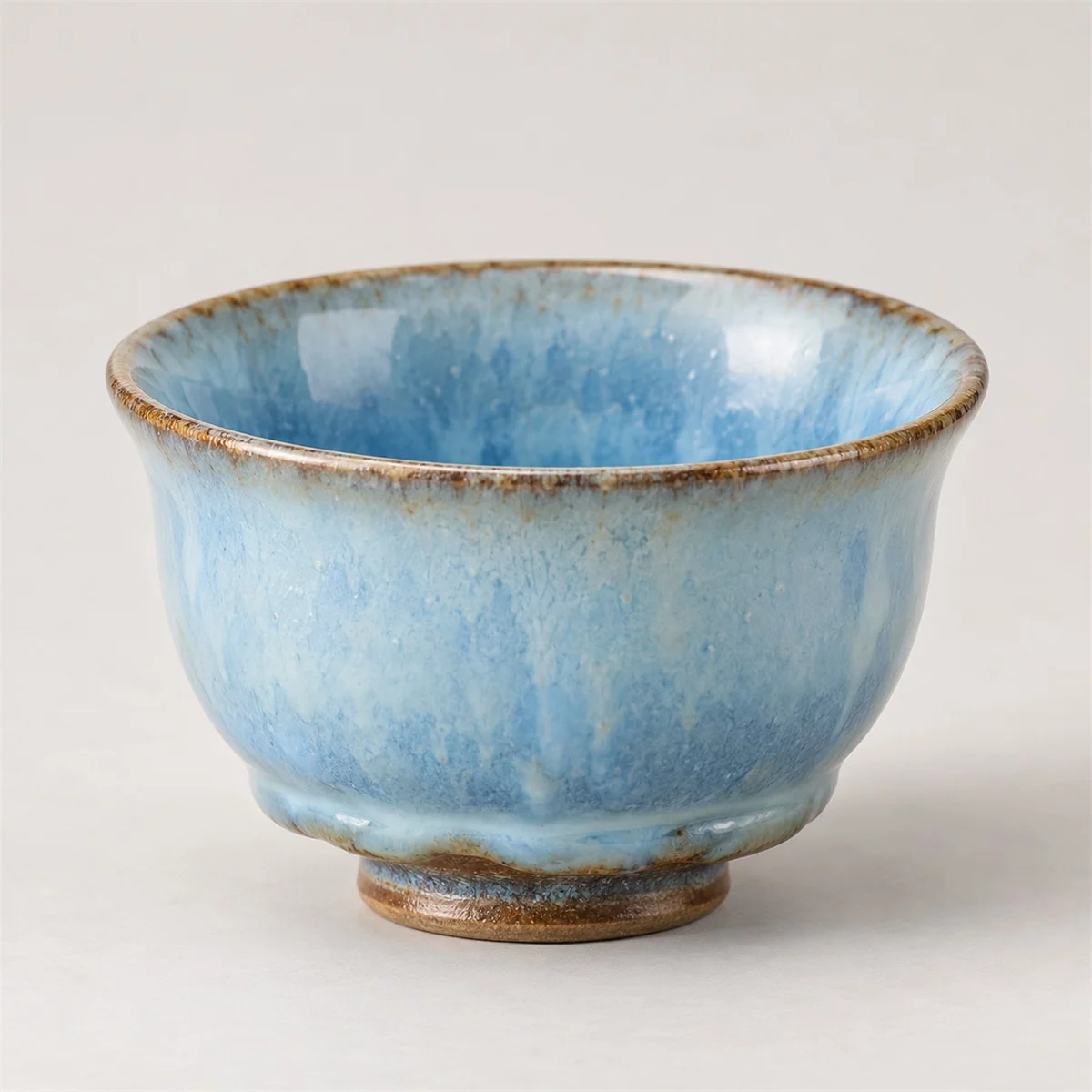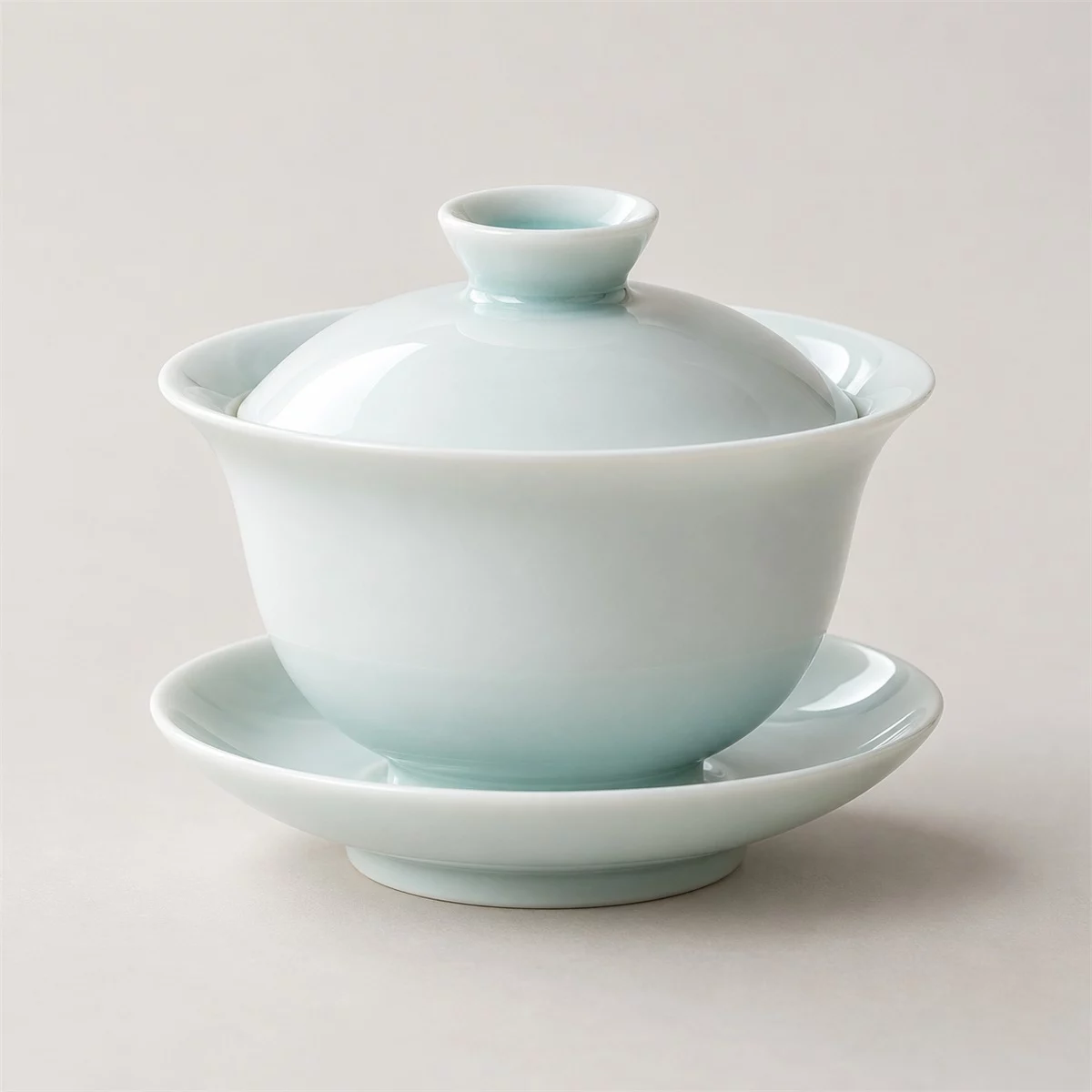
One quiet blue across every piece
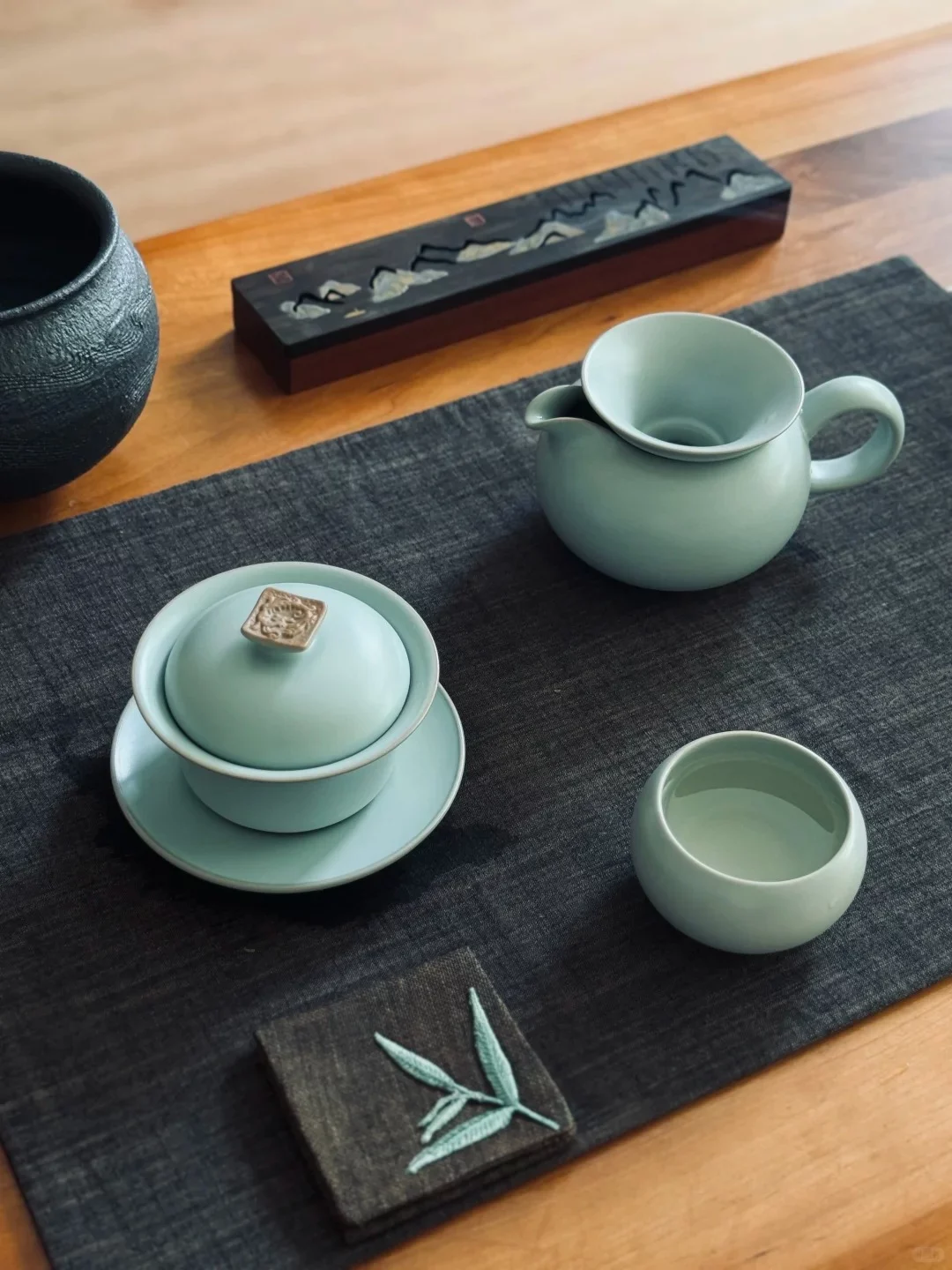
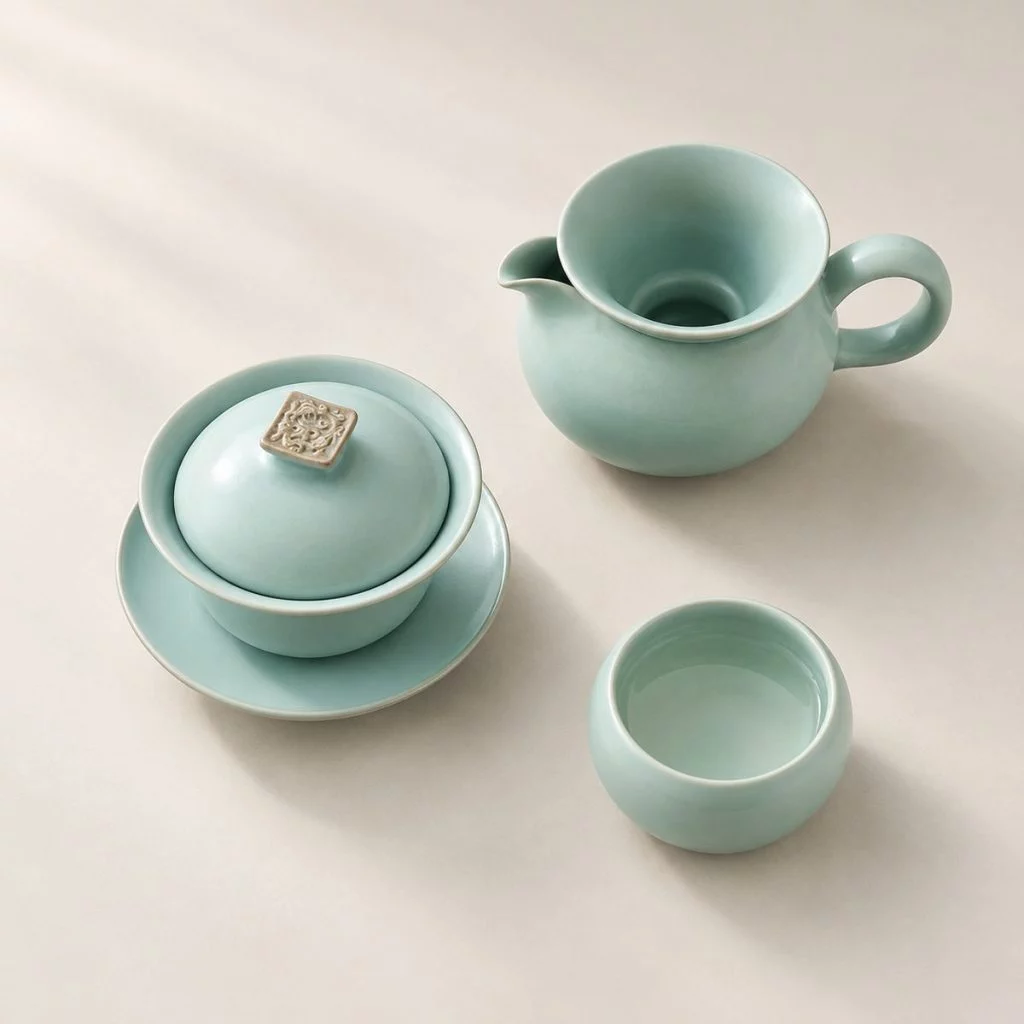
A tea set is a harder test for Ru than a single cup. The gaiwan bowl, its lid, the saucer, the pitcher and the cup are separate pieces, and they all have to come out of the kiln in the same blue, or the table looks pieced together from different orders. The pieces of this set are fired in one batch and matched before they go into the box.
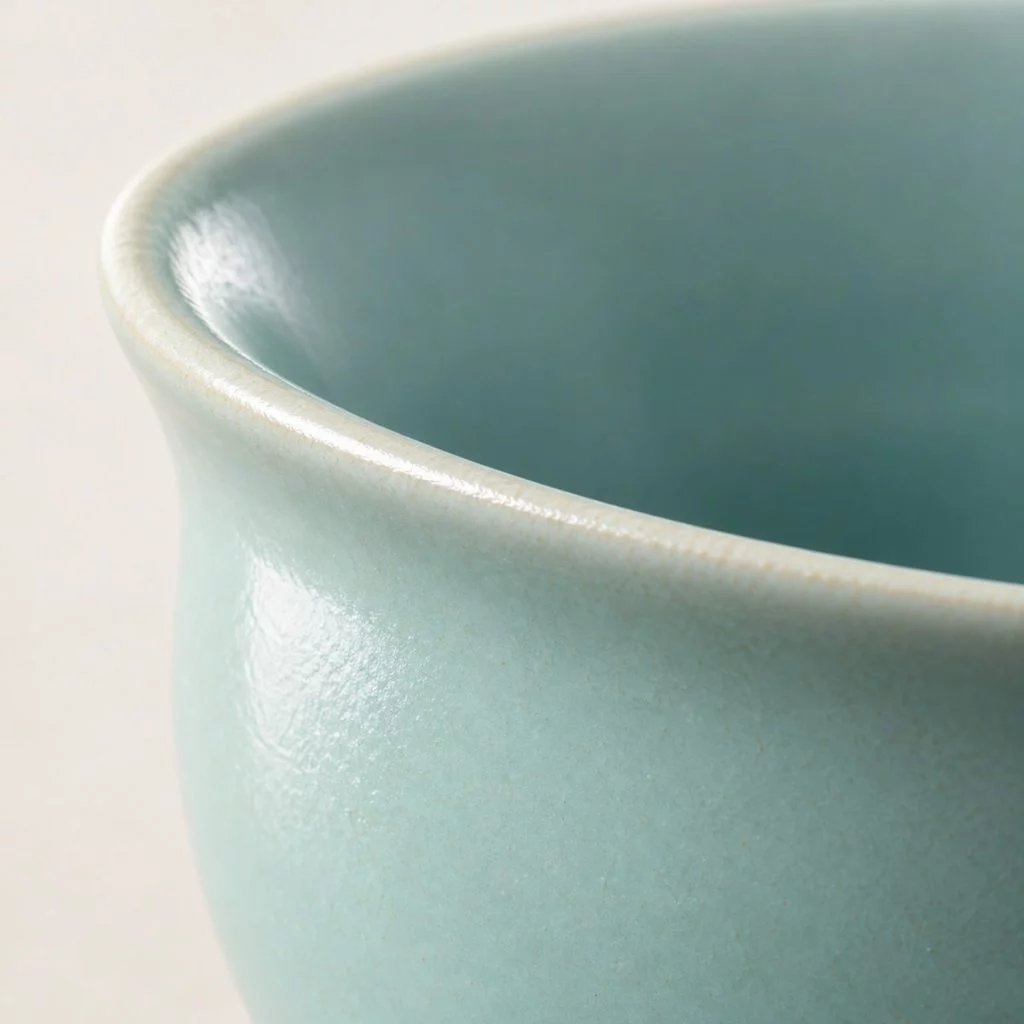
The glaze is opaque and satin-smooth, closer to polished stone than to glass, and it softens every edge it covers. That matters on a gaiwan, which is handled more than anything else on a tea table: lifted, tilted, its lid nudged forward to hold back the leaves while the tea pours.
The lid carries the one detail the rest of the set does not, a small square knob in relief, crisp under the glaze. It gives your fingers something to hold when the lid is hot, and it breaks up the round shapes around it.
The pitcher is the fairness cup. Tea goes from the gaiwan into the pitcher first, so every guest is poured the same strength. Add as many cups as your tables need, and each is glazed to the same tone.
Ru’s soft sky-blue glaze and its fine crackle are explained in our guide to Chinese porcelain glazes.