KKCN ceramic logo
Request a Quote

Quality Control · Jingdezhen

Three levels of inspection.
Every finished piece checked.

Ceramic quality control at KKCN is led by Li Qiusheng, a firing master with 28 years in porcelain. Your approved sample becomes the written standard, the first finished piece is checked against it, and every finished piece is inspected at our Jingdezhen headquarters before it is packed and released.

One confirmed standard across every order

Eighteen years at the kiln,
ten leading inspection.

Anyone who has sourced ceramics from overseas knows the moment. The sample was beautiful, and the bulk order that arrives three months later is not quite the same piece. The glaze sits a shade darker, rims wander a few millimeters, a carton of cups rattles when you lift it. Nothing about handmade porcelain makes that gap inevitable. It happens when nobody owns the standard between the sample table and the shipping container.

At KKCN, we own it. Our roots go back to a family workshop on the old street of Doufunong in 1996, and the habit that workshop taught us still runs the business: decide what "right" looks like before the clay is prepared, then check every stage against it. Today that discipline is led by Li Qiusheng, our quality manager. He spent about eighteen years on the firing floor before ten years leading inspection, and he is a municipal-level intangible-heritage inheritor of traditional firing techniques. He and his team review your sample, sign off the first finished piece and inspect the bulk order before it leaves our hands. That is the practical difference when the maker runs its own inspection. Core forming, hand painting, glazing, high-temperature firing and final quality control all happen in our Jingdezhen workshops. When an order calls for a specialist partner: a complex mold from Dehua, decals or gift packaging from Chaozhou. Those pieces travel back to Jingdezhen for the same final inspection and full-carton packing as everything we make ourselves. One inspection floor, one standard, one team answerable to you.

Our quality lead's hands-on experience with glaze, body and firing
28 years
Of inspection: before, during and after production
3 levels
Of finished pieces checked for cracks, warping and glaze defects
100 %
To report a quality defect after receipt
30 days

Quality begins before production

Confirm the reference.
Then protect it.

Most quality problems are decided long before a kiln is lit. They start with an assumption nobody wrote down: how far a celadon is allowed to shift in tone, whether "10 cm" means the outside diameter or the inside, which side of the mug the logo should face. So before we schedule a single piece, we put those details into written production specifications that you, our artisans and our inspectors all work from.

Product discussion

Clarify the object.

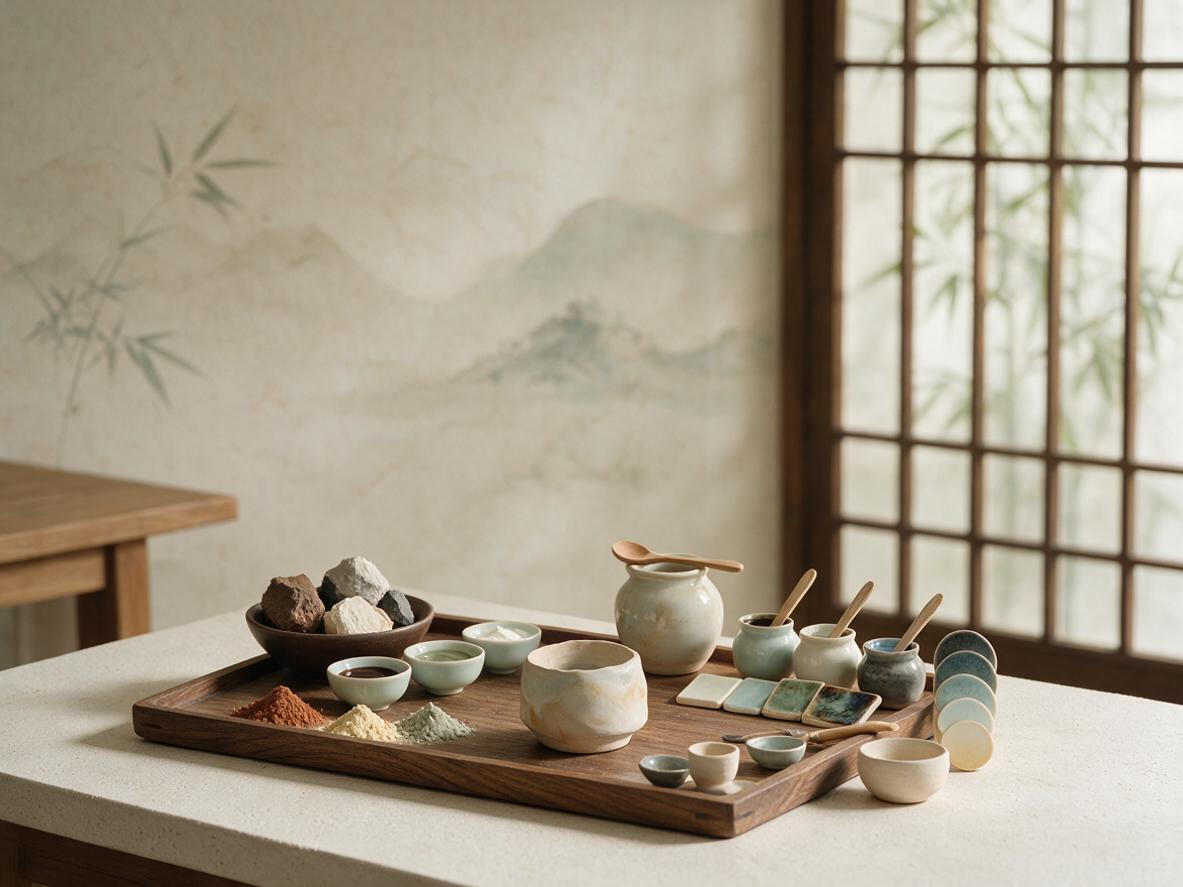
We start with how the piece will be used and sold: material direction, dimensions and capacity, decoration, quantity, target market and the date you need it on your shelf. Tableware for a restaurant group and a vase for a boutique window are inspected very differently, so we ask early.
Sample development

Build the reference.

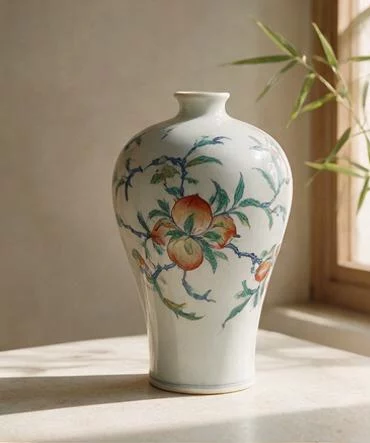
Choose an in-stock sample, adapt an existing form, or develop a new one. In-stock samples ship within 3–7 business days; new molds and original patterns take 15–30. The approved piece becomes the physical reference for your order, and we keep a matching one on file here.

Production follow-up

Protect the standard.

Your specifications travel with the order. We review the first finished piece against your sample before the run continues, compare each process stage to the spec, and pull non-conforming pieces at the semi-finished stage, while fixing a problem is still quick and inexpensive.

Export preparation

Prepare the release.

Final inspection, protective packing, counts, labels, shipping marks and export documents are checked together, so what passes inspection is exactly what gets packed, declared and shipped.

What we inspect

A Ge crackle passes.The same line on a plate fails.

Underglaze red can drift from cherry to brick in a single firing, while a matte monochrome bowl lives or dies by an even surface. A generic checklist misses all of that. Our inspectors build each order's checkpoints from the product family, the finish and the way the piece will be used, then work through four areas on every item.

Close inspection of glaze color, surface texture and hand-painted detail
03 / 04Glaze and decoration
01Body and materialsClay body, glaze and decoration materials are checked before production starts. Our kaolin and porcelain stone come from long-term sources in Yaoli and Gaoling Village, and the glazes on our daily-use lines are tested for lead and cadmium release, with the reports listed below.
02Dimensions and fitDimensions, capacity, proportion, weight, wall thickness, rim and foot are measured against the approved sample, along with how lids, nesting pieces and sets fit together.
03Glaze and decorationColor is compared with the approved reference under consistent light, then texture, pinholes, crawling, bubbles and cracks are checked. Hand-painted pieces are reviewed for line quality, motif placement and color depth.
04Use and stabilityPieces must sit flat, pour cleanly and stack without rocking. Sample pieces from daily-use batches are tested for heat resistance and physical stability, and food-contact lines are matched to their third-party test report.
Our three-level inspection system

Three levels, then a packing check.

We built our inspection system around a simple idea: catch problems where they cost the least to fix. A wrong clay body caught before forming costs an afternoon. Caught after glazing, it costs a firing. Caught on your loading dock, it costs a season. Every order passes three inspection levels led by Li Qiusheng, a municipal-level intangible-heritage inheritor of traditional firing techniques. The cartons get one more check before they close.

Level 1

The standard, in writing.

Your approved sample, dimensions, materials, decoration, quantity, packing plan and acceptable range of handmade variation are written into the mass-production specification. Raw materials are checked against it before any work begins.

Level 2

The first piece, then every stage.

Production is tracked in real time. The first finished piece is reviewed against your sample, each process is compared with the specification, and non-conforming semi-finished pieces are removed before they reach the kiln or the decorating table.

Level 3

Every piece, one by one.

Every finished piece is checked for appearance defects, cracks, deformation and glaze faults. Dimensions, counts, pattern and color consistency are verified, and sampled pieces are tested for heat resistance, lead and cadmium release and stability.

Release

Cartons checked before they close.

Packing is accepted only when inner protection, carton strength, labels and shipping marks all pass. Nothing is released to ship until it does.

Want to see it for yourself? Ask for production photos, real-time workshop video or inspection records at any stage of your order.

In numbers

Our ceramic quality standards, written into the contract.

The handmade range we accept and the sampling plan an inspector uses are both fixed before production and written into your contract. These are our defaults; hotel and custom gift lines carry a tighter plan.

How the AQL figures work in practice, with a worked example for a lot of 4,000 cups, is in our ceramic tableware compliance guide.

Ceramic quality tolerances and sampling plans
Size±3% within a style
Weight±8% within a style
ColorΔE00 ≤ 2.5 within a batch
Iron specks, food faceUp to 1.0 mm, no more than 2 per piece
Iron specks, rimUp to 1.5 mm
Foot bearing surfaceNo iron specks
Sampling plan, standard tablewareISO 2859-1, General Inspection Level II: critical 0, major AQL 2.5, minor AQL 4.0
Sampling plan, hotel and custom gift linesCritical 0, major AQL 0.65, minor AQL 2.5
Finished pieces100% inspected by Li Qiusheng's team before packing
Hotel line durabilityTested to BS 8654 and EN 12875-5 by an independent accredited lab
Handmade variation, defined in advance

Handmade character is not a defect. A crack is.

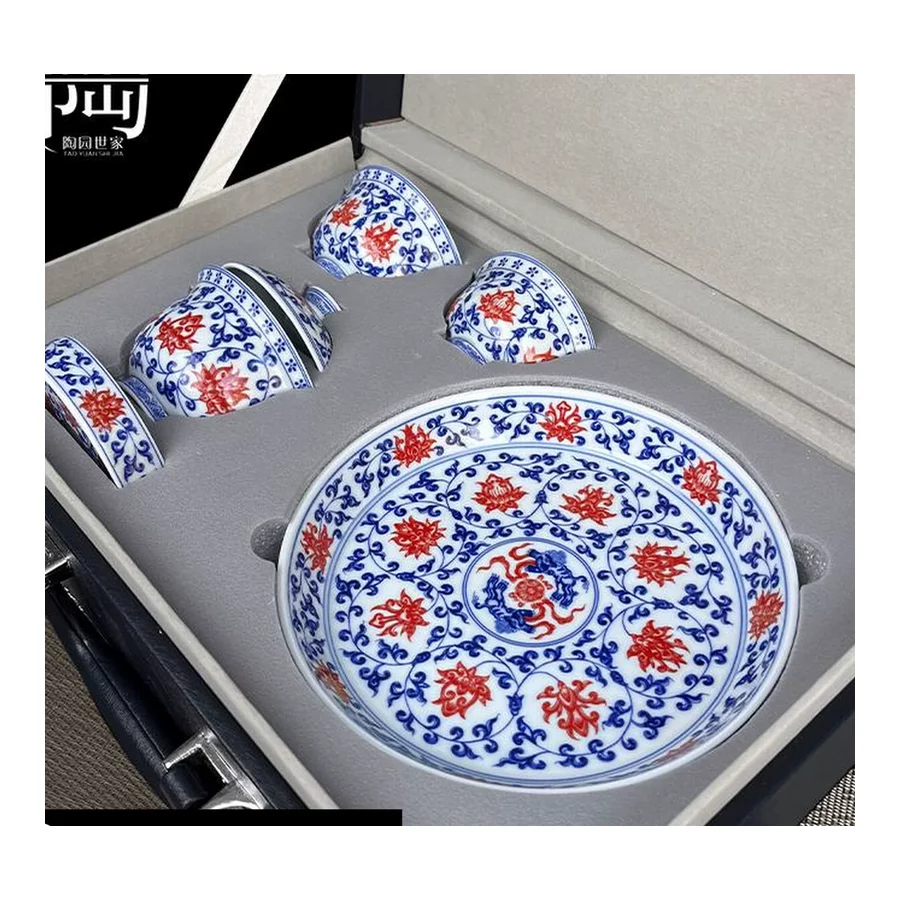
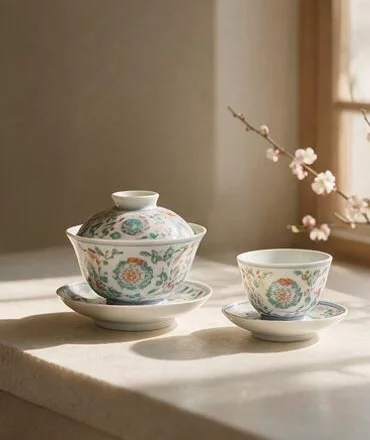
Doucai porcelain gaiwan tea set

Every buyer of handmade ceramics eventually asks the same question: how will I know whether a difference is character or a mistake? We would much rather answer it before production than after delivery.

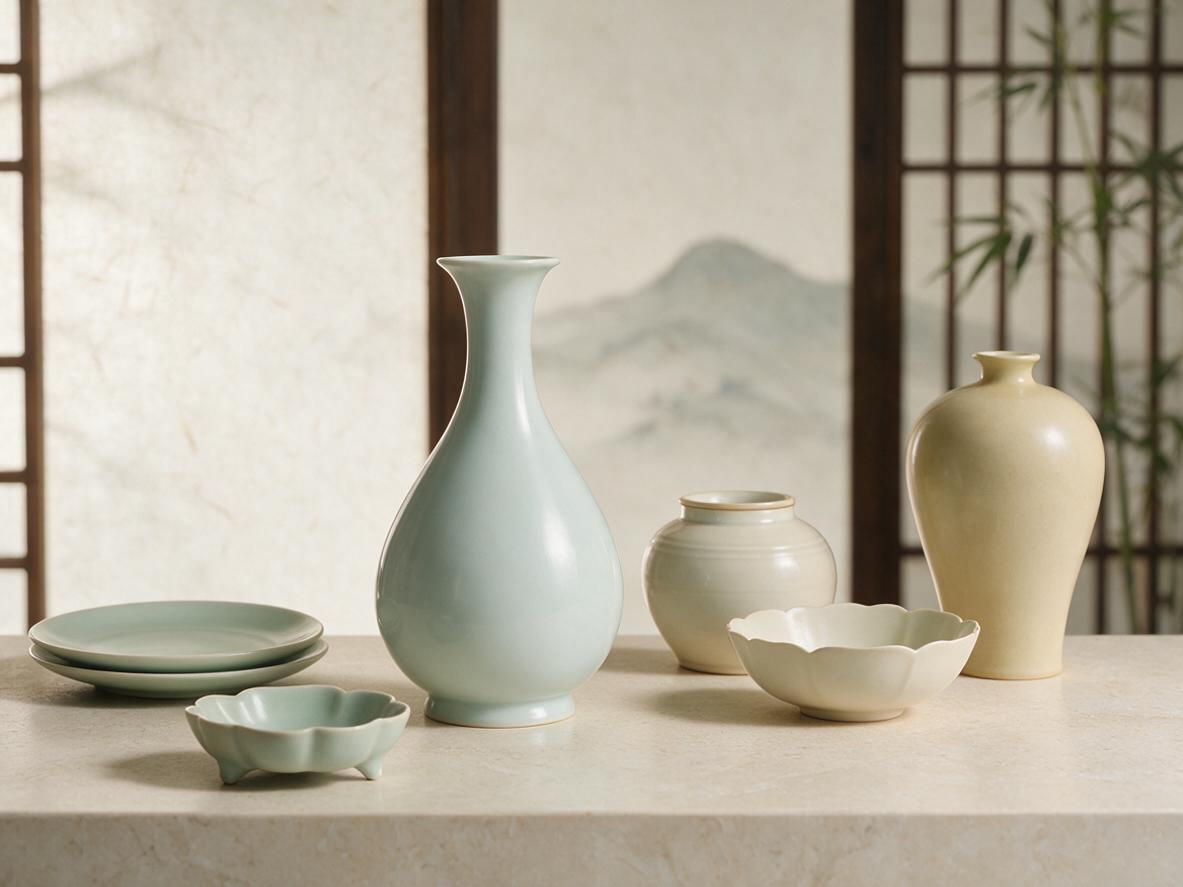
Natural variation lives in the things that make handmade porcelain worth buying: the soft tonal movement in a celadon, glaze pooling gently at a foot ring, the painter’s hand in a cobalt line, a Jun glaze that opens a little differently in every firing. We photograph that range on your approved sample and write the tolerances down: how far the color may move, how many millimeters a rim may vary, which marks are part of the process.

Defects are a separate list, and it is not up for negotiation: cracks, chips, warping beyond tolerance, pinholes or crawling outside the agreed range, wrong colors, wrong dimensions, smudged or misplaced decoration. Those pieces are never packed. It is the same respect for craft that has guided our family workshop for three decades. We won’t sand away what makes a piece handmade, and we won’t hide behind the word “handmade” when something is simply wrong.

Testing & documentation

Six food-contact documents, cited by number.

For tableware, quality includes what the glaze does around food. Daily-use glazes are tested for lead and cadmium release to LFGB and ASTM C738 limits (SGS reports SGS-CER-2026-0418-14567 and LFGB-20260318-036). Each report covers named product lines and batches, so the one you receive traces to the pieces in your carton.

KKCN‘s Jingdezhen headquarters is certified to ISO 9001:2015 (ISO-CER-20260218-044). The site also holds an amfori BSCI audit, Grade B (Mar 10, 2026), and a Sedex SMETA 4-Pillar audit (Apr 8, 2026).

Each export order can be matched to its own report, one file per order and batch, and we supply commercial invoices, packing lists, certificates of origin and full inspection reports for import clearance. Our decorative, sculptural and collectible art porcelain is made and inspected for display, and we'll always tell you plainly which pieces belong on the table and which belong on the shelf.

Who decides

Four quality calls Li Qiusheng signs.

One person’s judgment runs from your sample to any claim after delivery, so the standard that approved your order is the standard that reviews it.

FAQ

What buyers ask before trusting our inspection.

Both, depending on the check. Every finished piece is inspected for appearance defects, cracks, deformation and glaze flaws, and dimensions, quantities, pattern and color are verified across the whole order. Performance checks, meaning high-temperature, food-contact and physical-stability tests, are run on sampled pieces drawn from the order.

Every claim names its report. Our glazes are tested for lead and cadmium release to LFGB and ASTM C738 limits, and report SGS-CER-2026-0112 can be verified on the SGS China portal. Tell us your market and we match the document: LFGB for the EU, ASTM C738 and C927 for the US, and the Prop 65 and Canada report for California and Canada.

We are. Anything made by our partners in Dehua or Chaozhou, or by our heritage kilns, comes back to our Jingdezhen headquarters for final inspection and packing by Li Qiusheng’s team. You deal with one supplier and one quality standard, whoever formed the piece.

Yes. We send production photos and video and inspection records at any stage, and you can visit our workshops and showroom in Jingdezhen by appointment. For hotel and engineering projects, an on-site Intertek inspection can be added before shipment, as on our Dubai hotel project.

We agree it before production. Your confirmed sample is photographed under consistent light, and the acceptable range of tone and surface movement is written into the specification. Pieces inside that range are packed; pieces outside it are removed. The full sign-off process is on Quality & Approval.

Some glazes and decorations can, which is why a test measures how much lead and cadmium a finished piece releases rather than what went into it. Our daily-use lines are tested by SGS to the method your market requires, such as ASTM C738 for the United States, and the report numbers are listed on this page. Ask which report covers your pieces and we will name it.

Set the standard

Tell us the one detail you won't compromise on.

Send reference photos, drawings, a sample you love and the market you sell into. Within 1 to 2 business days we come back with our questions, a sampling plan and how Li Qiusheng's team would inspect your product. Write to hejiang@knockingcn.com or message +86 197 1171 3584 on WhatsApp.