A gaiwan that shows you the tea
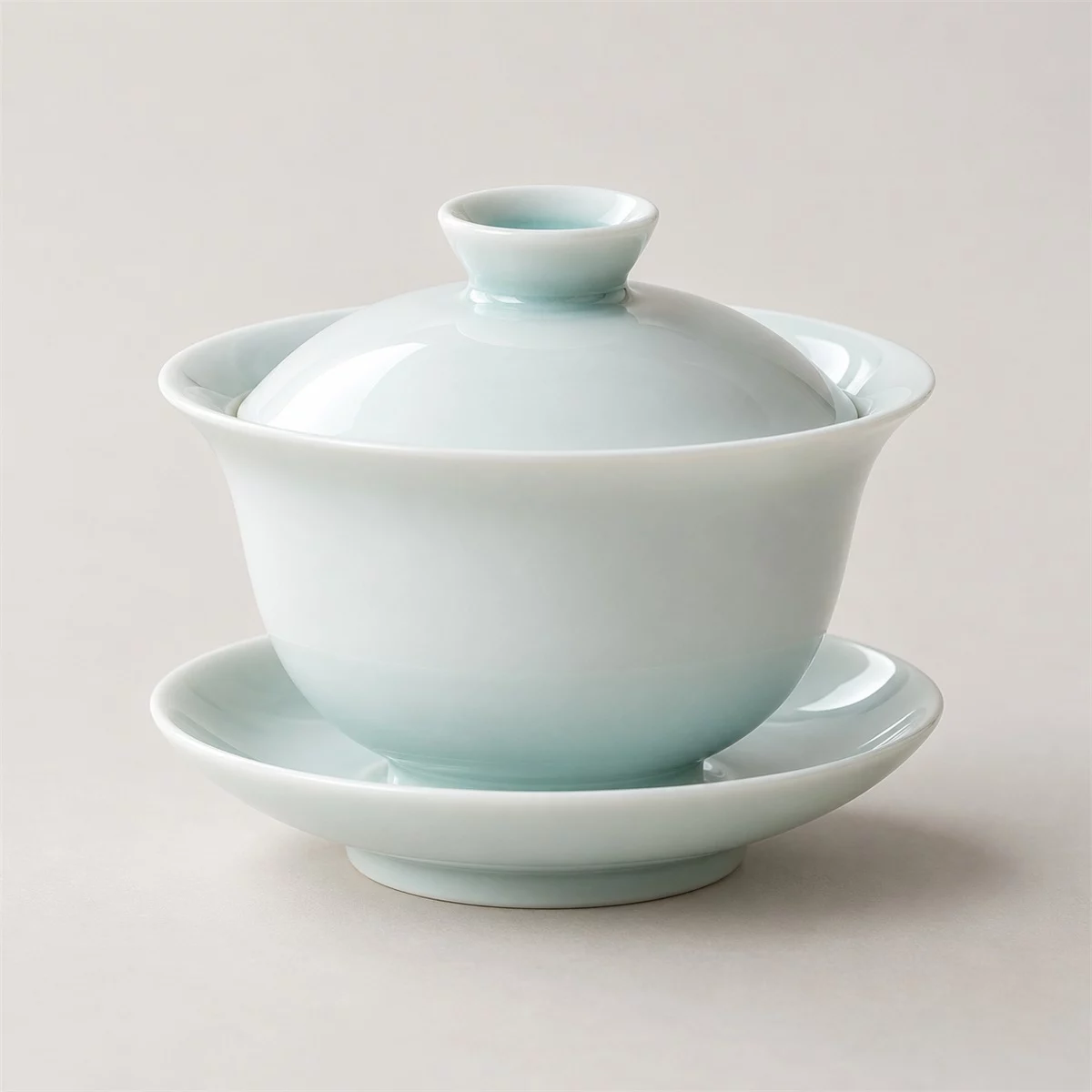
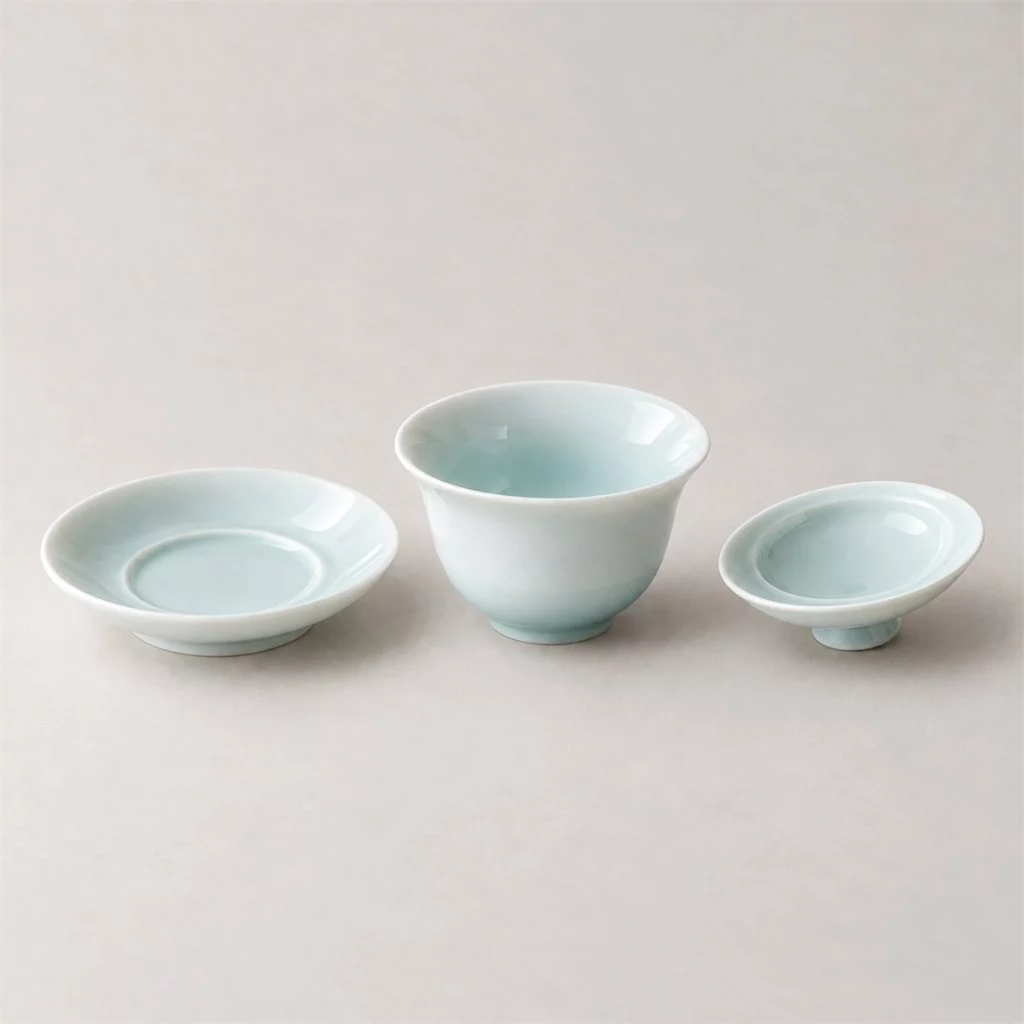
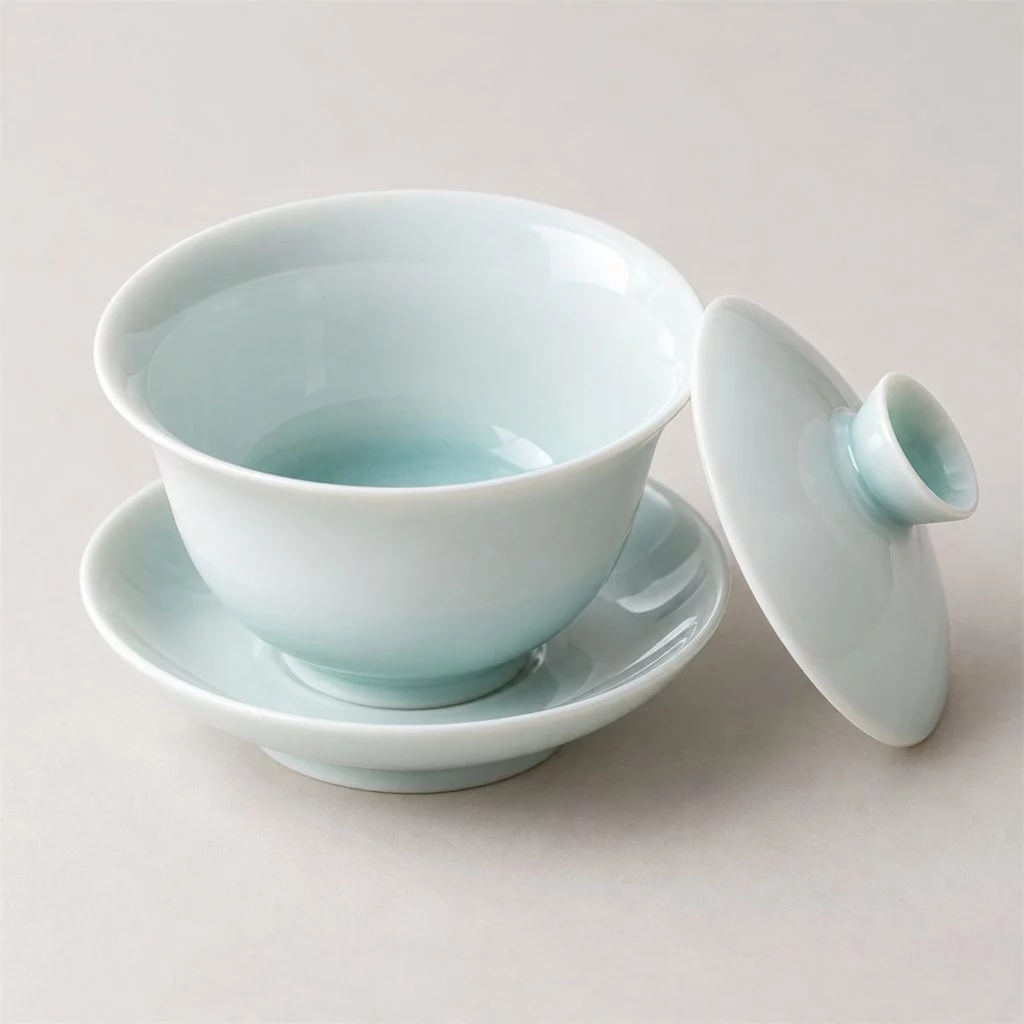
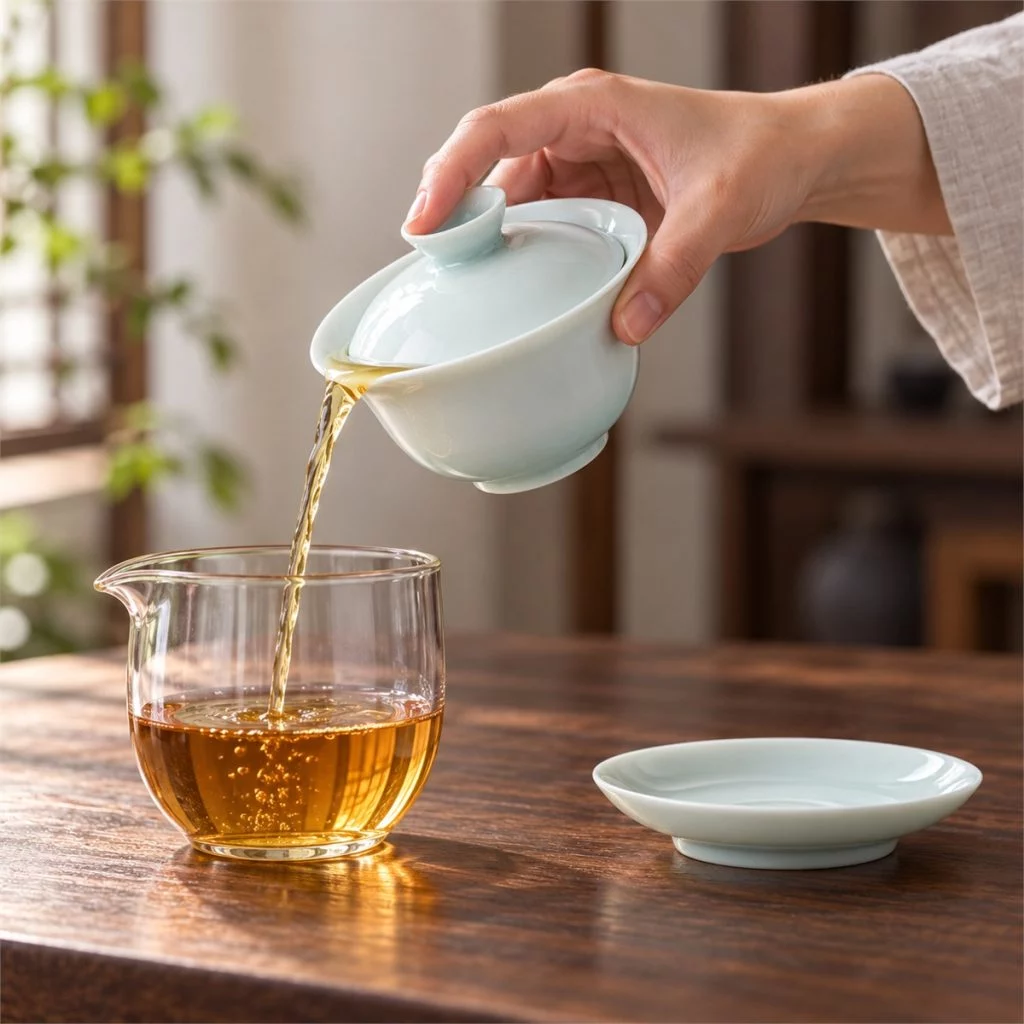
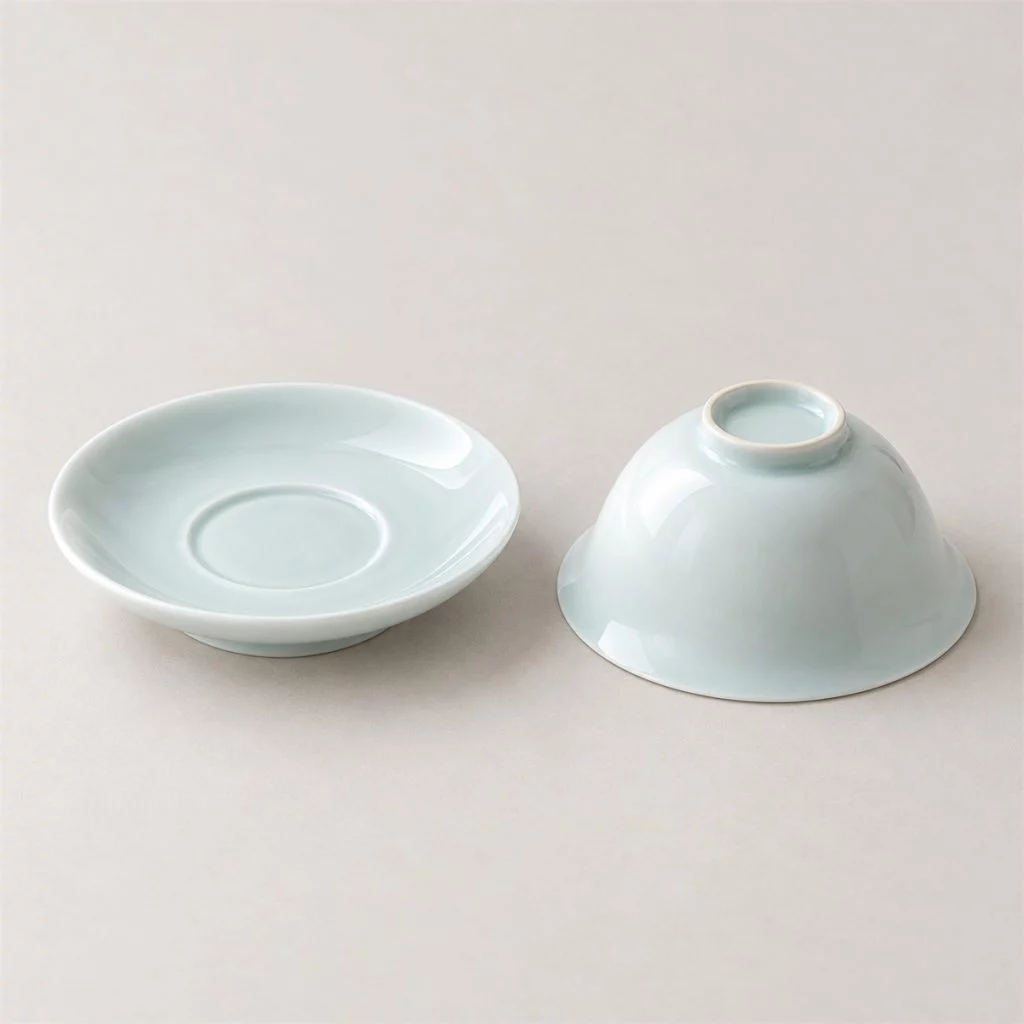
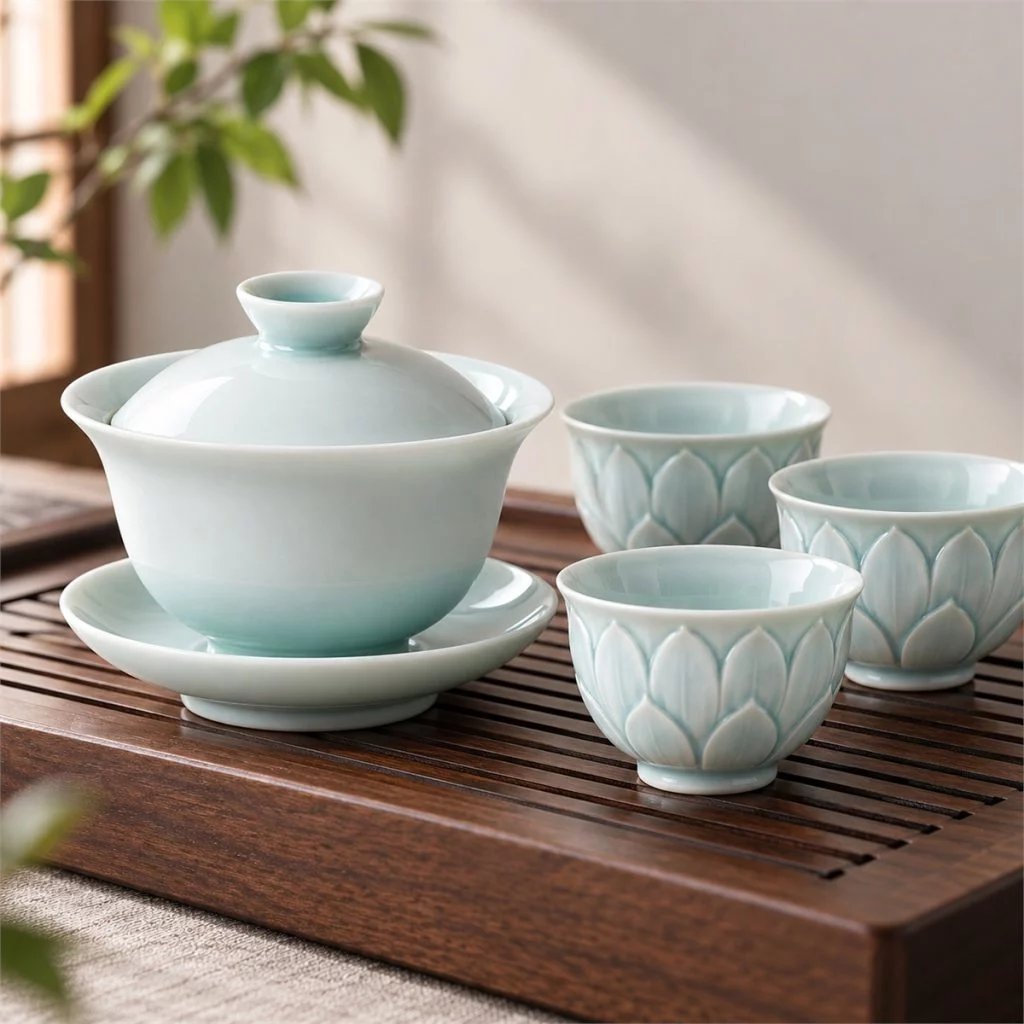
A gaiwan is a working tool before it is anything else. It is lifted and tilted dozens of times a session, its lid nudged forward to hold back the leaves while the tea pours out through the gap. The shape here is the classic one, a flared bowl that is easy to grip at the rim, a domed lid with a small knob, and a saucer that keeps hot fingers off the bowl.
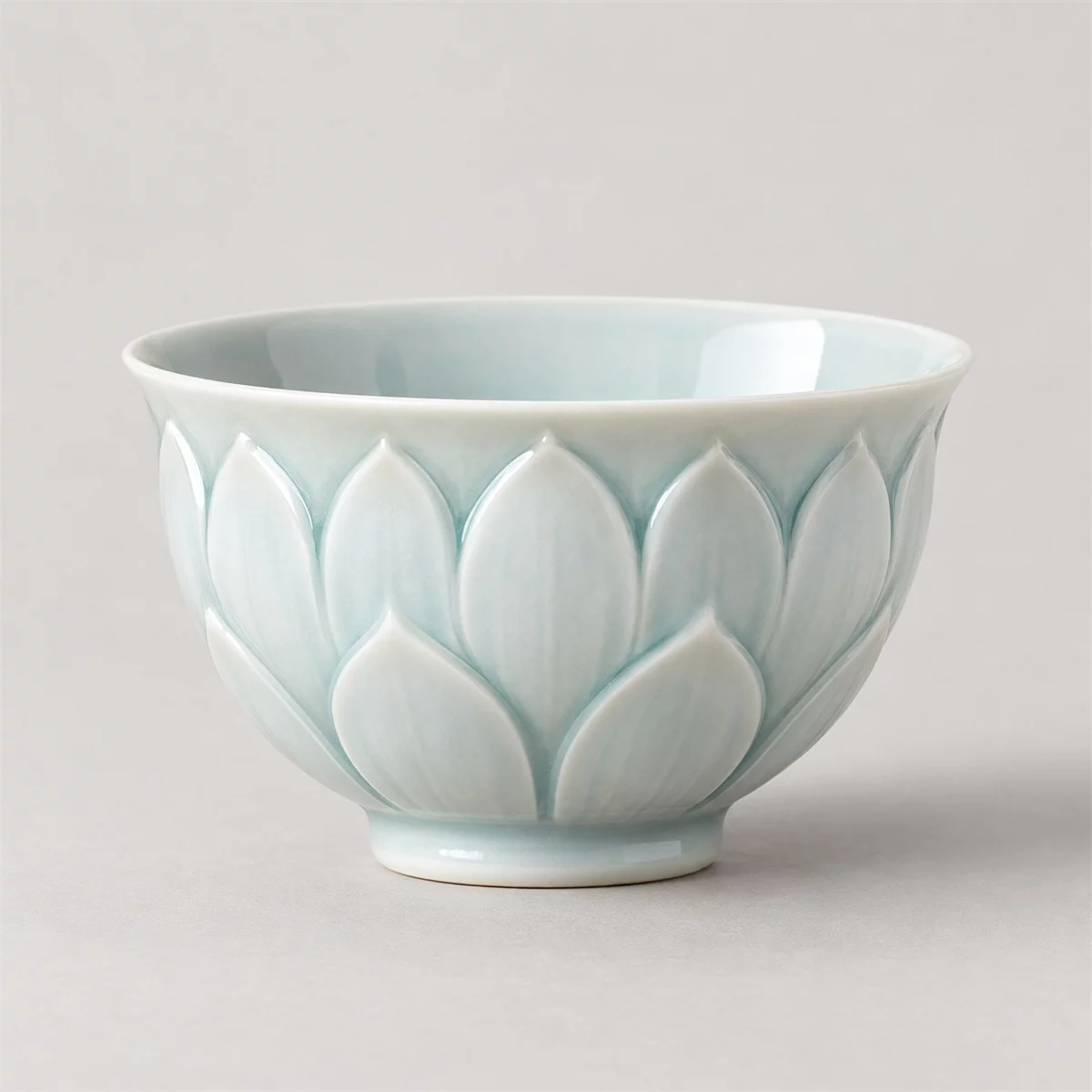
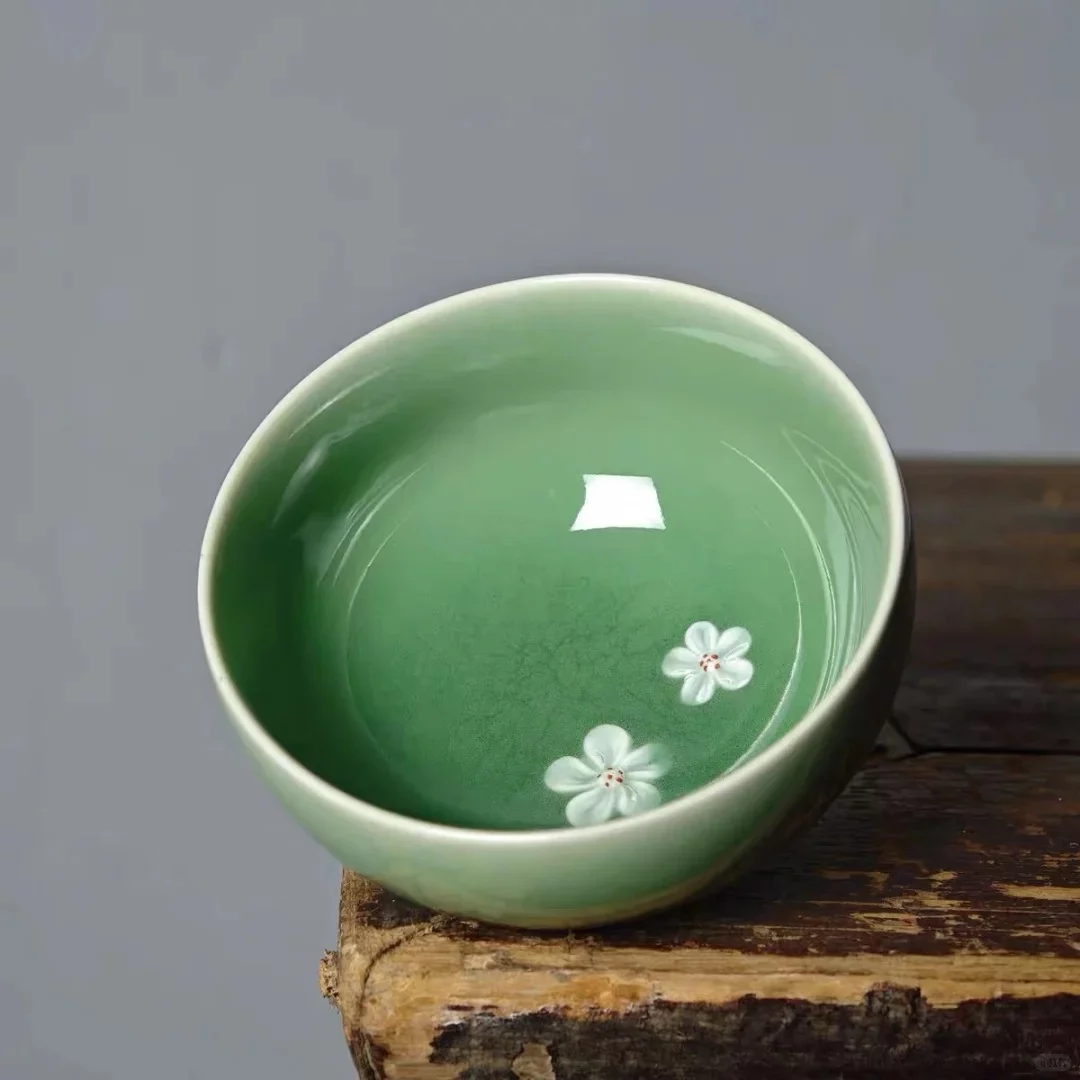
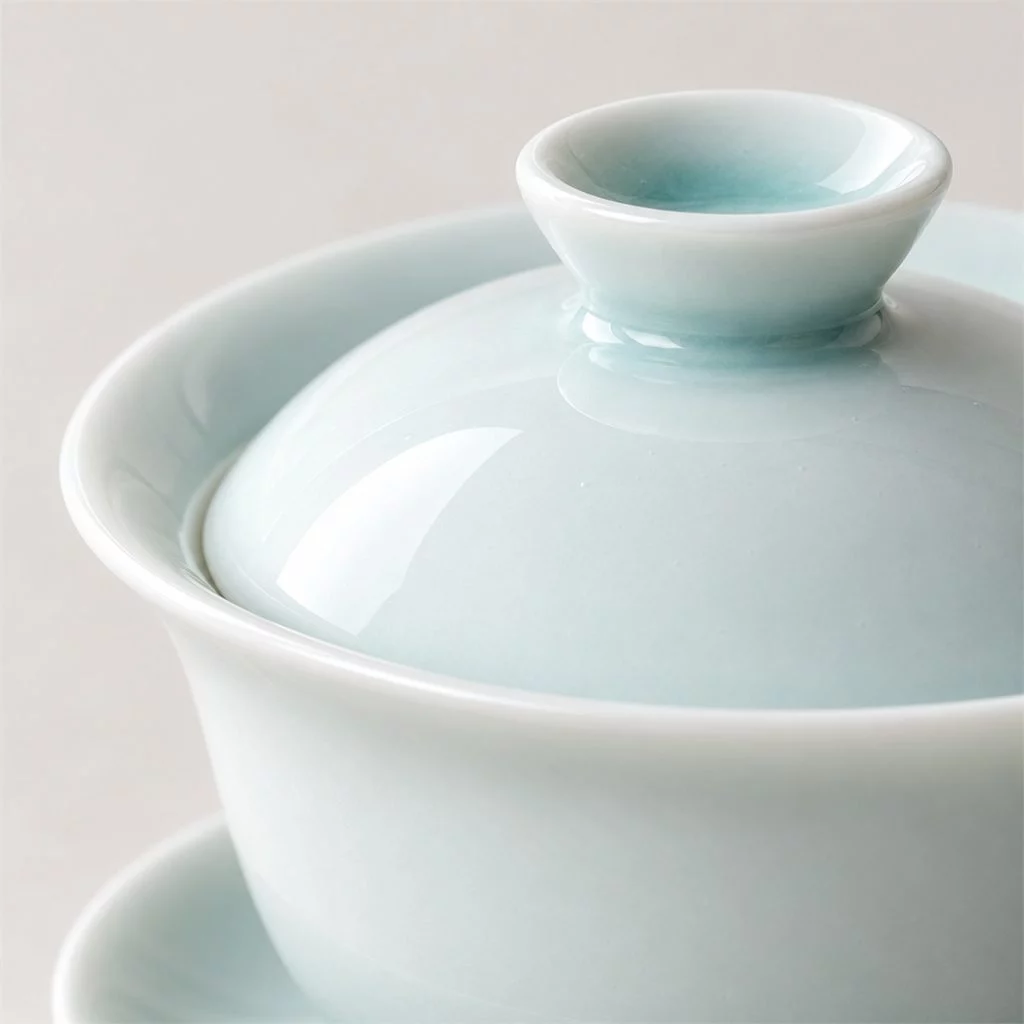
The glaze is yingqing, the pale “shadow blue” of Song dynasty Jingdezhen. It is nearly white on the walls and gathers into a faint blue-green at the foot and around the knob, where it lies thickest. Inside, that pale ground does the job a brewing vessel should: you see the real color of the liquor and how far the leaves have opened, which tells you when to pour.
Fired at 1,280 to 1,330 °C, the porcelain becomes dense and slightly translucent, and the rim thins enough to glow when a lamp is behind it. That thin rim is also what makes it pour cleanly, because the tea leaves the lip in a neat stream instead of running down the outside.
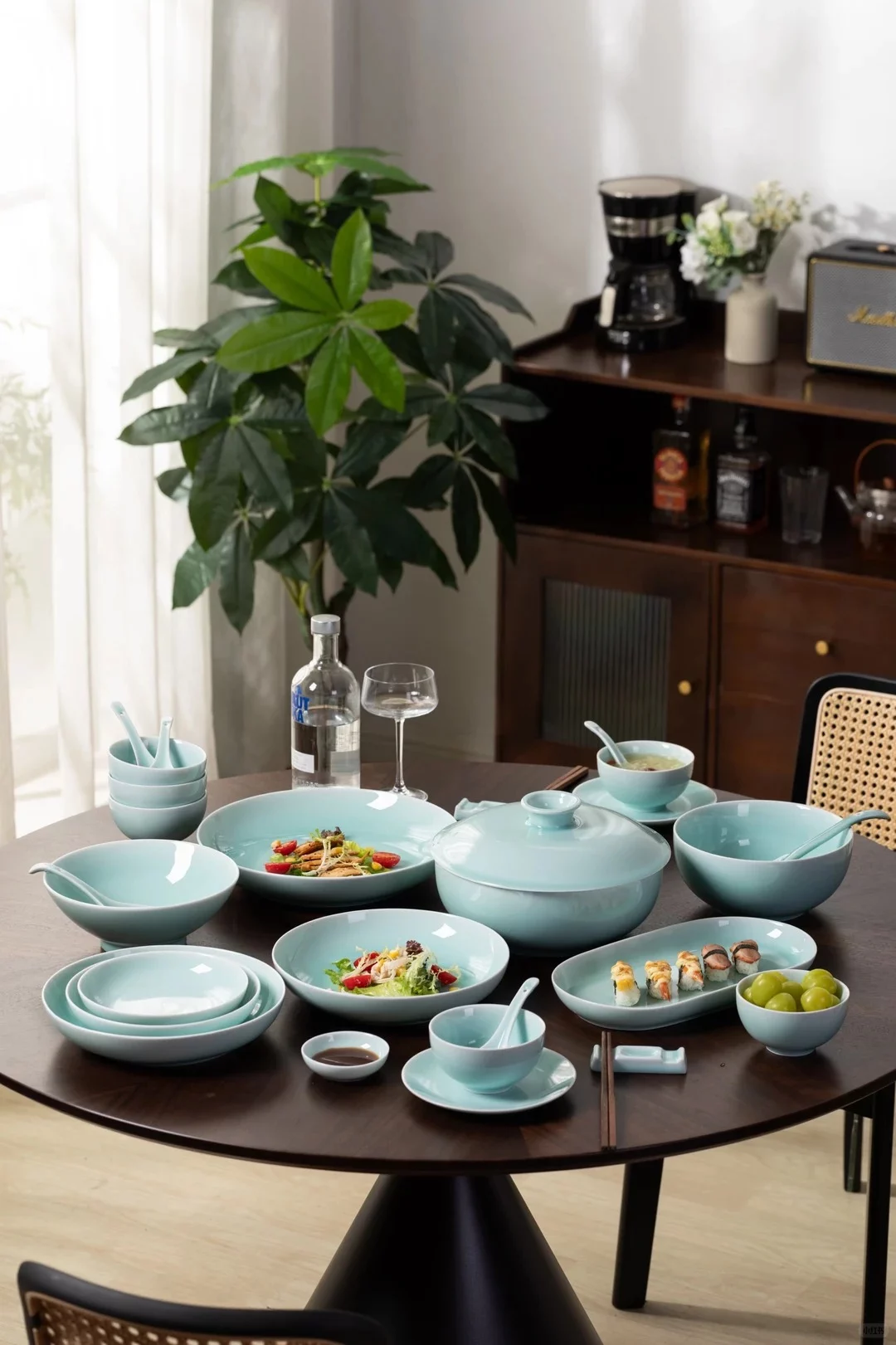
The gaiwan is part of the same yingqing tea ware series as the lotus-petal cup, and the two are fired to the same color codes, so a shop can sell them as a set. Both are held in our Americas stock in Los Angeles and Toronto, where a reorder ships within seven days.
How to choose a gaiwan by size, wall and lid fit is covered in our Chinese tea ware guide.