Resources
Buyer guides from Jingdezhen
Ten guide collections on sourcing, craft and selling Chinese porcelain, written by our export team.
Browse all guides ↗ Resources
Buyer guides from Jingdezhen
Ten guide collections on sourcing, craft and selling Chinese porcelain, written by our export team.
Browse all guides ↗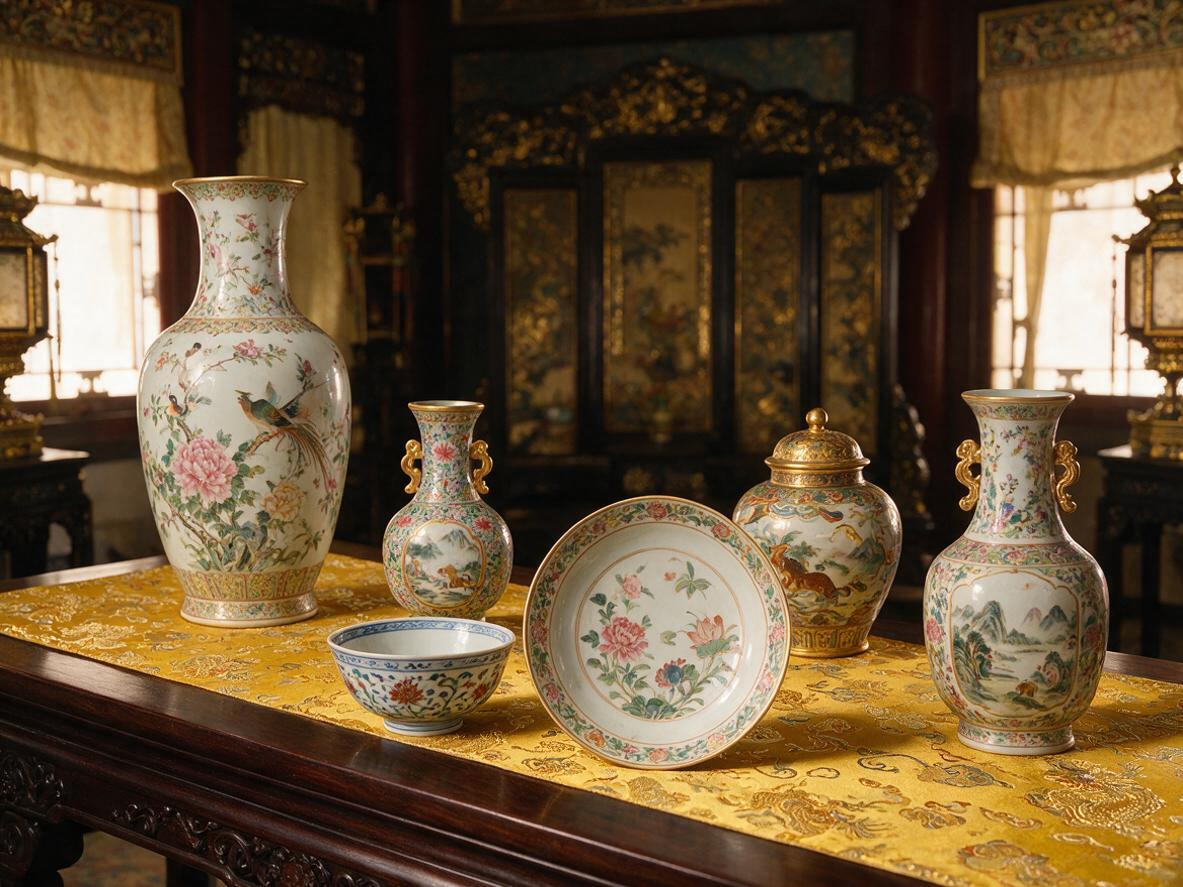
Kangxi to Qianlong
From 1644 to 1912, a rebuilt imperial kiln, a line of scholar-superintendents and the Canton trade made Jingdezhen porcelain more varied in color and technique than at any time before.
1644 to 1912
The Manchu Qing took Beijing in 1644, but Jingdezhen’s kilns were wrecked in the rebellion that broke out in the 1670s. From the 1680s the Kangxi emperor rebuilt the imperial kiln under superintendents who reported to the court. Three long reigns followed, Kangxi, Yongzheng and Qianlong, each with its own taste, while enamel workshops inside the Beijing palace set styles that Jingdezhen followed. A French Jesuit, Père d’Entrecolles, lived in the town and in 1712 sent Europe the first detailed account of how its porcelain was made. Through Canton, the East India companies ordered tea services painted with family coats of arms. In the 1850s the Taiping war burned Jingdezhen again, and imperial production ended with the dynasty in 1912.
Dates · 1644–1912 | Centers · the Jingdezhen imperial kiln, the Beijing palace workshops, the Canton trade | Signature · famille verte, famille rose, Falangcai, revived Song and Ming glazes, armorial export
Four Qing achievements
Under Kangxi, Yongzheng and Qianlong, the kiln learned to make almost any color or surface the court asked for.
01
Kangxi painters added a blue enamel over the glaze and let bright greens lead, a palette later collectors named famille verte. Color no longer needed an underglaze cobalt outline, and this style led the decades before famille rose.
02
Around 1705, kilns linked to the Jiangxi governor Lang Tingji mastered a deep copper-red glaze, langyao, known in the West as sang de boeuf. A paler, mottled peachbloom glaze followed for small desk pieces made for the emperor.
03
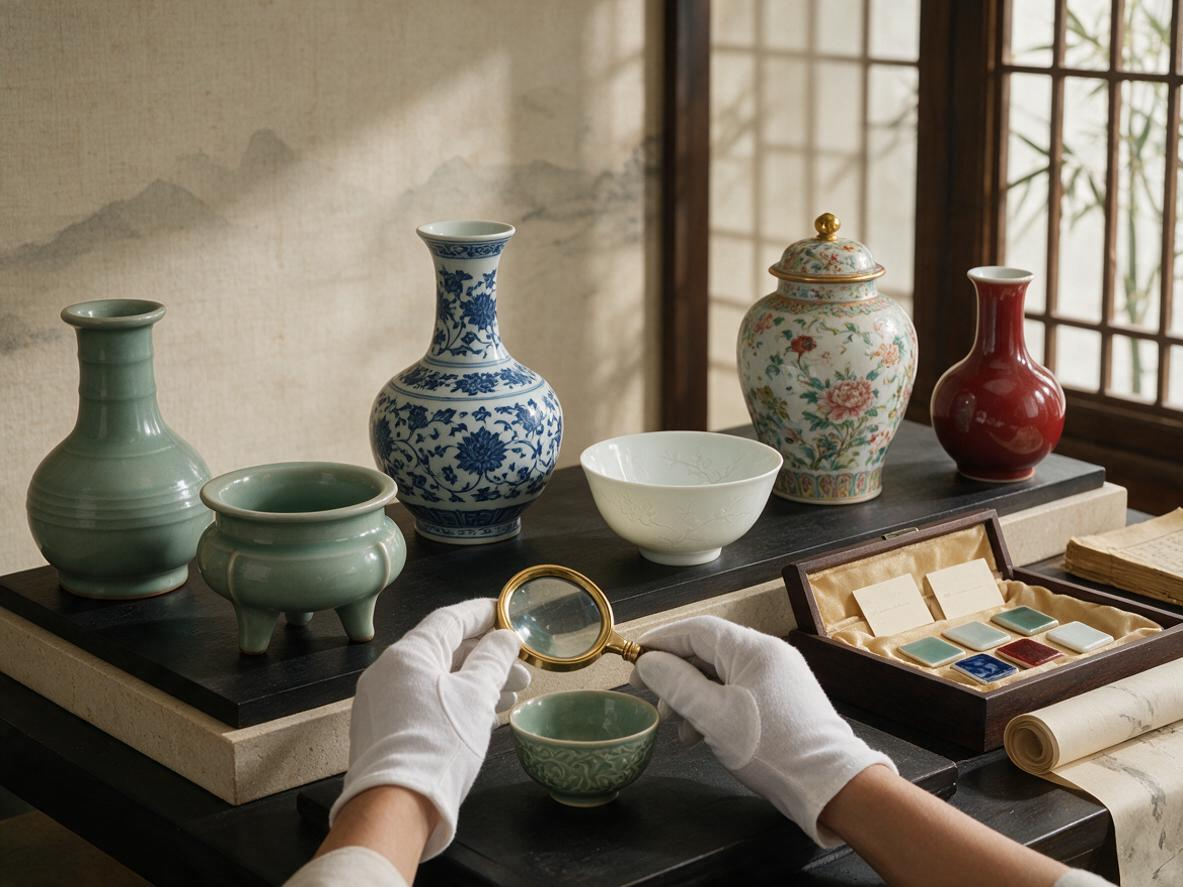
The superintendents Nian Xiyao and Tang Ying copied Ru, Guan, Ge and Jun glazes from pieces in the palace collection and listed dozens of monochromes by name. In 1743 Tang Ying wrote the text for a twenty-scene illustrated account of porcelain making.
04
Qianlong’s kiln painted porcelain to pass for bronze, lacquer, wood grain and jade, and built revolving vases with an inner sleeve that turns behind a pierced outer wall. Such pieces showed the court that clay could imitate any material.
Court and company
Two pieces made for the palace and one made to order for a European family.
A tall, straight-sided vase painted in overglaze greens, iron red, yellow and enamel blue with a garden scene. The cylinder gave painters a surface wide enough for a full narrative panel. 1662–1722.
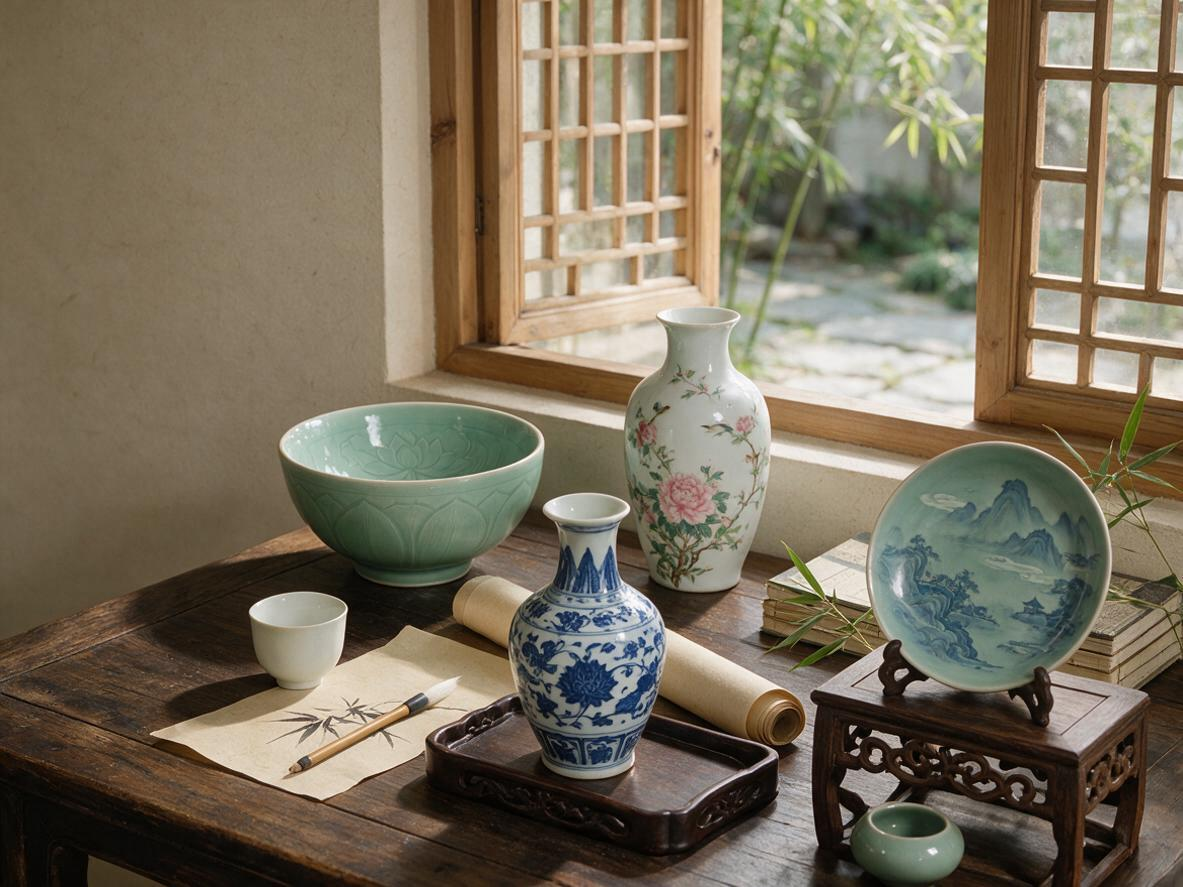
A small desk vessel for a scholar’s brush water, in a mottled pink-red copper glaze flecked with green. Peachbloom was made only in a few small shapes for the emperor’s writing table. 1662–1722.
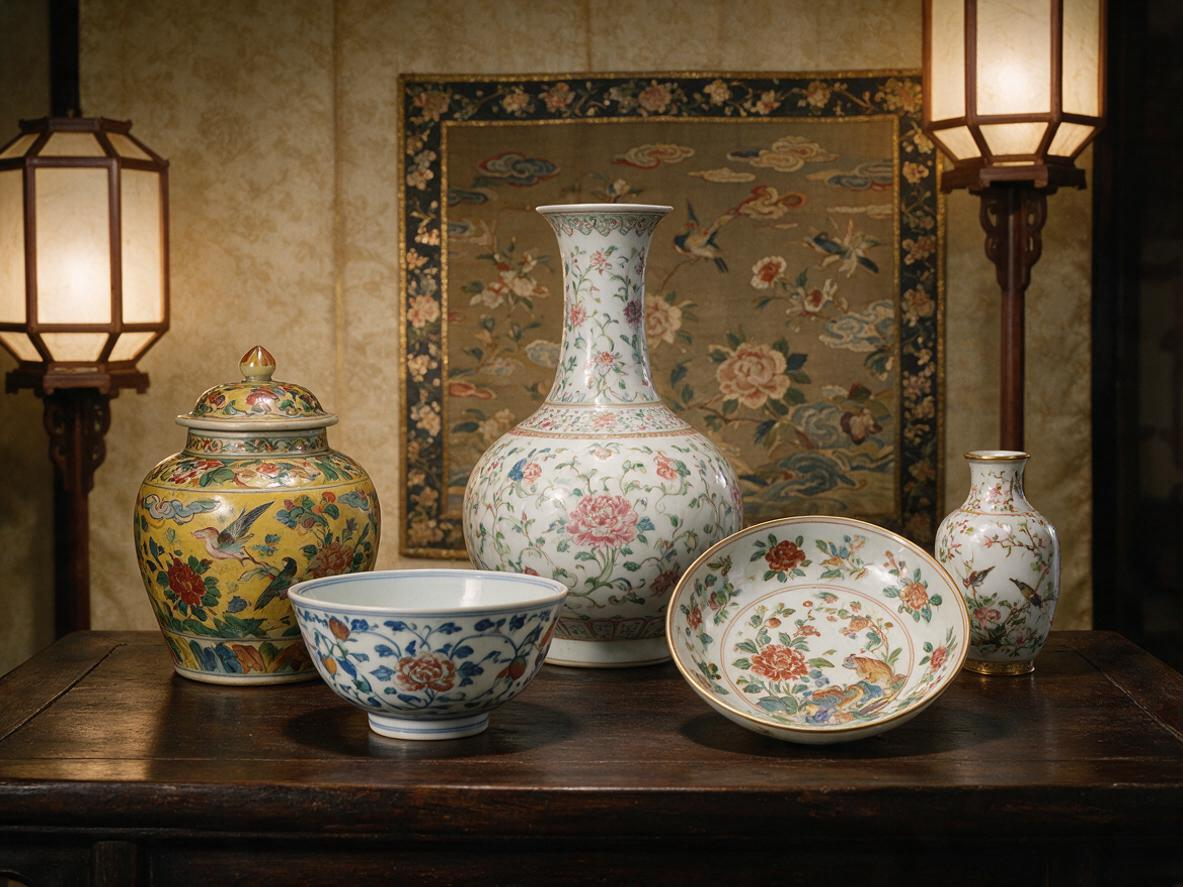
A porcelain plate painted with a family’s coat of arms, copied from a bookplate or seal sent out from Europe through Canton. Orders like this could take two years to arrive. 18th century.
Qing porcelain changed fastest in the enamels. Read the palette and the body at the foot first, and the mark last.
The painted styles that came out of this era, and how they are made today, are in our guide to Chinese porcelain decoration techniques.
| Reign | What to look for |
|---|---|
| Kangxi, 1662–1722 | Brilliant sapphire-blue cobalt, the famille verte palette, and many pieces with earlier Ming marks |
| Yongzheng, 1723–1735 | Refined famille rose and falangcai, and close copies of Song monochrome glazes |
| Qianlong, 1736–1795 | Seal-script marks, technical showpieces and porcelain made to imitate bronze, wood and lacquer |
| Late Qing, 1796–1912 | Simpler painting, iron-red seal marks, and lighter qianjiang enamels toward the end |
Carried forward
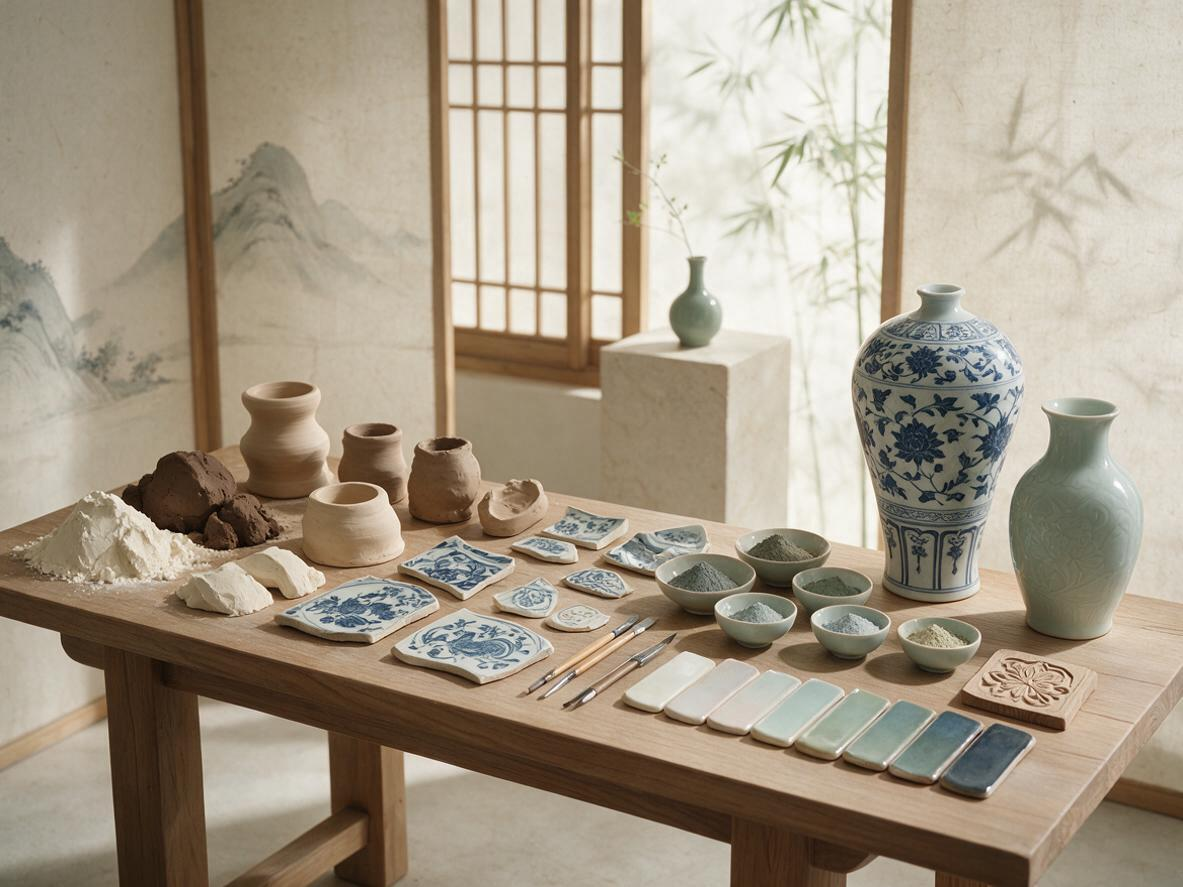
Famille rose and Falangcai belong to our Imperial Wucai & Painted Porcelain Collection and are painted in our Jingdezhen workshops. Enamel still goes on after the high firing and is fixed at a lower heat, the order of work our glazing page sets out. Qing peony, bird and garden motifs are redrawn by our designers for each form in a famille rose range.
Painting in our Doufunong workshops.
01
PP-014 is a tea set on a rectangular tray: a gaiwan, a cup on a round stand and an open cup, with flying apsaras and butterflies on a clouded rose-pink enamel ground. It ships from stock.
02
PP-010 is a dinner service with lotus scrolls on a yellow enamel ground and a cloud-head rim border, finished in overglaze enamel and fired again. It suits ceremonial gift sets and display cabinets.
03
As Canton once painted European coats of arms, we paint monograms, crests and short verses in a reserved panel or on the base, from a drawing you approve before the painted sample.
Qing, in brief
Ming before, Modern after
Later era
Factories, studios and revived glazes, 20th century–now.
Commission in enamel
Send a museum photo, a pattern you already own or the reign you have in mind, with the occasion and the number of pieces. Lin Wan replies within 1–2 business days with the painting route, the sample timing and a price.
hejiang@knockingcn.com · WhatsApp +86 197 1171 3584