What makes a yellow ground so hard to paint?
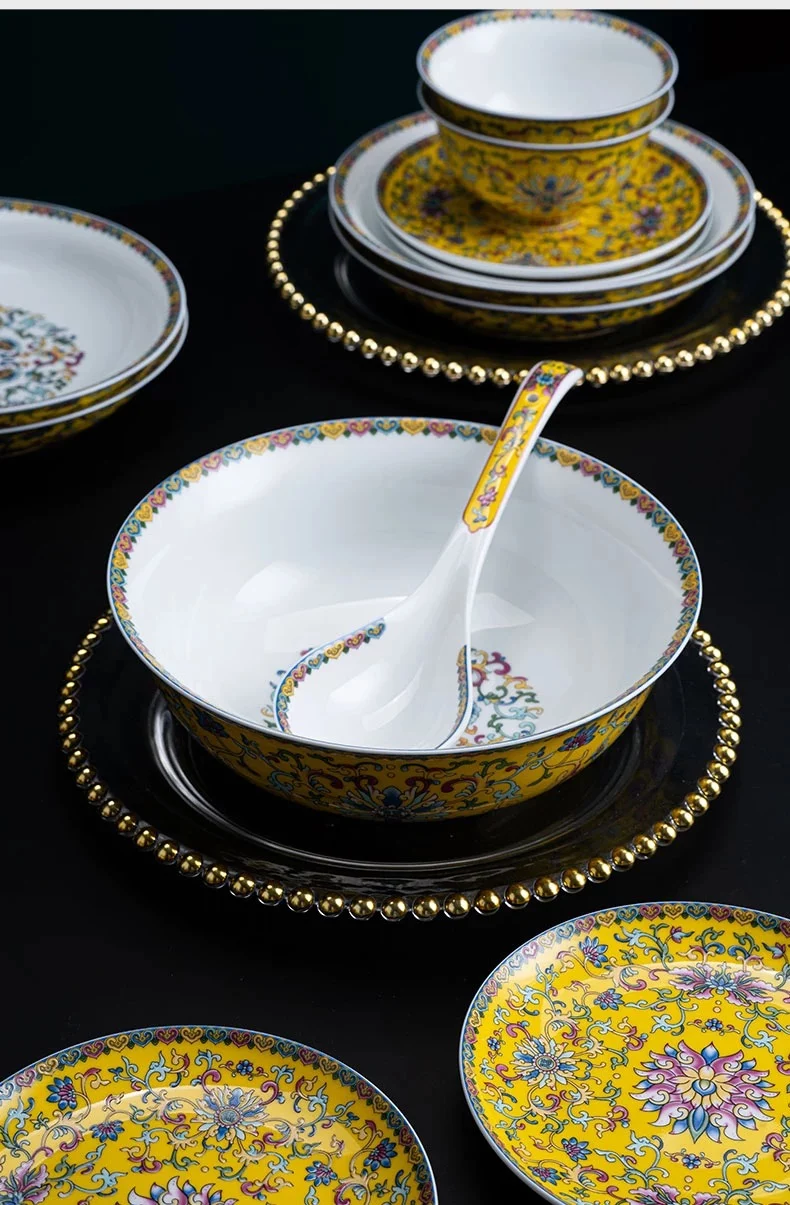
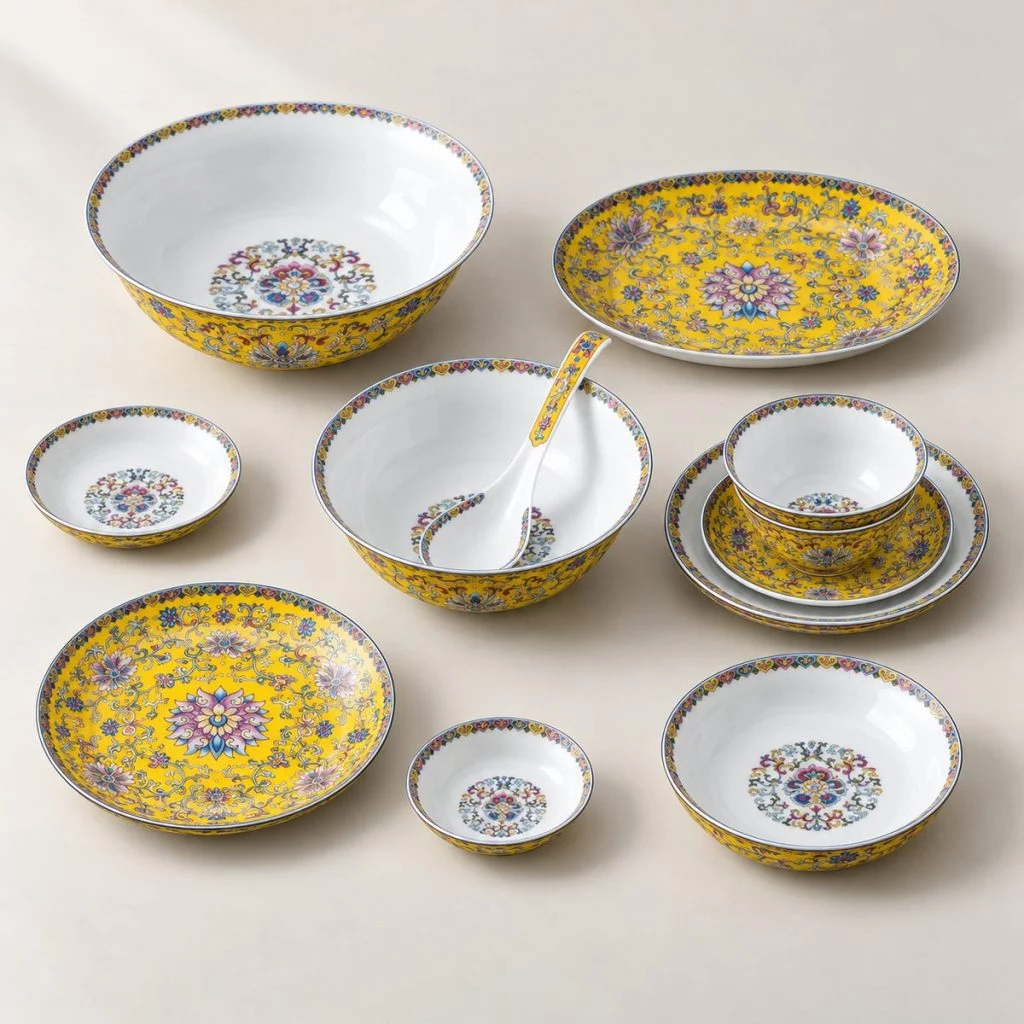
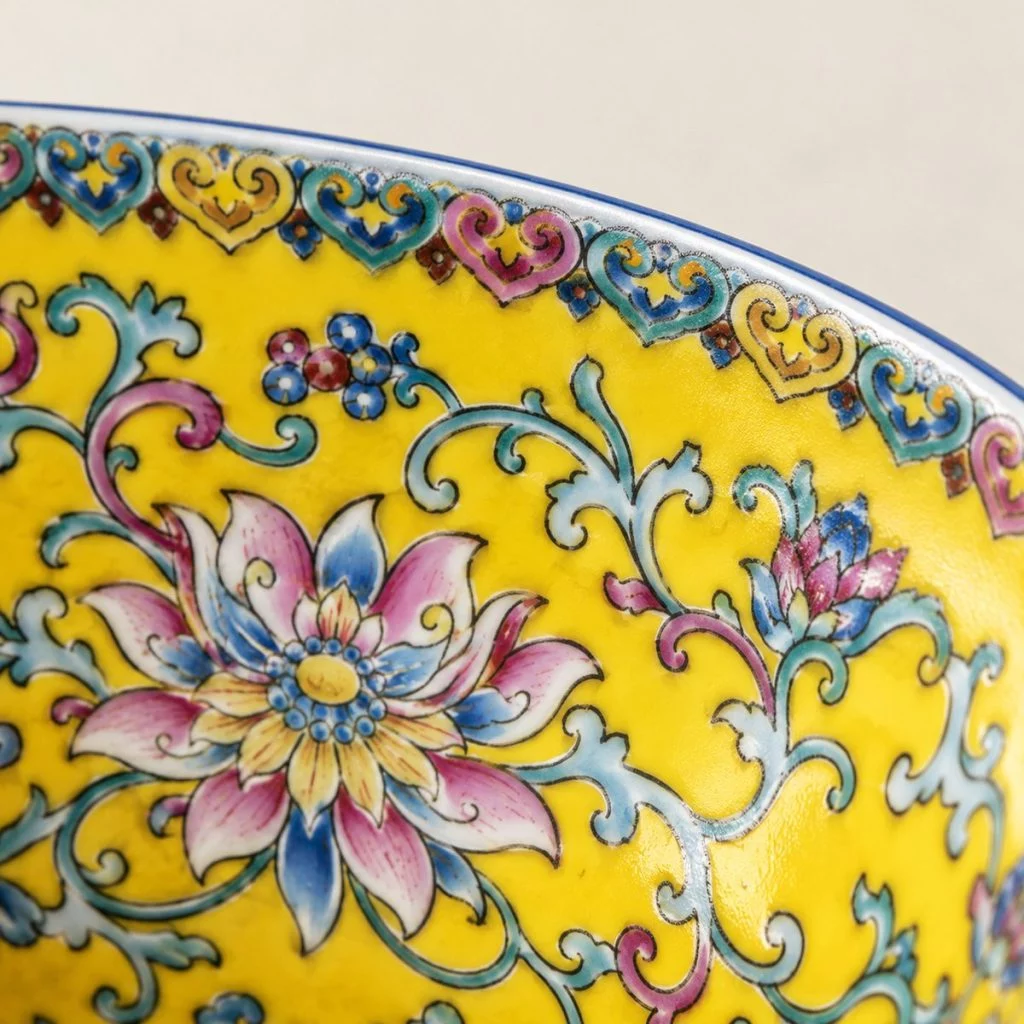
A plain bright ground hides nothing. On white porcelain a slightly uneven stroke disappears; on solid yellow, every thin patch, every brush mark and every speck of dust shows. The enamel has to go on thick enough to look opaque and thin enough not to crawl or bubble in the kiln, and it has to do that across bowls, plates and a spoon that all curve differently.
The painters lay the ground around the lotus scrolls, leaving the flowers and stems as islands to be painted in finer colors afterward. The cloud-head border at each rim is drawn the same way, a ring of pointed ruyi shapes that gives the yellow a clean edge.
Then there is the medallion. At the bottom of the large bowl a single lotus is painted face-up, the way you would see one floating on a pond, and it appears only as the bowl is emptied. Small surprises like this were a favorite of Qing porcelain painters.
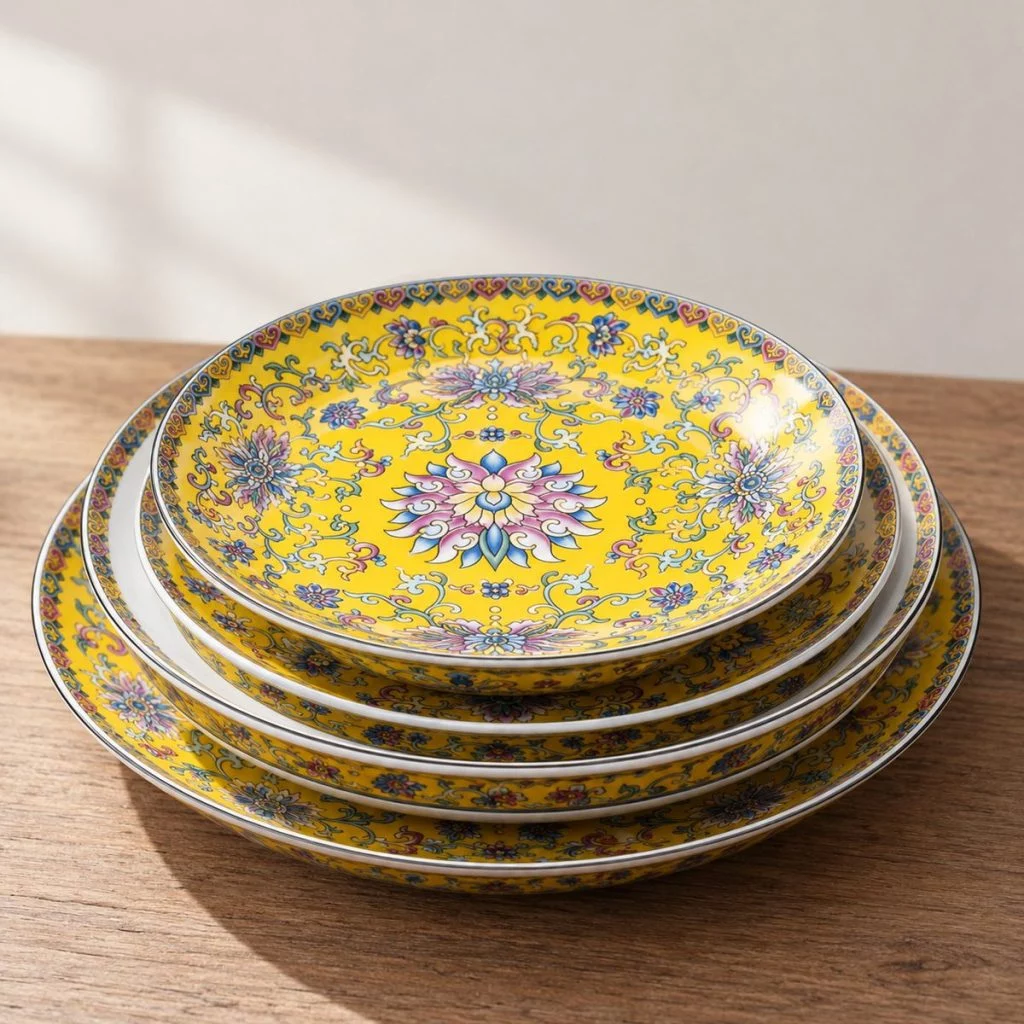
The service is painted in Jingdezhen on porcelain first fired at about 1,300 °C, then refired at about 780–850 °C to fix the enamels. Before packing, the plates are stacked and every piece is compared side by side so the yellow matches from bowl to bowl.
How overglaze enamels are painted, fired and cared for is explained in our guide to Chinese porcelain decoration techniques.