
Resources
Buyer guides from Jingdezhen
Ten guide collections on sourcing, craft and selling Chinese porcelain, written by our export team.
Browse all guides ↗ Resources
Buyer guides from Jingdezhen
Ten guide collections on sourcing, craft and selling Chinese porcelain, written by our export team.
Browse all guides ↗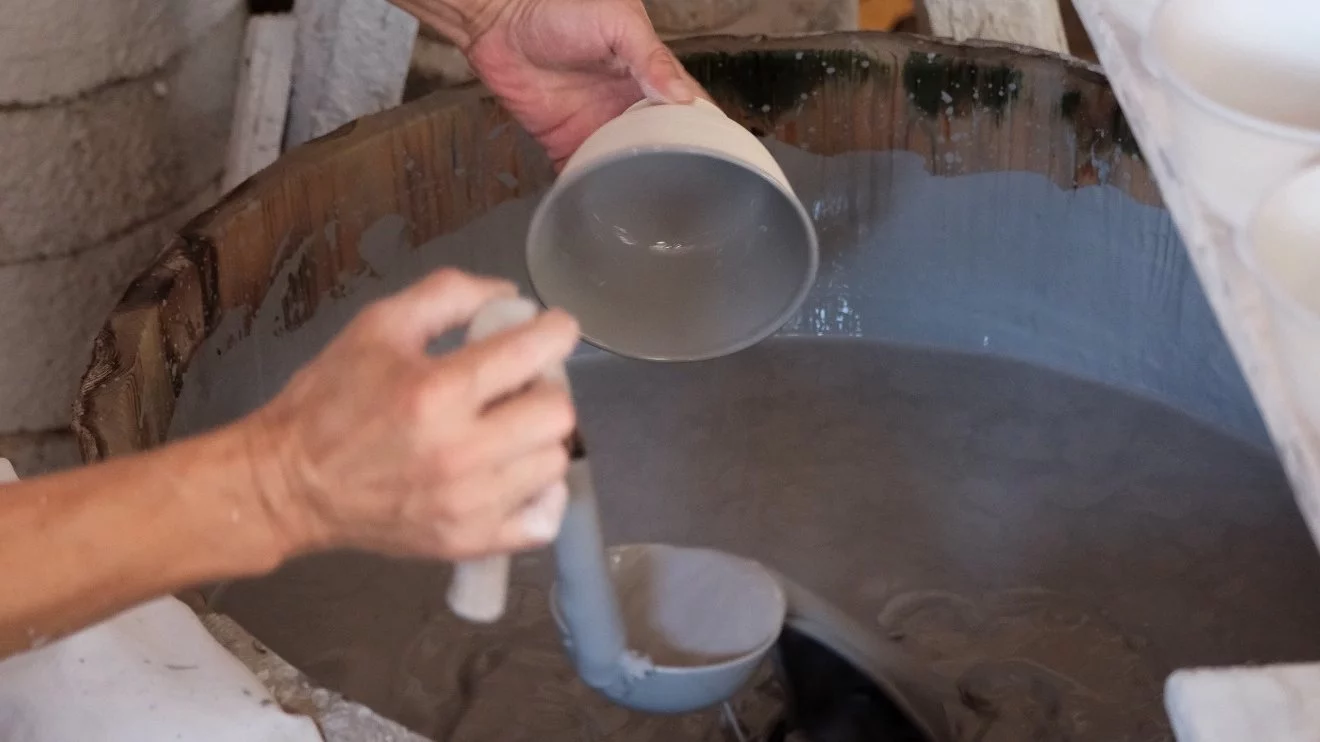
Brush, glaze, enamel
Cobalt and copper go onto the raw body, glaze goes over them, and enamel or decal goes onto fired porcelain for a second, lower firing.
Under, in, over
Glazing and decoration happen in our Doufunong workshops, on bodies already trimmed and dried through. The order of work is set by heat. Cobalt and copper are brushed onto the raw body first, because both hold their color through the high firing at about 1,300 °C beneath a clear glaze. Glaze goes on next: clear over painted work, or the color itself on celadon and monochrome pieces. Overglaze enamels for famille rose, Falangcai and Wucai come last. They would burn away at full heat, so painters apply them to porcelain that has already been fired, and the piece returns to the kiln at about 780–850 °C. Decals from our Chaozhou partners also go onto fired porcelain and are fired here to our Jingdezhen standards.
Where · Doufunong workshops, Jingdezhen; Ge, Ru, Jun and Sancai pieces are glazed here too | Led by · painters and glazers, working to the approved pattern drawing and color range | Hands on to · Kiln firing
Decoration work on the Doufunong workshop floor
Brush to second fire
01
Cleaned and laid out
Dust is wiped from the bone-dry body so the glaze will not crawl in the kiln. The motif is then marked out from the approved pattern drawing, so every piece in the run starts from the same layout.
02
Cobalt and copper by hand
Painters outline the motif and fill it with cobalt or copper on the raw clay. Porous clay drinks the pigment at once, so a stroke cannot be wiped away; the hand has to be sure before it moves.
03
Glazed and wiped at the foot
Glaze is applied by dipping, pouring or spraying, to the thickness written for the piece; over carving it settles into the cuts. The foot ring is wiped bare so it will not fuse to the kiln shelf.
04
Enamel or decal after the fire
Pieces for famille rose, Falangcai, Wucai or a decal come back from their high firing white and glazed. Enamel is painted onto the glaze or the decal is laid in place, and the piece is fired again at a lower heat.
On finished pieces
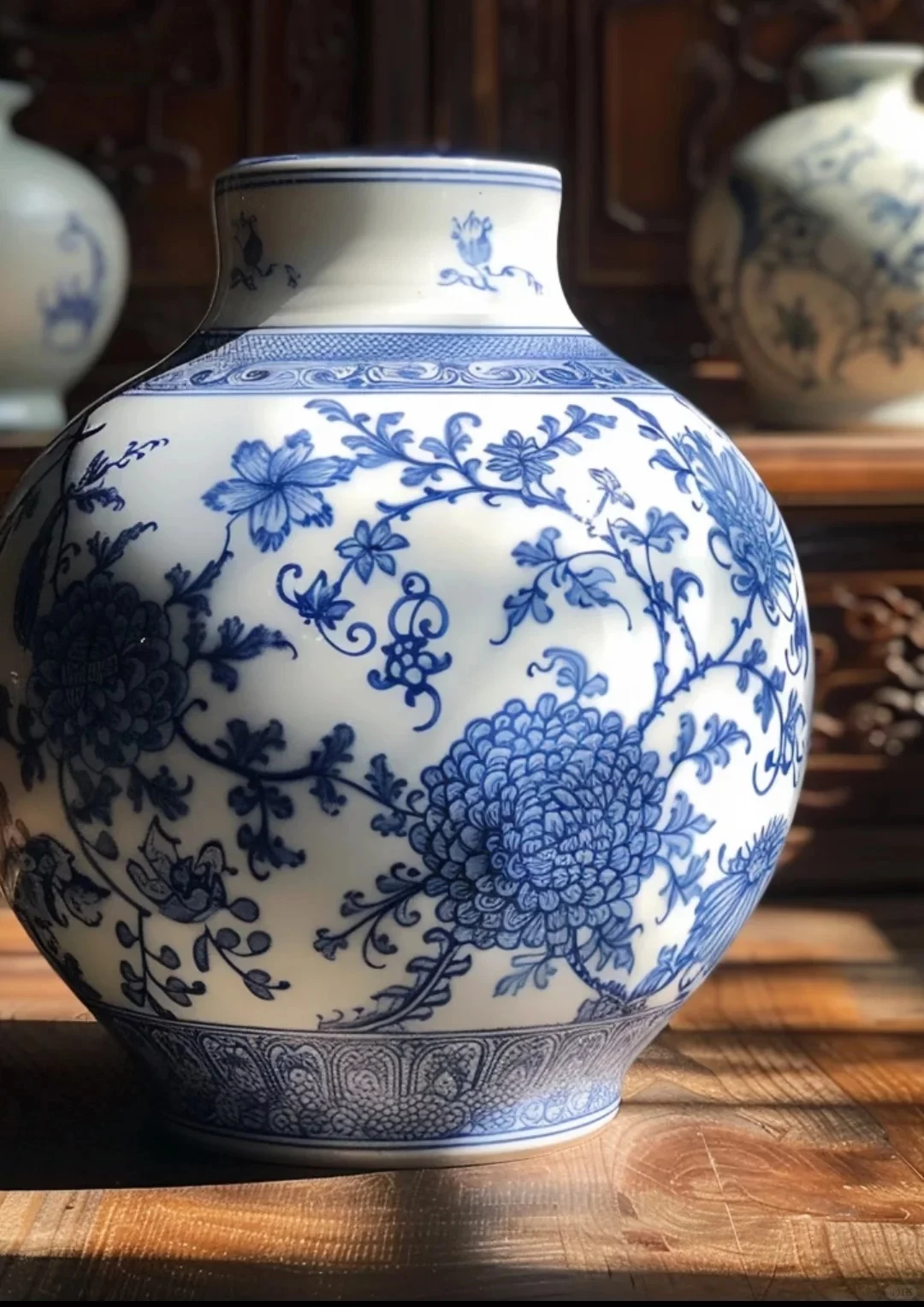
Cobalt from dark line to pale wash
Chrysanthemum and peony scrolls circle the jar, outlined dark and filled in lighter cobalt. Everything was painted on raw clay and sealed under clear glaze in a single high firing.
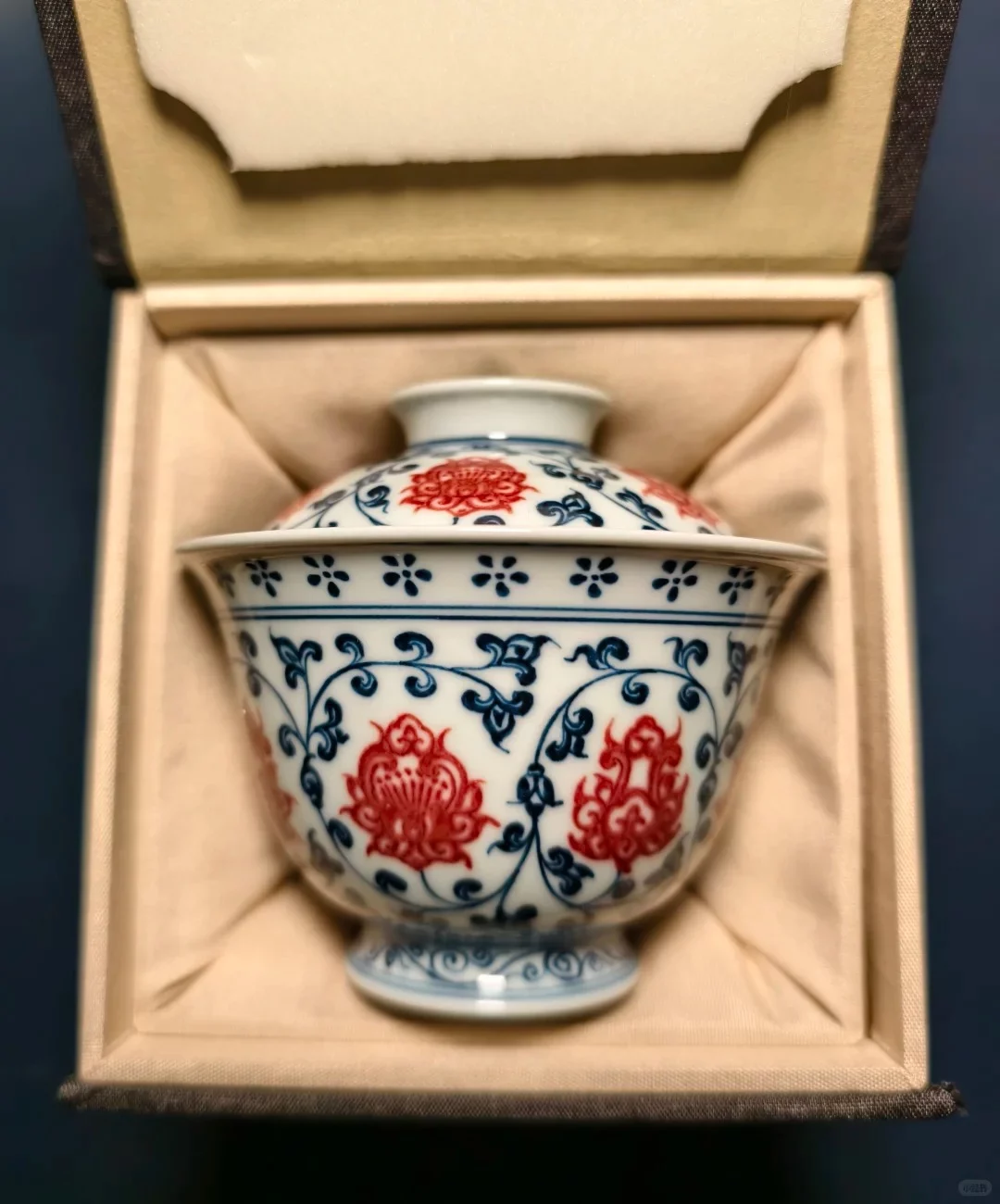
Two pigments, one firing
Copper-red lotus flowers sit on cobalt scrolls. Both were painted before glazing and fired together, and because copper and cobalt answer the kiln differently, the balance is approved on a fired sample.
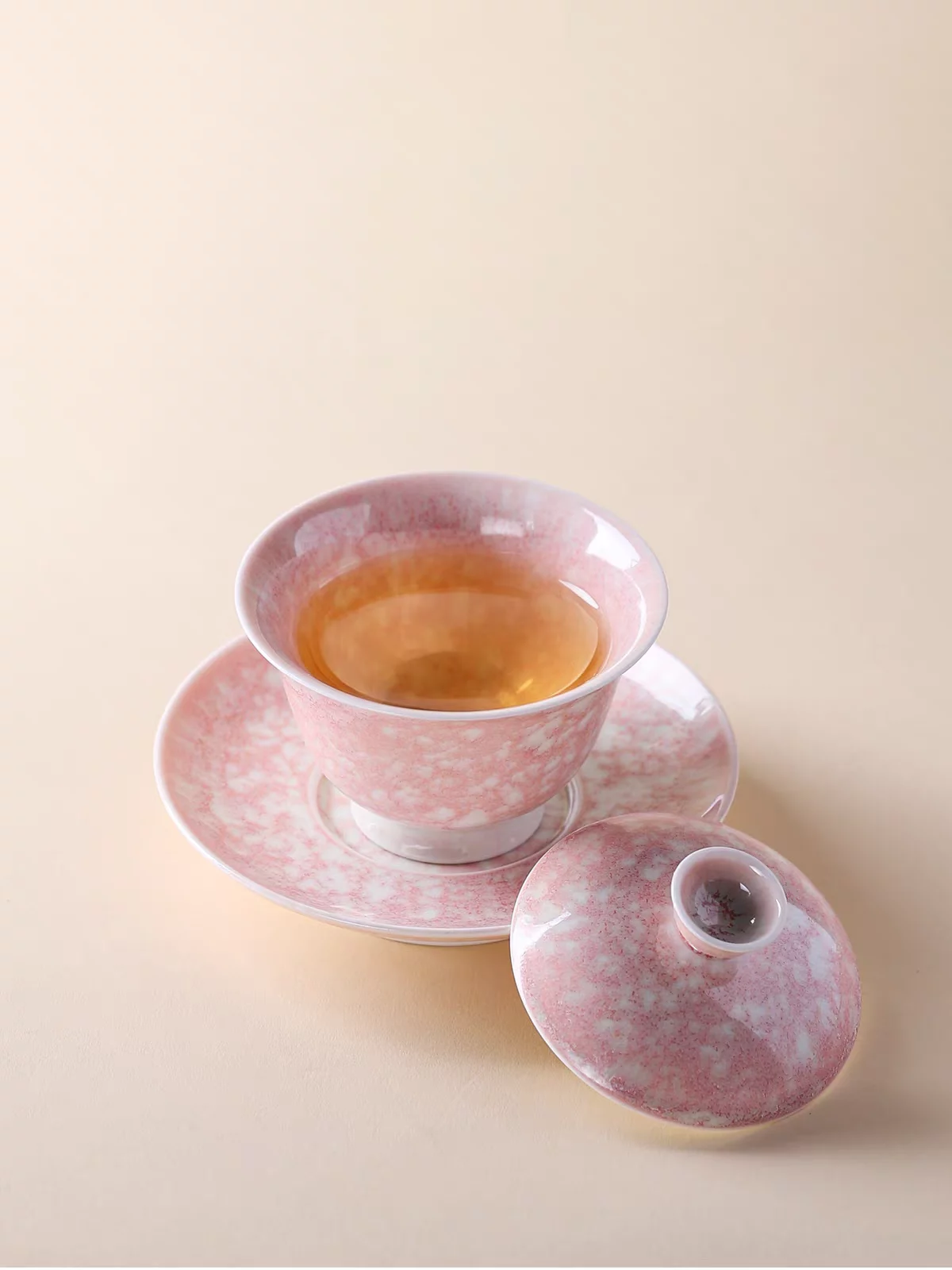
Enamel blended on fired glaze
Pink overglaze enamel is worked by hand into a soft pink-and-white mottle over the fired white gaiwan, then fixed in a second, lower firing. The mottle falls slightly differently on every piece.
Where a color sits decides how long it lasts. Under the glaze it is sealed for good; on top of it, it is brighter but more exposed. As a price guide, a decal tea cup runs about USD 1.20–2.60 FOB Shanghai at 500 pieces, while hand painting is priced by the hours the design takes.
Each technique, with the painted styles that use it, is set out in our guide to Chinese porcelain decoration techniques.
| Route | Fired at | How it wears | Best for |
|---|---|---|---|
| Underglaze cobalt or copper | 1,280–1,330 °C, one firing | Sealed under the glaze; does not wear off | Blue and white, copper red, pieces in daily use |
| In-glaze decal | 1,220–1,280 °C | Sinks into the glaze and wears with it | Logos and patterns on tableware washed every day |
| Overglaze enamel, painted by hand | 780–850 °C, after the high firing | Sits on the glaze; wash by hand | Famille rose, falangcai, wucai and doucai colors |
| Overglaze decal | 750–850 °C | Sits on the glaze | Display pieces and low-turnover gifts |
| Glaze color | In the high firing | ΔE00 ≤ 2.5 within a batch on stable solid glazes | Reactive glazes such as Jun vary more, and we give the range before sampling |
Before firing
What you can specify
Checked before it moves on
Once fired, color and painting are judged against the range written into your signed standard.
Surface questions
Between trimming and fire
Previous stage
How the body dries evenly and its foot and rim are refined.
All six stages
Follow the work from clay preparation to final selection.
Plan the surface
Email the motif, the form it will sit on and any color you need matched. Lin Wan replies within 1–2 business days with the decoration route for each element and how the sample is priced. hejiang@knockingcn.com · WhatsApp +86 197 1171 3584