
Resources
Buyer guides from Jingdezhen
Ten guide collections on sourcing, craft and selling Chinese porcelain, written by our export team.
Browse all guides ↗ Resources
Buyer guides from Jingdezhen
Ten guide collections on sourcing, craft and selling Chinese porcelain, written by our export team.
Browse all guides ↗Home » Products » Imperial Wucai & Painted Porcelain Collection » Page 2
KKCN collection
Enamel porcelain is painted after the first firing, on top of the glaze, then fired a second time at a lower heat to fix the colors. This collection gathers the painted styles made in Jingdezhen, famille rose, falangcai, wucai and doucai, along with Tang sancai, the one earthenware tradition in the group. Every piece is in stock from 1 piece.
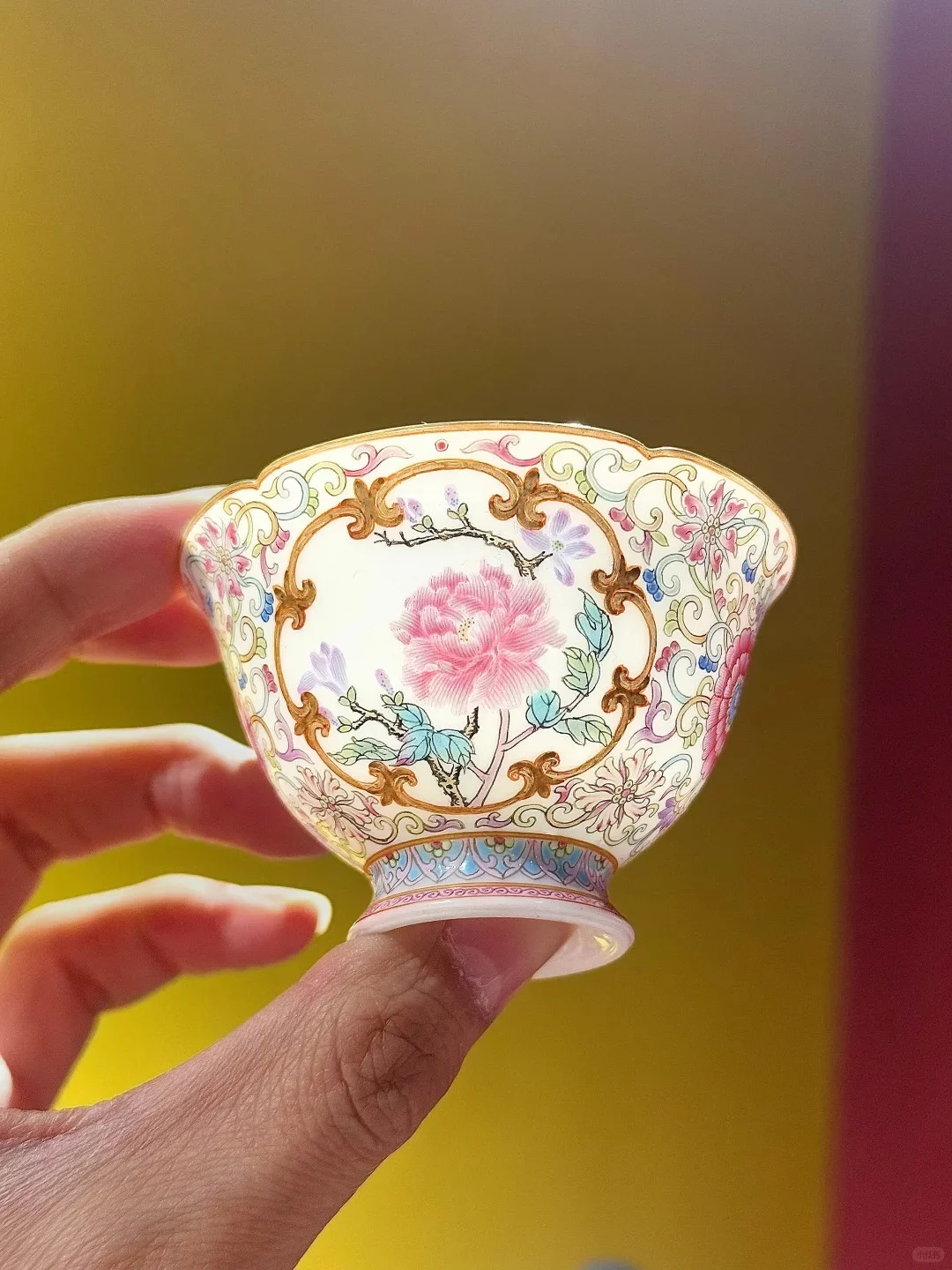
Falangcai · Imperial Wucai & Painted Porcelain Collection
This falangcai tea cup has a lobed rim and a tall foot, its pink peony set in a framed white panel against dense floral scrolls. KKCN, a Jingdezhen ceramic supplier with its own enamel painters, boxes it singly for collectors and tea gift programs.
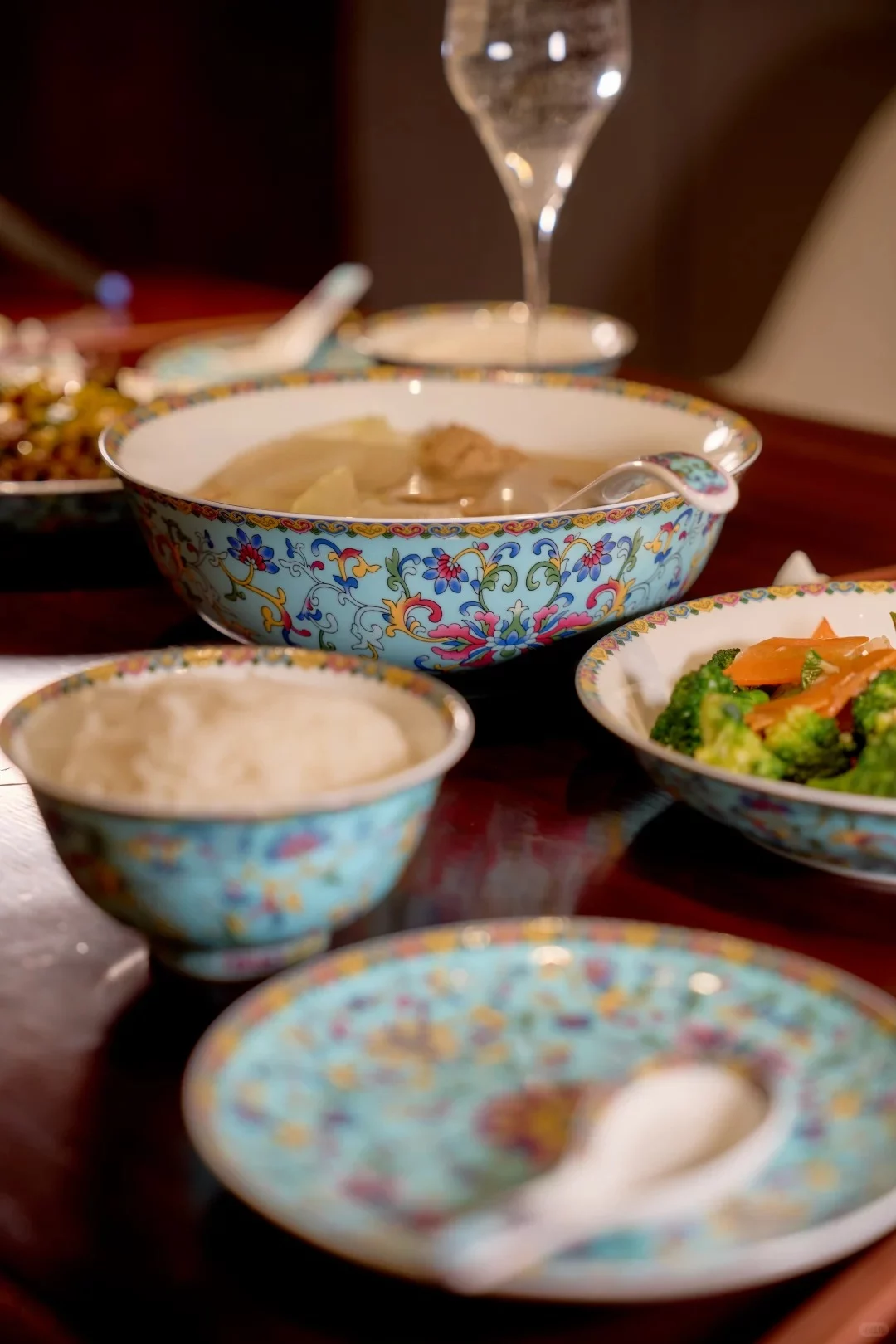
Falangcai · Imperial Wucai & Painted Porcelain Collection
A serving bowl with its ladle, rice bowls, deep plates and spoons make up this falangcai dinner service, each wrapped in turquoise enamel and lotus scrolls. Painted in our Jingdezhen factory, it goes to ceremonial gift programs and private dining rooms, boxed by the place setting.
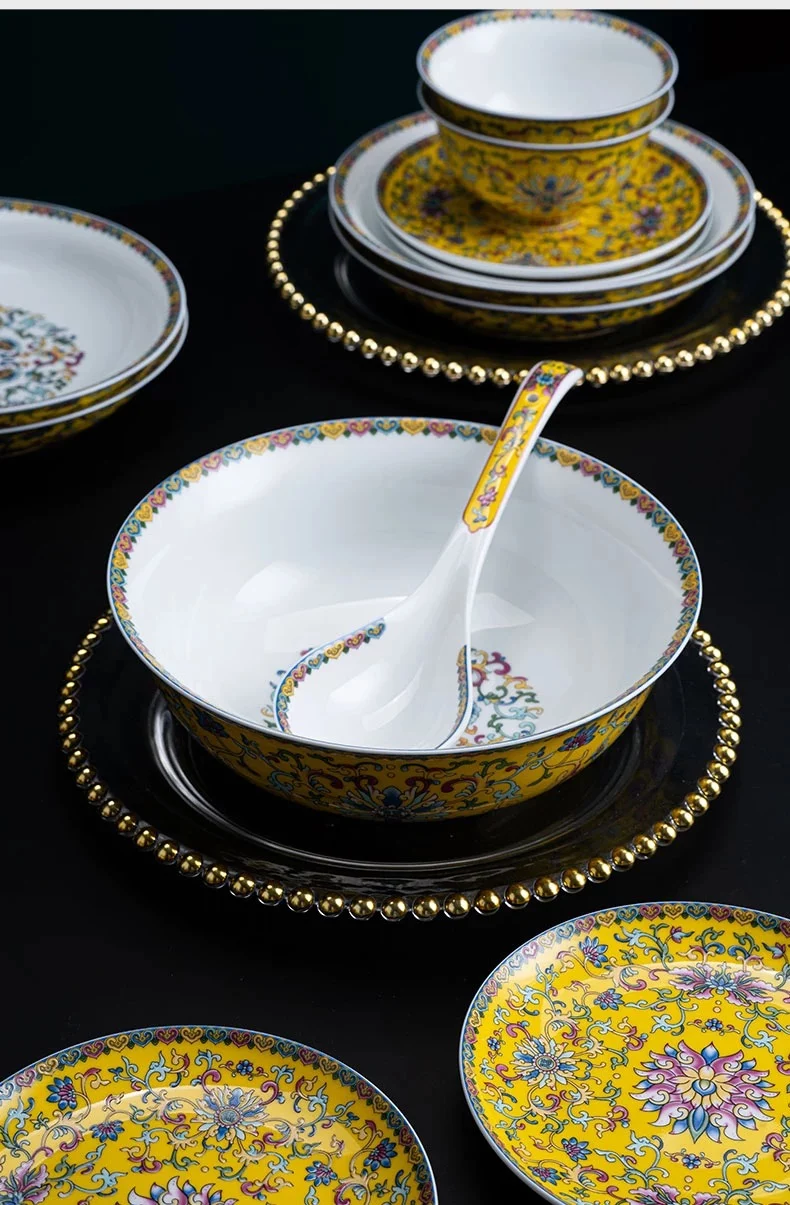
Falangcai · Imperial Wucai & Painted Porcelain Collection
A single lotus opens at the bottom of the large bowl in this yellow-ground service, and lotus scrolls run around every plate and bowl beneath a cloud-head rim. It is enameled by hand at our Jingdezhen porcelain factory, and gift programs order it as a full service.
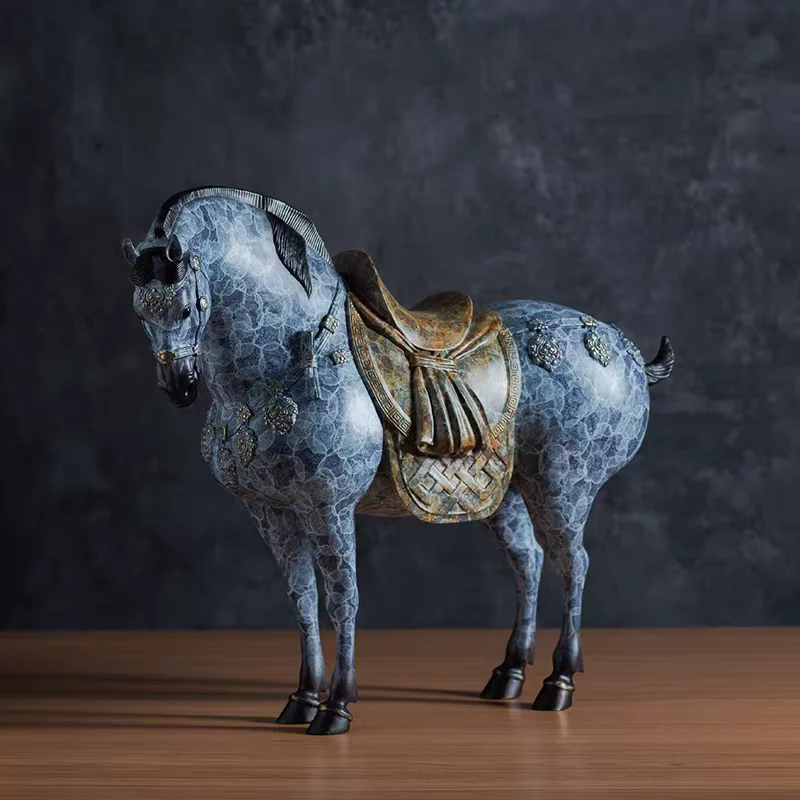
Imperial Wucai & Painted Porcelain Collection · Tang Sancai
A blue crackle glaze, its cracks traced in white, covers this Tang-form horse, and a bronze-toned metallic luster picks out the saddle and harness. Made in KKCN's own Jingdezhen workshops, it is chosen for interiors, executive gifts and design retail.
Imperial Wucai & Painted Porcelain Collection · Tang Sancai
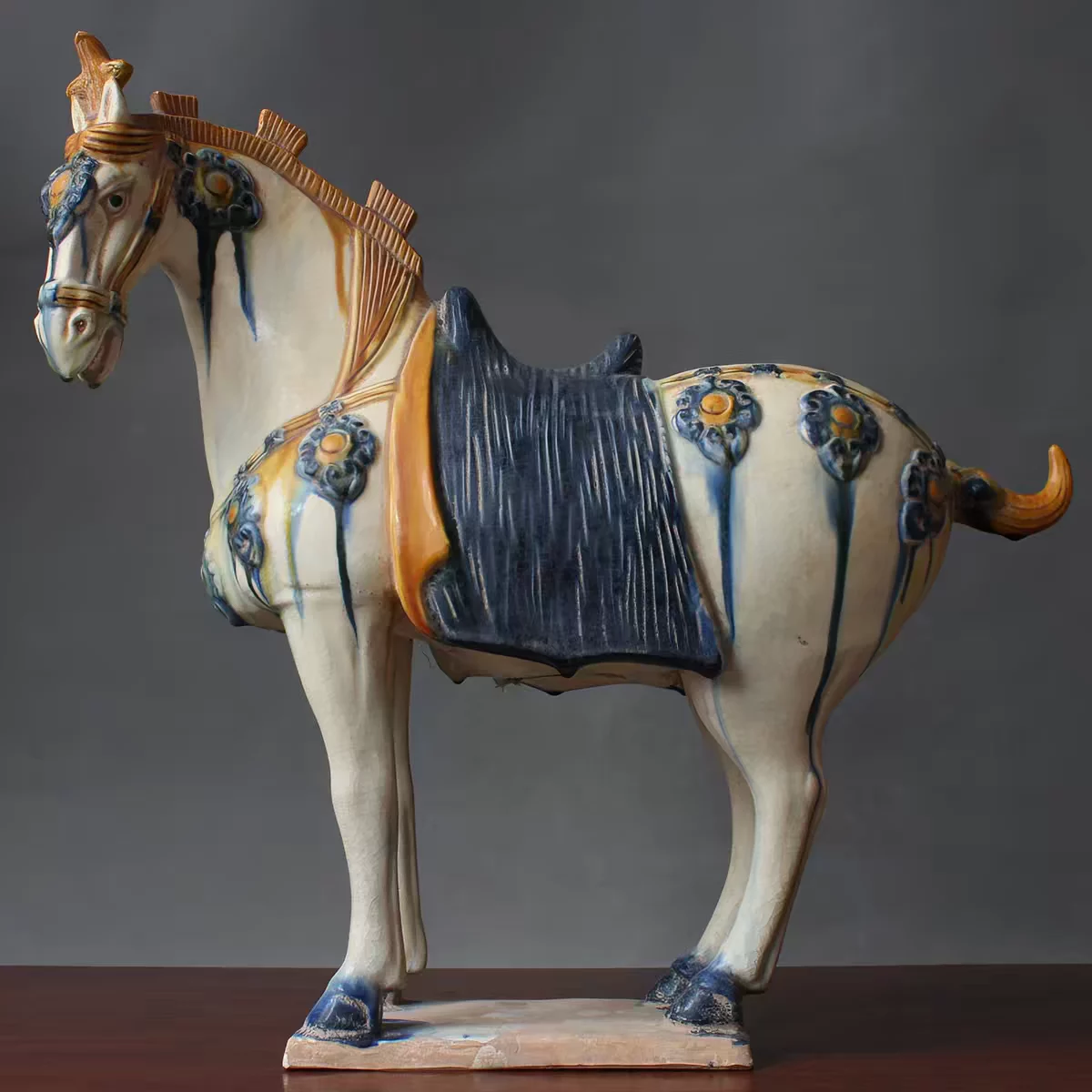
A Tang-style horse stands square on a flat slab base, head turned slightly left, in crackled cream glaze with an amber mane and a cobalt saddle cloth. Made in our Jingdezhen factory, it goes to hotel lobbies and cultural retailers, from one horse to a matched pair.
Blue and white is painted before the glaze goes on. Everything in this collection is painted after. The porcelain is first fired white and finished at about 1,300 °C, and only then does the painter start, working in enamels: colored glass ground to a powder and mixed into a paint. The piece goes back into a cooler kiln at about 780–850 °C, hot enough to melt the enamel onto the glaze and not hot enough to burn it away. That lower heat is the point. Pinks, greens, yellows and bright reds that would vanish at full temperature survive, and the palette opens far beyond cobalt and copper.
The styles differ in how they use that palette. Wucai, the Ming "five colors", draws its outlines in underglaze cobalt and lays red, green, yellow and aubergine enamels over them in bold, flat areas. Doucai is the finer cousin, perfected under the Chenghua emperor: thin cobalt outlines fired first, then filled with enamel so exactly that line and color seem to lock together. Famille rose brought opaque white into the enamels in the Qing dynasty, which let a petal shade from deep rose to almost nothing. Falangcai began in the Kangxi emperor's palace workshops and is the most minute of all, with dense colored grounds and brushwork you need to lean in to see.
What separates a modest painted cup from an expensive one is rarely the enamel itself. It is hours at the brush, the number of times a piece goes back into the kiln, and whether the ground is left white or painted solid. A yellow-ground dinner service costs more than a white-ground cup because every part of that yellow is laid by hand and has to fire evenly. A fully hand-painted order takes about 45 to 60 days.
Tang sancai is the exception, and it is here on purpose. Sancai, "three colors", comes from the Tang dynasty, more than a thousand years before famille rose. It is low-fired earthenware, and its color is in the glaze rather than painted on top of it: amber, green and cream that run and pool as they melt. No brush controls where they settle. It shares this collection because it is the other great tradition of colorful Chinese ceramics, and the two horses in it are display pieces for indoors.
Wucai and doucai, the styles in the collection's name, now have pages of their own: a lotus covered jar and four tea cups under wucai, and two gaiwan tea sets under doucai, all in stock. Both are also painted to commission, with a motif, a form and a palette agreed on a fired sample before the run. Miniature wucai ornaments made this way have stocked East Art Gallery's museum stores around Washington, D.C. for five years, a partnership described on About KKCN.
Doucai vs wucai is the question we hear most: both start with cobalt under the glaze, but doucai keeps every outline fine and fills it exactly, while wucai lays its enamels in bold, flat areas. Our guide to Chinese porcelain decoration techniques covers each style and what drives its cost.
Who makes it
Famille rose is painted in KKCN's own Jingdezhen workshops; falangcai, wucai and doucai are painted in Jingdezhen, including heritage studios working under KKCN's quality control, and every enamel piece is refired at about 780–850 °C. Both the Silk Road horse and the Chang'an horse are made and fired in KKCN's own Jingdezhen kilns. All pieces are inspected and packed at KKCN's Jingdezhen headquarters, and He Jiang reviews high-end handmade work.
Custom orders
Process
Choose a reference or send your own design.
Approve a fired sample or photos before production.
Inspected, packed and shipped from Jingdezhen.
FAQ
Because the glaze and the enamels need very different heat. The porcelain body and its clear glaze mature at about 1,300 °C, and most enamel colors would burn off or turn dull at that temperature. So the piece is fired white first, painted on the finished glaze, and fired again at about 780–850 °C to fuse the enamel. A piece with many colors, or with a solid ground under the painting, may go back to the kiln more than once.
On a display piece, no: the enamel is fused to the glaze and will not fade or flake on a shelf. On a piece used daily, enamel sits on top of the glaze rather than under it, so years of abrasive scrubbing, dishwasher detergent and cutlery can slowly dull it, starting at the rim. Hand washing with a soft cloth keeps it bright. Test reports for daily-use pieces are listed on Quality Control.
It depends on the occasion and the budget. Famille rose, with its soft pinks and greens, has the broadest appeal and suits tea sets and cups in gift boxes. Falangcai is the top tier, for ceremonial gifts and limited editions where a dense ground and fine brushwork are worth the hours. Wucai's bold colors read as festive and fit New Year programs. A Tang sancai horse makes a single executive gift for an office or lobby.
Order minimums, samples and shipping are covered on Samples & Quotations and Packing & Shipping. Technique names on this page are defined in our Chinese porcelain glossary.
Send a photo, a sketch or a size, and we will tell you which reference comes closest or quote it as a custom piece.
Product inquiry
Share the PP numbers, quantity, destination and any customization. We reply within 1–2 business days.