KKCN ceramic logo
Request a Quote

Silk Road Tang Sancai Horse

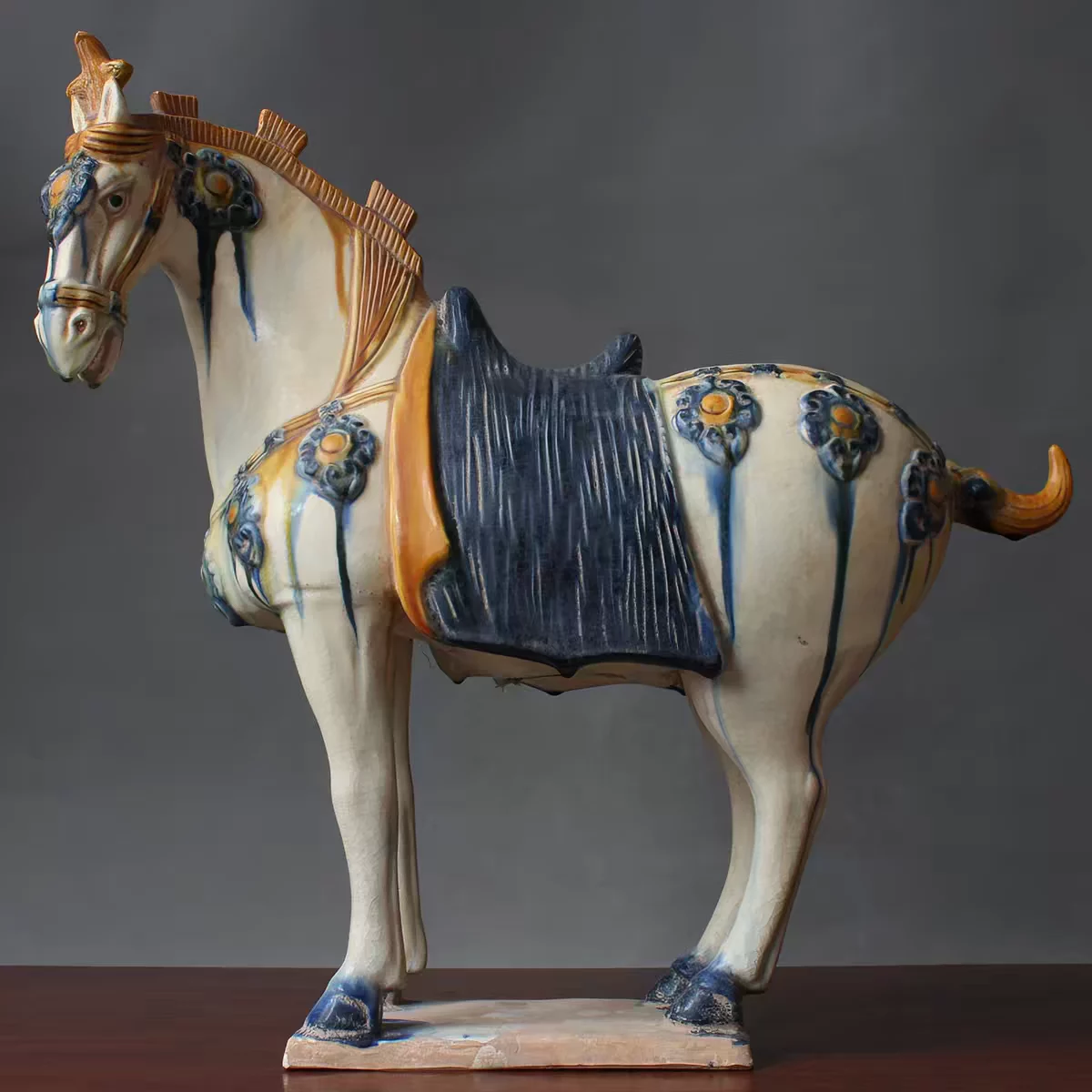
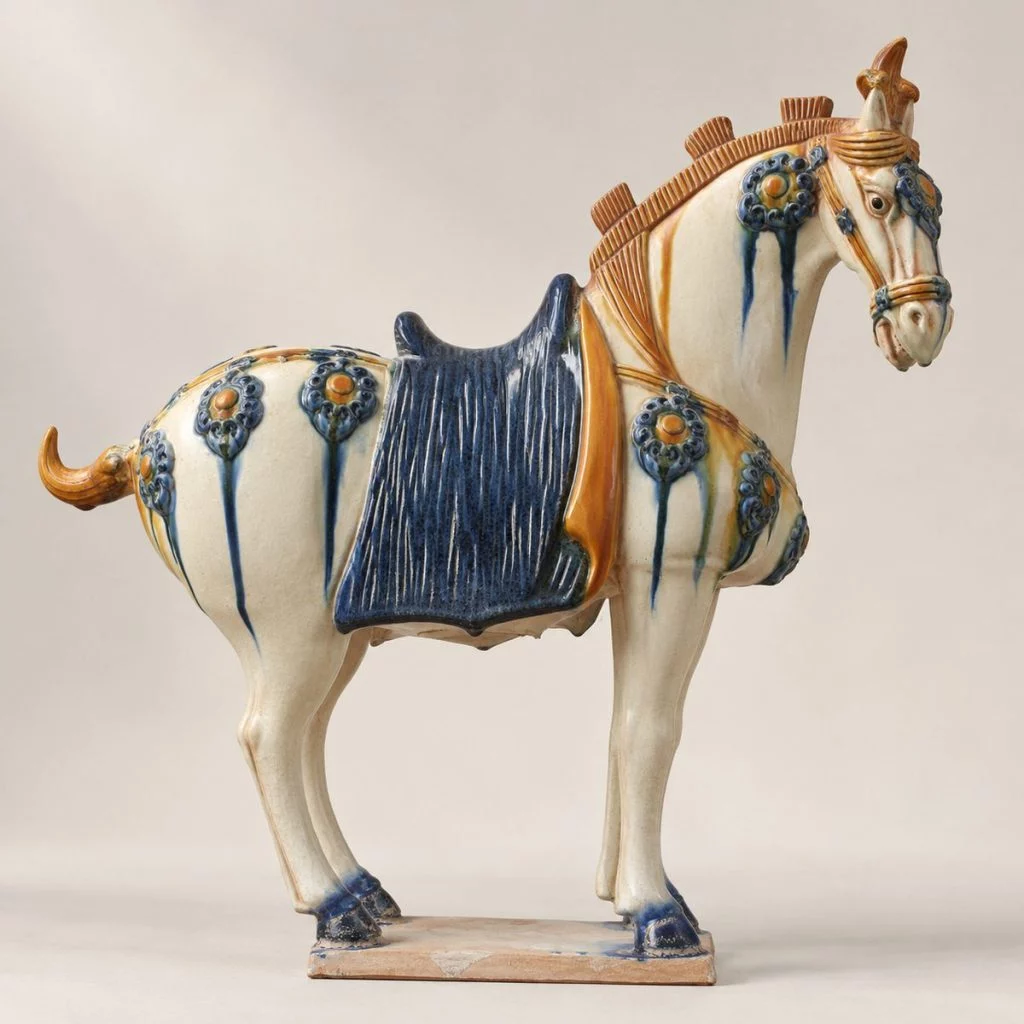
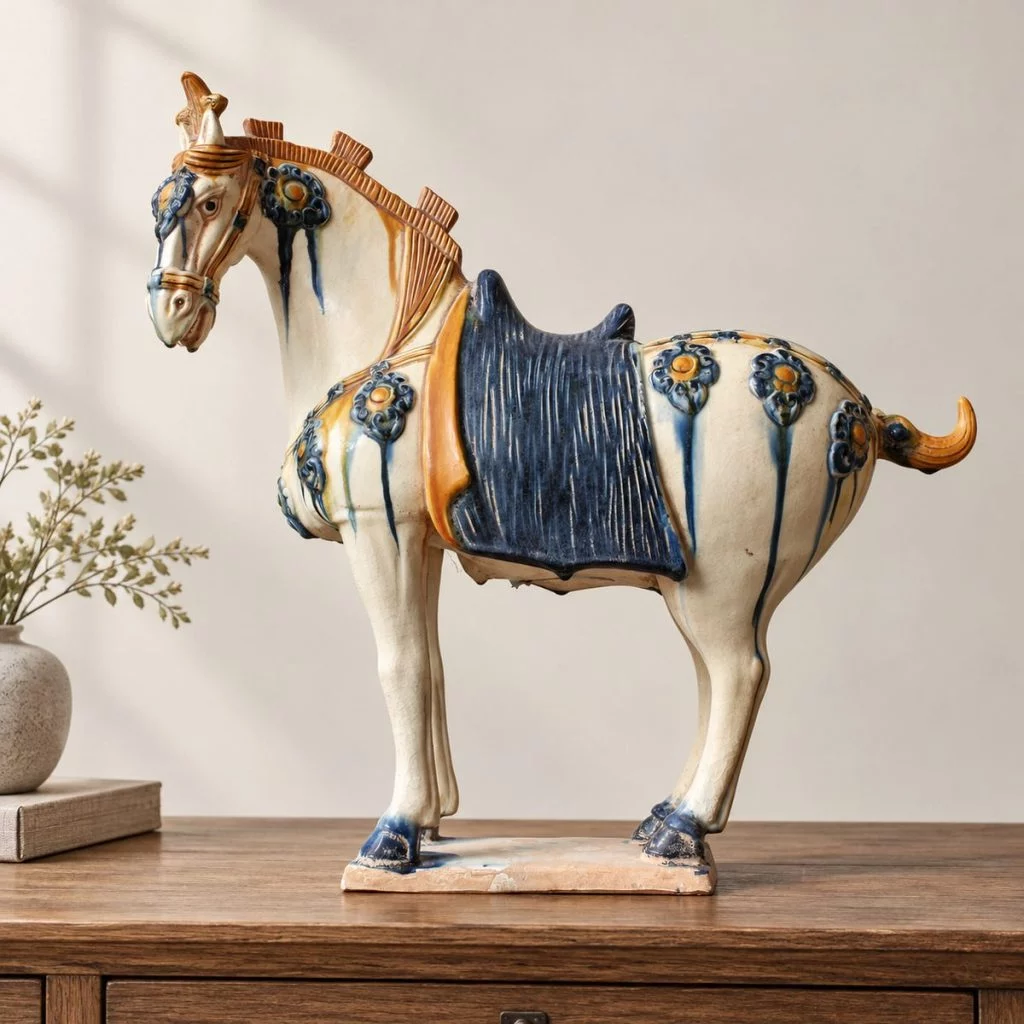
A Tang-style horse stands square on a flat slab base, head turned slightly left, in crackled cream glaze with an amber mane and a cobalt saddle cloth. Made in our Jingdezhen factory, it goes to hotel lobbies and cultural retailers, from one horse to a matched pair.

PP-002
Tang sancai horse standing on a slab base, cream glaze with an amber mane and a cobalt-blue saddle cloth

Need this in your size or glaze?

Tell us the quantity and destination and we will confirm options.

At a glance

Product details

Reference
PP-002
Collection
Imperial Wucai & Painted Porcelain Collection
Type
Tang sancai earthenware
Finish
Cream, amber and cobalt sancai glazes
Availability
In stock · made to order

Specifications

Specifications

Reference designStanding Tang-style horse on a slab base in cream, amber and cobalt glazes
Sizes30–80 cm (12–31 in) tall; larger on request up to 130 cm (51 in); exact size confirmed in your quote
SetSingle horse as pictured; a pair, or a horse and camel, to order
BodyGlazed earthenware
DecorationCream, amber and cobalt sancai glazes left to run; incised saddle cloth
FiringLow-fired glazed earthenware, made in our own workshops
UseIndoor display
OrderIn stock from 1 piece; mixed orders from 10 pieces; custom from 50 pieces per style
Lead timeStock pieces leave Jingdezhen in 3–7 working days. Production runs take 15–25 days, and sizes above 60 cm are quoted with their own schedule.
PackingLegs, ears and tail checked, then crated in fitted foam inside a solid wood frame.

Applications

Where it is used

Hotel lobbies and reception areas use it as a single statement piece, usually on a plinth at eye level. Console tables in homes and offices take the smaller sizes, and cultural retailers sell it beside books and prints about the Silk Road and Tang China.

A Tang horse in cream, amber and blue

The horse stands four-square on its slab base with its head turned slightly to the left, as if something off to one side has caught its attention. The mane is cropped short in ridged tufts and the tail is tied up, the way grooms in Tang China dressed a fine horse for parade.

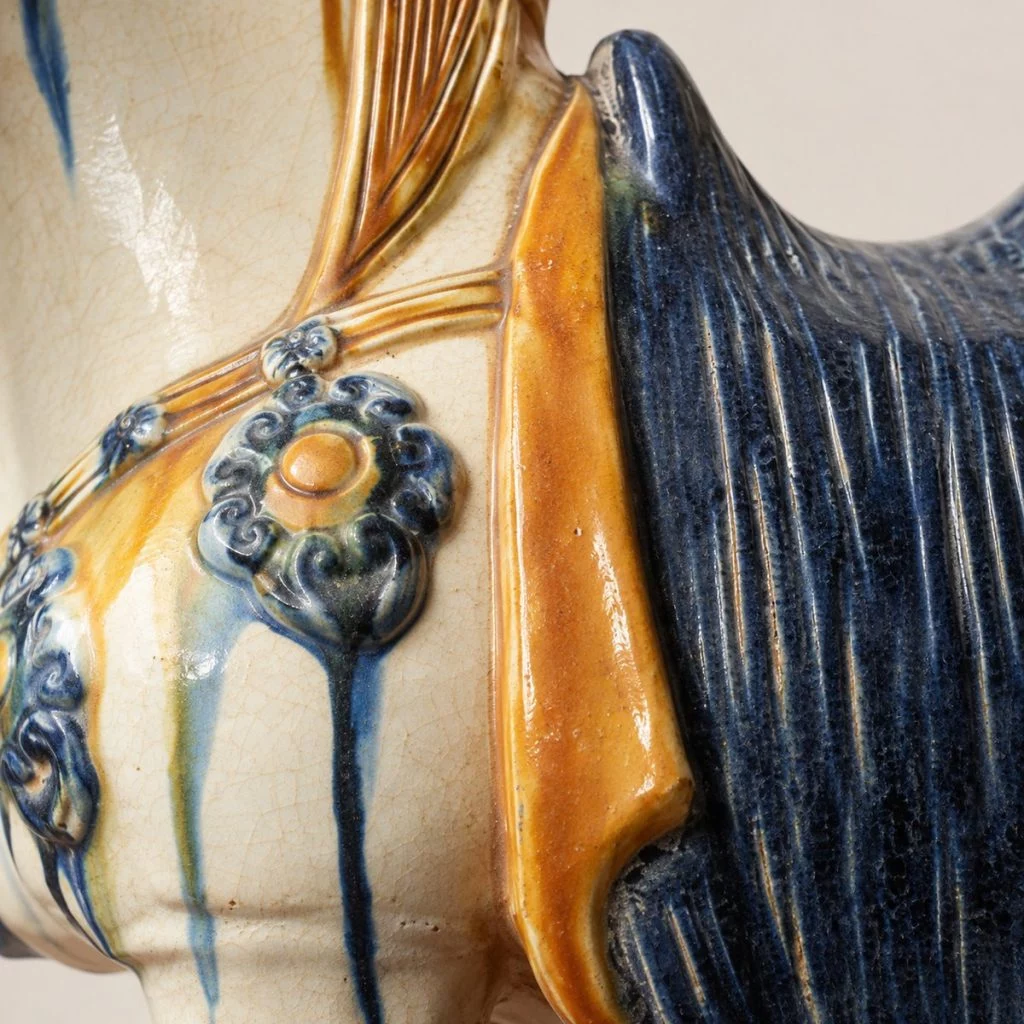
Most of the body is a cream glaze, crazed all over with fine cracks. Amber picks out the mane, the tail and the straps of the harness. The saddle cloth is cobalt, with lines incised into the clay beneath so the blue pools darker in them, and the rosettes on the harness are glazed blue and amber. In the kiln those colors melted and ran, leaving drips down the flanks that stop short of the base, where the pale buff clay shows bare.

The blue matters. In the Tang dynasty cobalt was imported and costly, so sancai with blue in it was the rarer, finer kind, and a blue saddle cloth marked a horse worth showing off.

We make this horse in our own workshops, glazing and firing the sancai in-house, then inspect and pack it at KKCN’s headquarters in Jingdezhen. It is low-fired earthenware, made to be displayed indoors.

How the three-color sancai glaze runs and pools in the kiln is explained in our guide to Chinese porcelain glazes.
Customization

What can be adapted

01

Size

From a 30 cm console horse to a lobby piece up to 130 cm tall.

02

Glaze

More amber, more cobalt, or green added to the classic palette.

03

Pair

A matched pair, or a horse with a camel, sampled and fired together.

Quality

Checks before packing

  • Legs, ears and tail checked at the joints
  • Glaze runs checked against the reference
  • Base checked for level
  • Crated with fitted foam

More from KKCN

Related products

FAQ

Questions about this piece

Can the horse stand outdoors?

No, it is an indoor piece. Earthenware is slightly porous, and the crackled glaze and the bare base both let moisture in. Rain wears the surface, and water that freezes inside the body can push the glaze off in flakes. Indoors, away from damp, it lasts indefinitely. Dust it with a soft, dry brush; never soak it or put it in water.

Why does the cream glaze have fine cracks?

The glaze and the clay shrink by slightly different amounts as the horse cools after firing, and the glaze, the more brittle of the two, crazes into a fine network of lines. It is typical of sancai and part of its look. The cracks are in the glaze surface only, they do not weaken the horse, and they are checked against the reference before it ships.

Why is it called the Silk Road horse?

Because the horses the Tang court prized most came along the Silk Road from Central Asia, taller and stronger than local breeds, and sancai potters modeled their figures on them. Chang'an, the Tang capital, sat at the eastern end of that road. The name points to that history: the horse is a new piece, made today in the Tang manner.

What does a Tang horse symbolize?

In the Tang dynasty, horses stood for wealth, rank and the trade that crossed the Silk Road, and glazed horses were made as tomb figures for families of standing. Today a horse is a classic gift for success and progress, and a sancai horse is one of the best-known images of Chinese ceramics.

Order minimums, samples and shipping are covered on Samples & Quotations and Packing & Shipping.

Request a quote

What to include in your inquiry

Ready to source this piece?

Send the PP number, your quantity and your market, and Lin Wan replies within 1–2 business days with a price, sample options and a lead time.

Product inquiry

Tell us what you need

Share the PP numbers, quantity, destination and any customization. We reply within 1–2 business days.

Name