The peony gets a window of its own
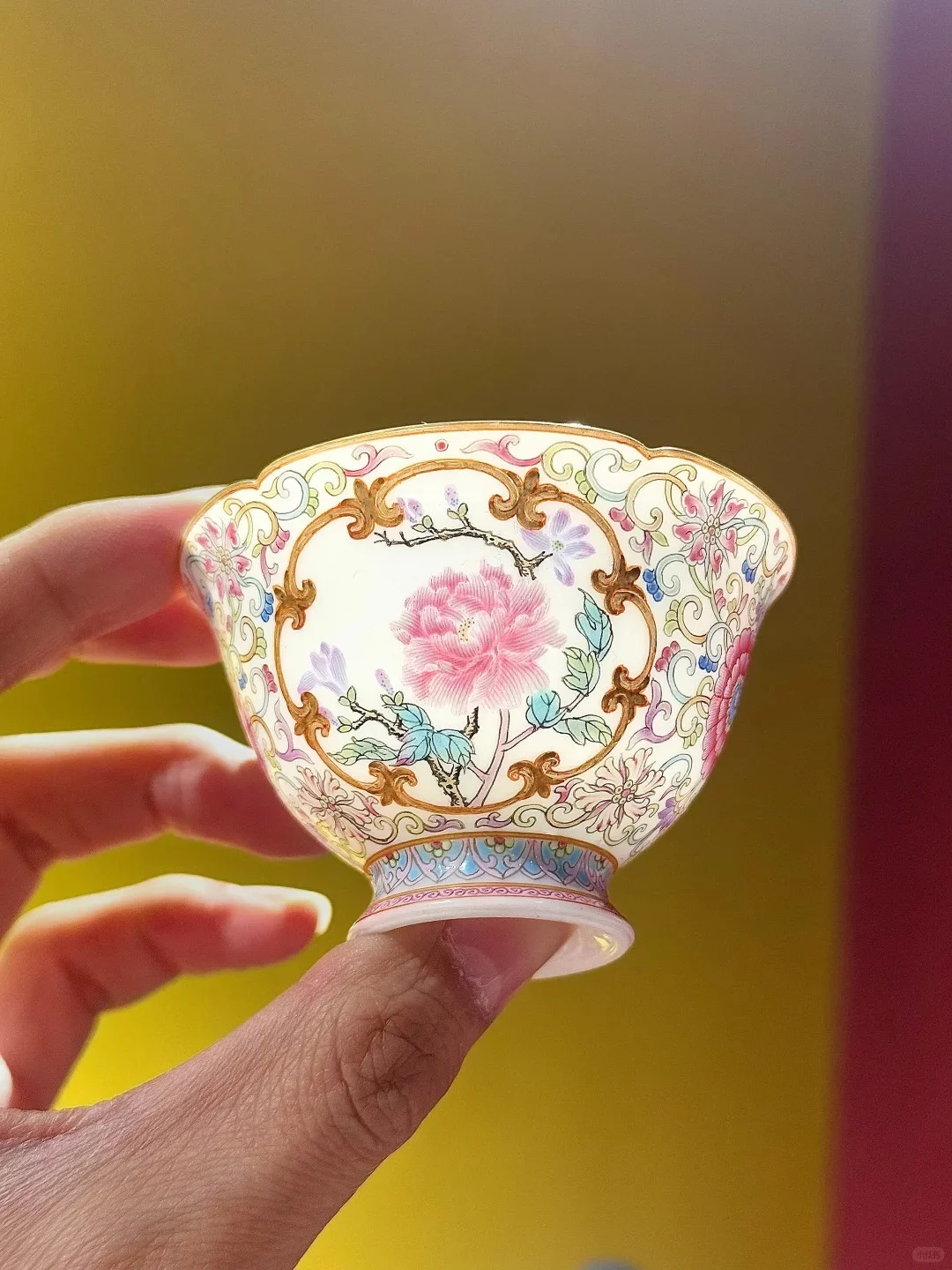
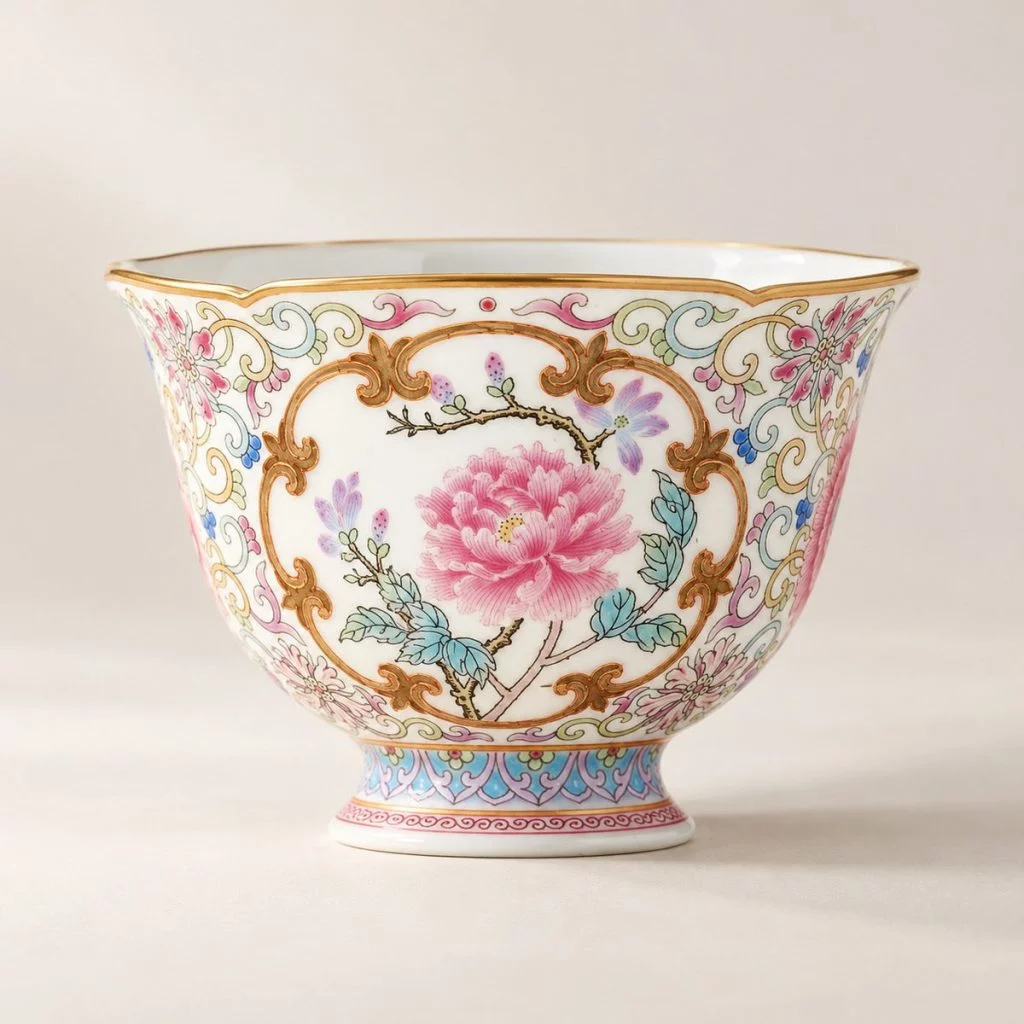
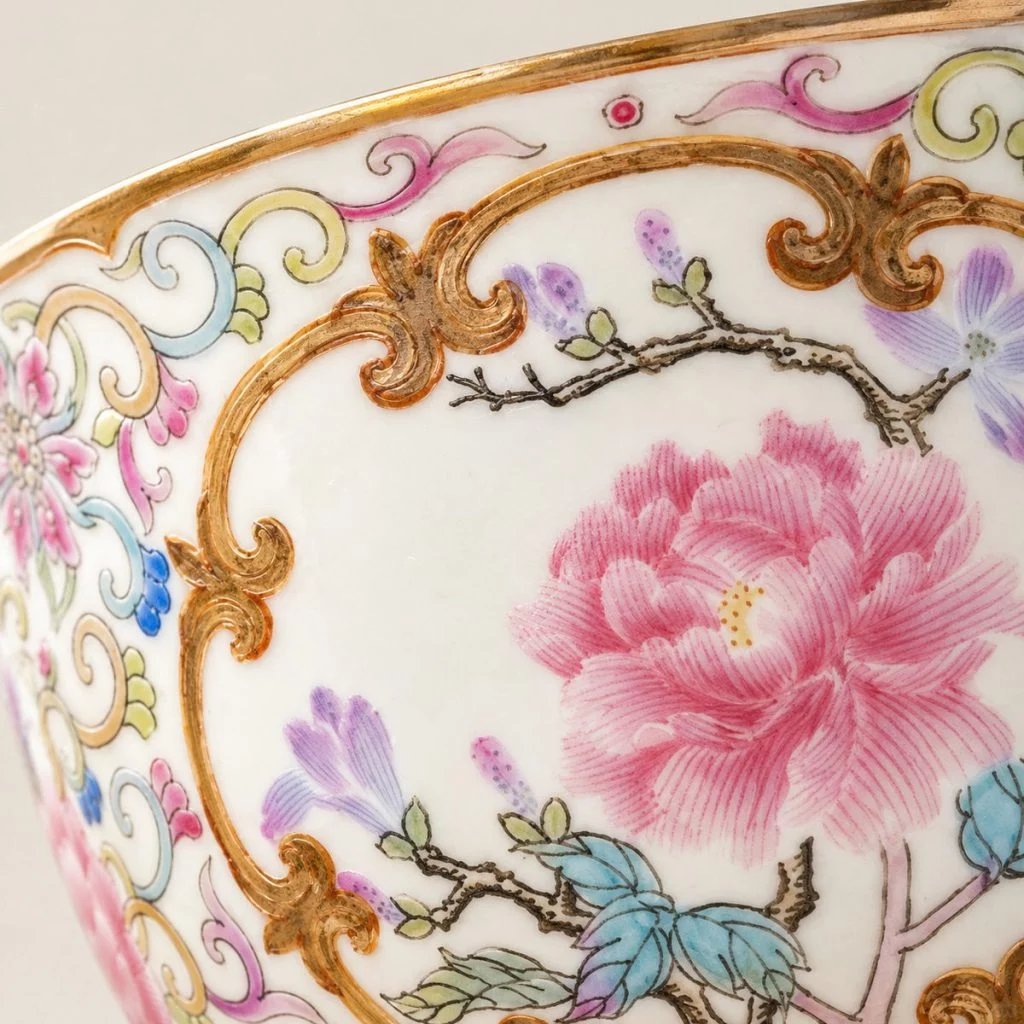
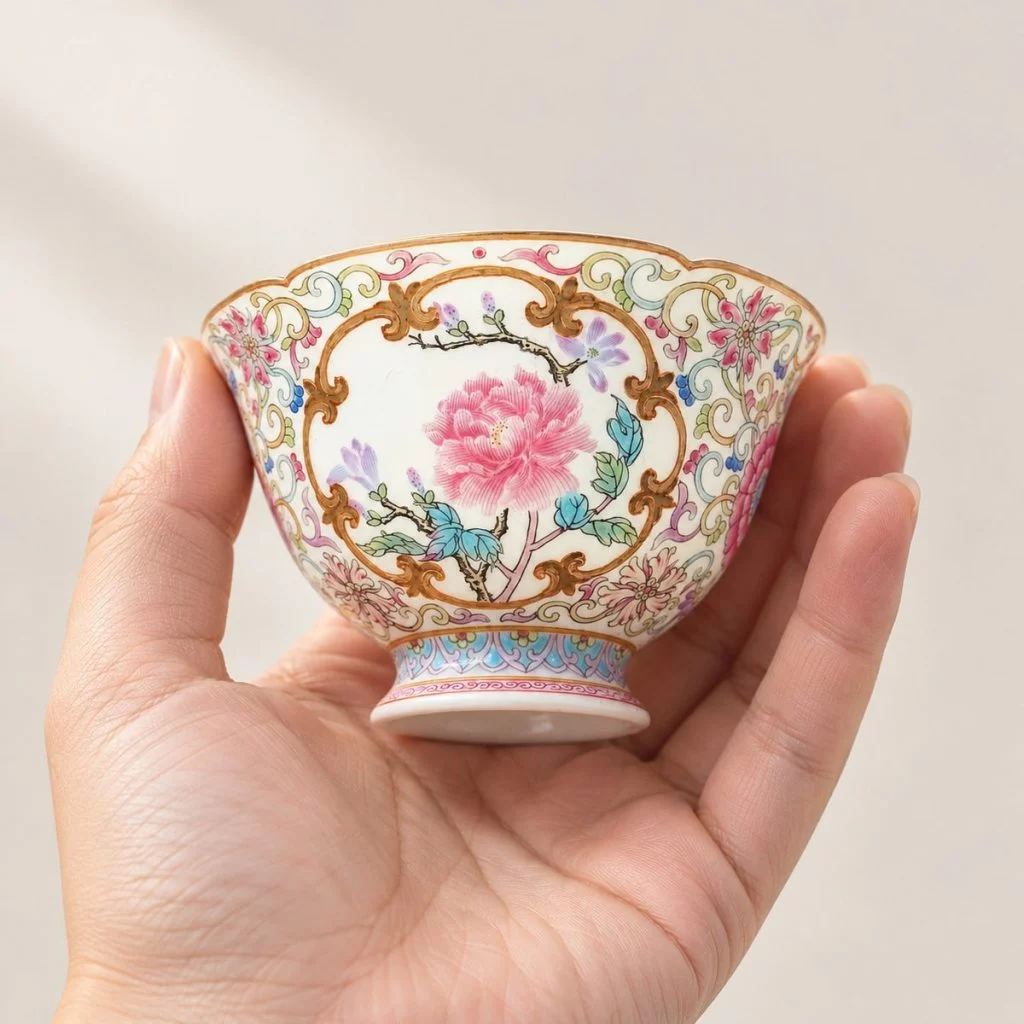
Almost the whole outside of this cup is covered. Small blossoms and curling leaves run edge to edge in dense scrolls, the way falangcai painters liked to fill a surface. Then, on one side, the pattern stops. A panel is held back in plain white, framed by a fine line, and inside it a pink peony and a flowering branch are painted like a picture in a small album.
The contrast is the point. Against all that busy ground, the quiet white panel reads as a frame, and the eye goes straight to the flower. Chinese painters call the device kaiguang, “opening the light”, and Qing porcelain uses it everywhere, from tiny cups like this one to tall vases with four or five panels.
The peony is the obvious choice for the window. Long called the king of flowers, it stands for wealth and honor, which is why it turns up on so many gifts. The cup itself echoes it: the lobed rim curves like petals, and the tall foot lifts the whole cup off the table, finished with a turquoise band.
It is a small cup, made for a few sips of tea at a time. Each one is painted in Jingdezhen on porcelain fired first at about 1,300 °C, then refired at about 780–850 °C to fix the enamels.
Falangcai, the fine enamel painting first made for the Qing court, is compared with famille rose in our Chinese porcelain decoration guide.