Resources
Buyer guides from Jingdezhen
Ten guide collections on sourcing, craft and selling Chinese porcelain, written by our export team.
Browse all guides ↗ Resources
Buyer guides from Jingdezhen
Ten guide collections on sourcing, craft and selling Chinese porcelain, written by our export team.
Browse all guides ↗KKCN collection
Blue and white porcelain is painted in cobalt on the unfired clay, covered in clear glaze and fired once, so the blue sits under the glass for good. The Blue & White Porcelain Series gathers the three underglaze lines KKCN makes in its own Jingdezhen workshops: cobalt blue, copper-red underglaze red and plain or carved white. Every piece is in stock from 1 piece.
Blue & White Porcelain Series · Classic Blue & White
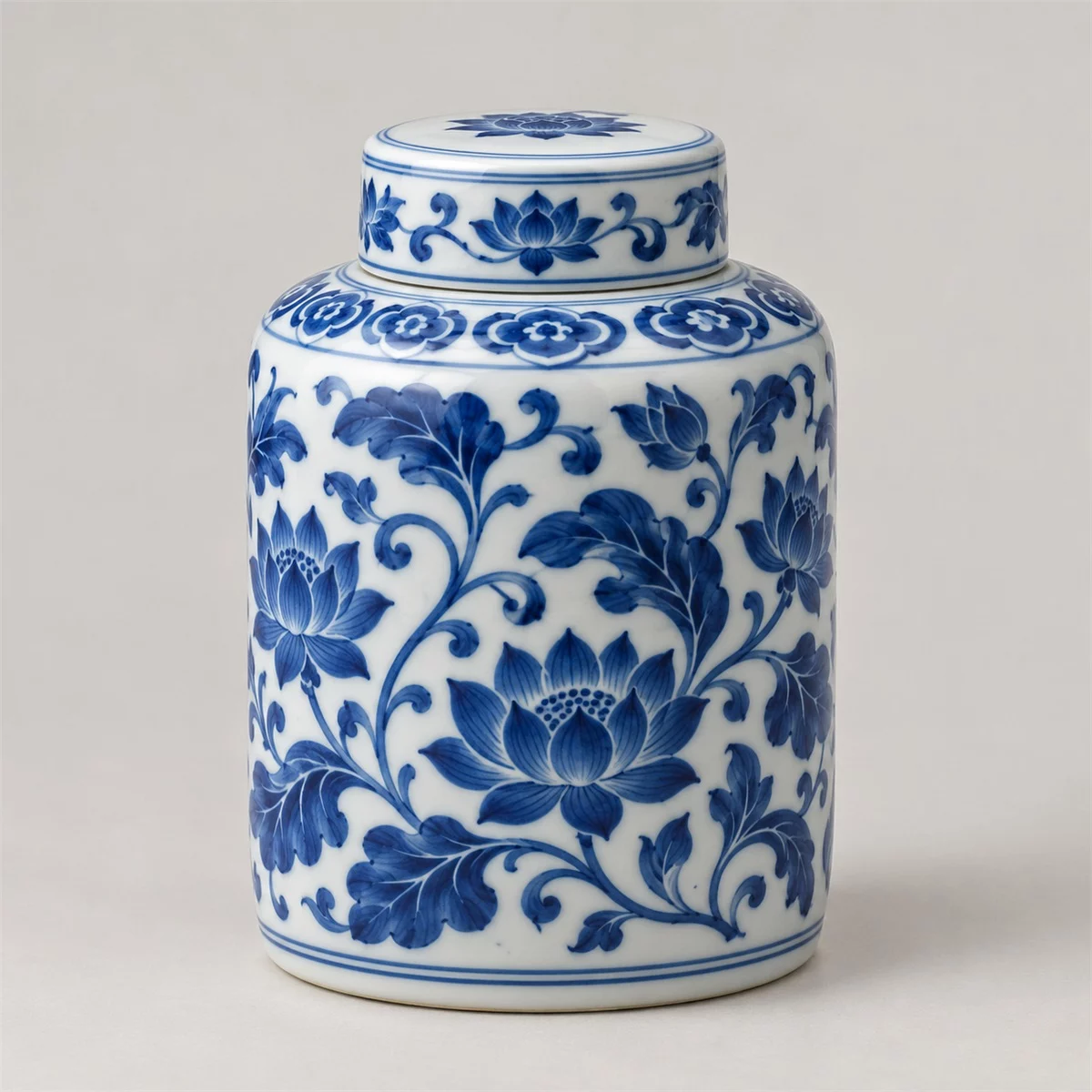
This lidded porcelain tea caddy is hand-painted in underglaze cobalt and fired under a clear glaze in our Jingdezhen factory. Tea shops stock it for loose leaf and gift sets, and we hold it in Los Angeles and Toronto for fast reorders.
Blue & White Porcelain Series · Classic Blue & White
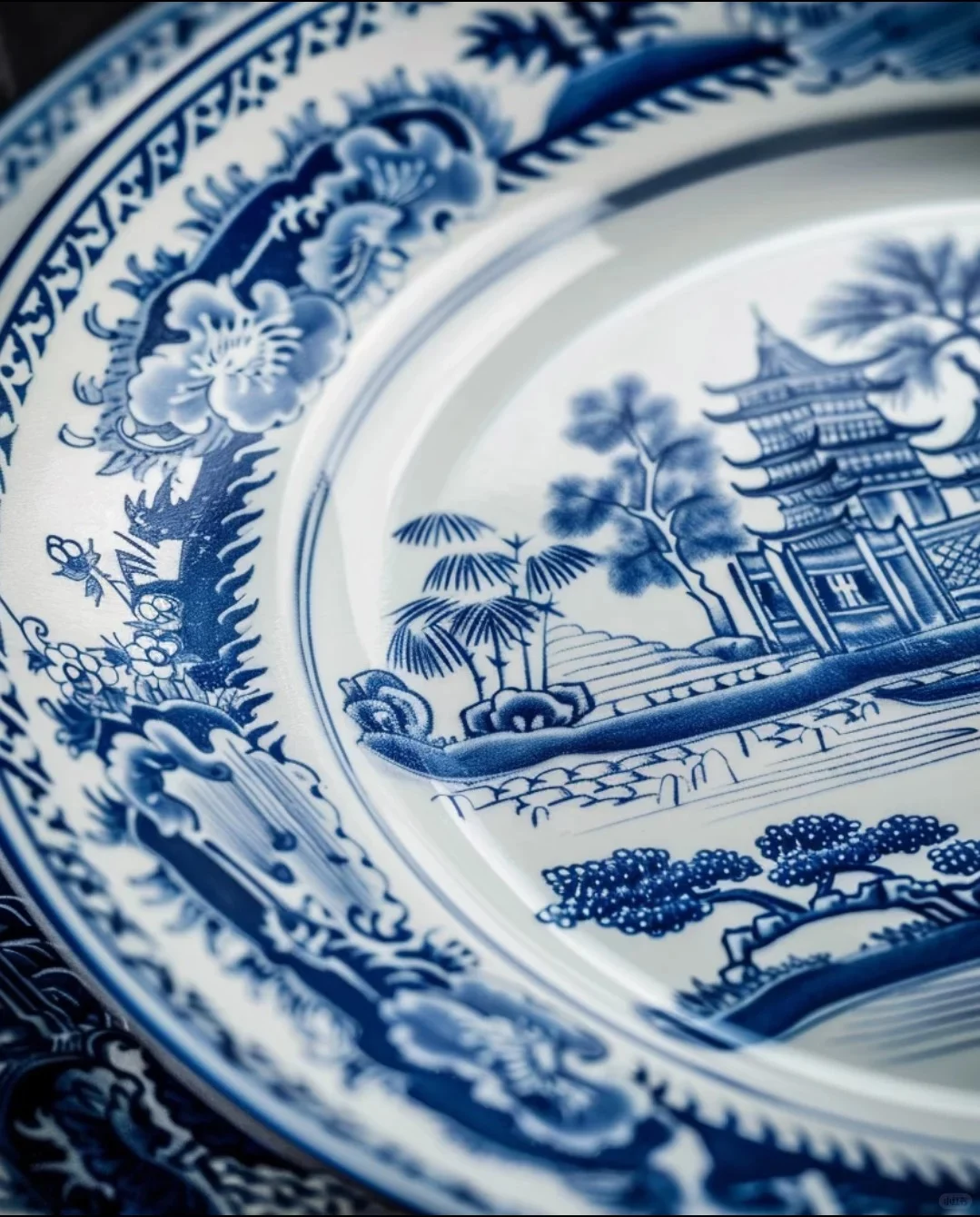
A pavilion stands between pine and bamboo at the center of this wide-rimmed plate, framed by a flowering branch on the rim and a patterned band at the edge. Hand-painted in cobalt at our Jingdezhen ceramic factory, it is the plate hotels order for their walls.
Blue & White Porcelain Series · Classic Blue & White
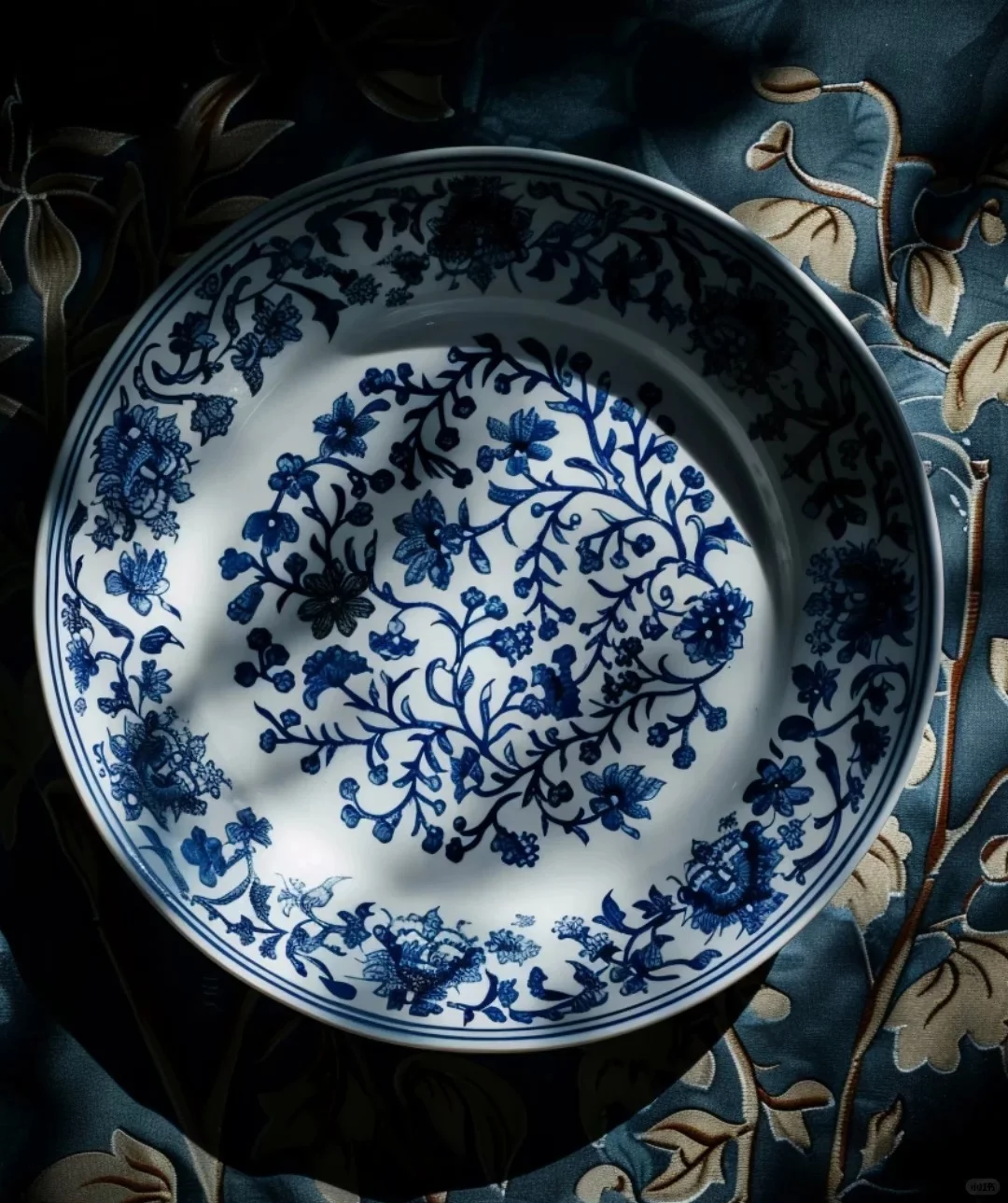
Dark cobalt outlines filled with a pale wash give this shallow dish its crisp, export-style look, with one flower scroll in the well and another around the rim. Many buyers start a ceramic tableware line from this dish, and our Jingdezhen factory paints the matching pieces.
Blue & White Porcelain Series · Classic Blue & White
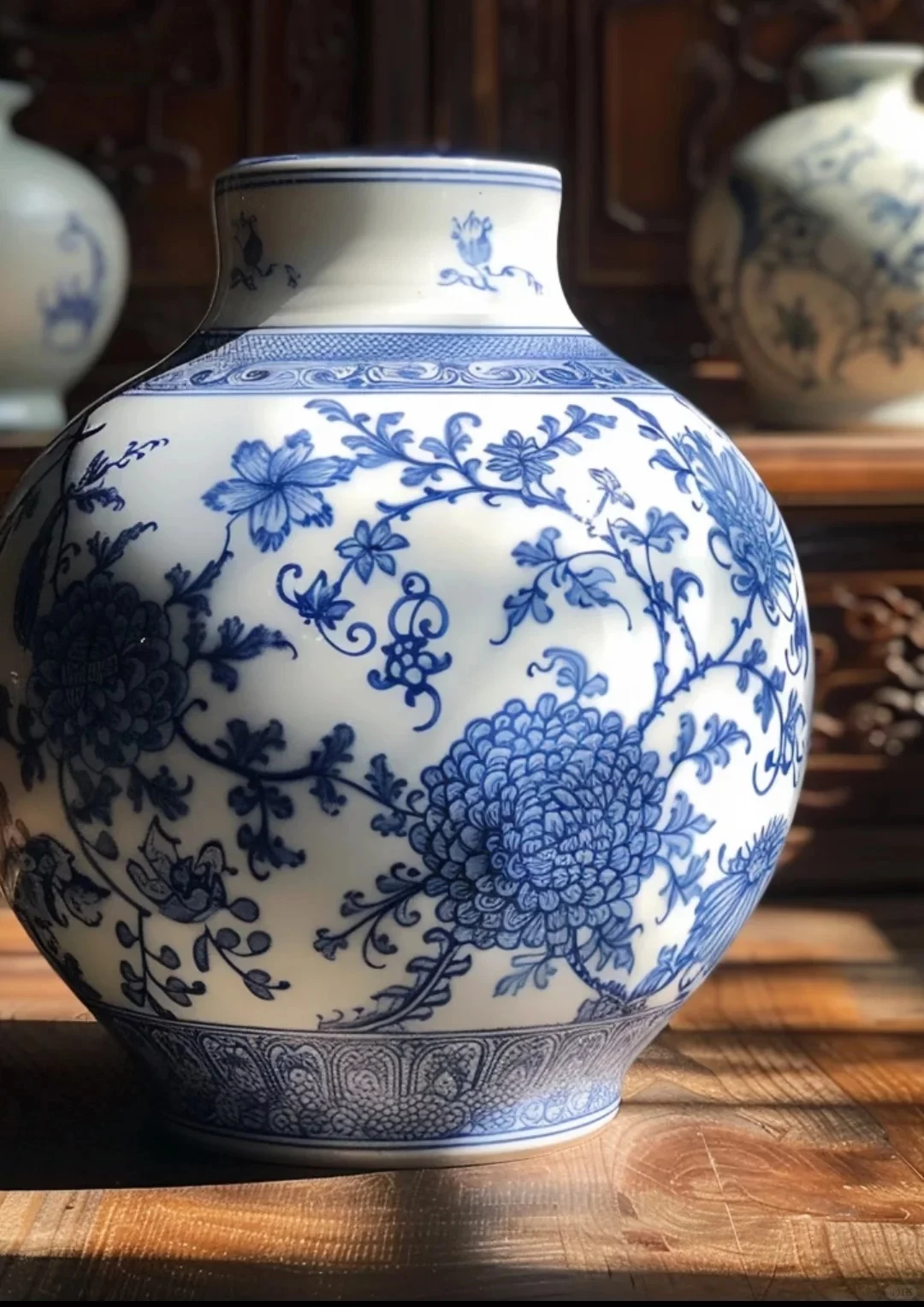
A round-bodied jar with a short, straight neck, painted in cobalt with a chrysanthemum and peony scroll between a shoulder band and a ring of lotus panels at the foot. Painted by hand in our Jingdezhen factory and shown without a lid, it is ordered by hotels and museum stores for display.
Blue & White Porcelain Series · Underglaze Red
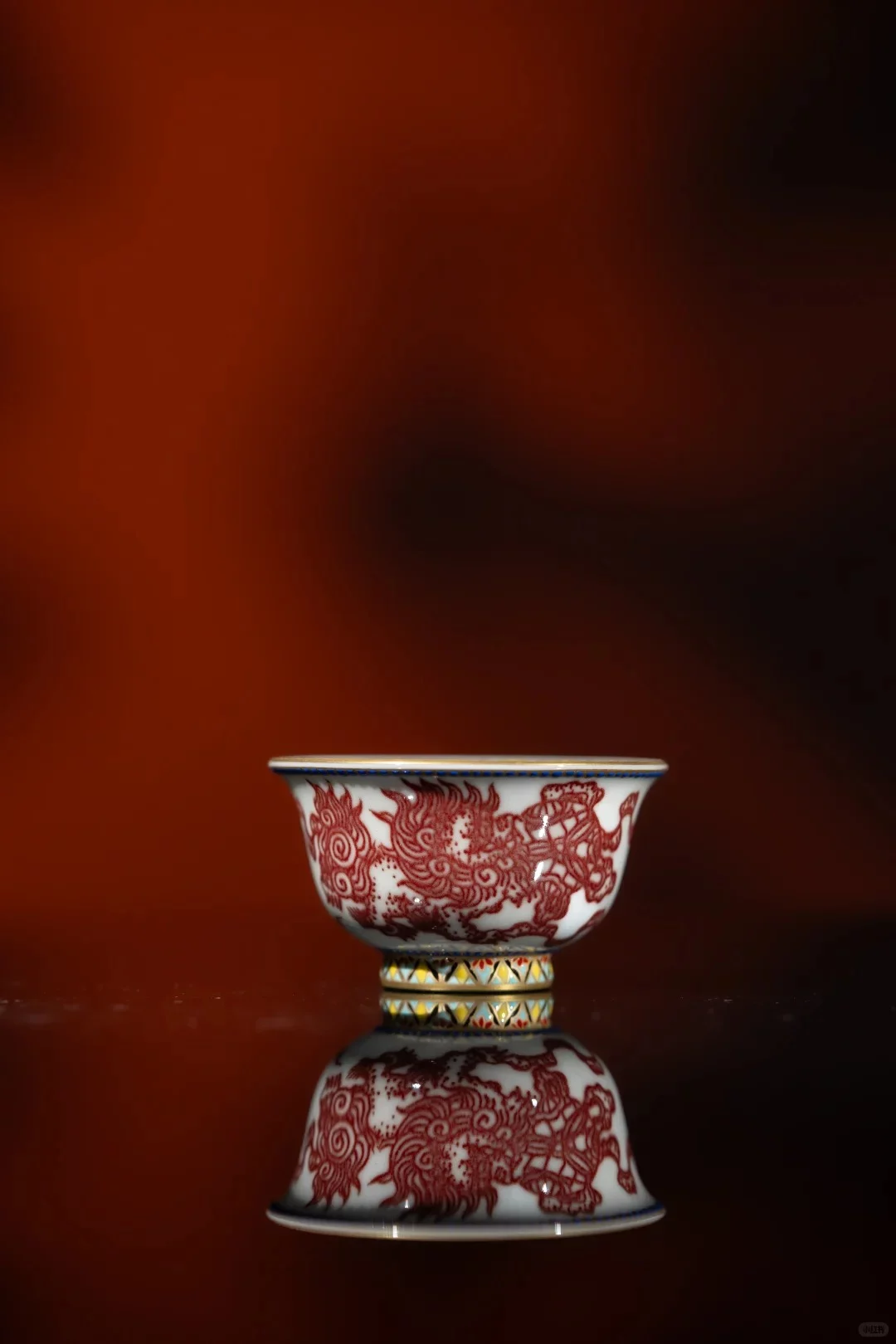
Two copper-red lions with curling manes chase a ribboned ball around this small footed tea cup, painted under the glaze and fired in reduction at our Jingdezhen factory. Collectors buy it singly, and festival gift buyers take it in pairs.
Blue & White Porcelain Series · Underglaze Red
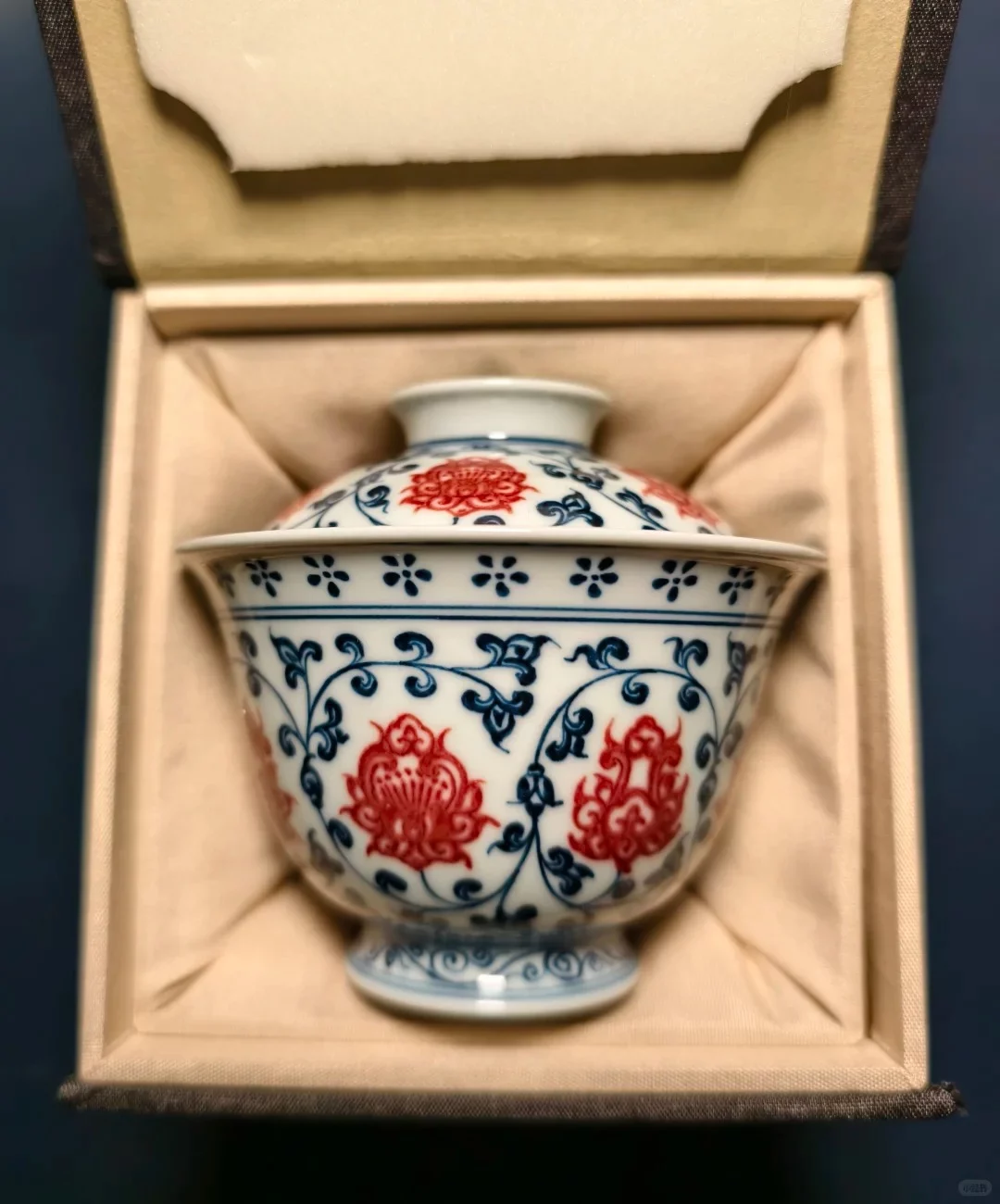
Copper red and cobalt blue are painted side by side under this gaiwan's glaze and fired once, as red lotus flowers on blue scrolling stems. We make it in our Jingdezhen ceramic factory and ship it in a lined presentation box for tea gifts.
Blue & White Porcelain Series · White Porcelain
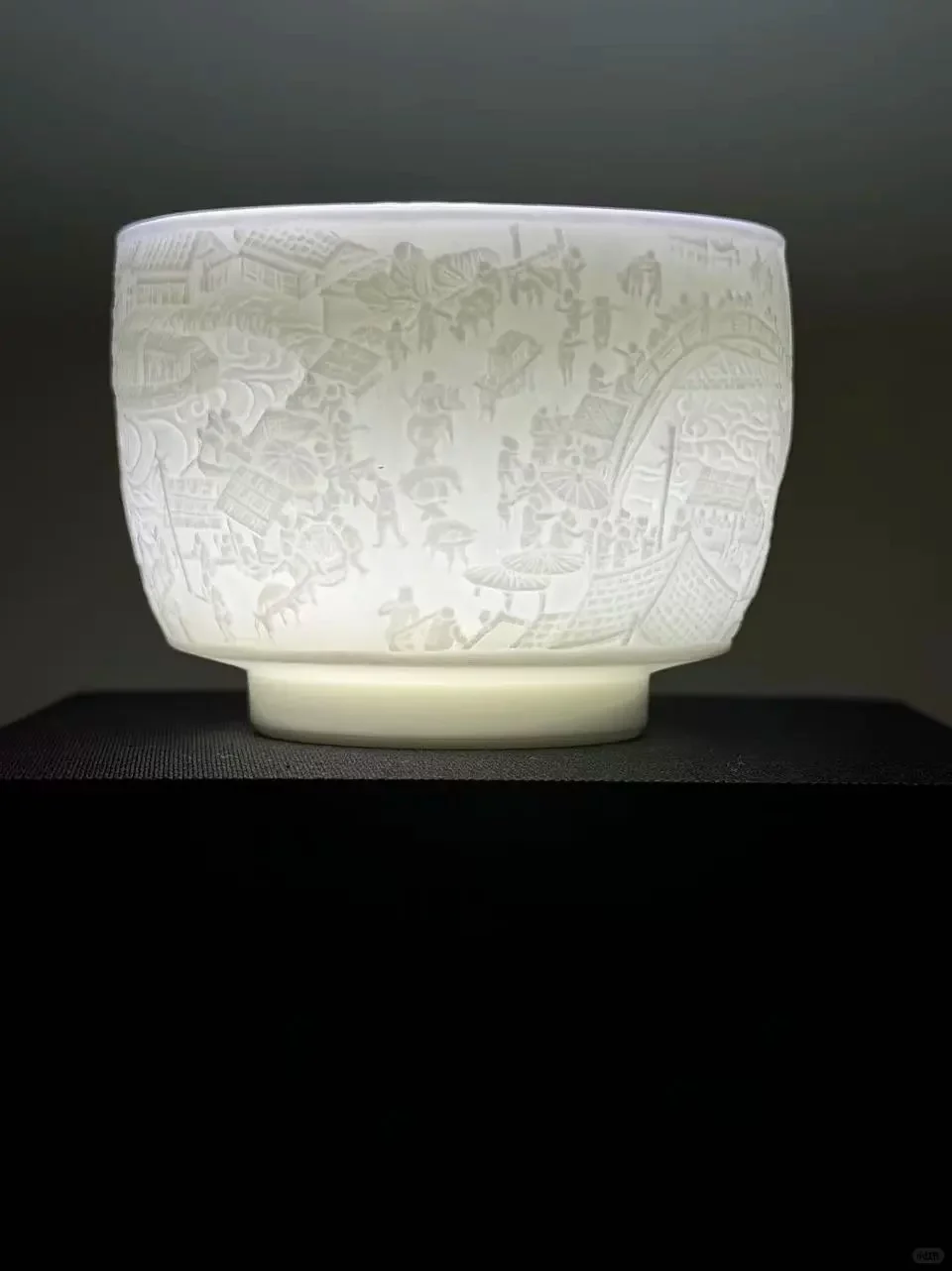
A straight-sided white porcelain cup on a wide foot ring, carved all the way around with a busy riverside market: an arched bridge, boats, rooftops and crowds. Made at the KKCN factory in Jingdezhen, it is a museum store favorite for cultural gift ranges.
Blue & White Porcelain Series · White Porcelain
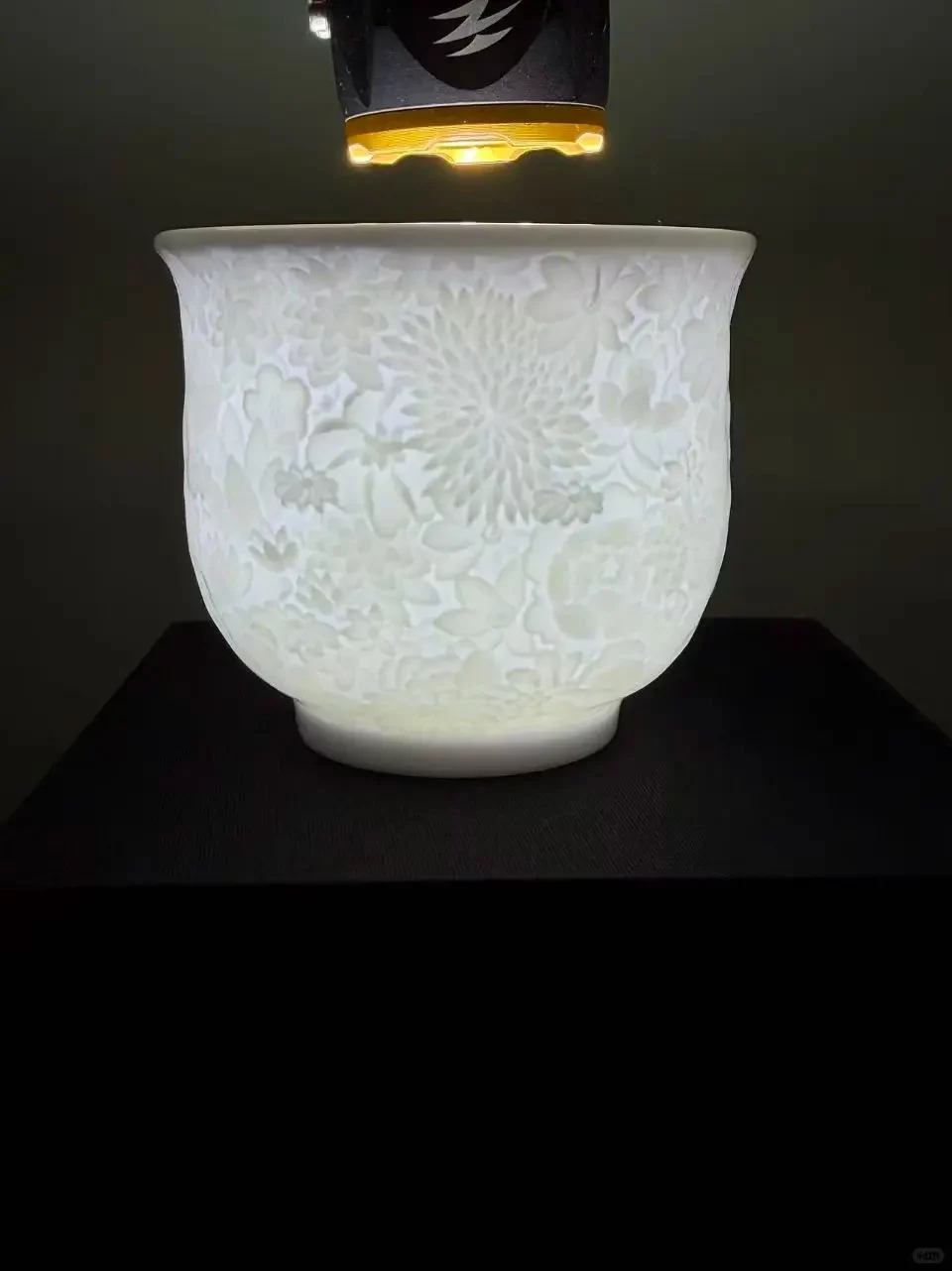
Chrysanthemums, peonies and small five-petal flowers cover this white porcelain cup, carved in relief so the whole pattern shows through the wall when it is held to the light. We supply it from our Jingdezhen factory by the case or in single gift boxes.
The three lines in this collection look nothing alike on a shelf, yet they are made the same way. The decoration goes onto the clay before any glaze, a clear glaze goes over the top, and the piece is fired once at about 1,300 °C. When it comes out, the color or carving is sealed under a layer of glass. It cannot scratch off, and it will not wear away at the rim the way overglaze enamel eventually can. (A few pieces, like the lion cup, add a small enamel band afterward in a second, lighter firing.)
Cobalt blue is the line most people mean by "blue and white", and it is the most forgiving of the three. A painter draws the outlines, then fills them with washes that run from a pale, watery blue to an indigo close to black. Cobalt holds its color reliably in the kiln, which is why it carries everything from dinner plates to large display jars.
Copper red works on the same principle and behaves very differently. Copper only turns red in a kiln starved of oxygen, and a small drift in the firing can leave it gray or liver-brown. Fewer pieces come out right, so underglaze red has always been rarer and more valued than blue, and it is often paired with cobalt on one piece, as on the lotus gaiwan in this collection.
White porcelain leaves out color altogether. The decoration is in the clay: walls trimmed thin and carved in relief, so the pattern glows when light passes through. Plain white is also the cleanest base for a hotel crest or a brand mark.
So the choice tends to follow the job. Blue and white and plain white do the daily work of a restaurant or hotel table. Copper red goes where a piece should be noticed: a gift, a tea set, a single cup on a shelf. Blue-and-white vases and miniature tea gift sets have gone to the Al Masa Grand Hotel in Dubai for four years, a project described on Quality Control.
Because the decoration sits under the glaze, none of the three can wear off in use. How hand-painted cobalt differs from a printed decal, and how to brief a painter, is in our guide to Chinese porcelain decoration techniques.
Who makes it
Every piece in this collection is painted or carved, glazed and fired in KKCN's own workshops in Jingdezhen at about 1,300 °C, with copper red fired in reduction. Every order passes three inspection levels led by Li Qiusheng, a municipal-level intangible-heritage inheritor of traditional firing techniques.
Custom orders
Process
Choose a reference or send your own design.
Approve a fired sample or photos before production.
Inspected, packed and shipped from Jingdezhen.
FAQ
Hand-painted. Every piece in the series is painted by hand in cobalt or copper on the unfired body, and you can see it in the slight changes of line weight and in the washes pooling a little darker at their edges. A printed decal shows an even dot pattern under a magnifier. For very large logo runs, KKCN can also use custom decals from its Chaozhou partners, fired in Jingdezhen; the quote always states which method is used.
Cobalt darkens as it gets thicker. A painter who loads the brush heavily, or goes over a line twice, gets an indigo that reads nearly black, while a thin wash fires pale and soft. Some fifteenth-century pieces show dark, almost metallic spots where the cobalt gathered, and collectors prize them. Today the depth of blue is your choice, fixed on fired tiles before a run.
Blue and white and plain white porcelain both work for daily service: the decoration sits under the glaze, so it stands up to washing and cutlery. Copper red can be used at the table too, but its cost and rarity usually send it to gift sets, tea ware and display pieces. Large jars and wide plates in cobalt are made for display walls, lobbies and consoles.
Order minimums, samples and shipping are covered on Samples & Quotations and Packing & Shipping. Technique names on this page are defined in our Chinese porcelain glossary.
Send a photo, a sketch or a size, and we will tell you which reference comes closest or quote it as a custom piece.
Product inquiry
Share the PP numbers, quantity, destination and any customization. We reply within 1–2 business days.