Three separate decisions
Porcelain is a body.
Celadon is a glaze.
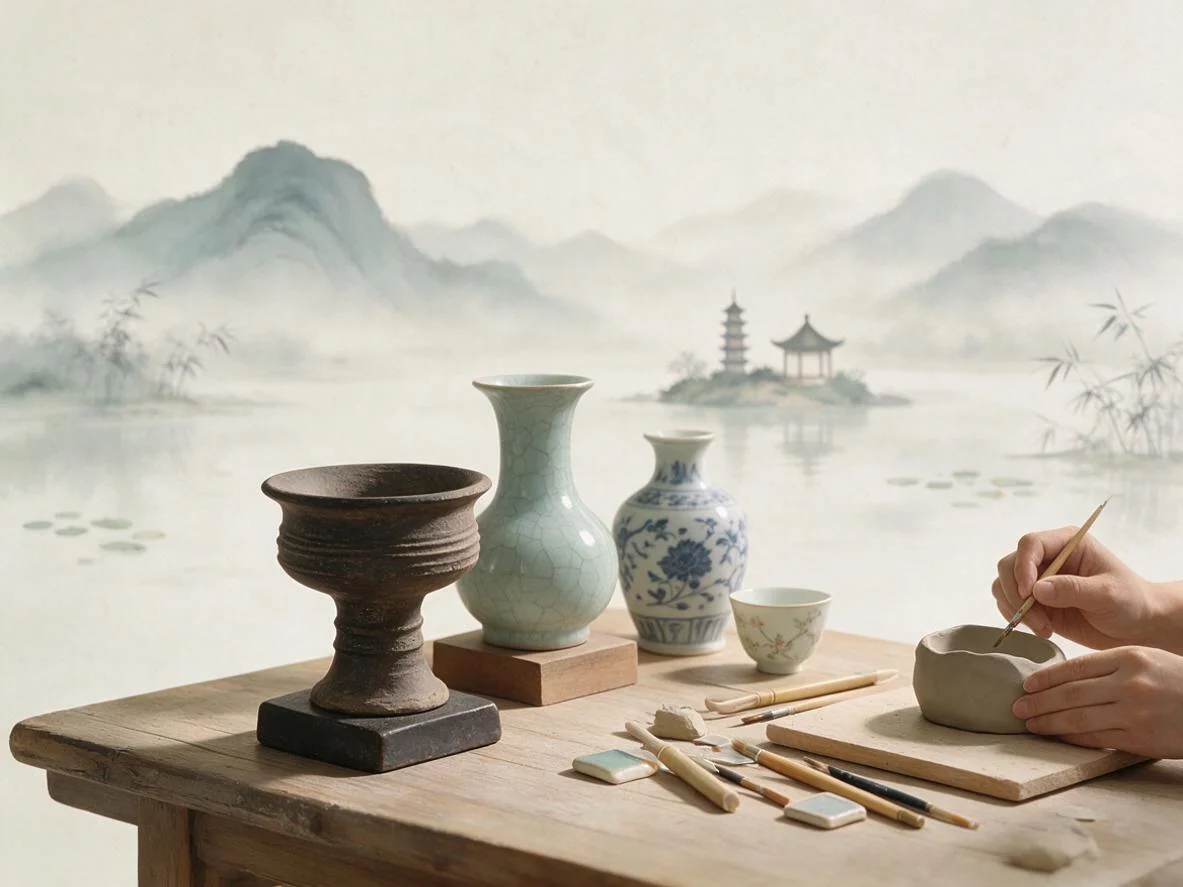
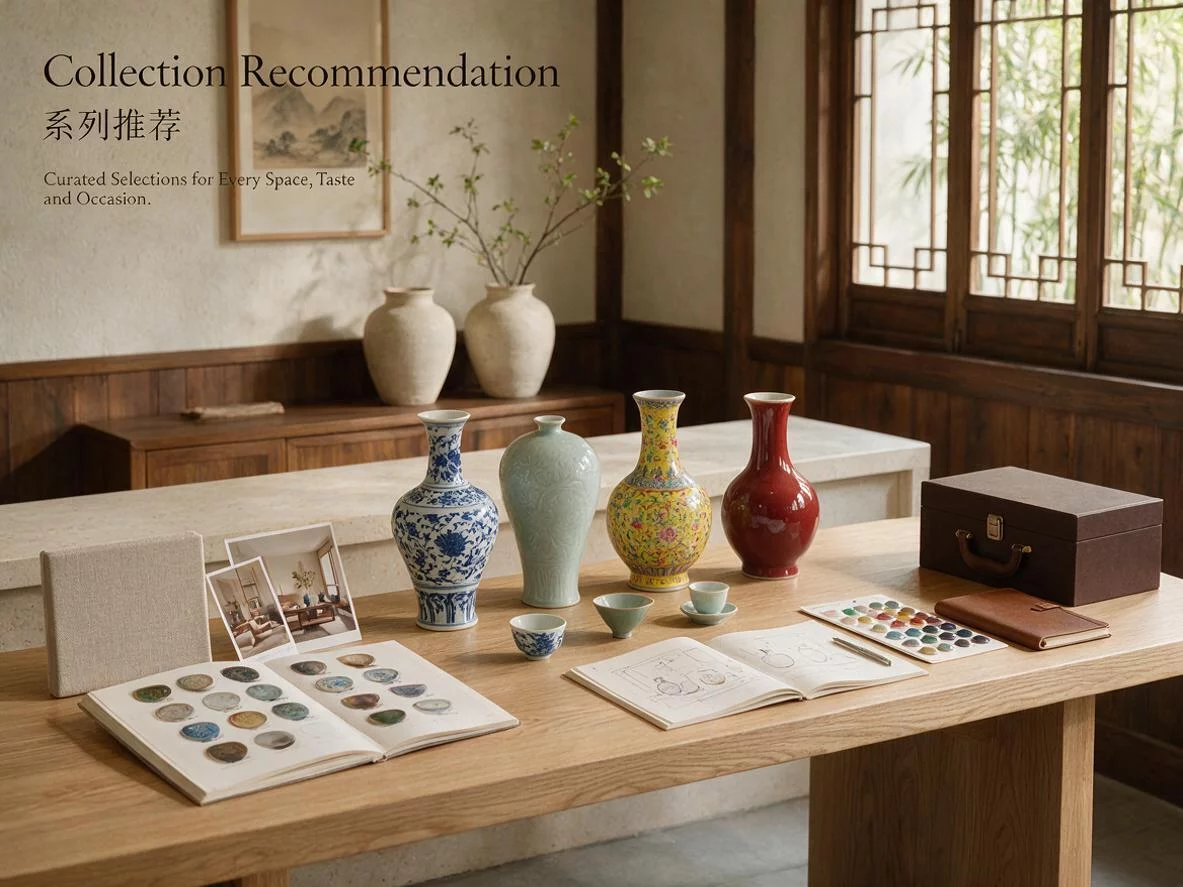
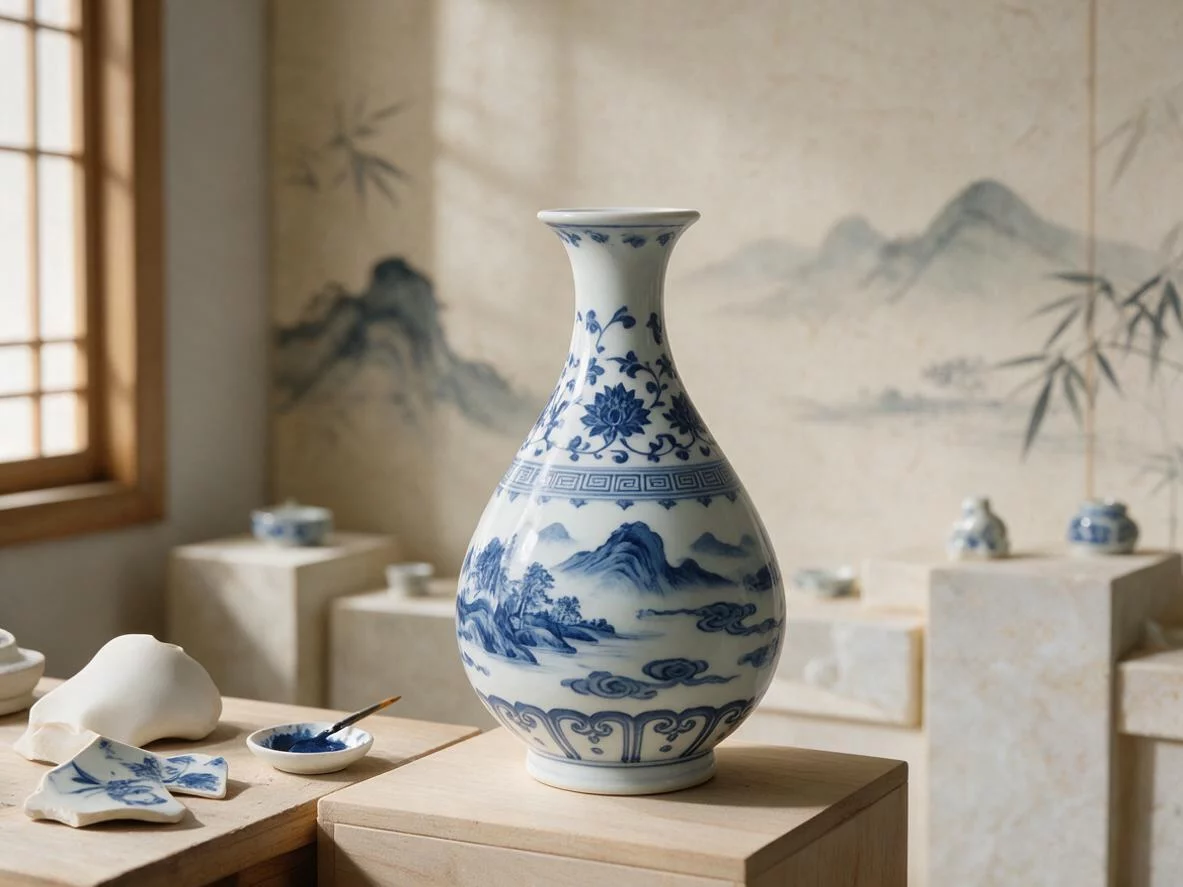
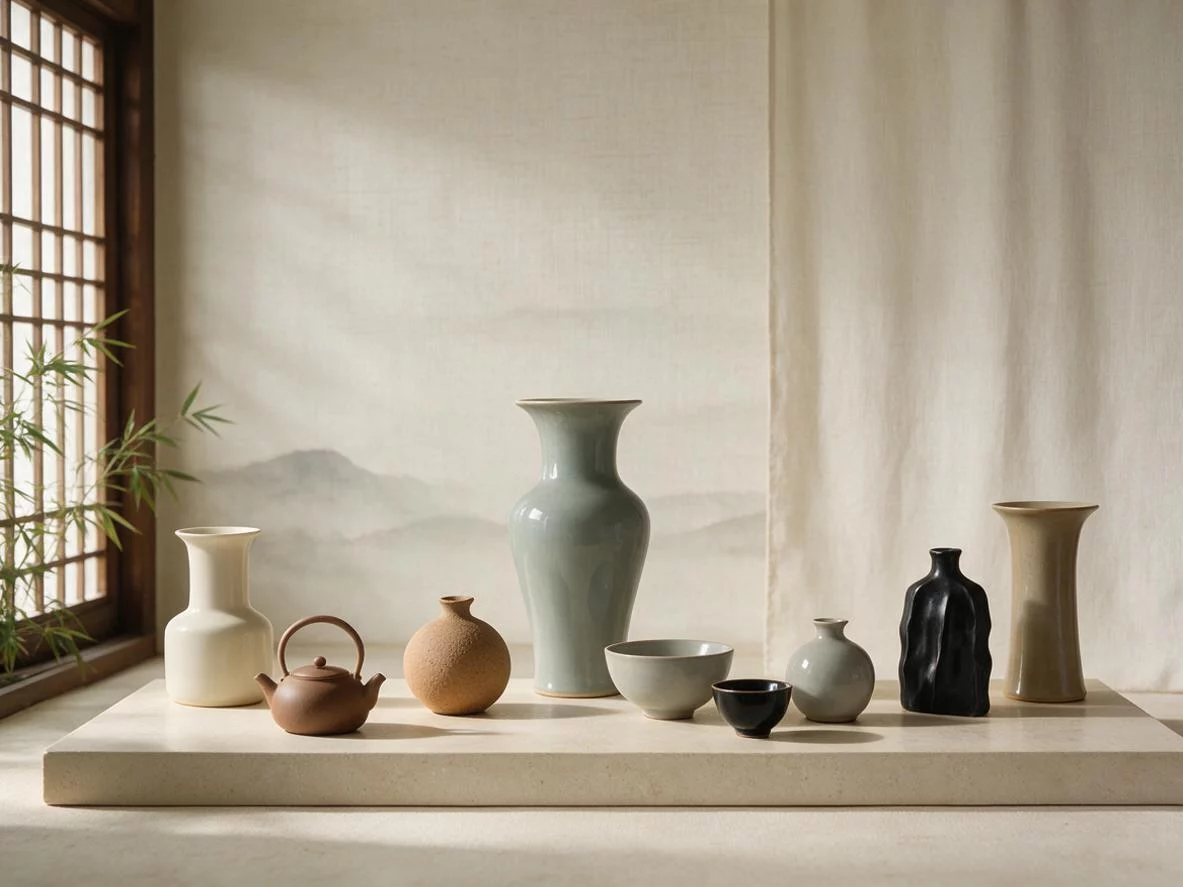
Ceramic words get tangled across languages, and "porcelain", "celadon" and "blue and white" are often used as if they were the same kind of word. Pulling them apart is the quickest way to sharpen a brief. The body is the clay: Jingdezhen kaolin porcelain, dense, bright and faintly translucent at a thin rim; stoneware, warmer and heavier; or a purple-clay composite. It sets strength, weight, tone and much of the price. The glaze is the glassy layer fused in the kiln, and it sets color, depth, texture and how much the surface shifts from piece to piece. Decoration is what is painted, applied or carved. One clay body can become a carved celadon or a hand-painted blue-and-white piece.
- Body
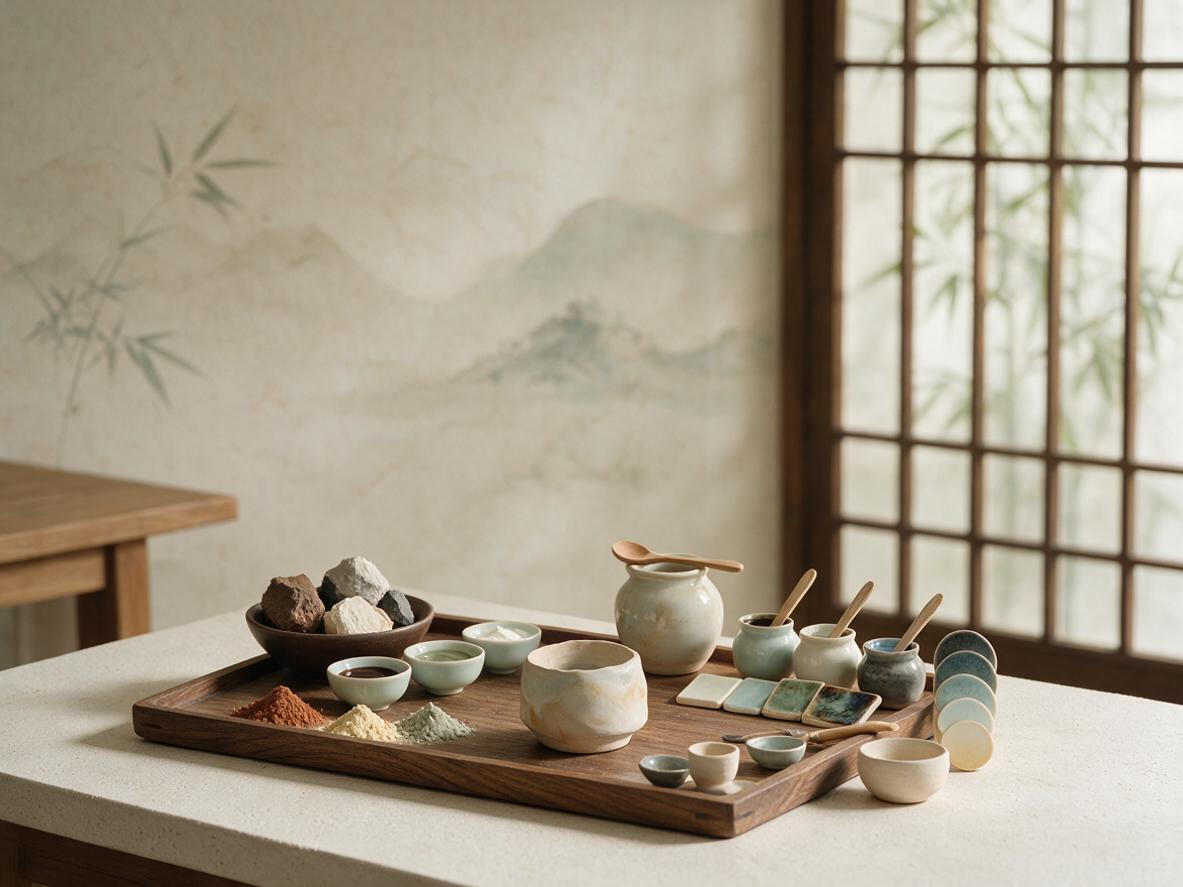
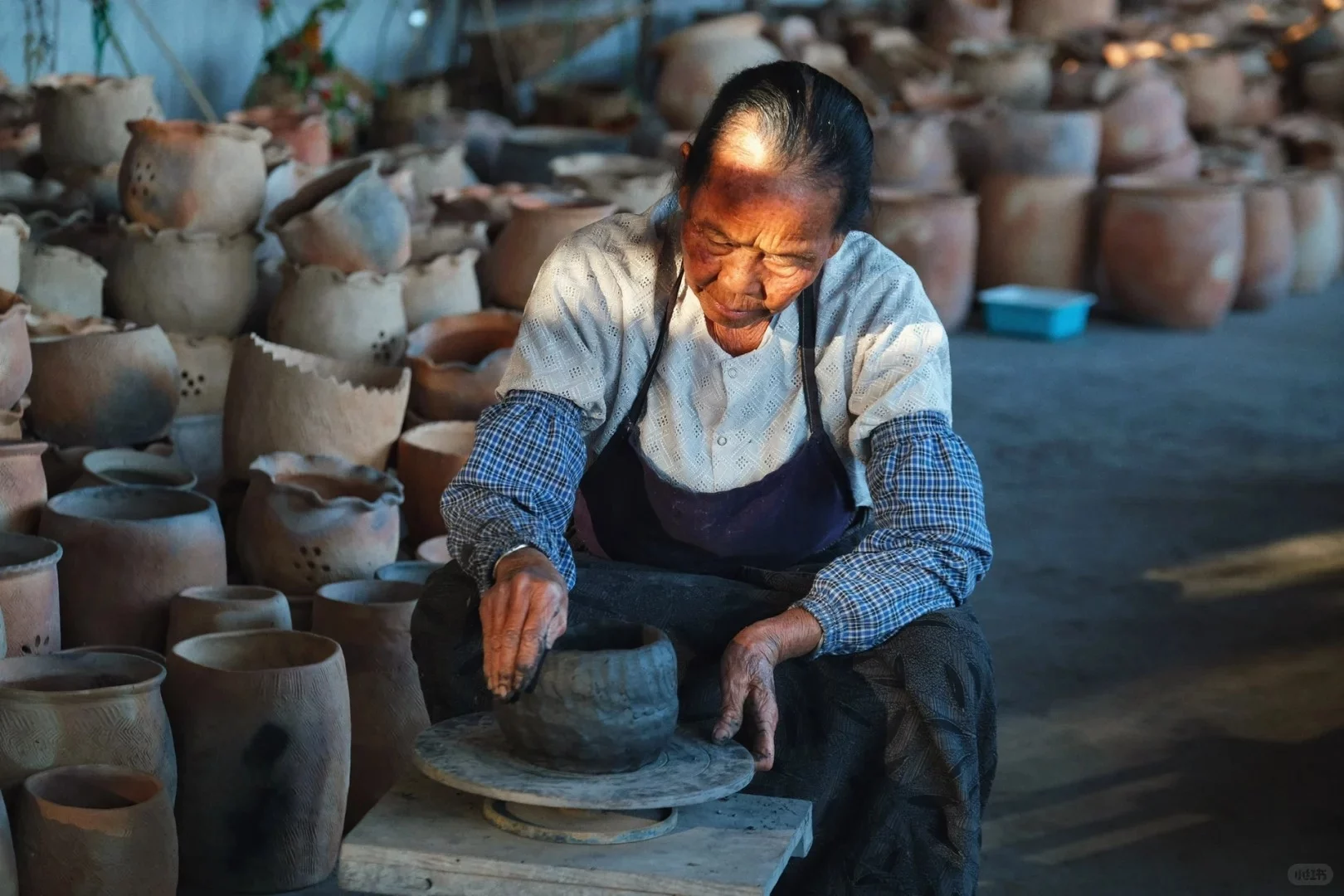
- The clay itself. Jingdezhen kaolin porcelain from Yaoli and Gaoling for bright white and fine rims, stoneware lines for warmth and weight, and Jingdezhen composite purple clay for texture. Body decides strength, weight, tone and a good share of price.
- Glaze
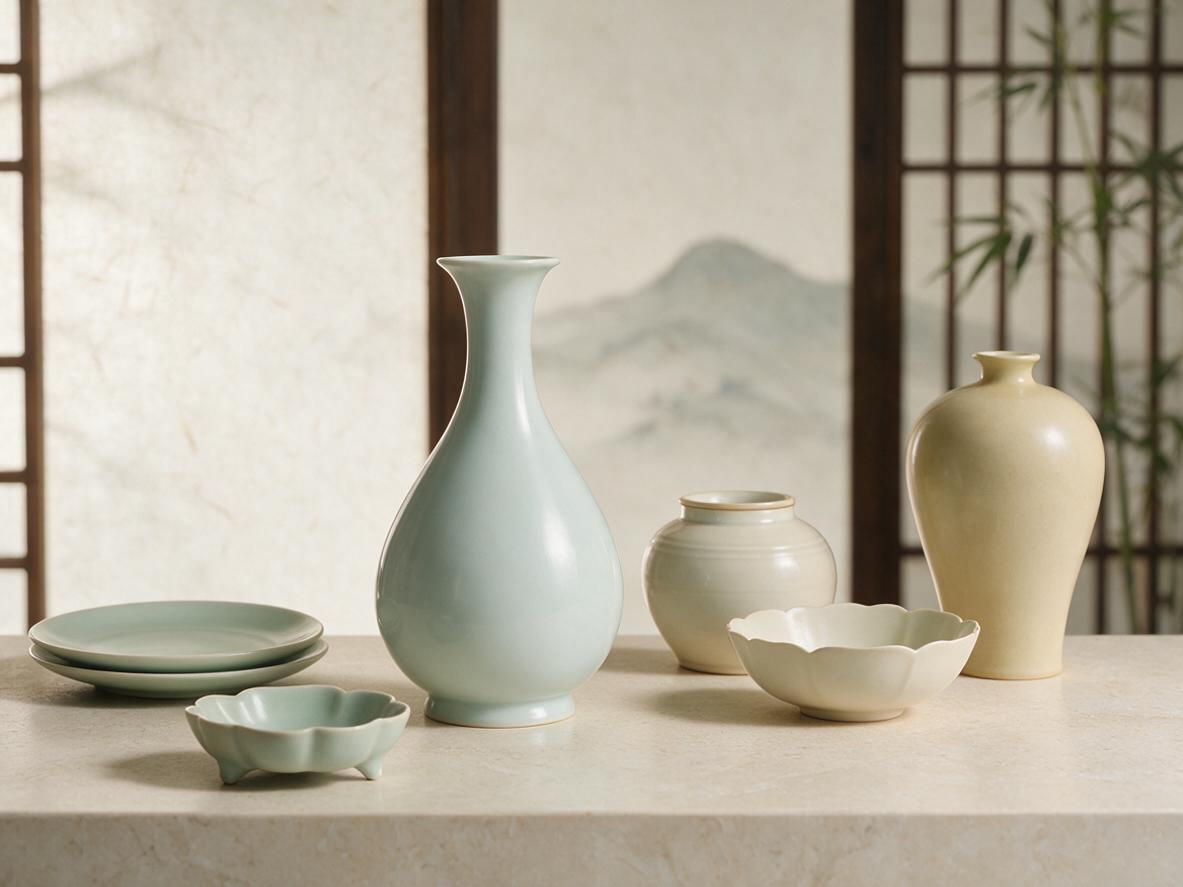
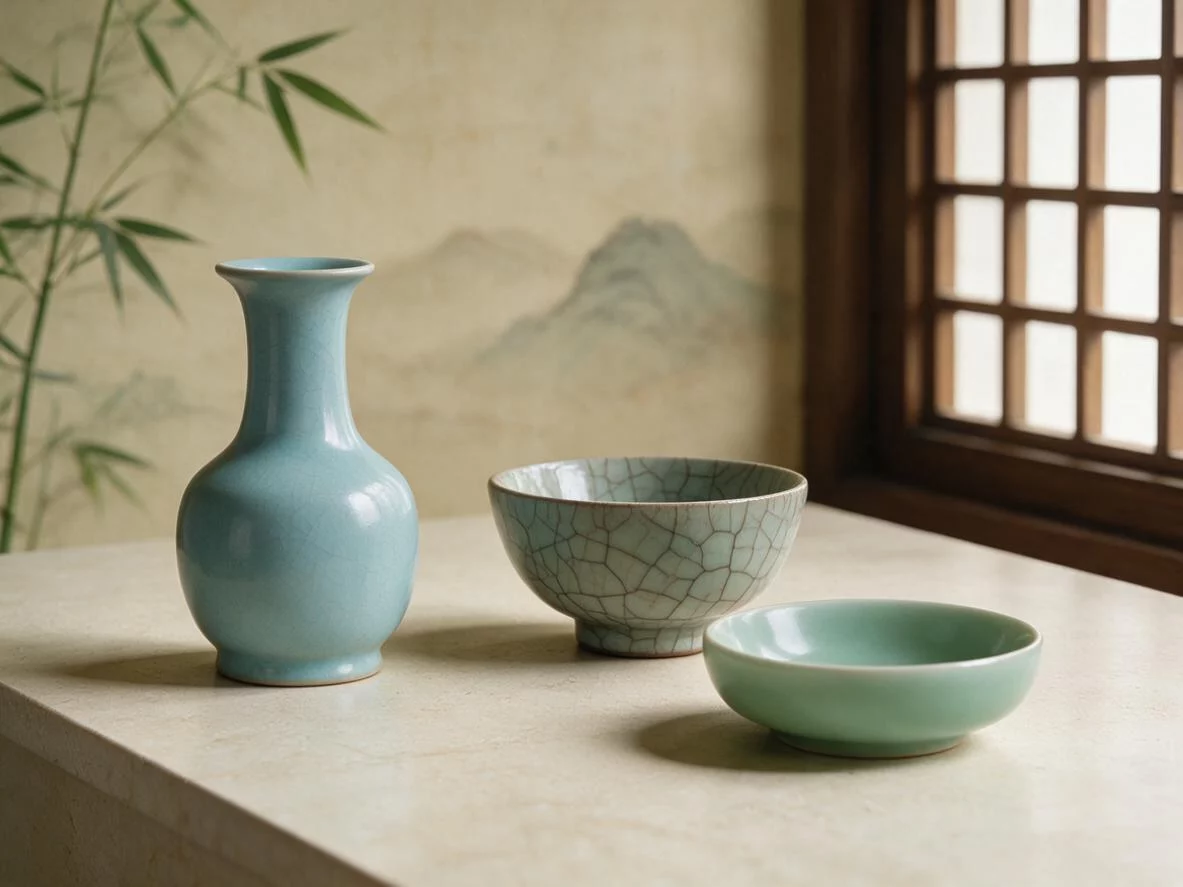
- Song-style celadon, Ge and Ru crackle, Jun kiln-change glazes, and monochromes in matte or gloss. Glaze decides color, depth and texture, and how far one piece may differ from the next, which is why its range is agreed on real samples.
- Decoration
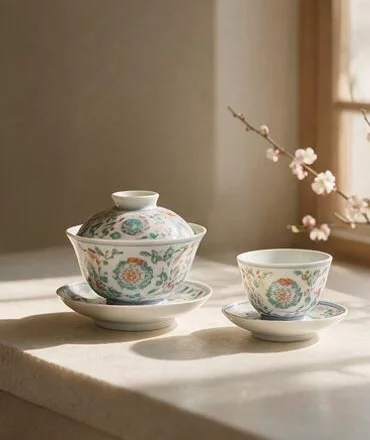
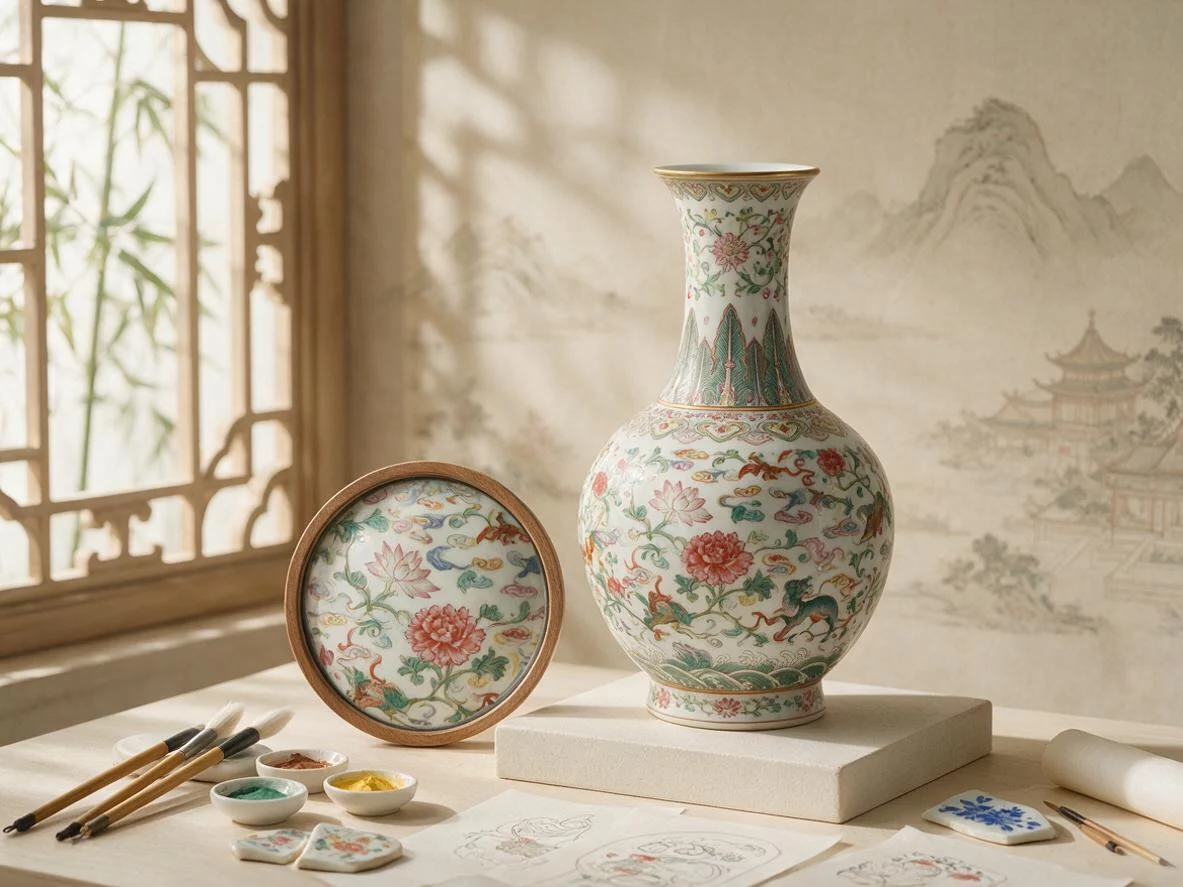
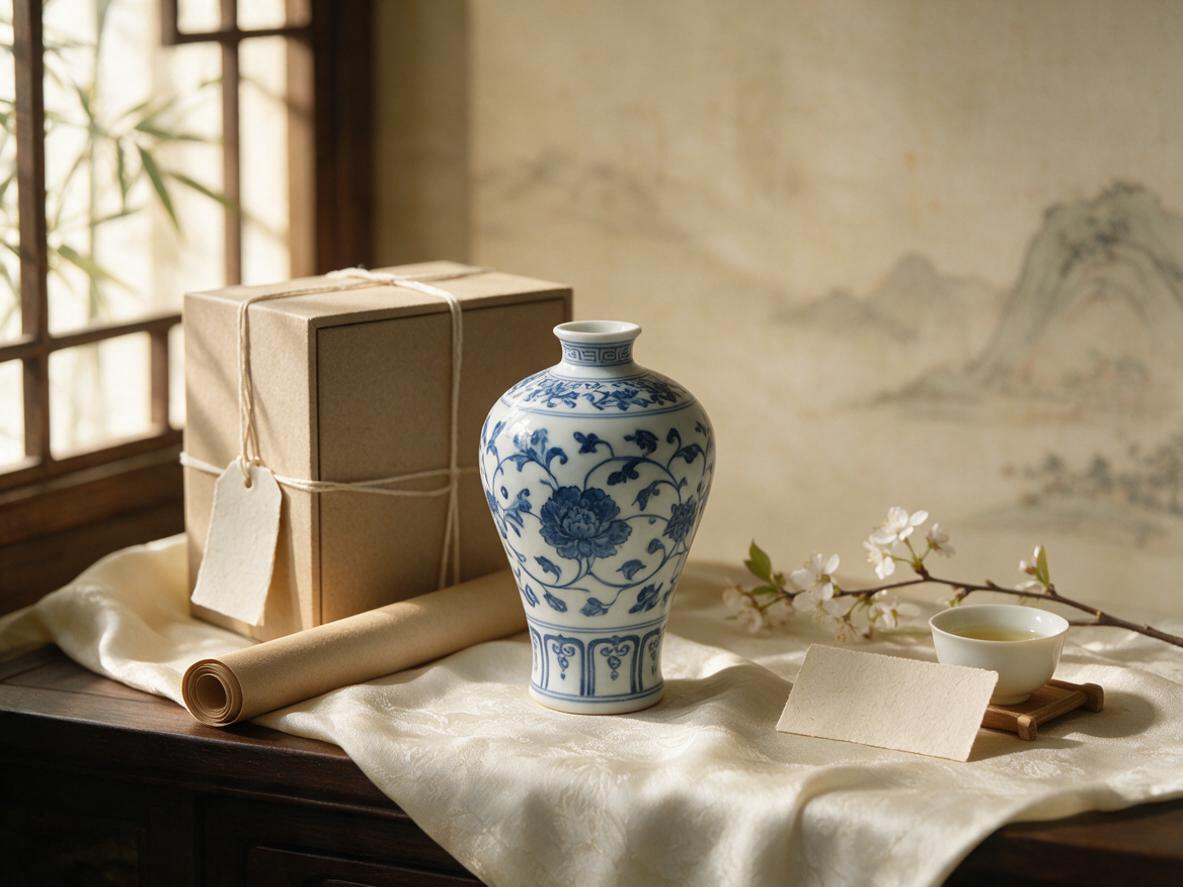
- Hand-painted cobalt, underglaze red, famille rose, Wucai and Falangcai enamels, relief carving, sgraffito or a refined decal for a logo. Decoration decides the character of the piece and much of the hand labor that goes into it.
- Firing
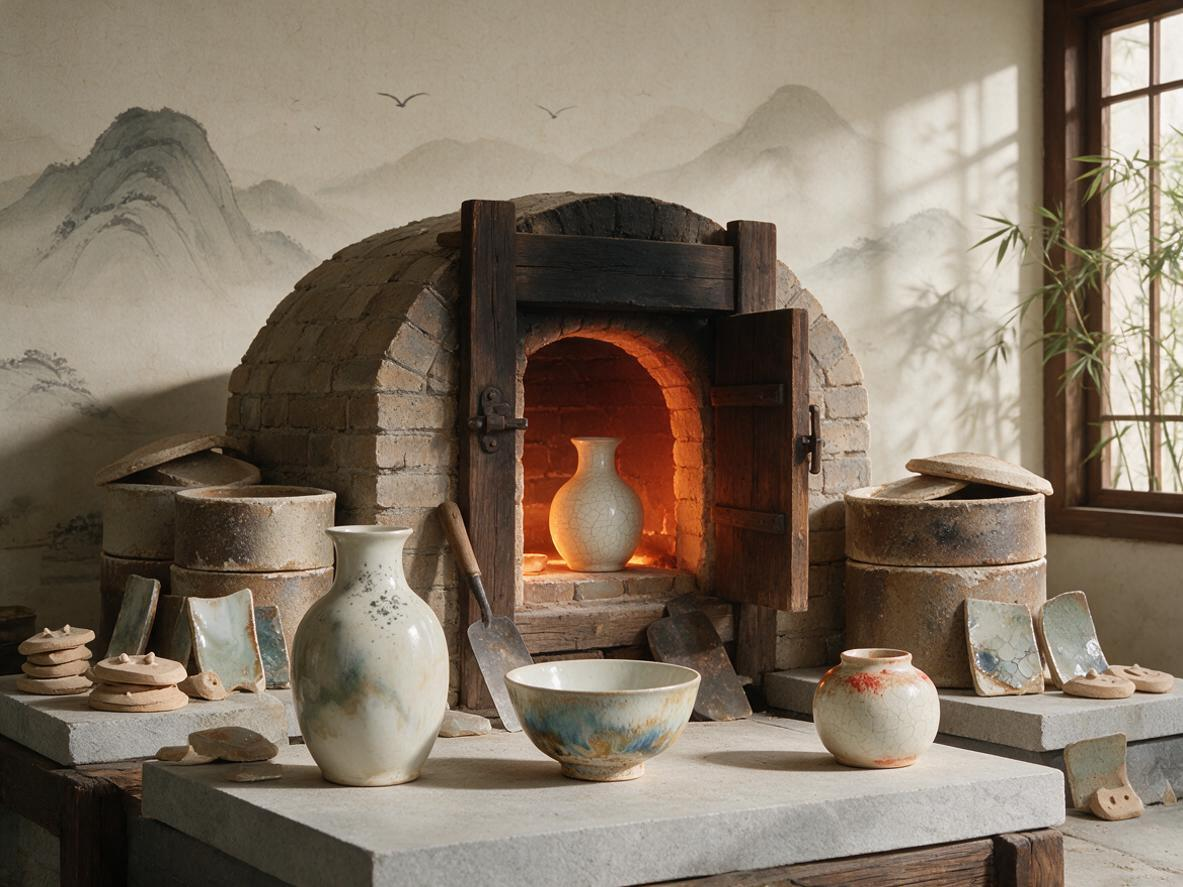
- The kiln sets the final body and glaze. Our porcelain is high-fired at 1,280–1,330 °C, typically 1,300 °C, in natural-gas kilns; overglaze enamels return for a second firing at about 780–850 °C, which adds a step to the price.