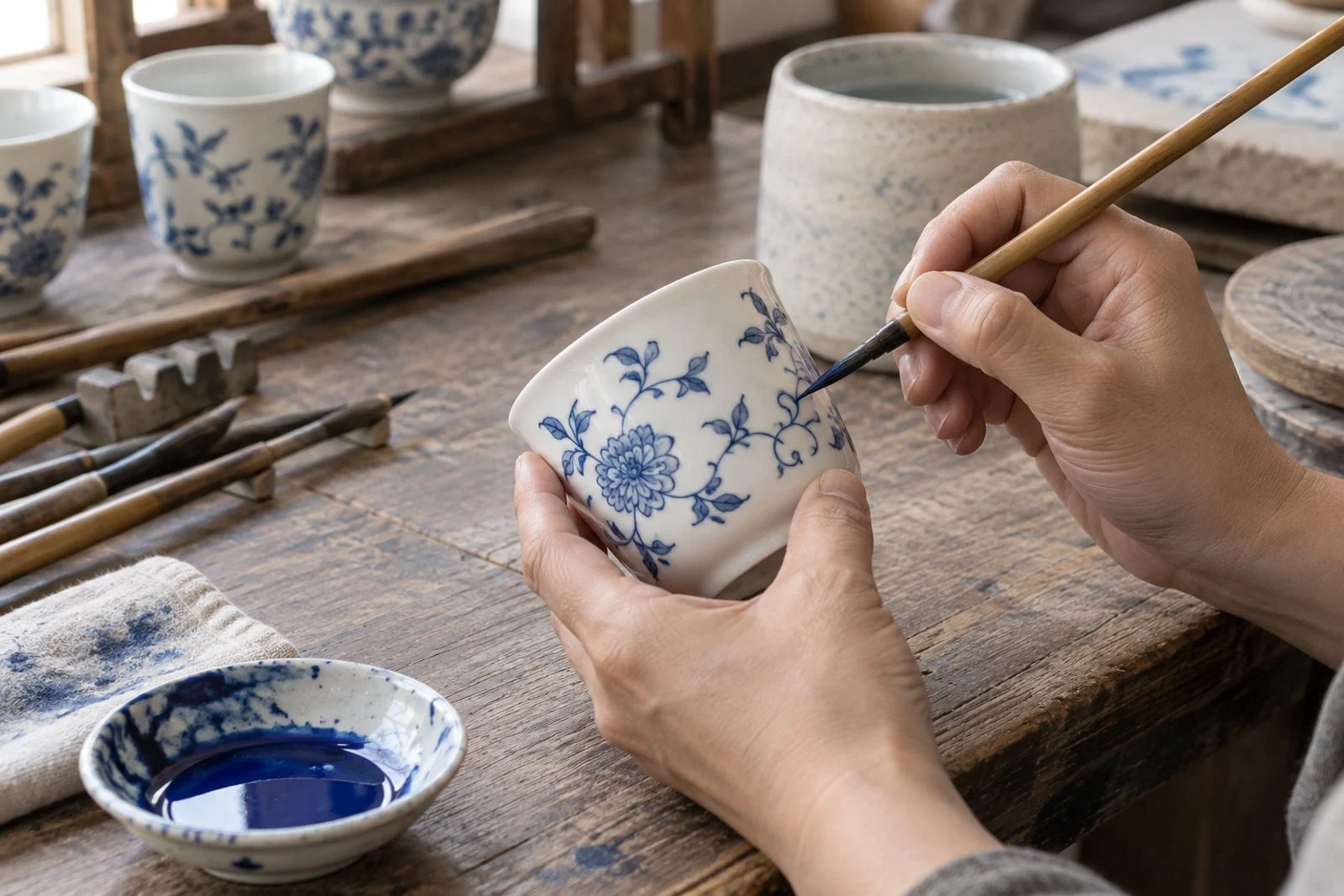
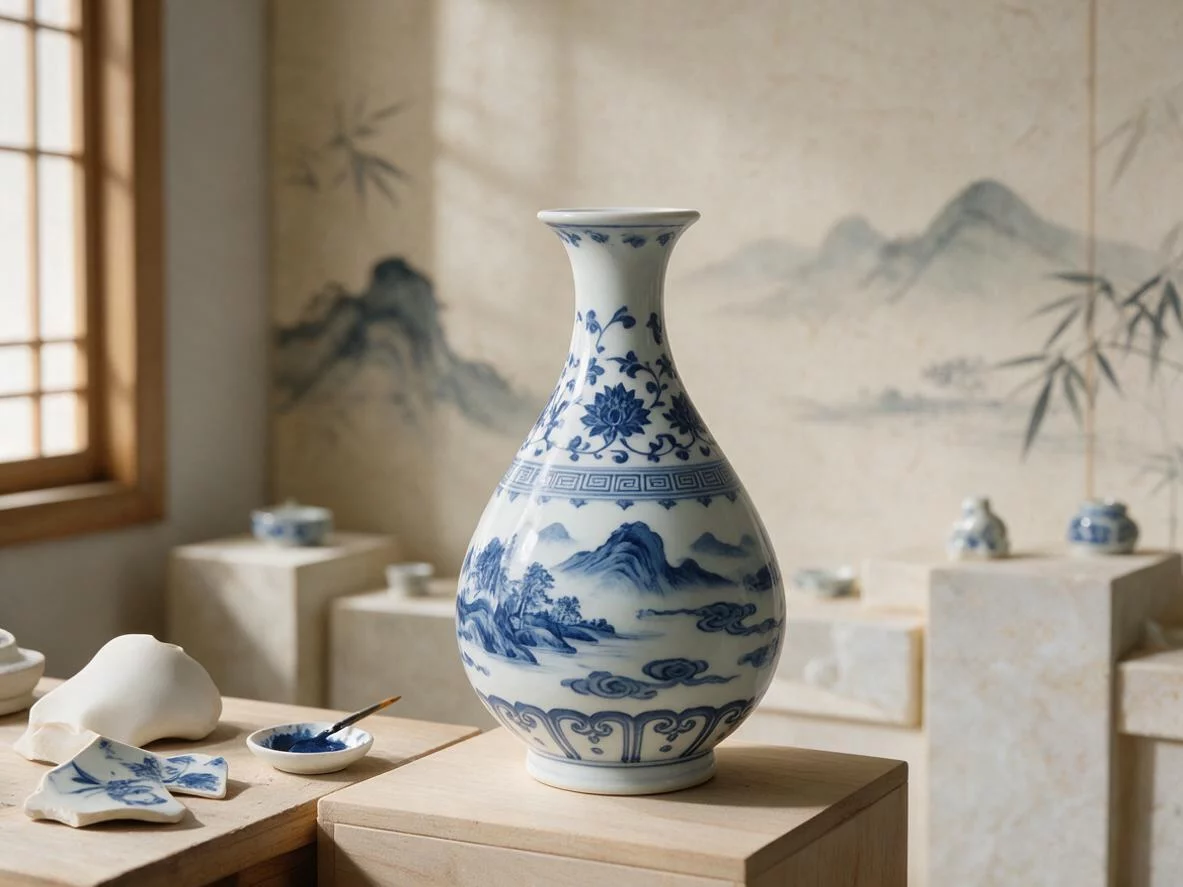
In the fourteenth century, Jingdezhen painters began brushing cobalt brought from Persia onto white porcelain and sealing it under a clear glaze. Within three hundred years the result was on tables from Istanbul to Amsterdam, and potters in Delft and Meissen were copying it. More than six centuries on, blue and white is still the flagship export series from our Doufunong workshops.
For a buyer, the history matters less than what it left behind. Shoppers in most markets already recognize the look, trust it and know where to put it in a room. This guide sets out four reasons the look keeps selling, then the four choices that decide whether your own range keeps selling with it.
Two colors that read from across a room
Blue and white is one dark color on one light ground, and that contrast carries. A ginger jar on a lobby console reads from the entrance. A plate reads on a crowded shelf, and a cup still reads as a thumbnail on a phone screen, where many of your customers will meet it first. The blue also lasts. Our painters brush cobalt onto the raw body, clear glaze goes over it, and both are fired once at about 1,300 °C. The pattern ends up inside the glass rather than on top of it, so washing, handling and years of service leave it as it left the kiln. Our Glazing & Decoration page sets out the full order of that work.
A palette at home in rooms with nothing else Chinese
Because the palette is a single blue, blue and white sits easily in interiors with no other Eastern reference. It holds its own against white plaster, oak, linen and brass, so it suits a hotel guest room as readily as an Eastern-aesthetic tea space. The same quality makes it easy to merchandise. A retailer can place a blue-and-white jar beside modern glassware or a plain white dinner service, and the shelf still does not look themed. Across the 36 countries and regions we ship to, our blue-and-white work goes to home and lifestyle brands, hotels and interior studios, museum stores, corporate and cultural gift programs, and importers building a regional range.
From a decal plate to a hand-painted floor vase
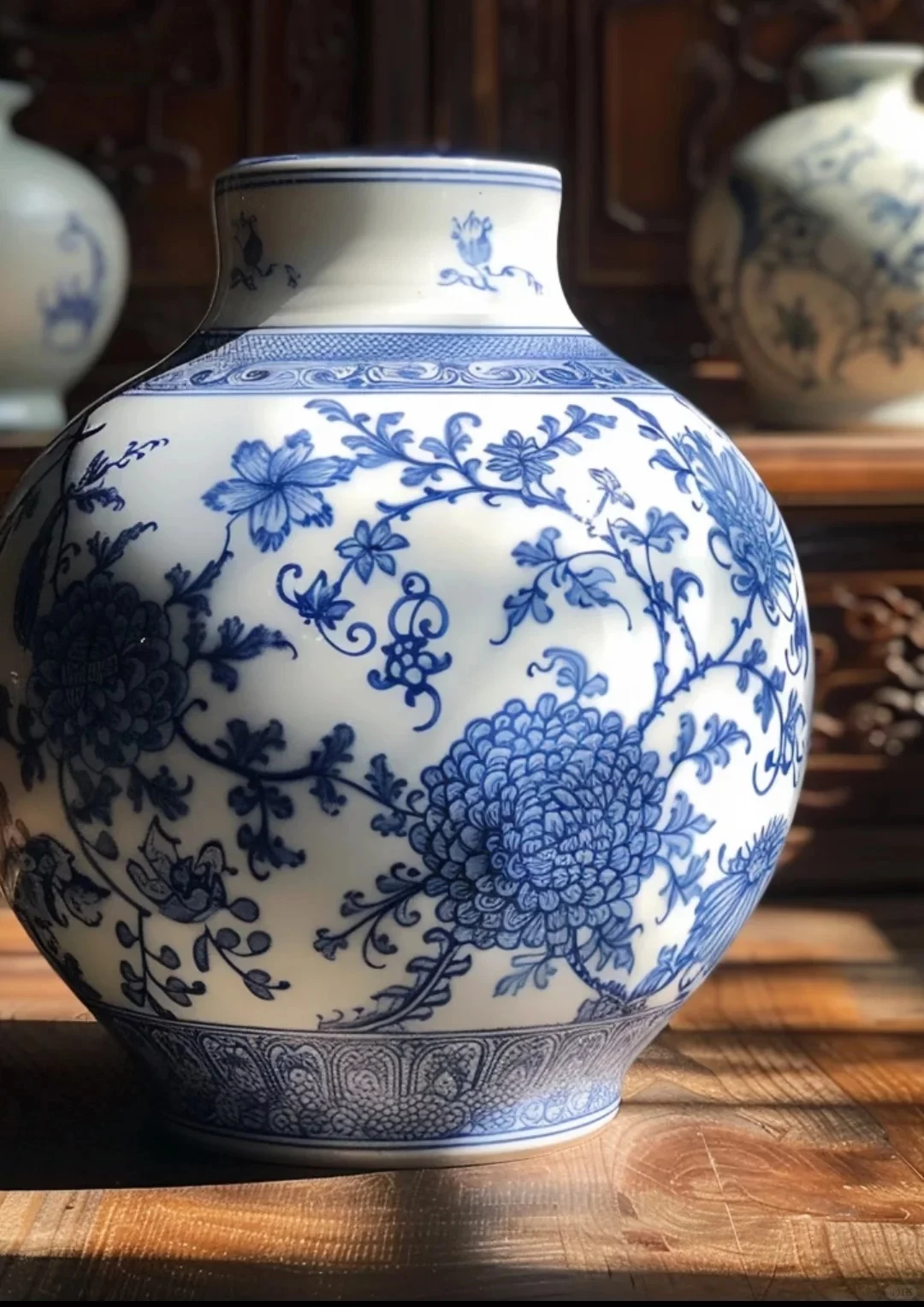
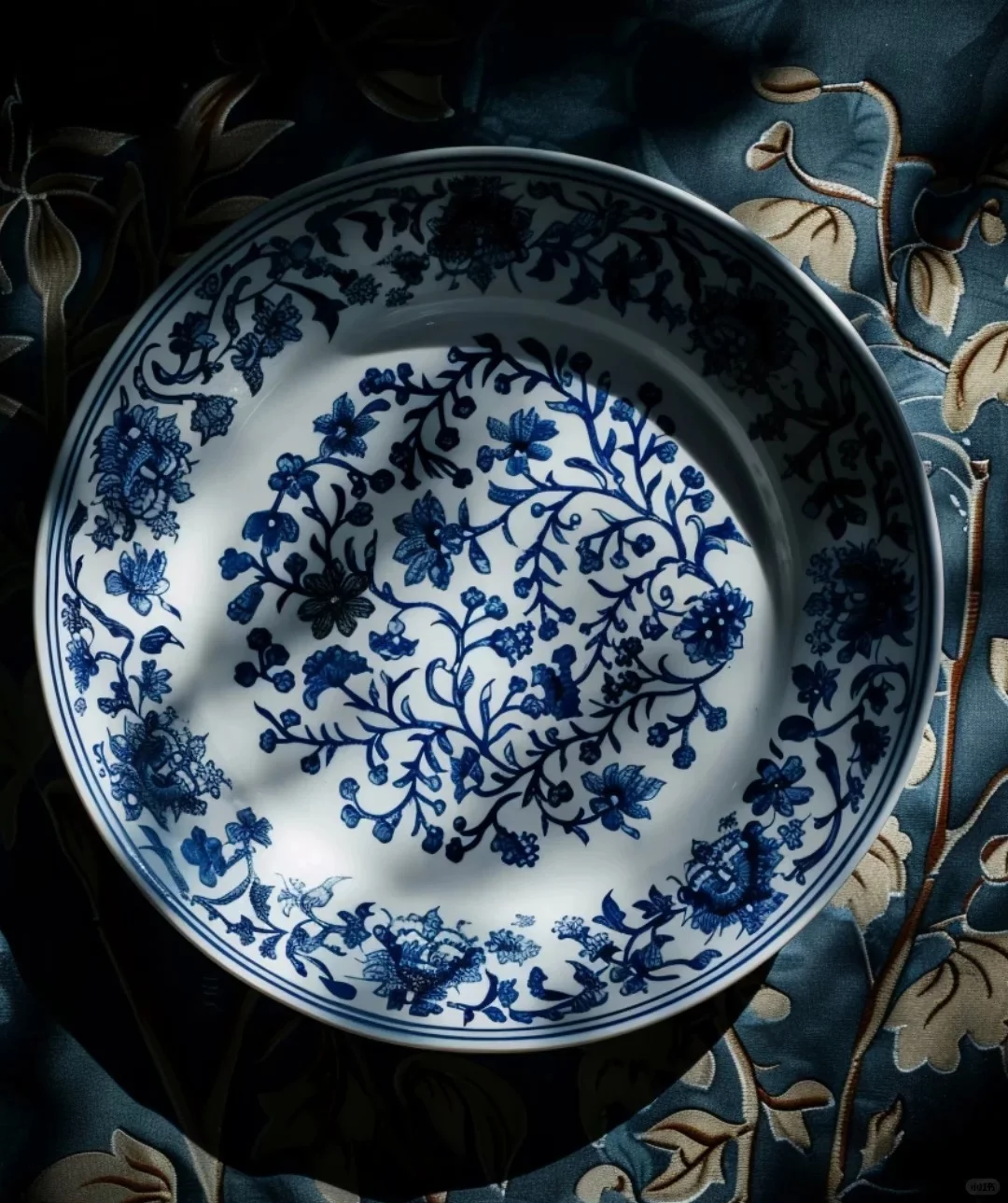
Few decorative styles span price points as easily. One cobalt palette can run from a dinner plate decorated with refined decal, for exact repeats at volume, to a hand-painted jar or a floor vase up to 130 cm tall. That lets a buyer build an entry line, a core line and a few statement pieces that all belong together on one shelf or one hotel floor. Decals are fired onto the glazed porcelain in Jingdezhen to our standards, and many programs pair a decal border with a painted center or a painted base mark. Hand painting stays the choice where the brush should show: covered jars, vases, gift pieces and collector work.
A provenance your customer can retell at the counter
Blue and white comes with a provenance most buyers can tell in two sentences. Cobalt traveled from Persia to Jingdezhen. The finished porcelain traveled back along the same routes, and later in Portuguese and Dutch ships to Europe. Museum stores and gift buyers sell that story as much as the object, and a label or card that names Jingdezhen does part of the selling for them. For the history in full, our Yuan chapter covers how the cobalt arrived and how scholars identified the first pieces. Our Ming chapter follows the export porcelain that reached Europe and the blues that changed from reign to reign.
Four choices that keep a blue-and-white range selling
The look sells a first order on its own. Reorders depend on four decisions made before the first sample is painted.
- Painted or decal, piece by piece. Decide which pieces need the brush and which need an exact repeat. A tea set can be painted by hand while the plates that go with it carry a fired decal of the same pattern.
- A blue you have signed for. Approve the blue on a fired sample of your own form. Record the lightest and darkest acceptable pieces beside it, so every later firing is judged against the same range.
- A pattern that is yours alone. Our six in-house designers redraw a motif for each form in the range, so one border fits a plate rim and a cup wall alike. Your drawings stay confidential and are never painted for another client.
- A reorder written in from the start. Name the pieces you expect to reorder. The approved sample, the pattern drawing and the craft file stay at our Jingdezhen headquarters, so a second run is painted from the same records as the first.
For motifs from lotus scrolls to a house design of your own, browse our Blue & White references.
Minimums, samples and dates for a first range
The stocked references in our Blue & White Porcelain Series ship from a single piece, and a mixed order across references starts at 10 pieces. A pattern of your own starts at 50 pieces per style. A new pattern is sampled in 15–30 business days, and the sampling fee is credited once the order reaches the agreed minimum. Custom-pattern production then takes 30–45 days, and fully hand-painted art pieces 45–60 days. From August to December, add 5–10 days. Peak-season capacity is booked about three months ahead, with existing clients first, so a range planned for autumn shelves is best briefed in spring.
Send the pieces, the quantities and a photo of the blue you want. Lin Wan replies within 1–2 business days with a route and a sample price.