Resources
Buyer guides from Jingdezhen
Ten guide collections on sourcing, craft and selling Chinese porcelain, written by our export team.
Browse all guides ↗ Resources
Buyer guides from Jingdezhen
Ten guide collections on sourcing, craft and selling Chinese porcelain, written by our export team.
Browse all guides ↗Home » Products » Blue & White Porcelain Series » Classic Blue & White
KKCN collection
Every piece here is hand-painted blue and white porcelain from KKCN’s Jingdezhen workshops, drawn in cobalt outline, filled with diluted washes and sealed under a clear glaze. The grid holds a scroll jar, a landscape plate and a flower scroll dish, all in stock as pictured. Any of the motifs can be redrawn for your own form.
Blue & White Porcelain Series · Classic Blue & White
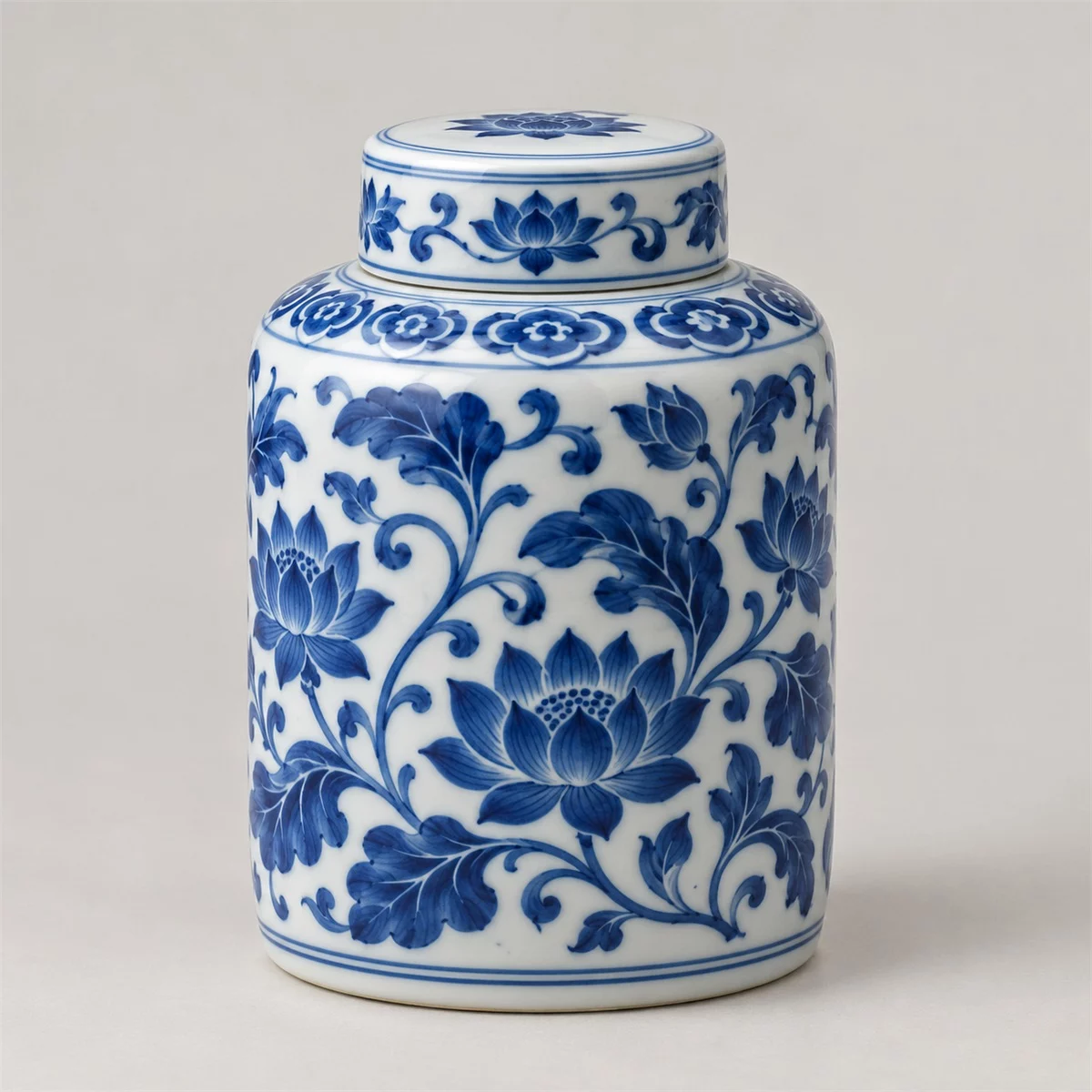
This lidded porcelain tea caddy is hand-painted in underglaze cobalt and fired under a clear glaze in our Jingdezhen factory. Tea shops stock it for loose leaf and gift sets, and we hold it in Los Angeles and Toronto for fast reorders.
Blue & White Porcelain Series · Classic Blue & White
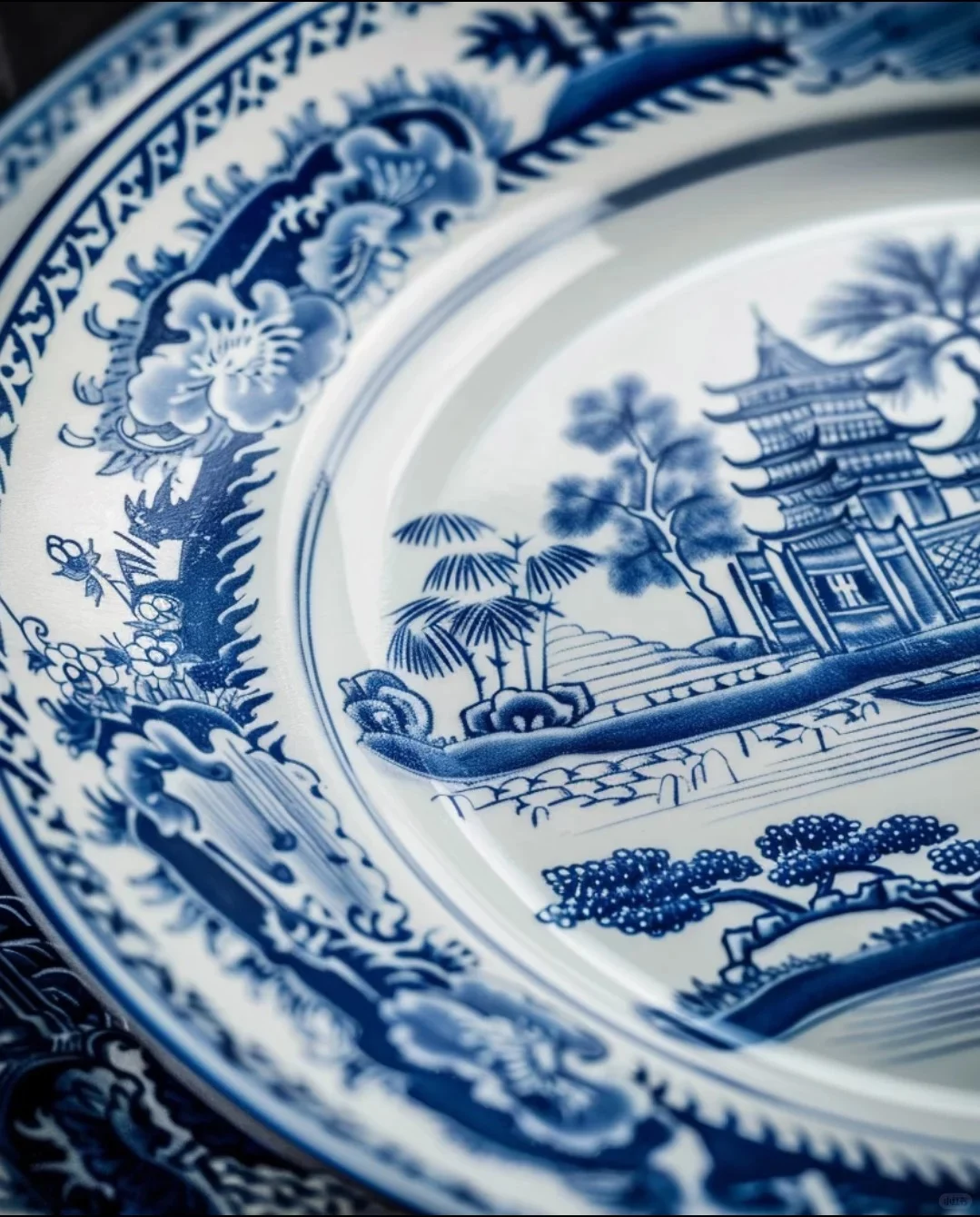
A pavilion stands between pine and bamboo at the center of this wide-rimmed plate, framed by a flowering branch on the rim and a patterned band at the edge. Hand-painted in cobalt at our Jingdezhen ceramic factory, it is the plate hotels order for their walls.
Blue & White Porcelain Series · Classic Blue & White
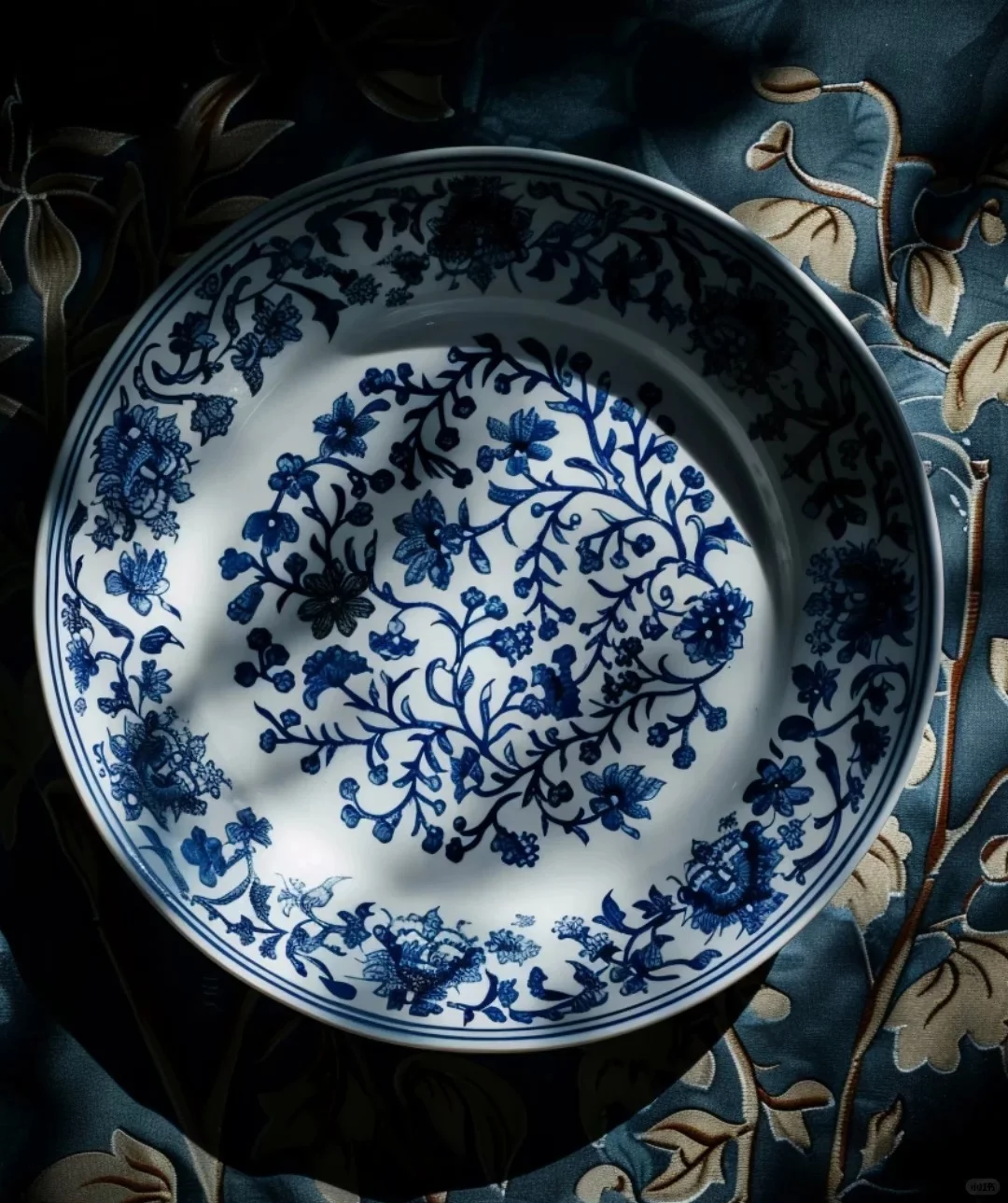
Dark cobalt outlines filled with a pale wash give this shallow dish its crisp, export-style look, with one flower scroll in the well and another around the rim. Many buyers start a ceramic tableware line from this dish, and our Jingdezhen factory paints the matching pieces.
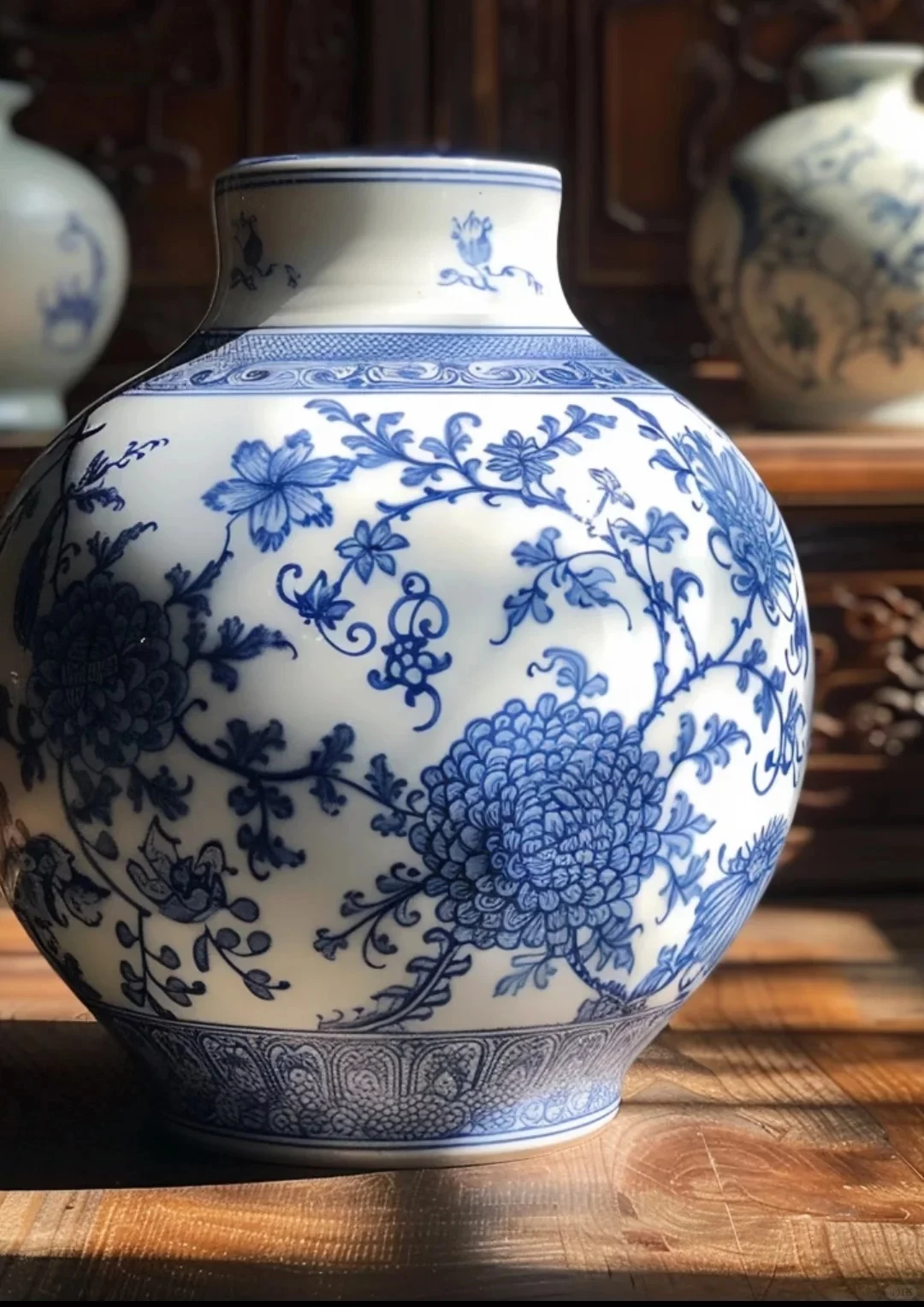
Blue & White Porcelain Series · Classic Blue & White
A round-bodied jar with a short, straight neck, painted in cobalt with a chrysanthemum and peony scroll between a shoulder band and a ring of lotus panels at the foot. Painted by hand in our Jingdezhen factory and shown without a lid, it is ordered by hotels and museum stores for display.
Unfired porcelain takes paint the way blotting paper takes ink. The moment a loaded brush touches the clay, the cobalt sinks in, and there is no wiping it away to try again. So blue and white is painted in a fixed order, and once you know the order you can see it in any finished piece.
The outline comes first. A fine brush draws every petal, leaf, roof line and rock in a dark, even stroke, and that drawing holds the whole design together. Then comes the fill. With a much fatter brush soaked in cobalt thinned with water, the painter floods each shape inside the lines and lets the wash settle rather than brushing it out. In Jingdezhen the two jobs have long been separate skills, and the fill has its own name, fenshui, or water separation.
The strange part is that the painter works blind. Raw cobalt goes on as a dull gray-black, and the blue appears only after the firing. Matching a shade across a hundred plates is done from memory and long practice, not by eye.
The three references here use the method at three scales. The chrysanthemum scroll jar wraps a single scroll around a round body, so the painter turns the jar as the stem travels and has to close the circle without a visible join. The pavilion landscape plate is built in zones: a garden of pavilion, pine and bamboo in the center, a flowering branch on the rim and a patterned band at the edge, each with its own depth of blue. The flower scroll dish shows the method most plainly, with dark outlines, a pale fill and double lines at the edge drawn as the dish turns on the wheel.
The order of work also explains the price. Outlines take roughly the same time whatever you choose, and the fill is where the hours go. A painted border around an open white center costs far less than a surface covered edge to edge, and that difference usually matters more than the size of the piece.
Underglaze blue, and how it compares with copper red, doucai and the overglaze enamels, is set out in our guide to Chinese porcelain decoration techniques.
Who makes it
Every piece in this grid is painted by hand at KKCN's Doufunong workshops in Jingdezhen, then glazed and fired once at about 1,300 °C. One of six in-house designers redraws each motif for the form it will sit on, and the blue is approved on a fired sample before a run starts.
Custom orders
Process
Choose a reference or send your own design.
Approve a fired sample or photos before production.
Inspected, packed and shipped from Jingdezhen.
FAQ
It is the fill stage of blue-and-white painting, called fenshui in Jingdezhen. The painter dilutes one cobalt to several strengths, then floods each outlined shape from a heavily loaded brush and lets the wash pool and level out. Traditional painters work in about five tones, from a dense blue for shadows to a faint wash for distant hills. A good fill shows no brushstrokes at all, only clean steps of color.
Follow the stem. In a true scroll, one continuous stem winds around the piece in a wave, with a flower set into each curve, often facing alternately up and down. On the chrysanthemum scroll jar the flowers are chrysanthemum and peony, and the band of lotus-petal panels around the foot is a border Jingdezhen painters have used on jars since the fourteenth century. Where the two ends of a scroll meet, a cramped or squeezed flower shows the spacing was misjudged; a well-painted scroll hides its join.
Yes, though a wide, flat surface is the hardest test of a fill. On a jar, the curve hides small changes in a wash; on a broad plate, every pool and thin patch shows. Painters lay the large washes with the plate turning on a wheel and divide the surface into zones, as on the pavilion landscape plate, so that no single area of blue is too wide to fill in one pass. For a run of large plates, a painted sample is fired first at full size.
The piece is formed and dried, and a painter draws the design in cobalt on the unfired clay, outlines first, then the wash. It is dipped in clear glaze and fired once at about 1,300 °C. Cobalt goes on gray-black and turns blue only in the kiln.
Plates read best on a wall or a stand at eye level, and jars in pairs or in odd-numbered groups of mixed heights. Keep one depth of blue across a group, so the pieces read as a set. Our interiors guide covers sizes and placement room by room.
Order minimums, samples and shipping are covered on Samples & Quotations and Packing & Shipping. Technique names on this page are defined in our Chinese porcelain glossary.
Send a photo, a sketch or a size, and we will tell you which reference comes closest or quote it as a custom piece.
Product inquiry
Share the PP numbers, quantity, destination and any customization. We reply within 1–2 business days.