Turquoise outside, white within
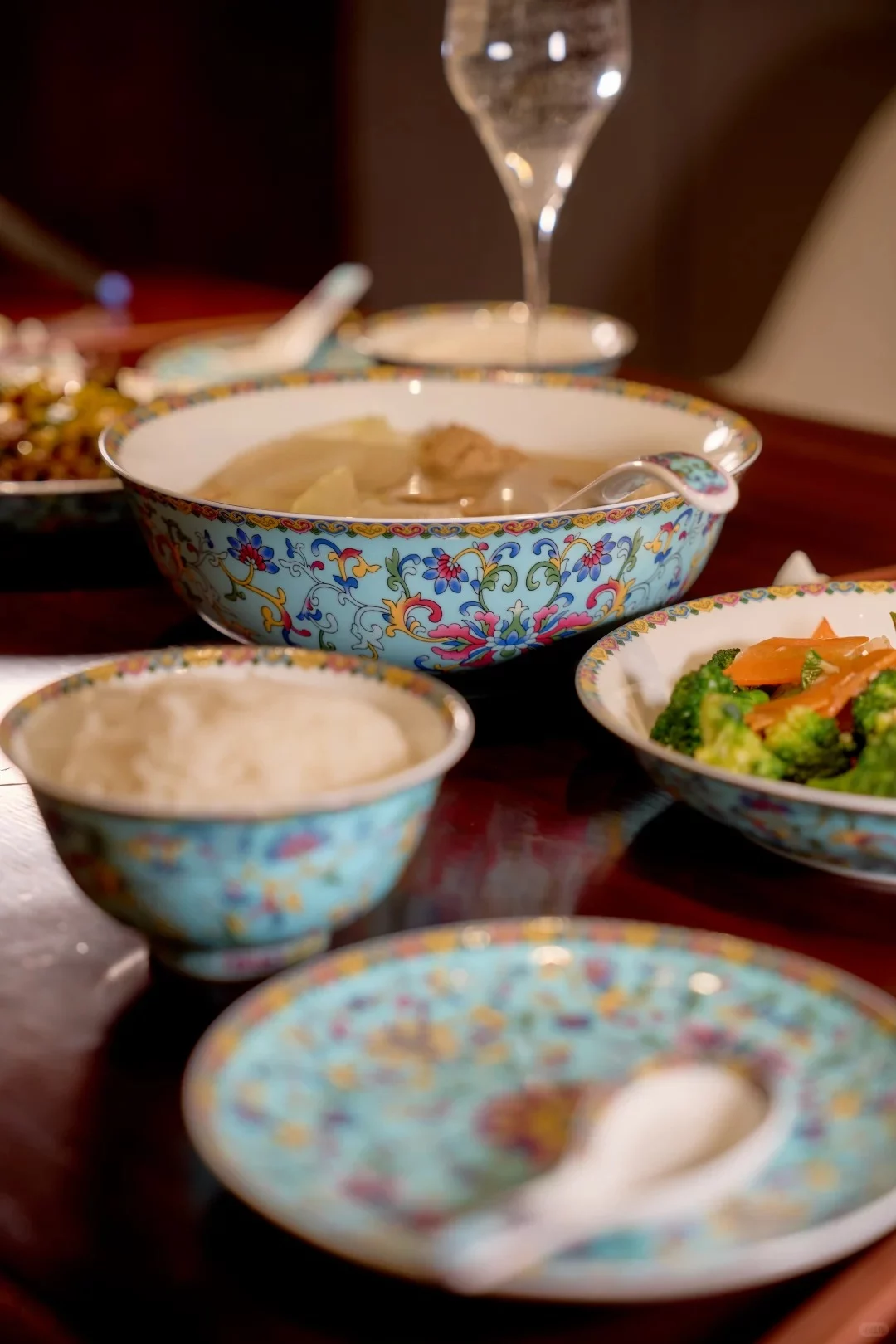
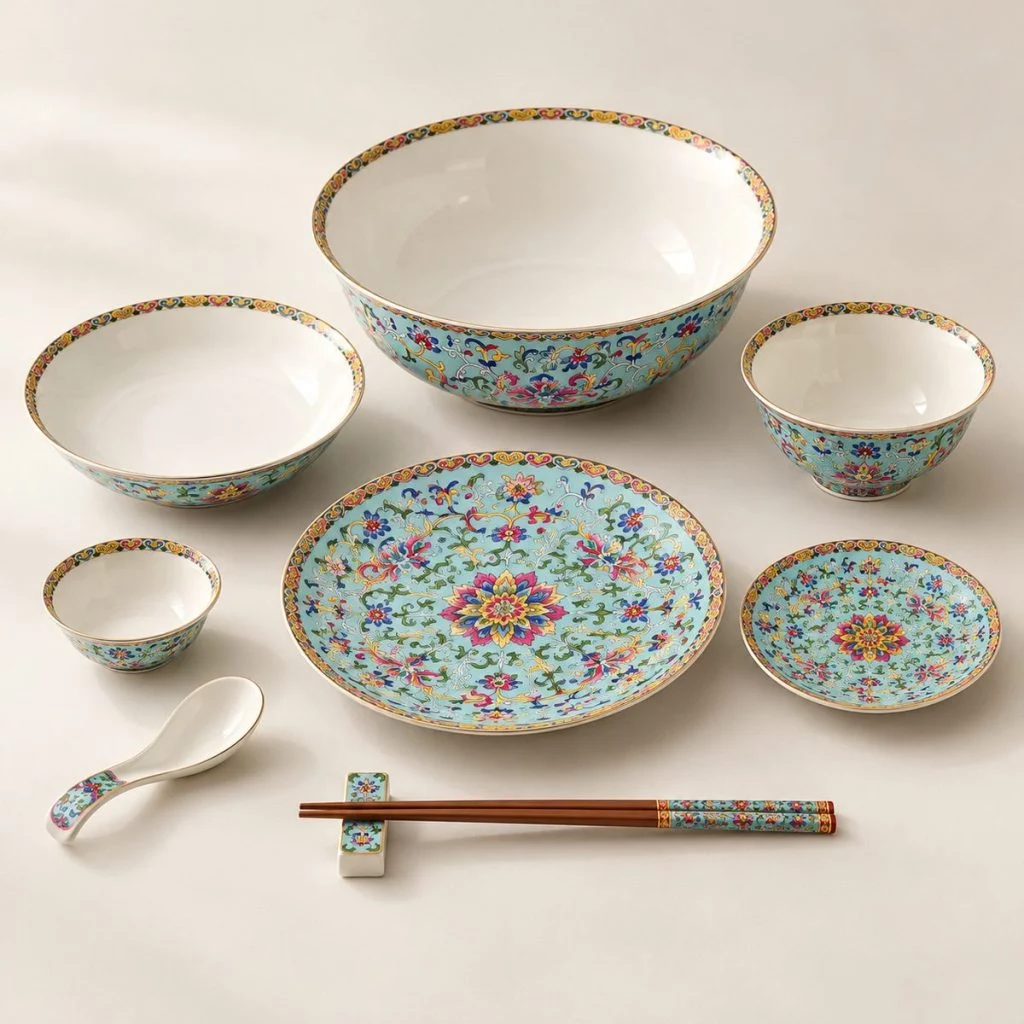
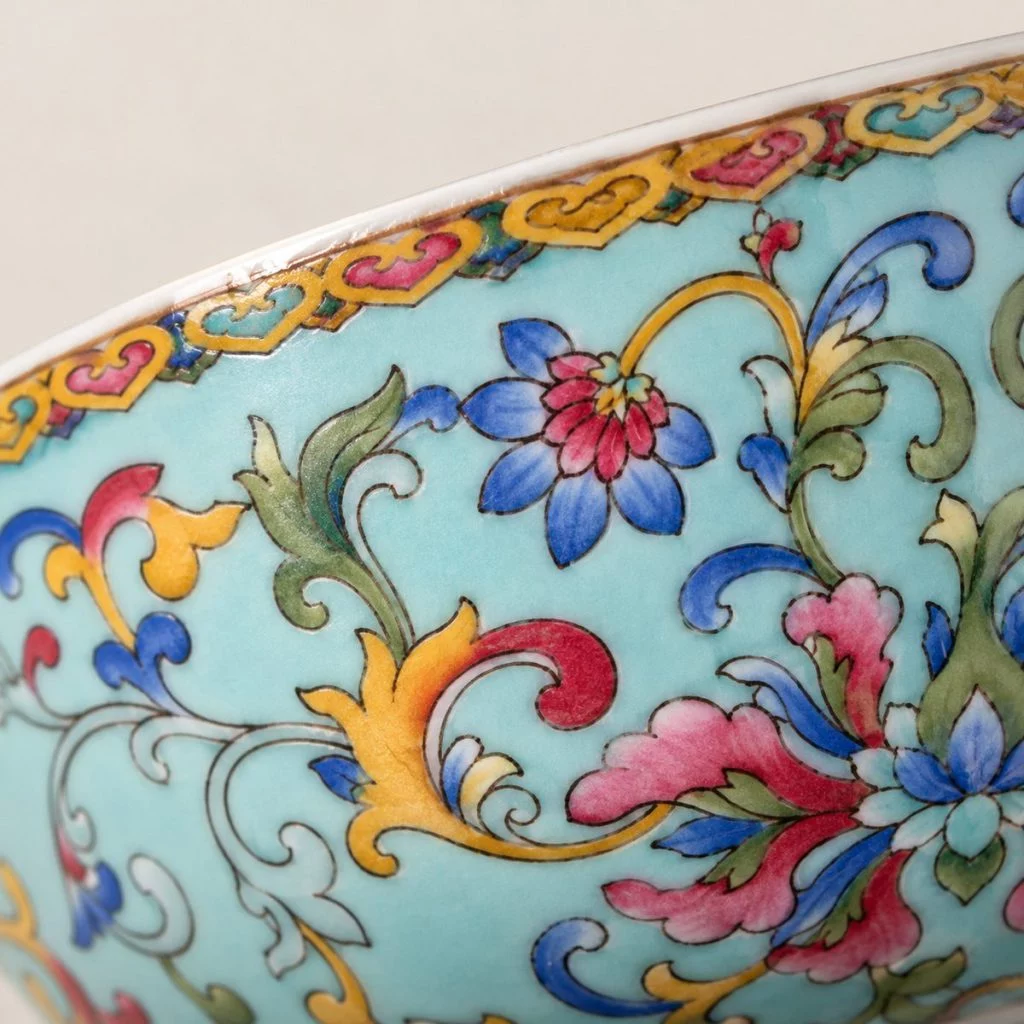
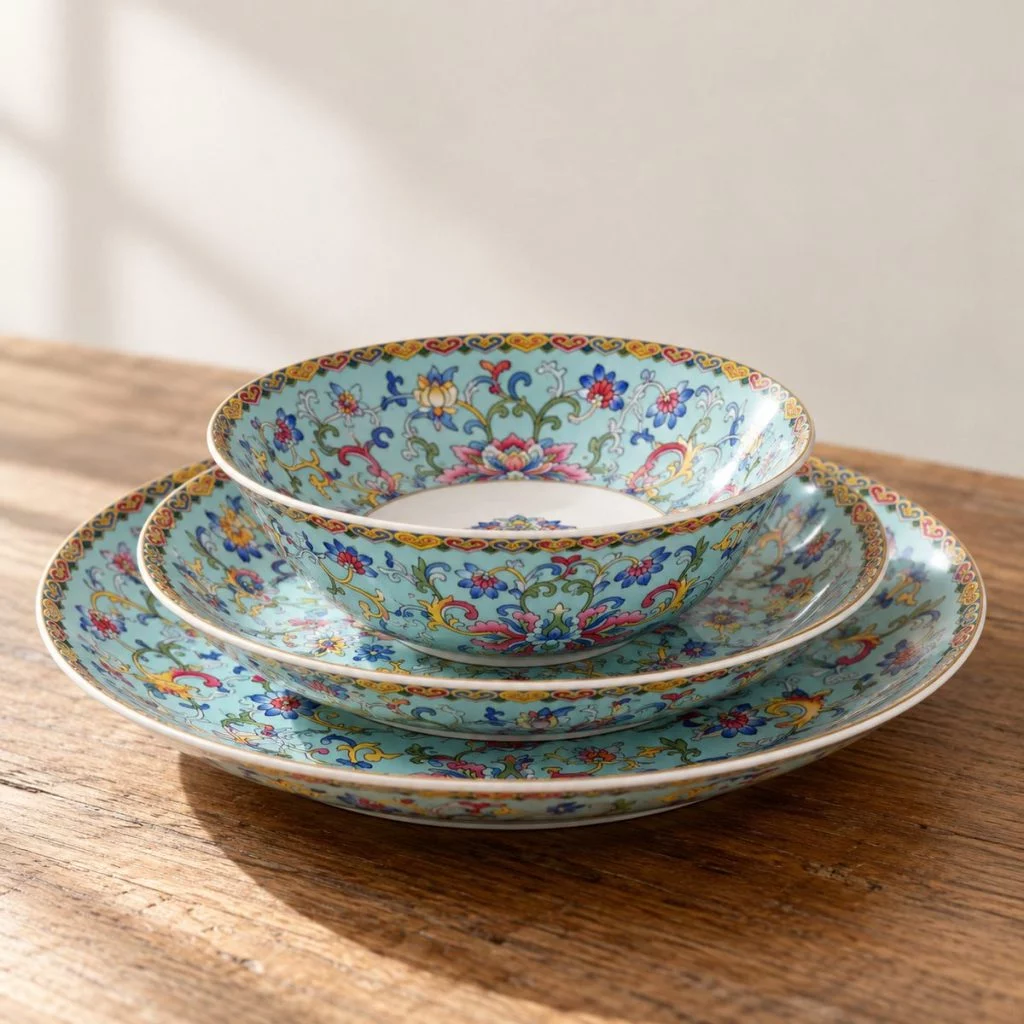
The whole outside of every piece is turquoise. It is a solid enamel ground, laid by hand over the glaze, and on top of it lotus flowers open along curling stems that run from piece to piece, so the service reads as one pattern when it is laid out together. Around each rim a cloud-head border, a ring of pointed ruyi shapes, closes the design like a collar.
Turquoise was a favorite ground in the Qing court’s enamel painting, cool against the warm pinks and yellows of the flowers. On a single cup it is easy to get right. Across a ladle, a deep plate and a serving bowl it is not, because each form takes the color a little differently, and the whole service has to match. That evenness is where most of the painting hours go.
Inside, the bowls are left white. The turquoise stops at the rim, and whatever goes into the bowl sits against plain porcelain, which makes both the food and the outside color look brighter.
Every piece is painted in Jingdezhen on porcelain fired first at about 1,300 °C, and the enamels are fixed in a second firing at about 780–850 °C. The service is checked as a set, with plates stacked and colors compared side by side before it is packed.
Setting a painted service for display or a formal table is covered in our guide to decorative Chinese porcelain for interiors.