Can porcelain look like an ink painting?
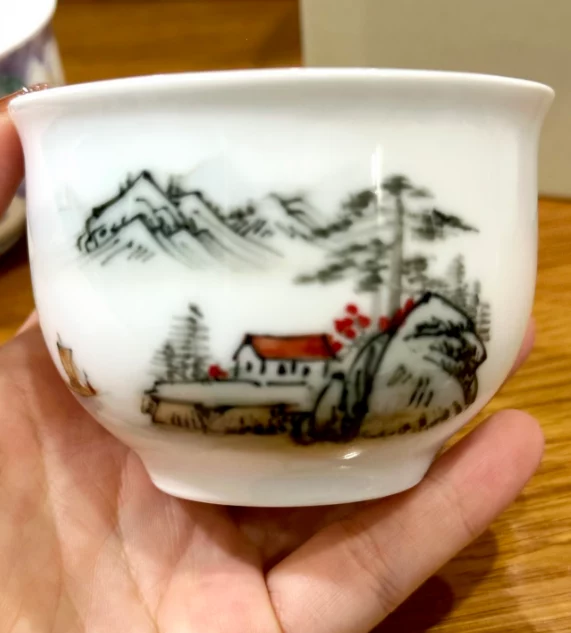
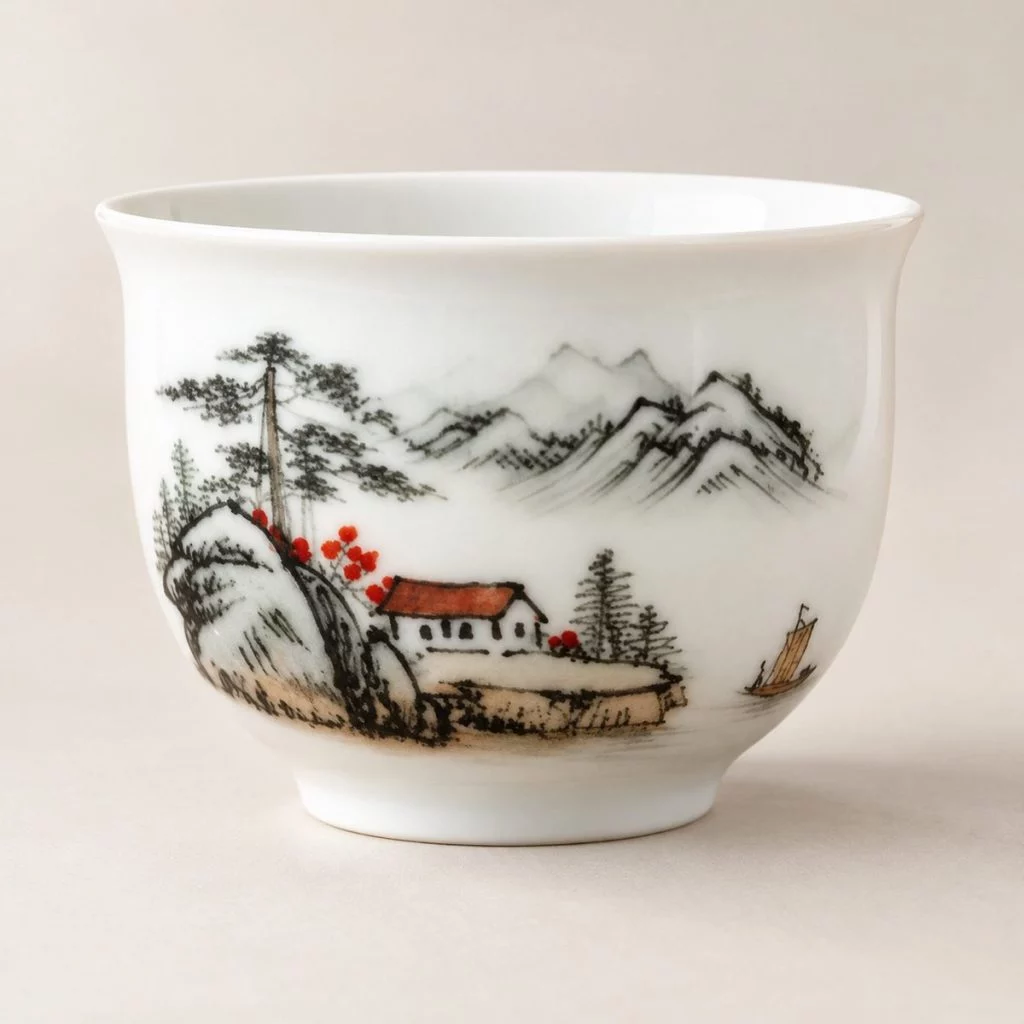
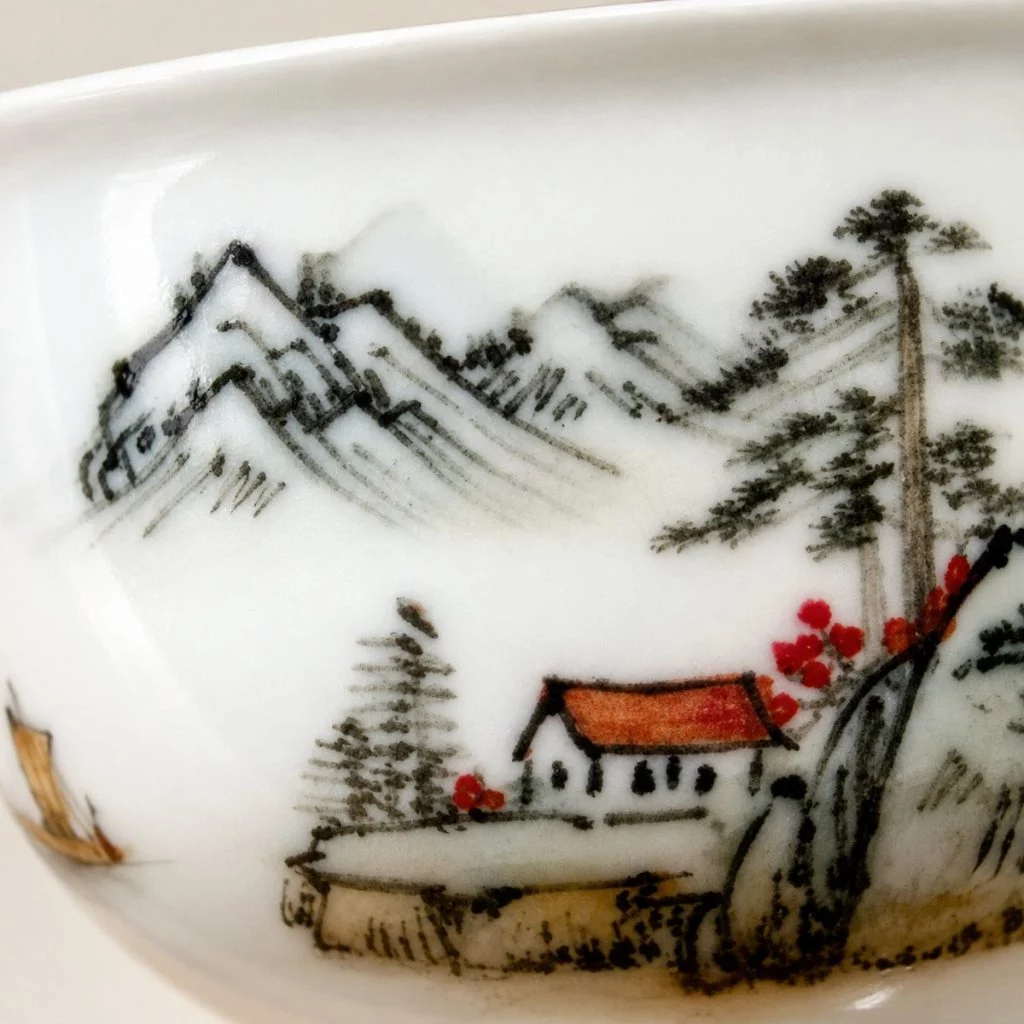
It can, and mocai is how. The word means “ink color”: the painter works in a black overglaze enamel that handles much like Chinese ink, laid on dark for rocks and pine needles, then thinned and shaded into grays for distant hills and mist. The result looks like a small landscape scroll wrapped around a cup.
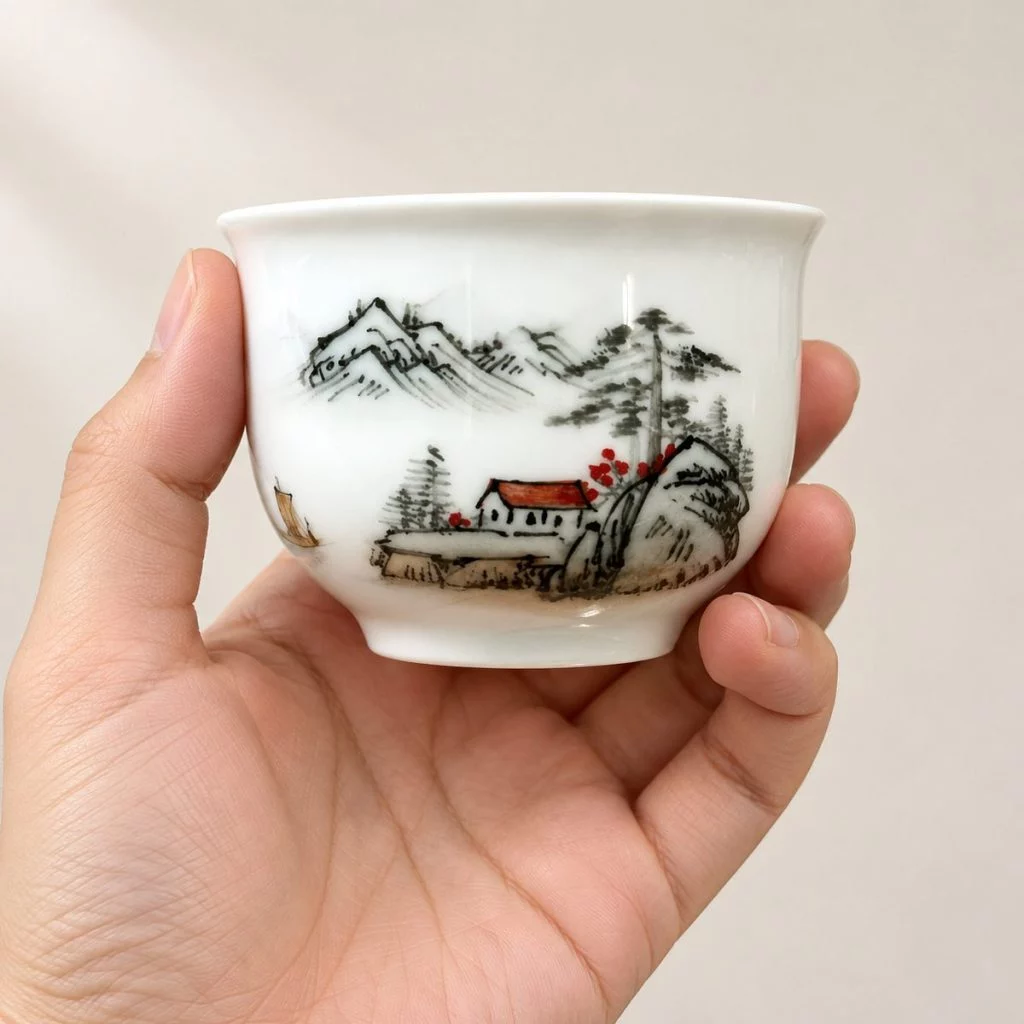
Turn it slowly and the scene unfolds. Steep mountains rise behind a tall pine, rocks crowd the foreground, and a farmhouse sits tucked among them. The only color is red. The farmhouse roof and the leaves on one bush are touched in iron red, a warm accent that catches the eye exactly where the painter wanted it, the way a red seal does on a scroll.
Mocai grew popular in the Qing dynasty, when porcelain painters began copying the ink landscapes of the scholar painters. It is quieter than wucai or famille rose and depends almost entirely on brushwork, so the cup is a good choice when the drawing matters more than the color. The bright white glaze stands in for paper.
The cup is rounded with a slightly outturned rim and a short foot. It is fired first at about 1,300 °C, painted in Jingdezhen, and fired again at about 780–850 °C to fix the enamel.
The difference between ink-style painting, wucai and famille rose is set out in our guide to Chinese porcelain decoration techniques.