Pine and bamboo keep the pavilion company
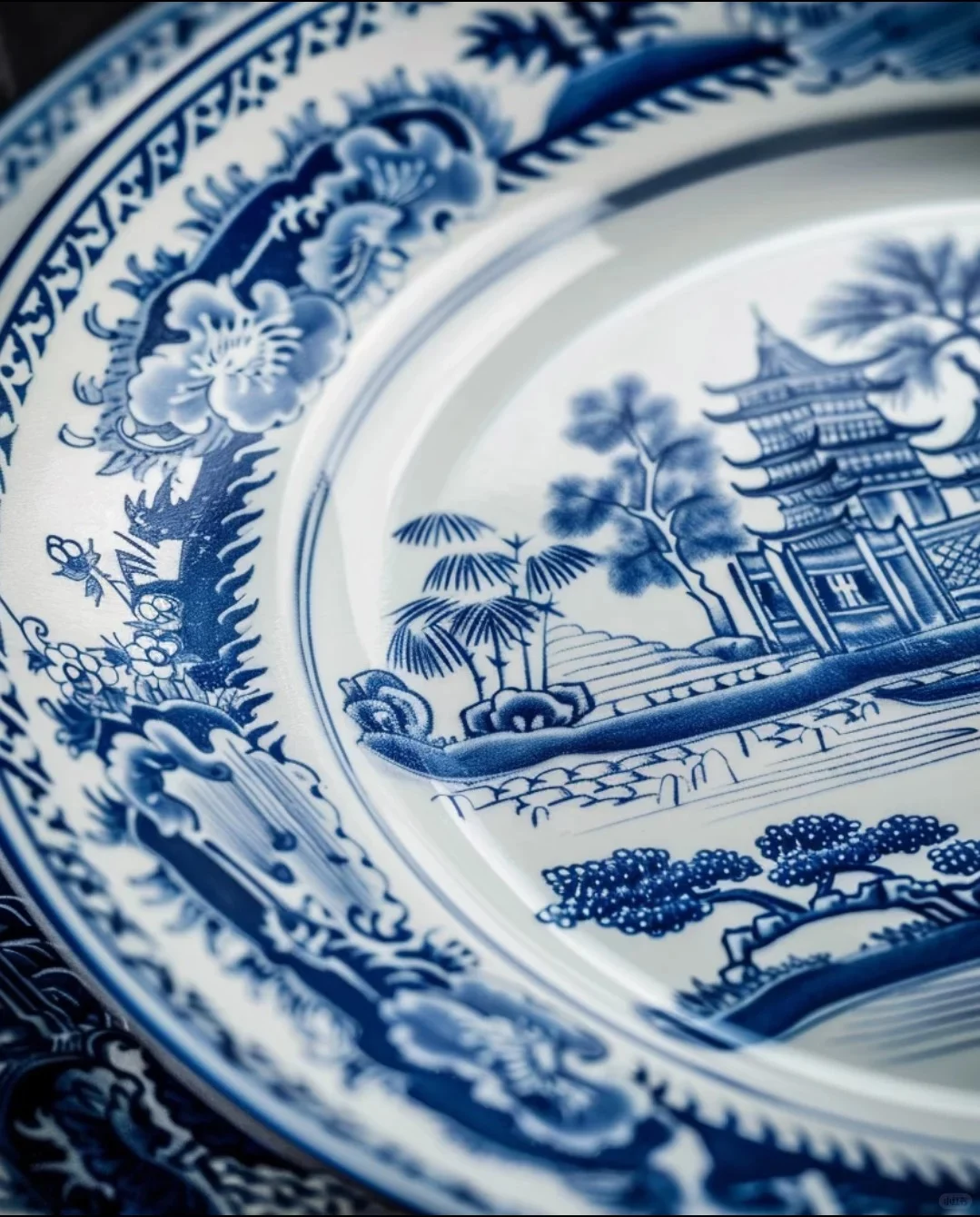
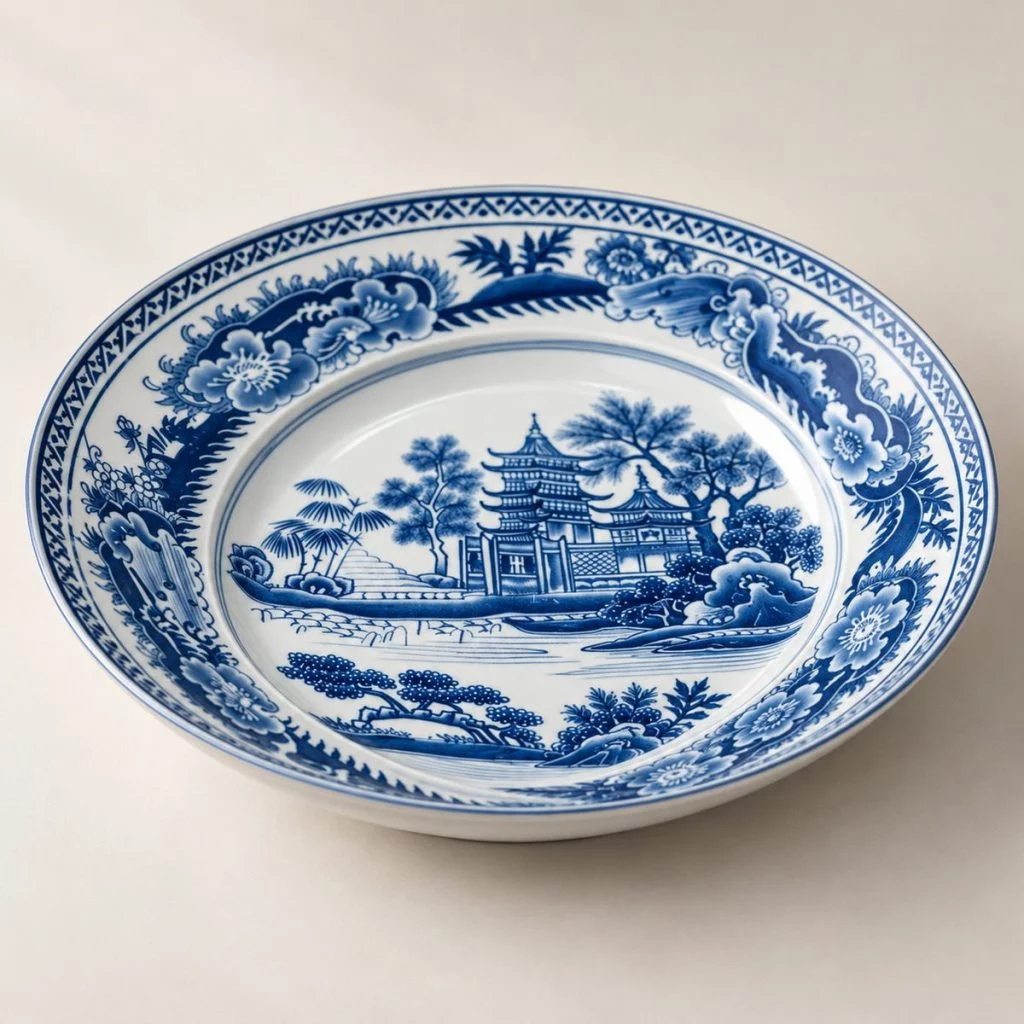
The scene is a garden in miniature. A pavilion with an upturned roof sits at the center, a pine leans in from one side, and a stand of bamboo rises on the other, with rocks and ground sketched in by short strokes of the brush. There is no one in it. The plate leaves that place to whoever is looking.
The plants were not chosen for decoration alone. Pine and bamboo both stay green through the winter, and in Chinese painting they stand for constancy and an upright character. A pavilion set among them is a scholar’s retreat, somewhere to sit, read and look at the view.
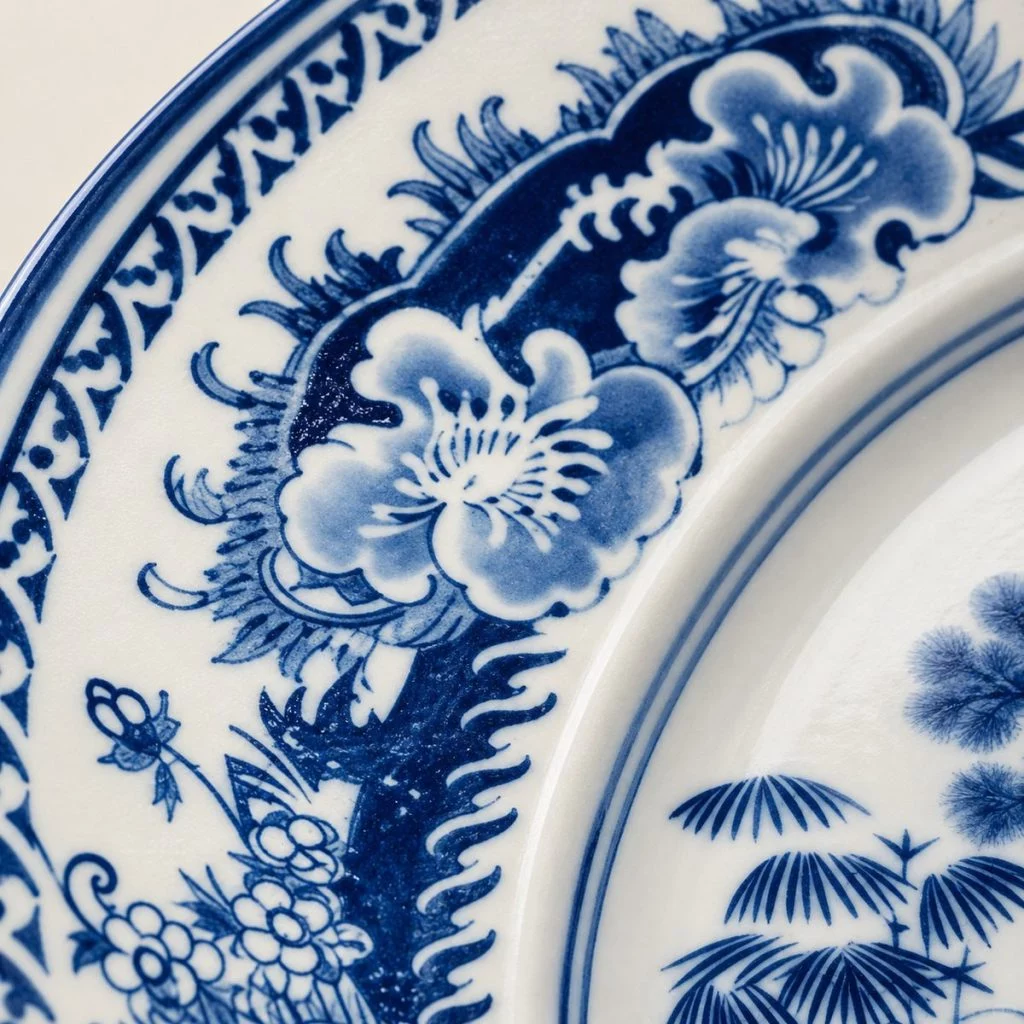
Around the scene, the wide rim carries a flowering branch, and a narrow patterned band runs along the very edge. The rim works like the mat around a framed print: it gives the landscape room to breathe before the plate ends.
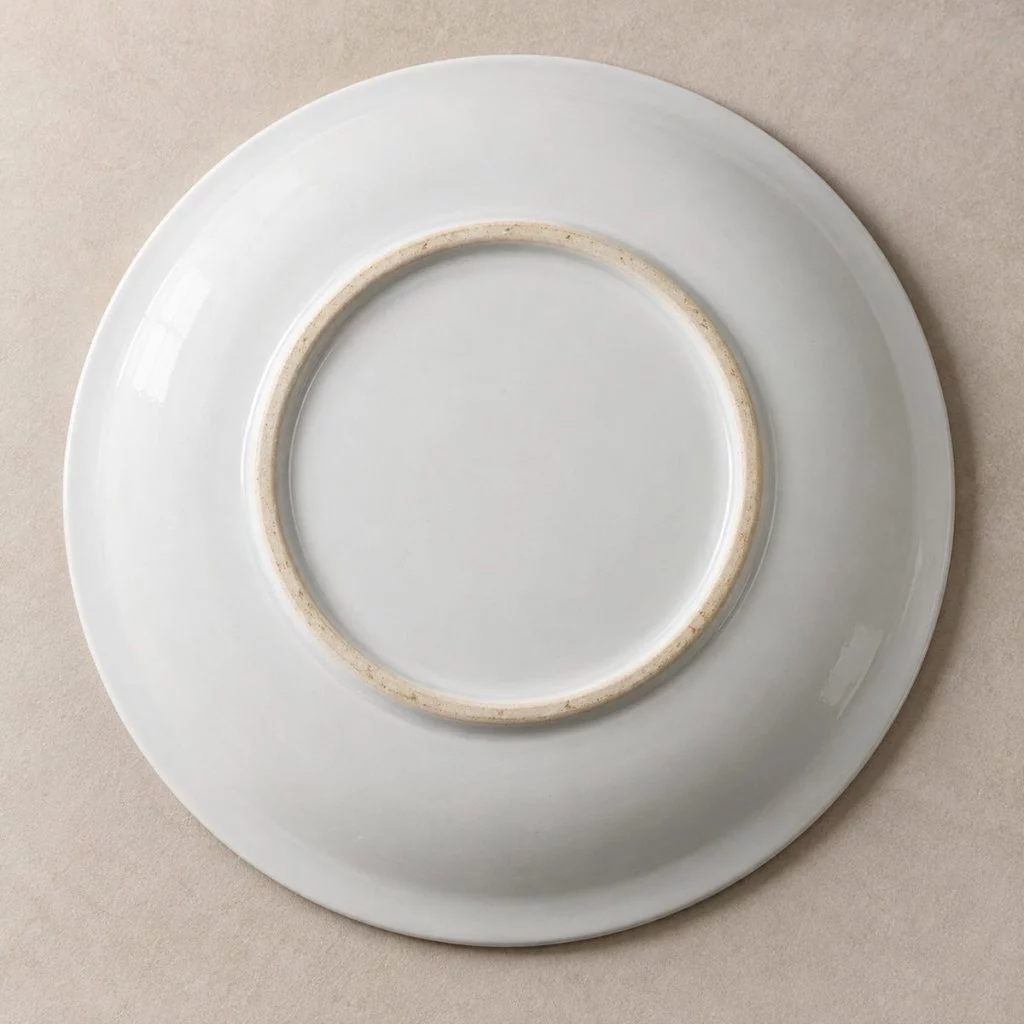
Everything is painted in cobalt on the raw clay at KKCN’s Doufunong workshops in Jingdezhen, then sealed under a clear glaze in a single firing at about 1,300 °C. Most buyers hang it, but with the blue under the glaze it can also go on the table as a serving plate.
If the plate is meant for a wall or a stand, our interiors guide to decorative Chinese porcelain covers sizes and placement.