Why leave out the picture?
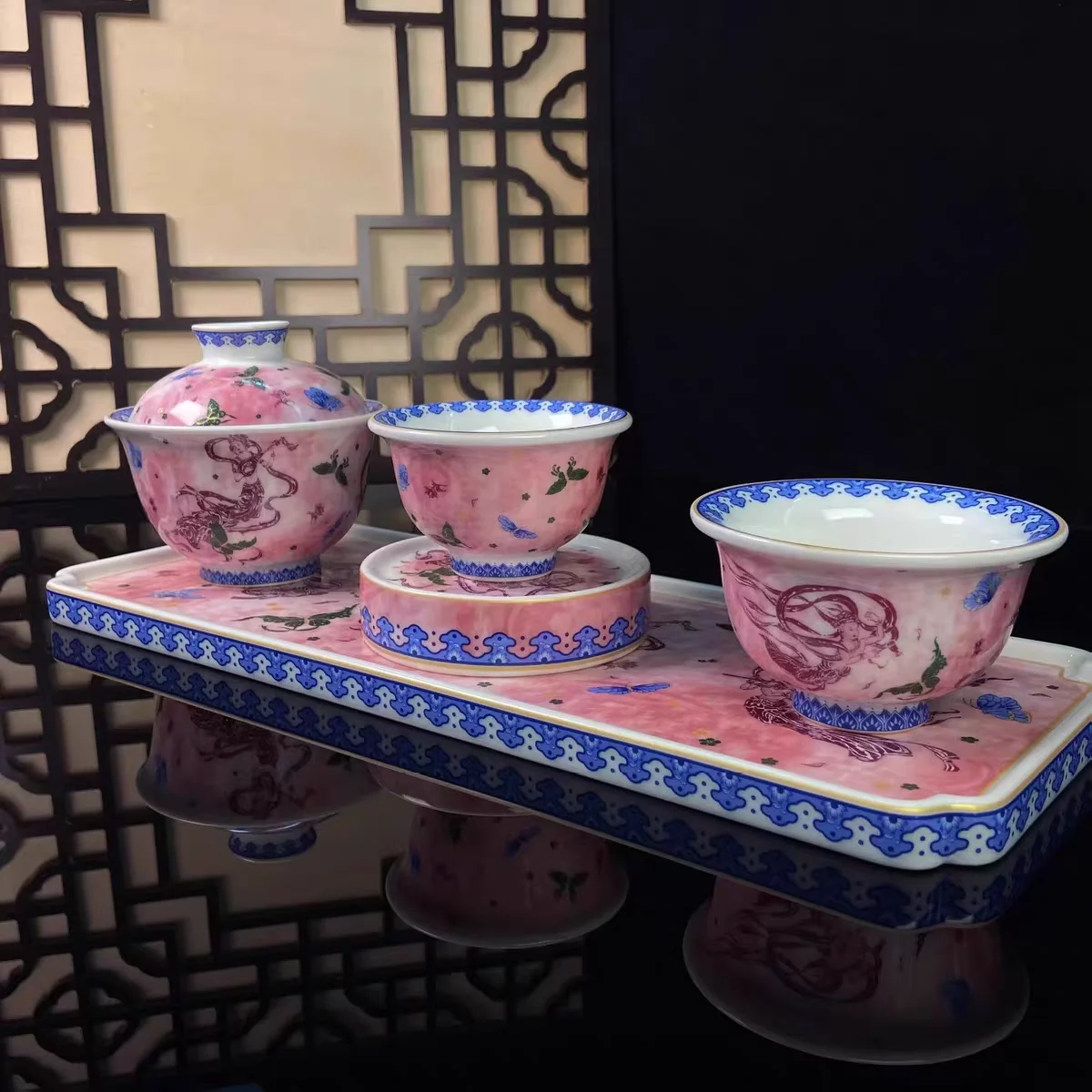
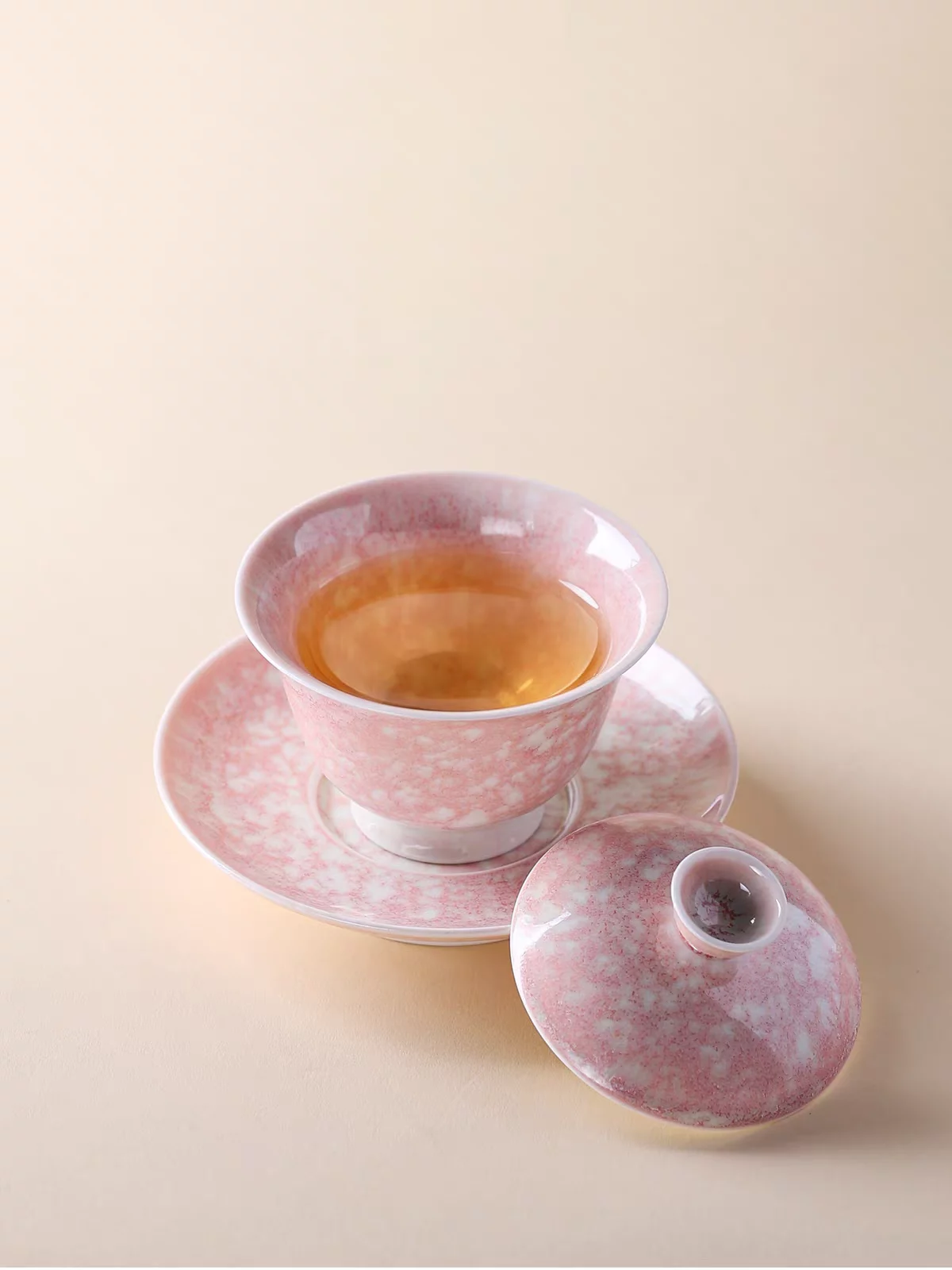
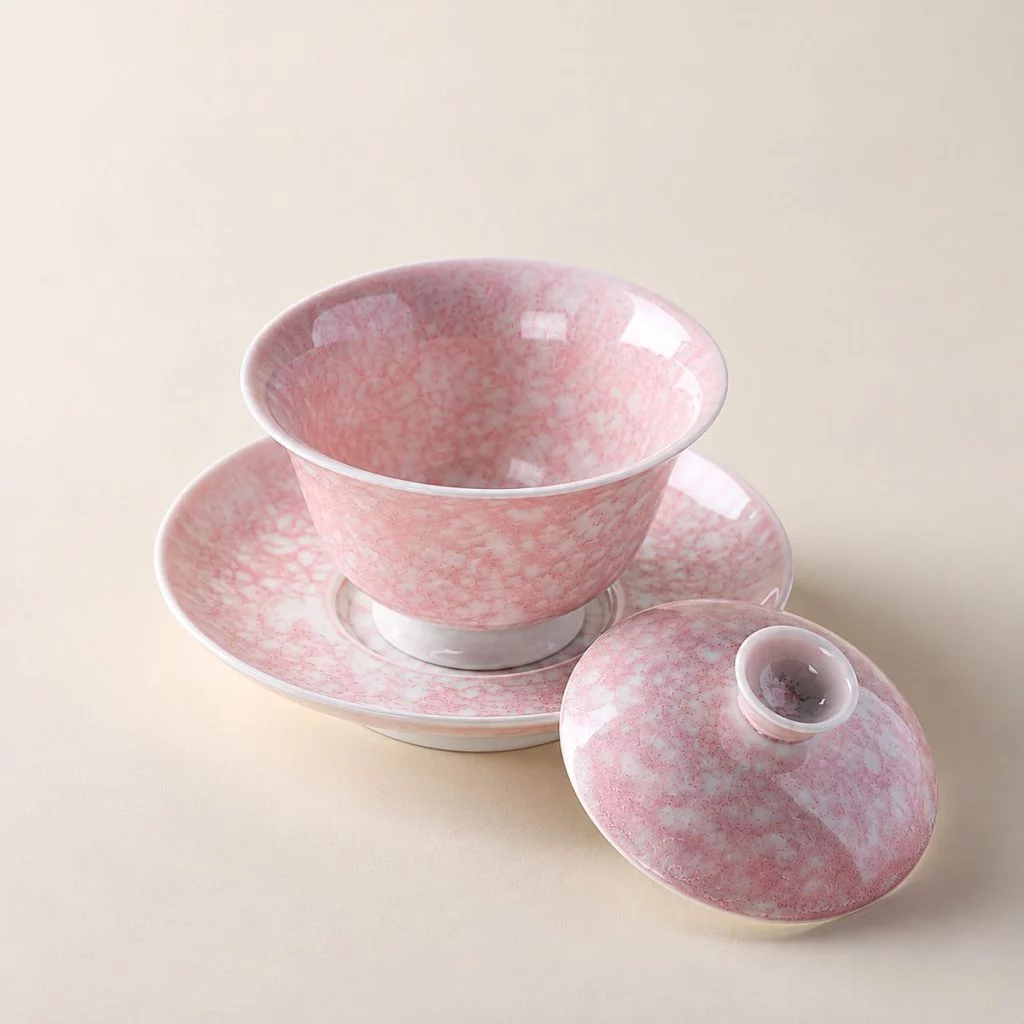
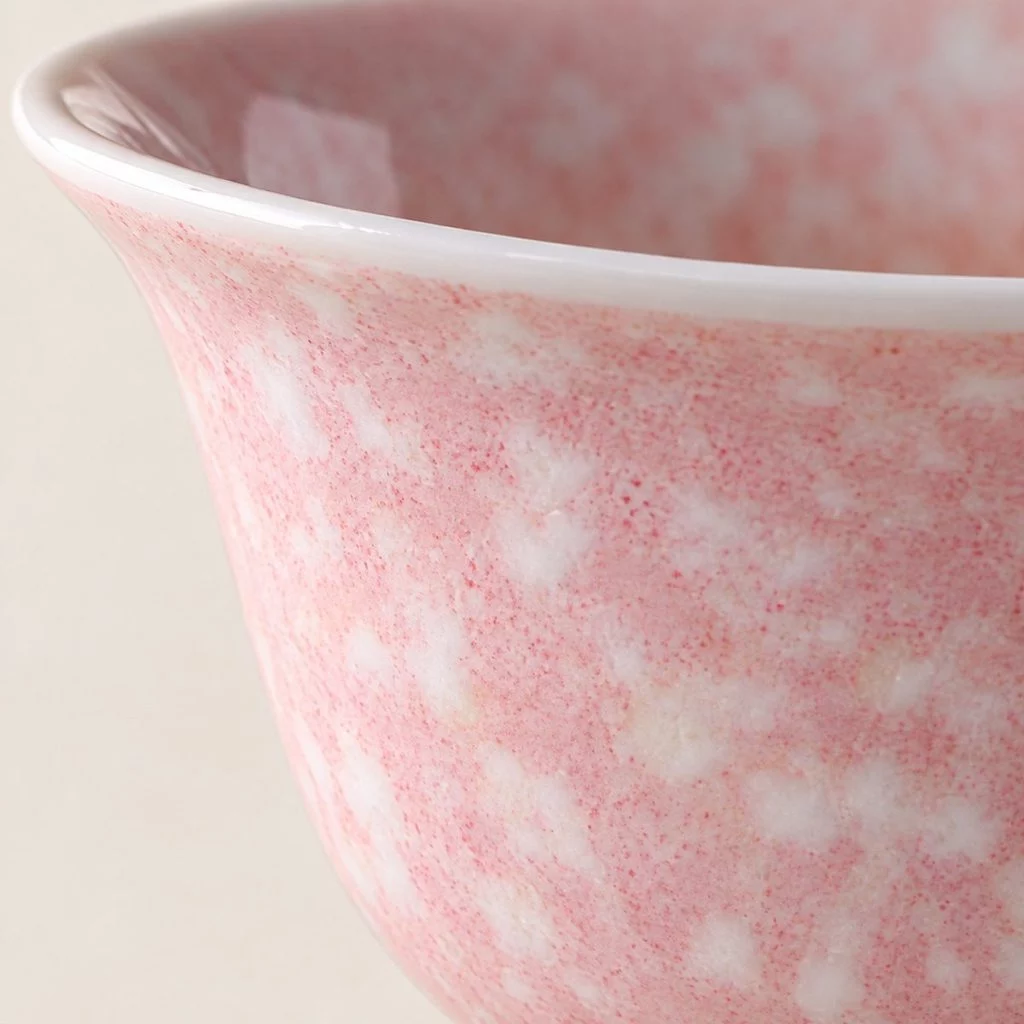
Most famille rose porcelain tells you something: a flower, a bird, a scene from a story. This gaiwan only shows you the color. The painter dabs pink enamel onto the fired glaze in overlapping touches and blends the edges while they are still wet, so the pink gathers in some places and thins to near white in others, the way color sits in a flower petal.
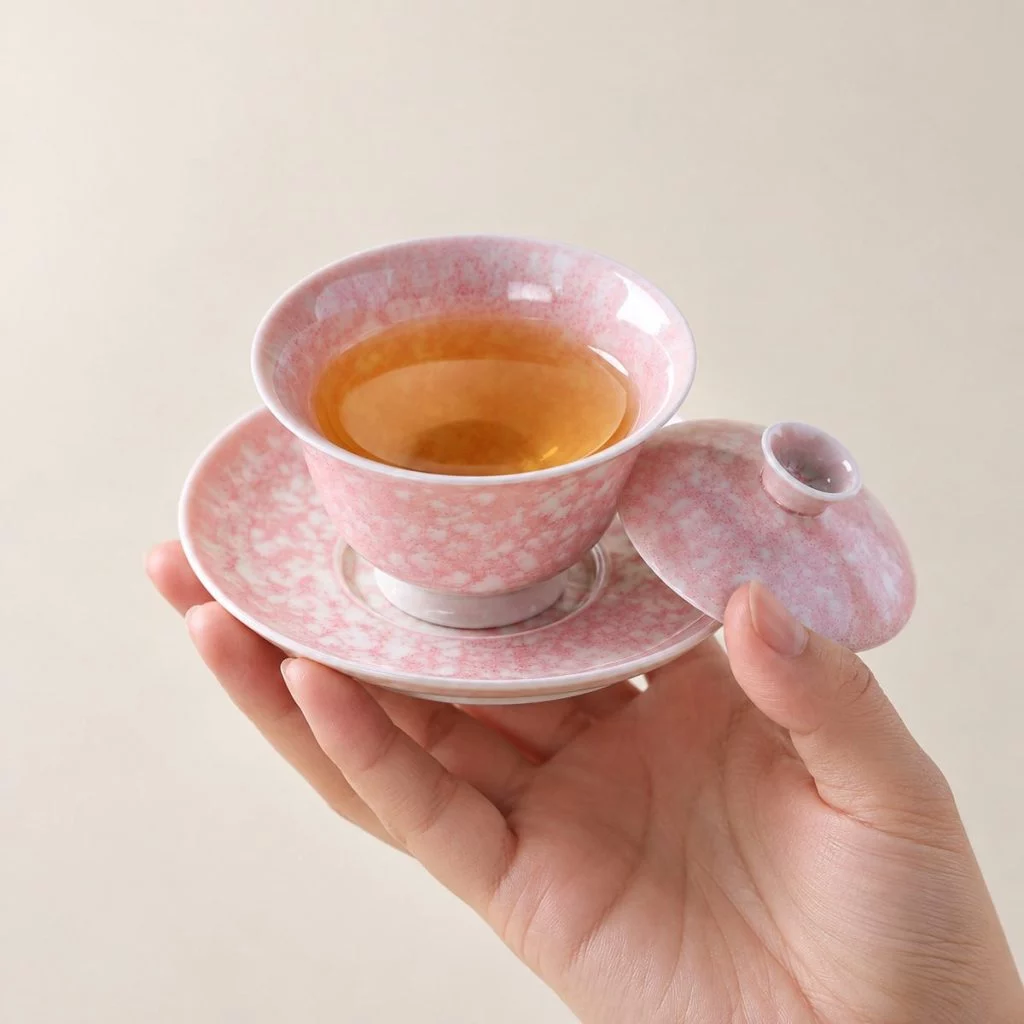
With no motif to look at, the eye goes to the shape instead. You notice the easy curve of the bowl, the dome of the lid, the saucer sitting flat beneath them. The foot and the rim of the knob are left white, a thin frame that stops the pink from simply running out at the edges.
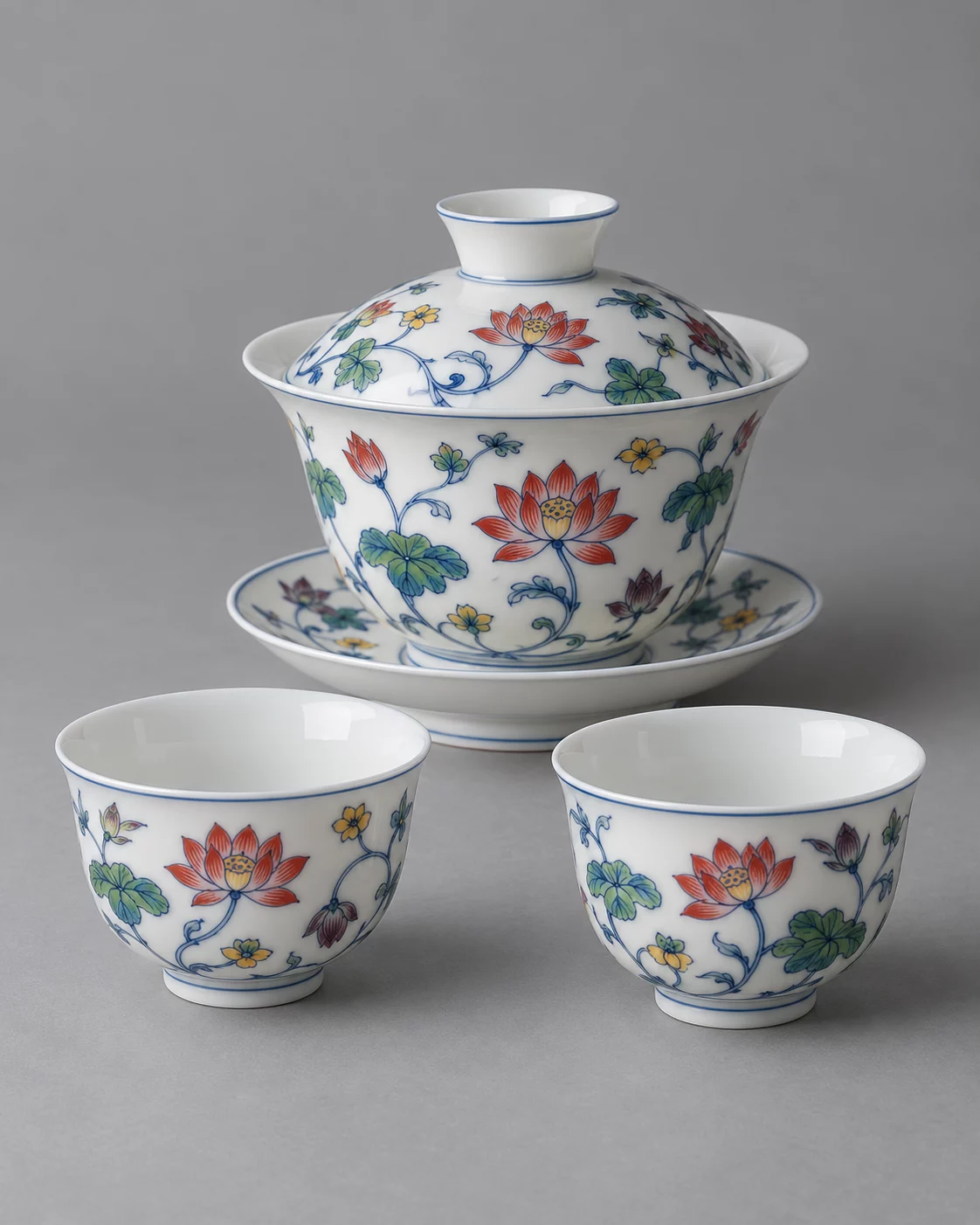
It also makes the gaiwan easy to live with. A plain pink sits comfortably beside patterned cups, a wooden tea tray or an iron kettle, and it never fights with whatever else is on the table. That is a large part of why tea shops reorder it.
KKCN makes it at its Doufunong workshops in Jingdezhen: porcelain fired first at about 1,300 °C, then the enamel fixed in a second firing at about 780–850 °C. Each lid is fired with its own bowl and packed beside it.
How famille rose’s soft, opaque enamels differ from wucai is covered in our guide to Chinese porcelain decoration techniques.