KKCN ceramic logo
Request a Quote

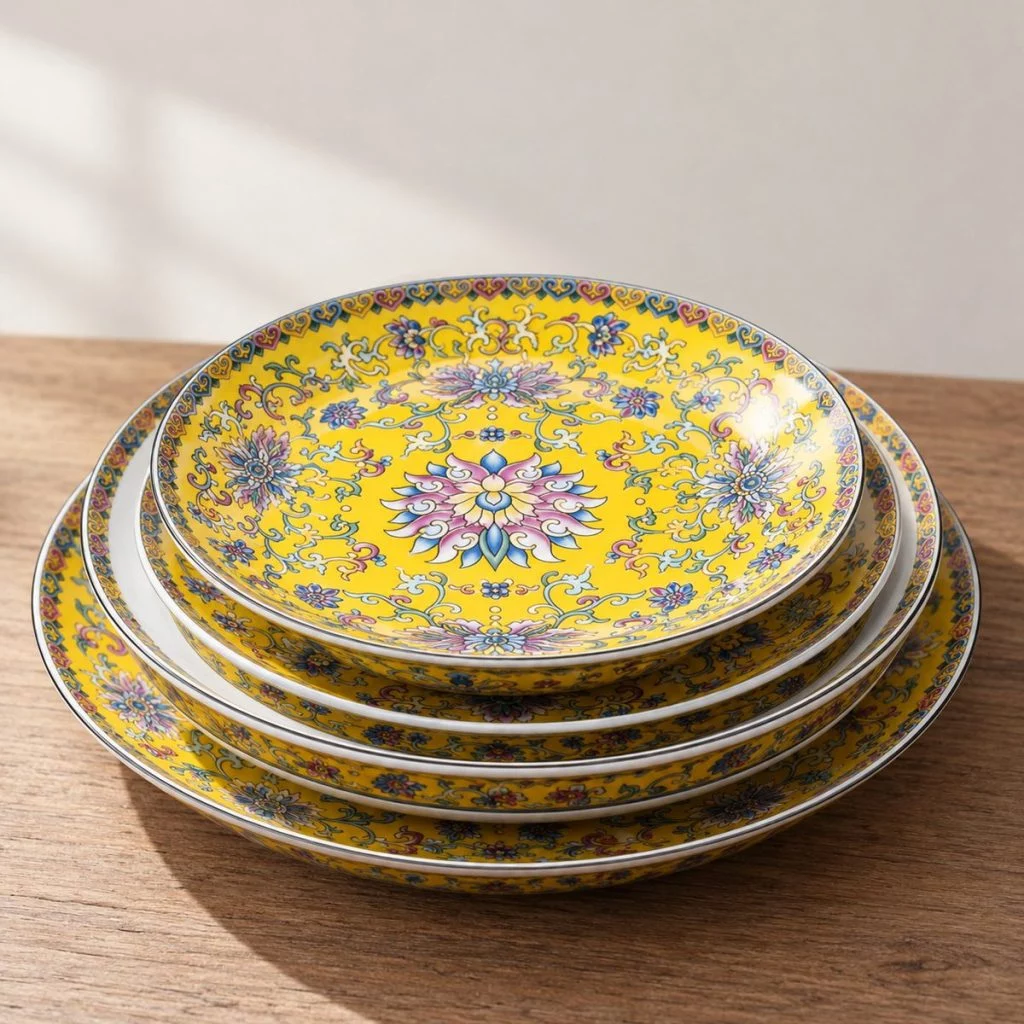
Falangcai Yellow-Ground Lotus Dinner Service

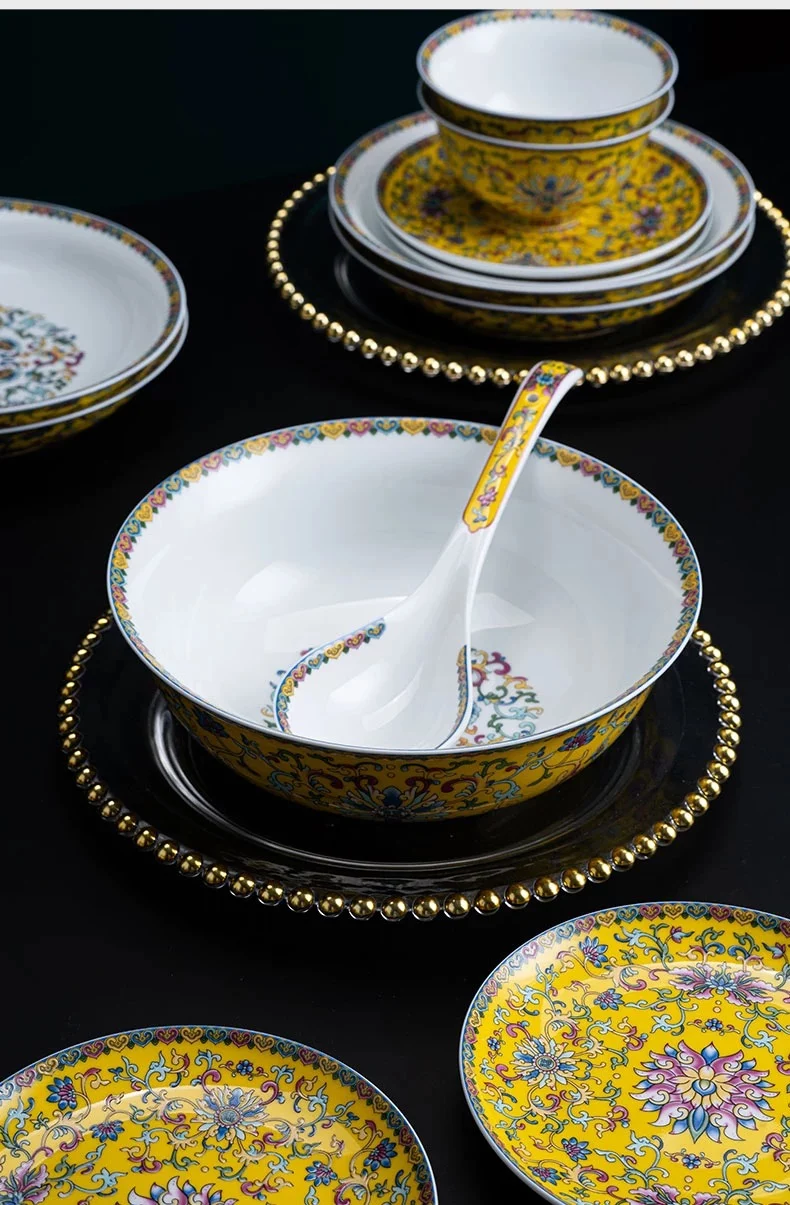
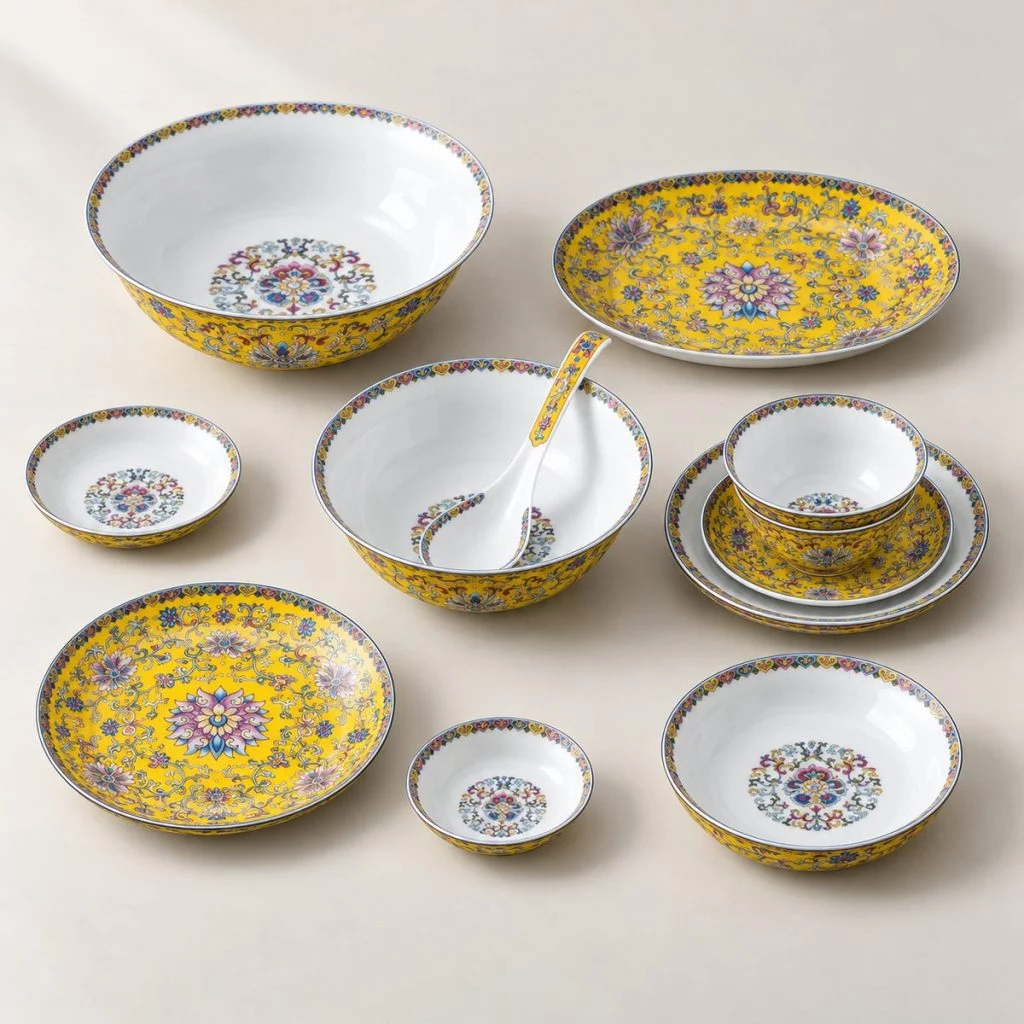
A single lotus opens at the bottom of the large bowl in this yellow-ground service, and lotus scrolls run around every plate and bowl beneath a cloud-head rim. It is enameled by hand at our Jingdezhen porcelain factory, and gift programs order it as a full service.

PP-010
Falangcai dinner service on a yellow enamel ground with lotus scrolls and a lotus medallion inside the large bowl

Need this in your size or glaze?

Tell us the quantity and destination and we will confirm options.

At a glance

Product details

Reference
PP-010
Collection
Imperial Wucai & Painted Porcelain Collection
Type
Falangcai porcelain
Finish
Hand-painted overglaze enamel on a yellow ground
Availability
In stock · made to order

Specifications

Specifications

Reference designYellow-ground falangcai dinner service with lotus scrolls and a lotus medallion
SizesPlates 15–28 cm (6–11 in); bowls 10–20 cm (4–8 in); exact sizes confirmed in your quote
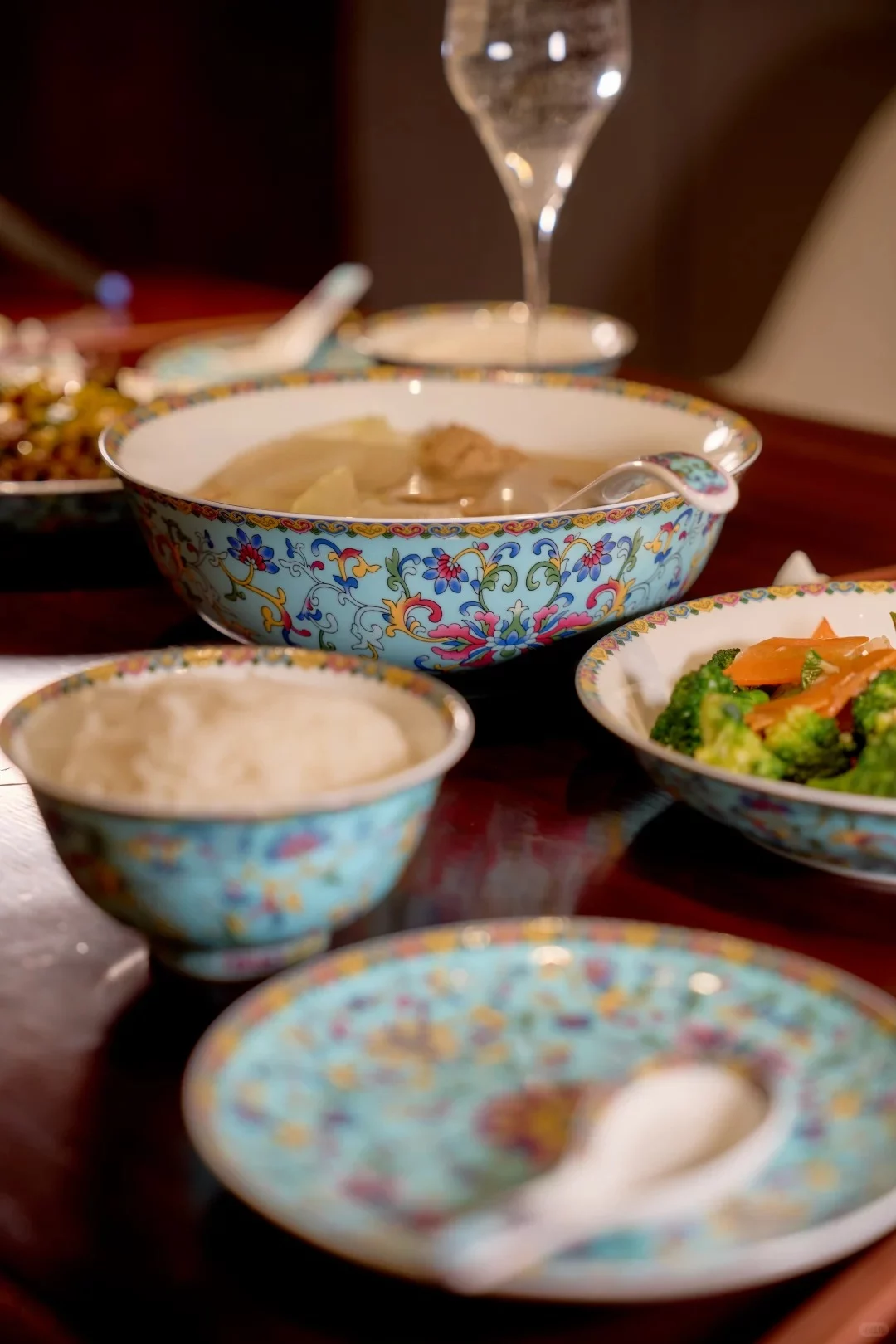
SetLarge bowl with spoon, plates and bowls as pictured (the glass chargers are props); built per place setting
BodyPorcelain
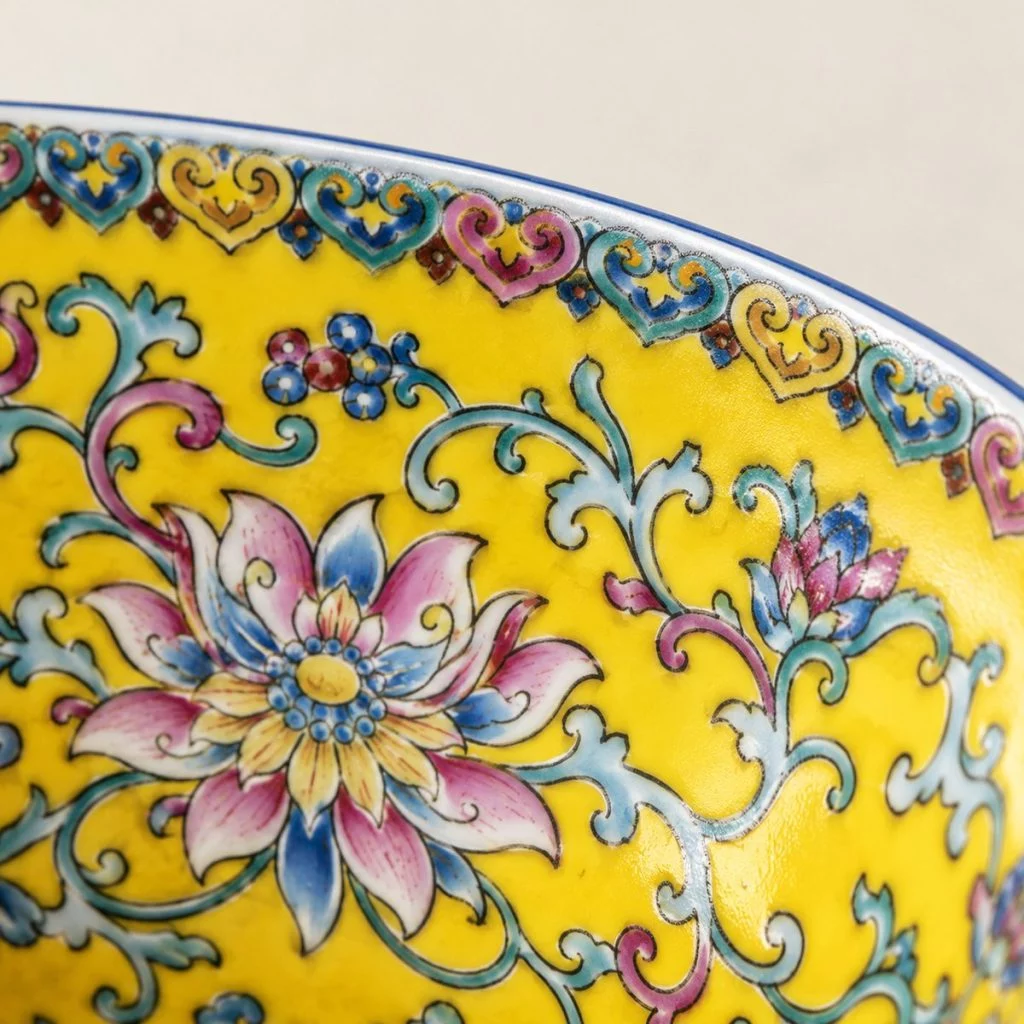
DecorationLotus scrolls, a lotus medallion and a cloud-head border in overglaze enamel on a yellow ground
FiringHigh-fired at about 1,300 °C (2,370 °F); enamels refired at 780–850 °C
UseCeremonial dining, gifts and display
OrderIn stock from 1 piece; mixed orders from 10 pieces; custom from 50 pieces per style
Lead timeStock leaves Jingdezhen in 3–7 working days. Production runs take 15–25 days, and a new size, shape or pattern 30–45 days.
PackingEach piece bagged and seated in its own molded pulp insert, in a five-layer export carton with corner guards.

Applications

Where it is used

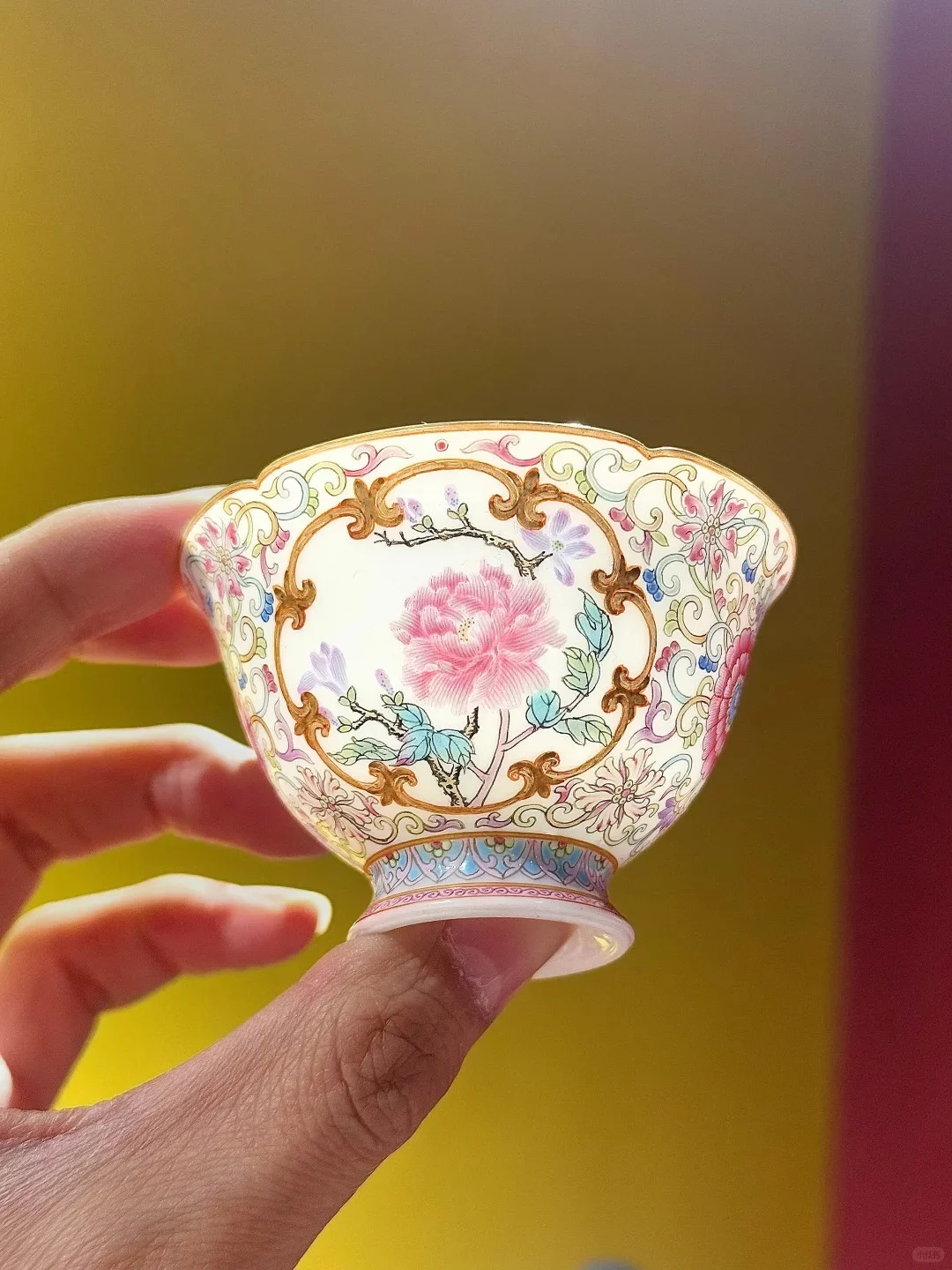
Corporate gift programs send it to partners and senior clients, boxed by the place setting, because yellow porcelain still reads as an honor. Display cabinets in offices, restaurants and homes hold it as a set, and museum stores sell single bowls beside exhibitions of Qing porcelain.

What makes a yellow ground so hard to paint?

A plain bright ground hides nothing. On white porcelain a slightly uneven stroke disappears; on solid yellow, every thin patch, every brush mark and every speck of dust shows. The enamel has to go on thick enough to look opaque and thin enough not to crawl or bubble in the kiln, and it has to do that across bowls, plates and a spoon that all curve differently.

The painters lay the ground around the lotus scrolls, leaving the flowers and stems as islands to be painted in finer colors afterward. The cloud-head border at each rim is drawn the same way, a ring of pointed ruyi shapes that gives the yellow a clean edge.

Then there is the medallion. At the bottom of the large bowl a single lotus is painted face-up, the way you would see one floating on a pond, and it appears only as the bowl is emptied. Small surprises like this were a favorite of Qing porcelain painters.

The service is painted in Jingdezhen on porcelain first fired at about 1,300 °C, then refired at about 780–850 °C to fix the enamels. Before packing, the plates are stacked and every piece is compared side by side so the yellow matches from bowl to bowl.

How overglaze enamels are painted, fired and cared for is explained in our guide to Chinese porcelain decoration techniques.
Customization

What can be adapted

01

Medallion

Your crest, monogram or a date in the bowl's center in place of the lotus.

02

Pieces

Place settings, cups, a teapot or serving dishes added to the service.

03

Box

A presentation box for each place setting, made for a gift program.

Quality

Checks before packing

  • Plates stacked to check they sit flat
  • Yellow ground checked for thin patches and specks
  • Rims checked for chips
  • Pieces counted against the order

More from KKCN

Related products

FAQ

Questions about this piece

Why a yellow ground?

In Ming and Qing China a bright yellow was reserved for the emperor, and porcelain glazed or enameled in it was made for the court and its ceremonies. That is why the color is still called imperial yellow. Today it reads as formal and celebratory rather than everyday, which is exactly why gift programs and museum stores choose it.

What is the medallion inside the bowl?

A roundel, a design drawn to fit a circle, here a single lotus seen from above. The lotus grows out of mud and flowers clean, so in Chinese art it stands for purity and integrity, a good wish for a guest. On a custom service the medallion is the easiest place to make the set personal: a crest, a monogram or a date fits in the same circle.

Turquoise or yellow: which suits a gift?

It depends on the message. Yellow is the more formal and ceremonial of the two, suited to senior partners, anniversaries and official occasions. The turquoise lotus service is cooler and more relaxed, and fits a private dining room or a modern interior more easily. Both share the same lotus scroll, so a program can offer one color to one group of recipients and the other to another.

How is a dinner service packed for shipping?

Every piece is bagged and seated in its own molded pulp insert, so plates never touch, then packed in five-layer export cartons with corner guards.

Order minimums, samples and shipping are covered on Samples & Quotations and Packing & Shipping.

Request a quote

What to include in your inquiry

Ready to source this piece?

Send the PP number, your quantity and your market, and Lin Wan replies within 1–2 business days with a price, sample options and a lead time.

Product inquiry

Tell us what you need

Share the PP numbers, quantity, destination and any customization. We reply within 1–2 business days.

Name