An old horse in a new coat
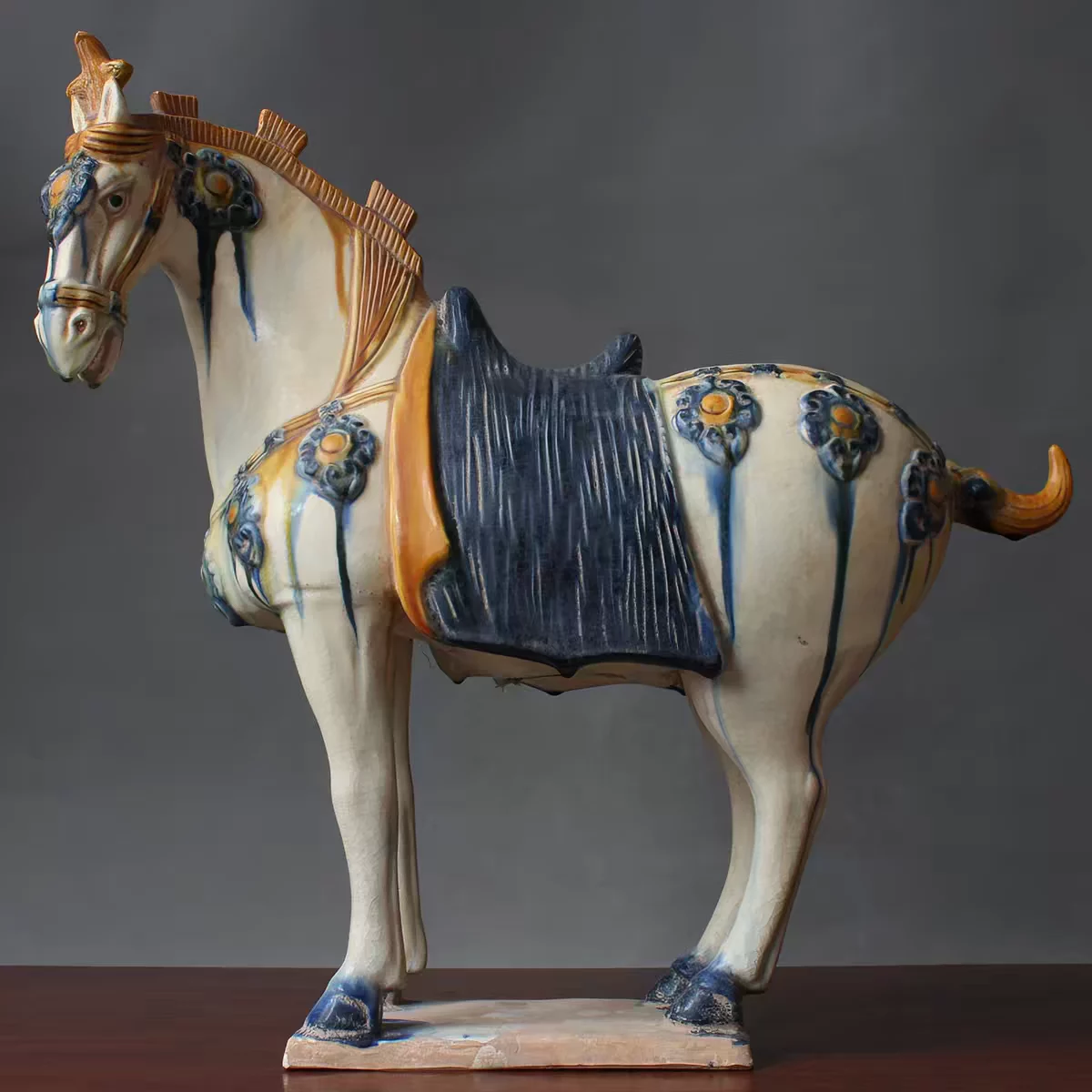
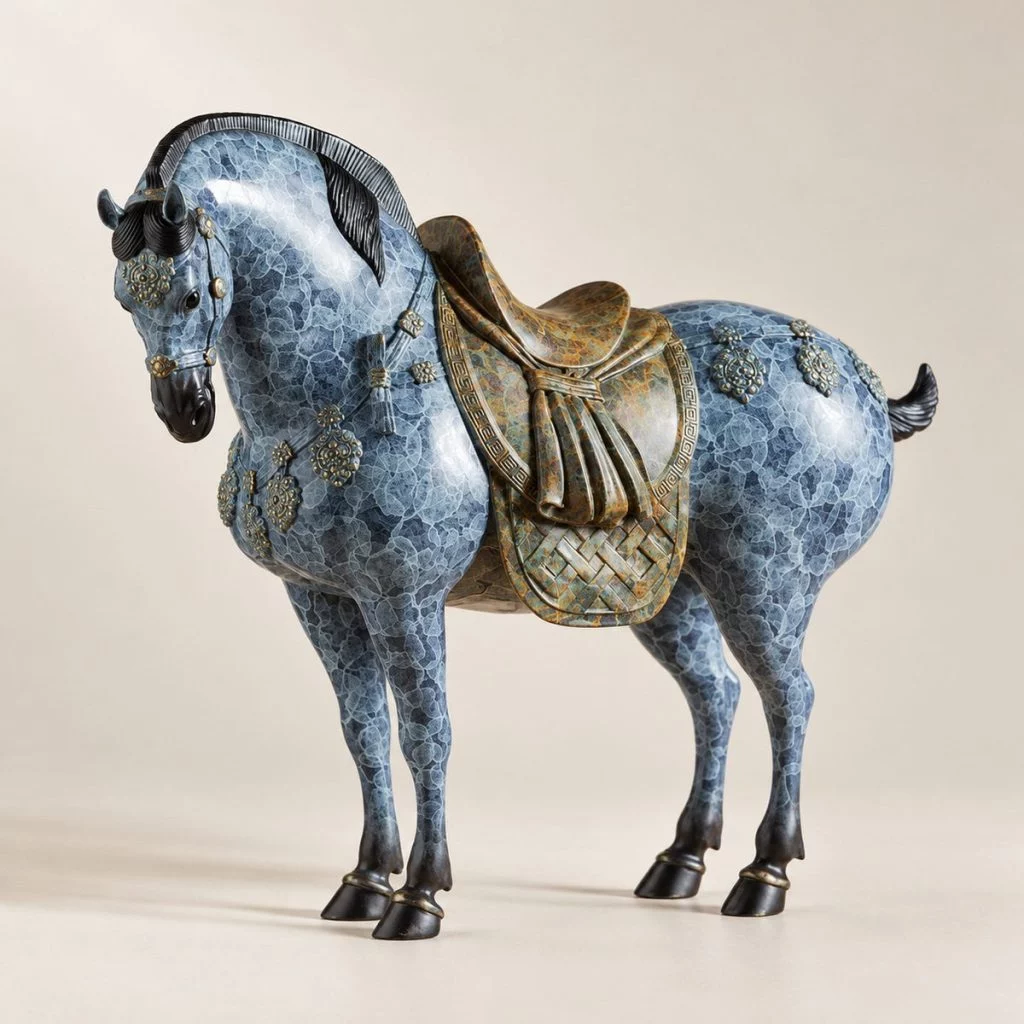
The shape is pure Tang. The horse stands square with its head held high, the mane and harness modeled in the clay, the same form potters in Chang’an were making some thirteen hundred years ago. The surface is where the eighth century ends.
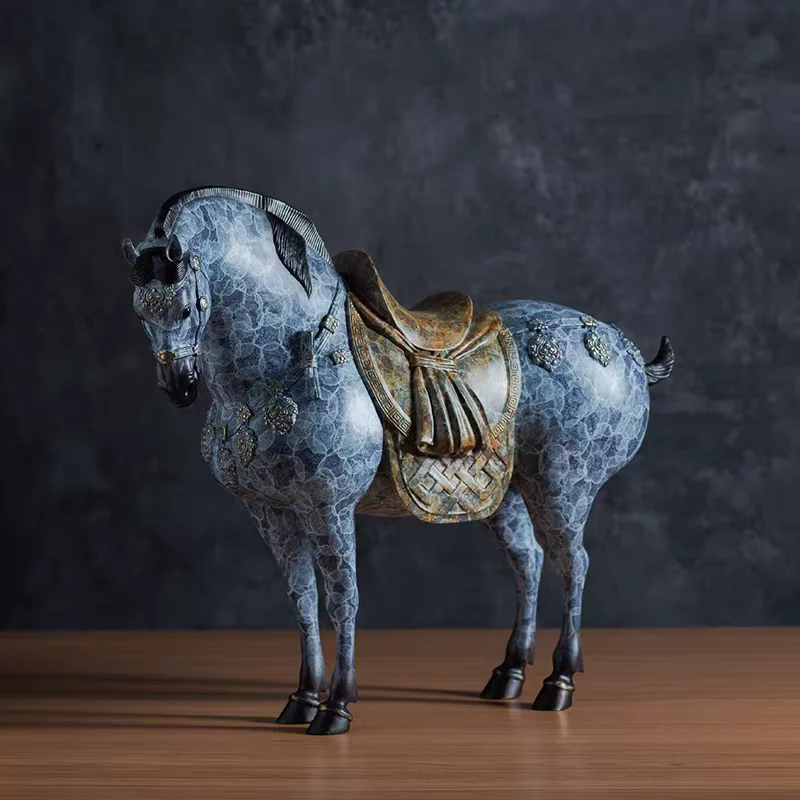
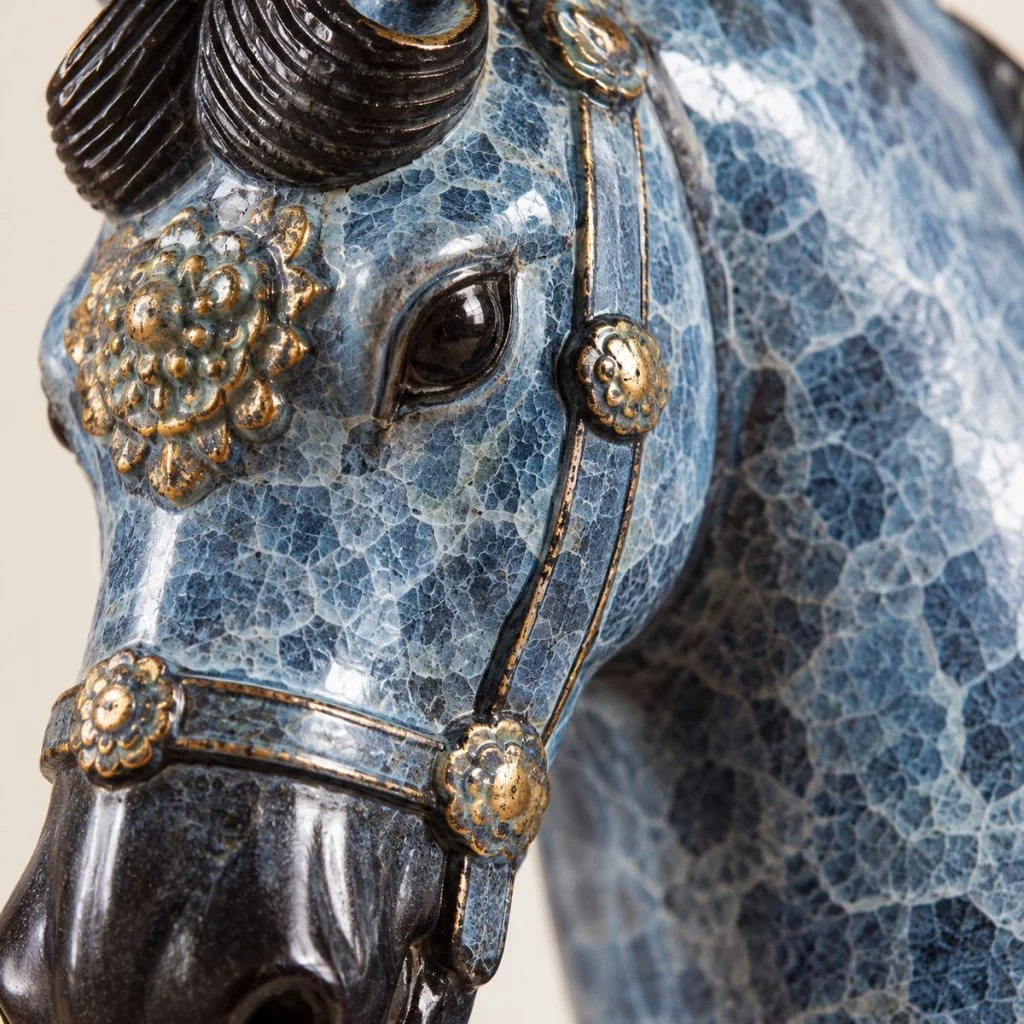
Instead of sancai’s running amber and cream, the whole body is covered in an even blue glaze that crackles as it cools. Each crack shows as a fine white line, so the horse is wrapped in a net of white over blue, a little like frost on a window. Because the glaze is laid evenly rather than left to run, the crackle covers the horse from ears to hooves in one continuous pattern.
The saddle and the ornaments on the harness carry a second finish, a metallic luster in a warm bronze tone. Against the glassy blue it catches the light and marks the parts of the horse that, on a real Tang mount, would have been leather and metal.
The finish was developed in KKCN’s own workshops in Jingdezhen, which is why it can be adjusted for an order in ways a historic glaze cannot. Like all sancai-style pieces it is earthenware, made for indoor display, and every horse is checked at its legs, ears and tail before it is crated.
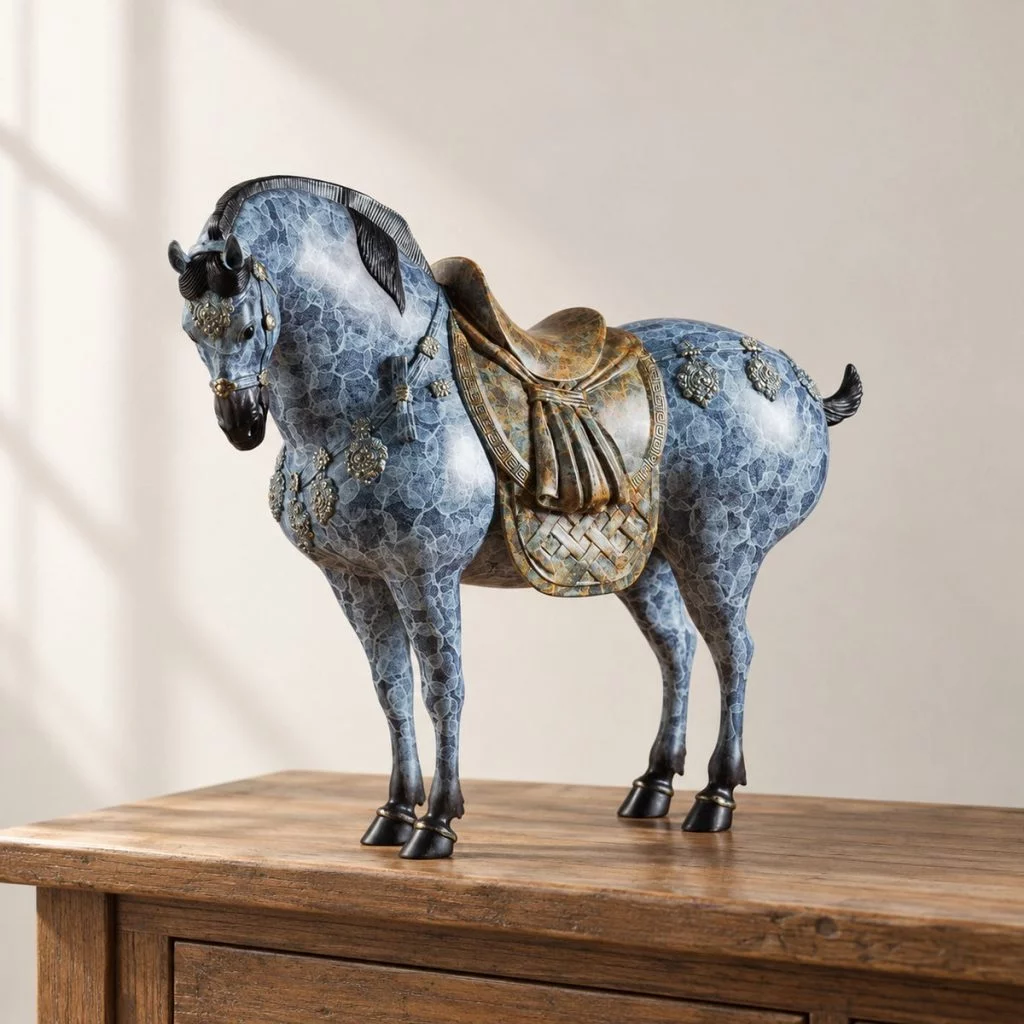
Where a horse like this sits best, and at what scale, is covered in our guide to decorative Chinese porcelain for interiors.