
Resources
Buyer guides from Jingdezhen
Ten guide collections on sourcing, craft and selling Chinese porcelain, written by our export team.
Browse all guides ↗ Resources
Buyer guides from Jingdezhen
Ten guide collections on sourcing, craft and selling Chinese porcelain, written by our export team.
Browse all guides ↗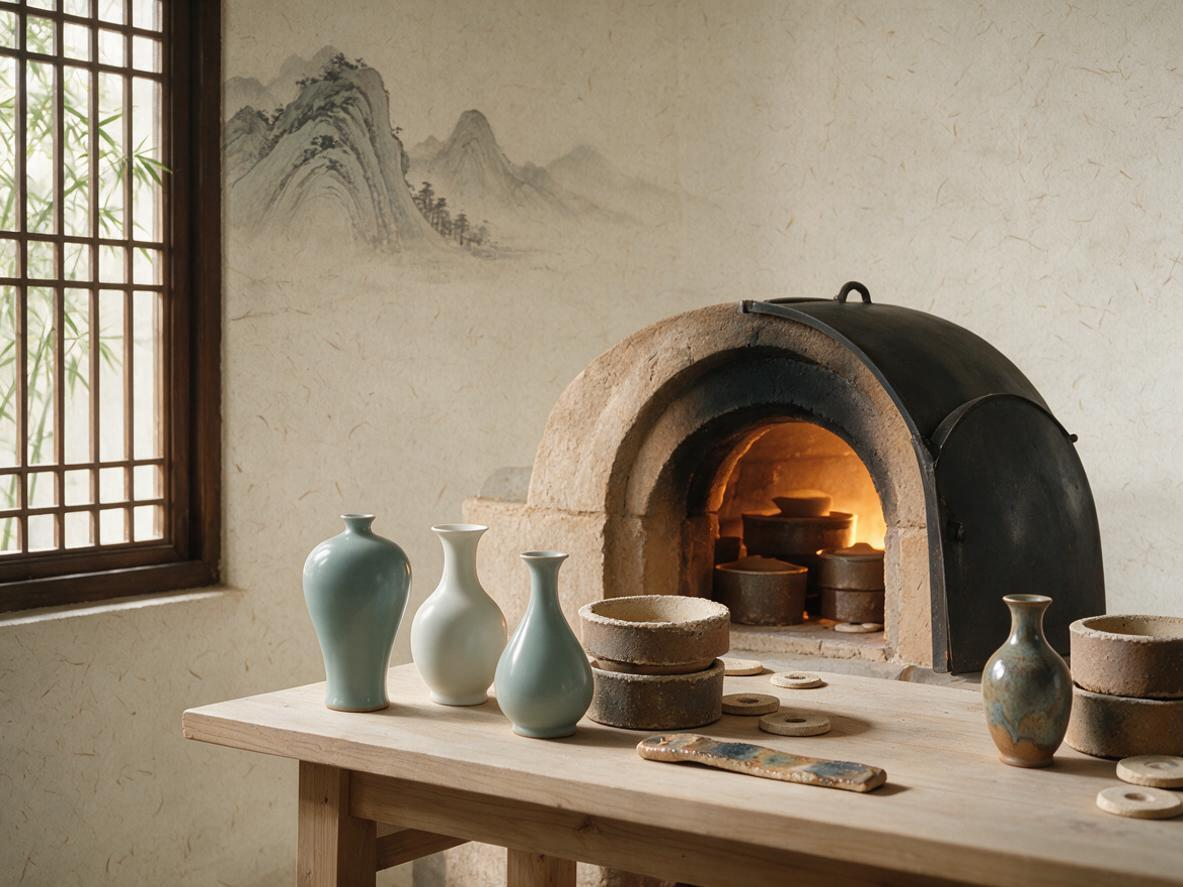
Heat, air and time
Four natural-gas kilns in our Doufunong workshops take each piece to about 1,300 °C. The air inside them decides whether iron turns green and copper turns red.
Oxygen in, oxygen out
Every piece is fired in the natural-gas shuttle kilns of our Jingdezhen factory at Doufunong, our Ru, Ge and Jun glazes included. One full cycle runs 22–28 hours: low-temperature dehydration, mid-temperature oxidation, a reduction hold of 2–4 hours at 1,280–1,330 °C, most often about 1,300 °C (2,370 °F), then staged slow cooling. Multi-point thermocouples track the chamber in real time and hold it within ±10 °C, so a cup on the top shelf fires like one at the bottom. The body comes out fully vitrified, with low porosity and good resistance to thermal shock. Controlled reduction steadies the metal oxides in the glaze, which is how Ru reaches its sky-blue celadon, Ge its “golden thread and iron wire” crackle and Jun its cloud-like kiln changes. Slow cooling relieves stress in the body, which cuts cracking in transit and leaves the soft, creamy luster of classic Jingdezhen porcelain. Enamel and decal pieces return for a short second firing at about 780–850 °C, and Tang Sancai earthenware has a lower firing of its own, so its glazes can run.
Where · four natural-gas kilns, Doufunong workshops; Ge, Ru, Jun and Sancai pieces are fired in the same factory, Sancai at a lower temperature of its own | Led by · our kiln team, firing to the record kept for each order | Hands on to · Final selection
A kiln load in the Doufunong workshops
Load to unload
01
Pieces are set on kiln shelves with room for the flame to move. Heavily glazed and colored pieces go where the heat runs most even, and each piece stands clear of its neighbor so melting glaze cannot fuse them.
02
The temperature climbs along a set curve. Moisture and organic matter burn out slowly at the start, because rushing that stage causes blisters and cracks. The curve used for each order is kept with its craft file.
03
For celadon and copper red, the burners switch to a reduction atmosphere as the glaze begins to melt. The kiln is then held near its top temperature, about 1,300 °C, so body and glaze mature together.
04
The kiln cools slowly before it is opened, since porcelain pulled hot can crack. Pieces then go to Li Qiusheng’s team, led by Jingdezhen’s municipal-level inheritor of traditional firing techniques.
Read in the glaze
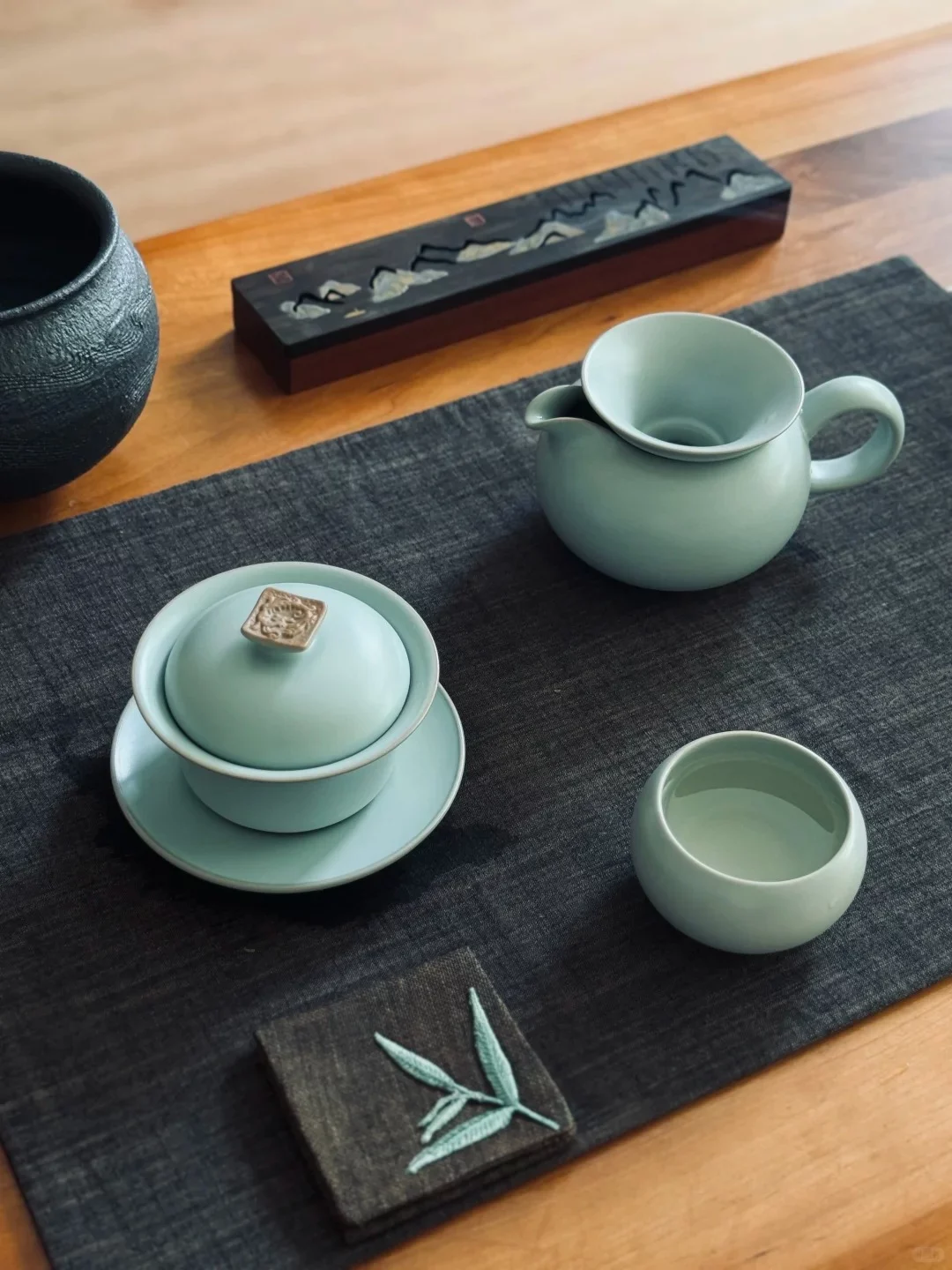
The Ru tea set owes its soft sky-blue to iron in the glaze and a reduction firing in our own kilns. Thick glaze and a long, even firing give the surface its gentle sheen.
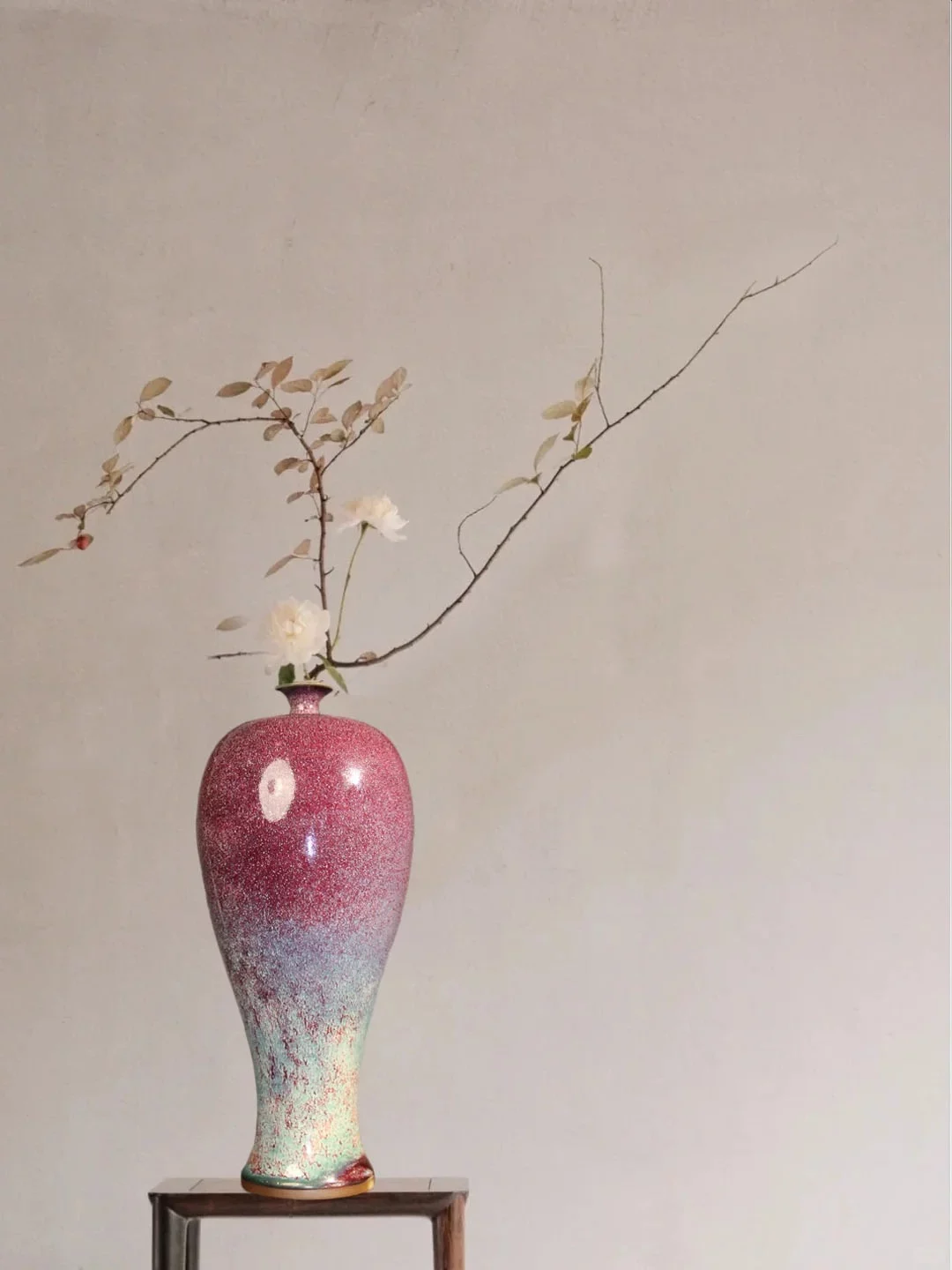
On the Jun meiping vase, copper in a thick glaze fires crimson-purple and lavender, with turquoise where the glaze thins. We fire it in reduction at our Jingdezhen factory, and the melting glaze carries the color down the form.
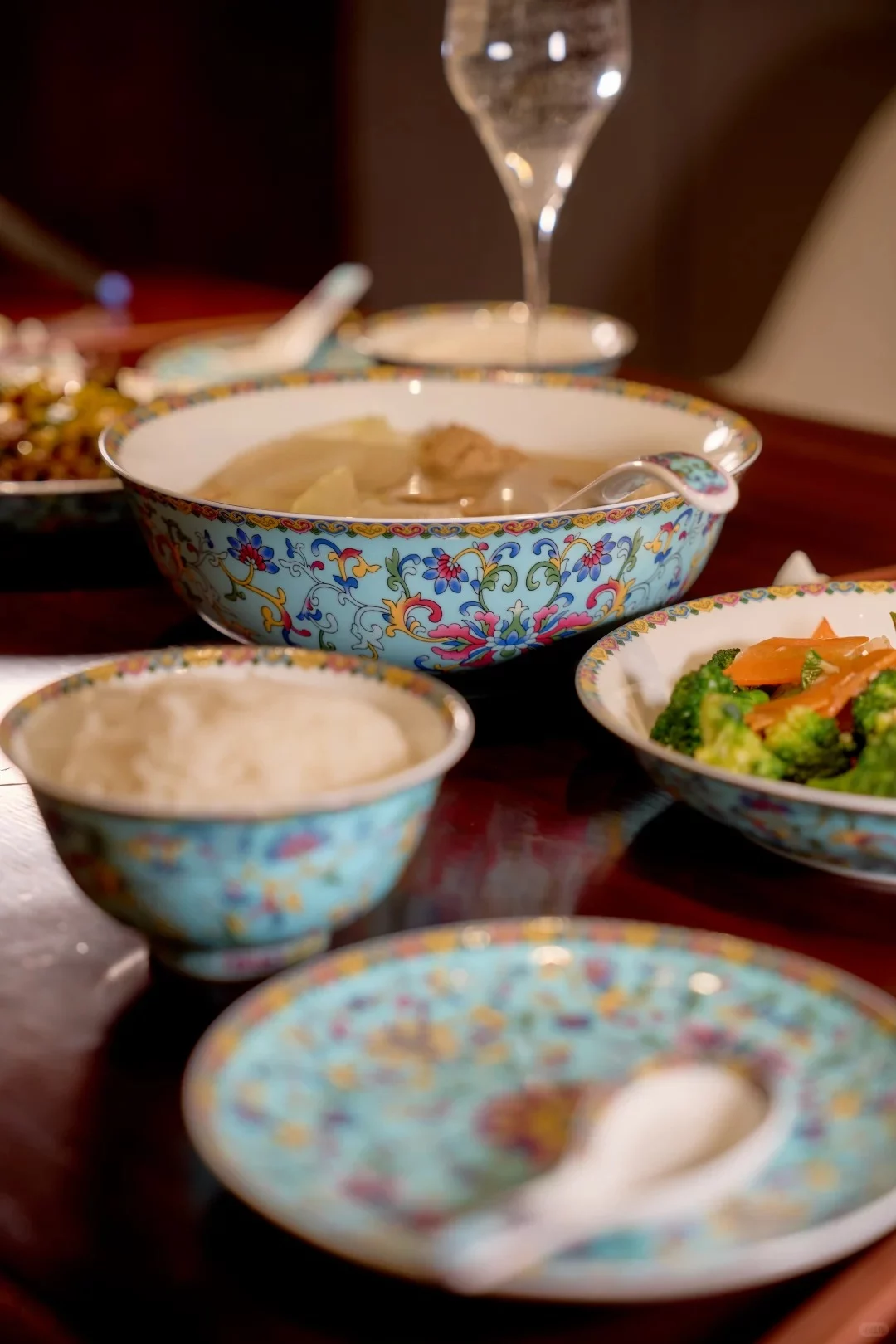
The turquoise ground and lotus scrolls on this dinner service are overglaze enamel, painted onto porcelain already fired at about 1,300 °C, then fixed in a second firing at about 780–850 °C.
Each kind of decoration has its own heat, and the order of firings follows from it. The high firing comes first, and anything that would burn away at that temperature goes on afterwards in a lower one. These are the ranges our Jingdezhen kilns work to.
How each glaze reacts to that heat is covered in our guide to Chinese porcelain glazes.
| Firing | Temperature | Used for |
|---|---|---|
| High firing, in reduction | 1,280–1,330 °C, most often about 1,300 °C | Porcelain body and clear glaze, cobalt blue, copper red, celadon, Ru, Ge and Jun |
| Gas shuttle kiln cycle | 22–28 hours, held within ±10 °C | Every high firing, with a 2–4 hour reduction hold |
| In-glaze decal | 1,220–1,280 °C | Logos and patterns on tableware washed every day |
| Overglaze enamel | 780–850 °C | Famille rose, falangcai, wucai and doucai colors, refired after the high firing |
| Overglaze decal | 750–850 °C | Decals on display and low-turnover pieces |
| Pine-wood kiln | About 1,300 °C for 50–60 hours | Collectible pieces, in strong reduction |
| Tang Sancai | Low-fired, far below porcelain heat | Buff earthenware with running amber, green and cream glazes |
Fresh from the kiln
Every piece then moves to final selection and is inspected one by one against your signed standard.
Firing questions
Between glaze and inspection
Previous stage
How the dry body is painted and glazed before it goes into the kiln.
Next stage
How every cooled piece is checked against the approved sample before packing.
All six stages
Follow a piece from clay preparation to final selection.
Fire a sample first
Tell us the glaze or color, the form and the quantity. Lin Wan replies within 1–2 business days with the firing route and the sample timing: 15–30 business days for a new glaze or form. Contact us at hejiang@knockingcn.com · WhatsApp +86 197 1171 3584