By Lin Wan, Foreign-Trade Lead at KKCN, Jingdezhen
A few weeks before its grand opening, a fine-dining restaurant came to us with a gap in its table. Its plates had come from another factory, and the supplier it had lined up for the rest of the service had missed its production dates. Worse, the samples that supplier did send didn’t match the existing plates: the contour was off and the glaze finish read differently under the dining room lights. Our technical team measured the existing plate’s geometry, worked out a glaze and firing curve that reproduced its finish, and ran matched test tiles and pre-production samples before committing to a run. We then split the delivery. A small allotment went by air so the kitchen had enough plates for opening weekend, and the bulk followed by sea. The matched mold and glaze recipe now sit under the restaurant’s own product code, so the next reorder starts from a recorded standard instead of from a plate in a box.
None of that trouble showed at the tasting. It showed in the calendar and in the match, and that is where most hospitality porcelain succeeds or fails. A plate is chosen for opening day and judged in year three, after a few thousand trips through the dish room, two rounds of breakage and at least one reorder. This hotel tableware buying guide is organized around those later moments. It covers how to split a property’s porcelain into the pieces that work hard and the pieces that carry the brand, how to count them, which details actually stop chips, how a logo survives commercial washing, what keeps replacements matched, and how far back from an opening the work has to start.
Where I quote KKCN’s own terms, times and test results, I say so. Other makers set theirs differently, and a buyer should compare like with like.
A hotel buys two kinds of porcelain
A restaurant mostly buys one kind of porcelain. A hotel buys two, and the most common mistake I see in hotel tableware specifications is treating them as one purchase.
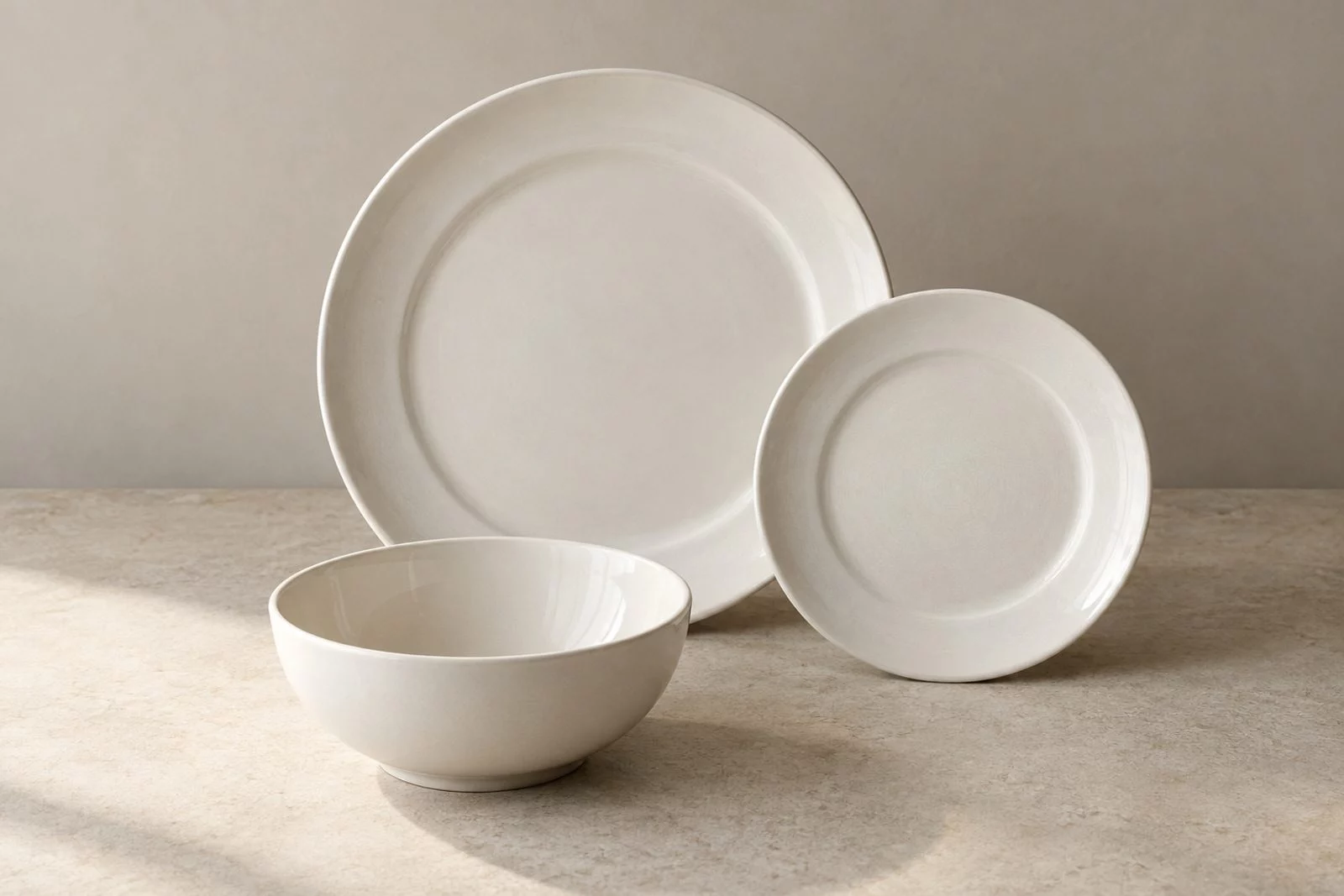
The first kind is workhorse porcelain: the plates, bowls, cups and saucers in the restaurant, the breakfast room, banquets and room service. These pieces go through a commercial dishwasher several times a day, get stacked by the dozen, carried on trays and dropped into bus tubs. A busy outlet replaces a share of them every year. They should be bought on durability, stacking, how easily they can be replaced, and unit cost, roughly in that order.
The second kind is signature porcelain: the tea service in the executive lounge, the cups and trays in the suites, the boxed gift sets for turndown or the shop, the vases in the lobby and corridors. Guests hold these pieces and look at them closely, but staff handle them gently and far less often. They carry the property’s identity, so design, decoration and presentation come first. Durability still matters, and matching matters just as much, because a lounge tea set that comes back from a reorder in a different blue is as visible as a mismatched dinner plate.
Buying both from one maker has a real advantage: one porcelain body and one white from the breakfast table to the suite, one approved sample file and one inspection record. But it only works if that maker can genuinely do both. A Jingdezhen workshop that paints by hand is at its strongest on the signature side and on custom pieces that have to match over years. For an outlet that needs thousands of plain plates replaced every year, a standardized white line with a small base mark is often the better buy, and the identity can live on the signature pieces. Our own Al Masa Grand Hotel project in Dubai is a signature program: hand-painted blue and white vases and miniature tea gift sets with the hotel’s own logo and patterns for the lobby, guest rooms and executive lounges, repeated every year for four years.
| Area of the property | Kind | Specify first | Watch |
|---|---|---|---|
| Restaurant and breakfast | Workhorse | Edge, weight, stacking, reorder code | Breakage rate and reserve stock |
| Banquet and buffet | Workhorse | Stack height, count per cover, heat | Volume swings between events |
| Room service and in-room | Workhorse | Weight on a tray, mug and cup durability | Housekeeping handling |
| Lounge tea and coffee | Signature | Glaze, decoration, pour and lid fit | Matching a colored glaze |
| Suites and turndown gifts | Signature | Decoration, logo, gift box | Box and piece approved together |
| Lobby and display | Signature | Size, decoration, packing | Freight for large pieces |
Our hotel and restaurant porcelain page shows the full range a property can order from one place.
Count the pieces before you choose them
Quantities follow covers, the menu, how fast the dish room turns pieces around and how much breaks. Foodservice suppliers publish per-seat multipliers that make a fair starting point. WebstaurantStore’s dinnerware inventory guide, for example, suggests about 2.5 dinner plates (10 to 12 inches) and 3 cups per seat for a casual restaurant, and fewer for formal service, where each place setting turns over more slowly. Sam Tell’s restaurant buying guide adds a reserve of at least 25% of the stock in active service, to cover breakage, loss and busy rushes. These are rules of thumb from suppliers, not standards. A property’s own breakage records, if it has them, are better.
Here is how that works for a 120-seat all-day restaurant, using the casual multipliers and the 25% reserve:
| Item | Active stock | With 25% reserve |
|---|---|---|
| Dinner plate, 27 cm (10.5 in) | 120 × 2.5 = 300 | 375 |
| Side plate, 15 cm (6 in) | 120 × 3 = 360 | 450 |
| Cup and saucer | 120 × 3 = 360 sets | 450 sets |
Buying direct from a factory changes how you treat that reserve. With a local distributor, a reorder is a phone call and a delivery next week. With a maker in China, a reorder of a custom piece is a production run plus a sea crossing. At KKCN, custom production takes 30 to 45 days and sea freight another 30 to 45 days door to door, so a property that runs out of plates can be two to three months from a matched replacement. Our minimums also work in the buyer’s favor at the start and against them later. A first run of a new custom decal design starts at 50 pieces per shape, subject to the artwork and setup being confirmed, so a property can launch small. A reorder of that approved artwork starts at 300 pieces, because each repeat decal run carries its own setup, and 300 is close to the whole dinner plate count for the restaurant above. That is why I’d rather see a hotel buy its reserve with the opening order, and store it, than plan to top up in small lots. For steady hotel clients we also offer an optional consignment stock agreement, which holds a buffer for urgent top-ups and shortens the wait. We don’t hold safety stock between batches automatically, so this has to be agreed in advance.
What actually stops a plate from chipping
Chips start at the edges. A plate’s rim meets other plates in the stack, the rack in the dishwasher and the edge of the pass, and a cup’s lip meets the saucer, the tray and the sink. So the details that decide whether restaurant porcelain chips are mostly at the rim and the foot, and they can be written down.
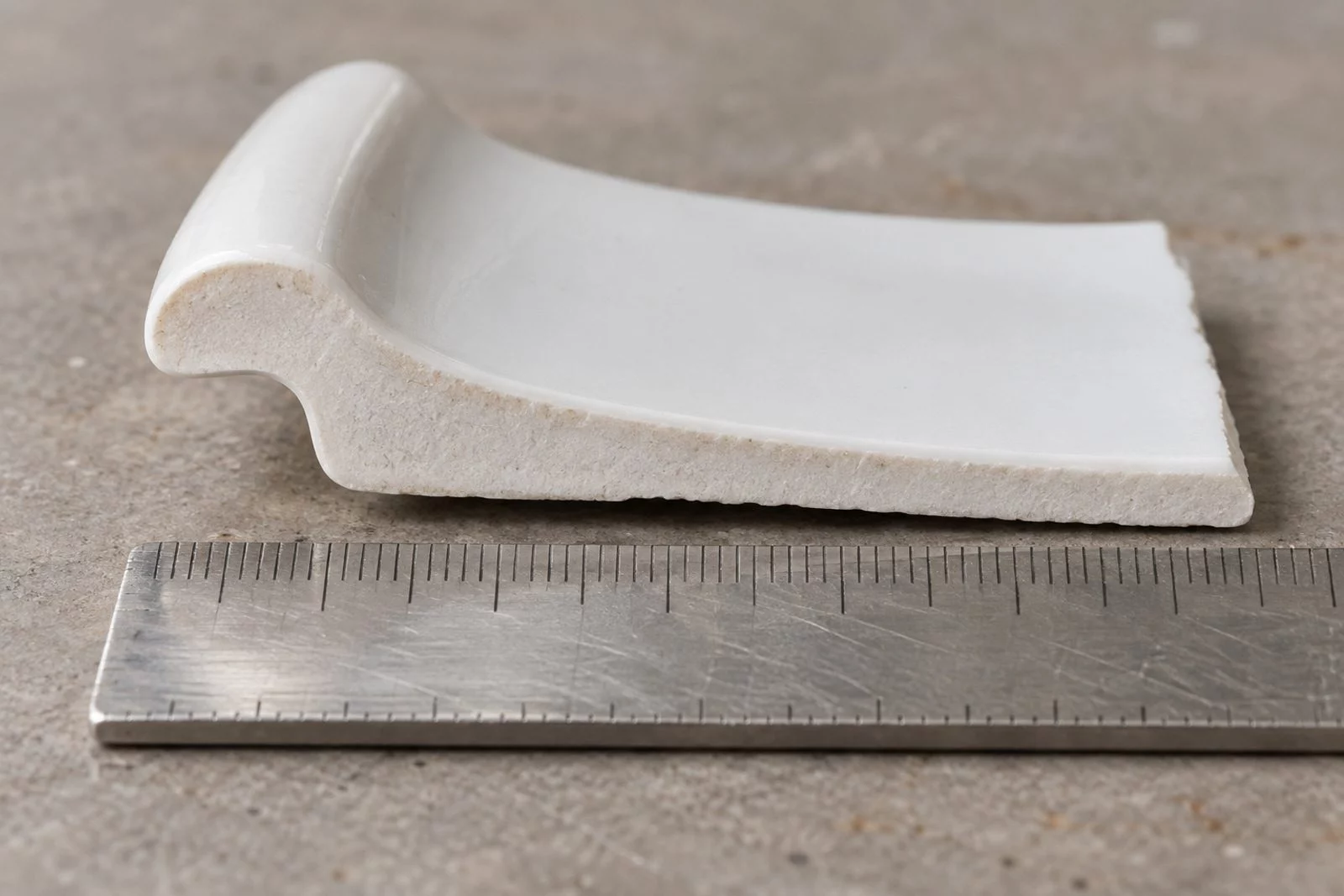
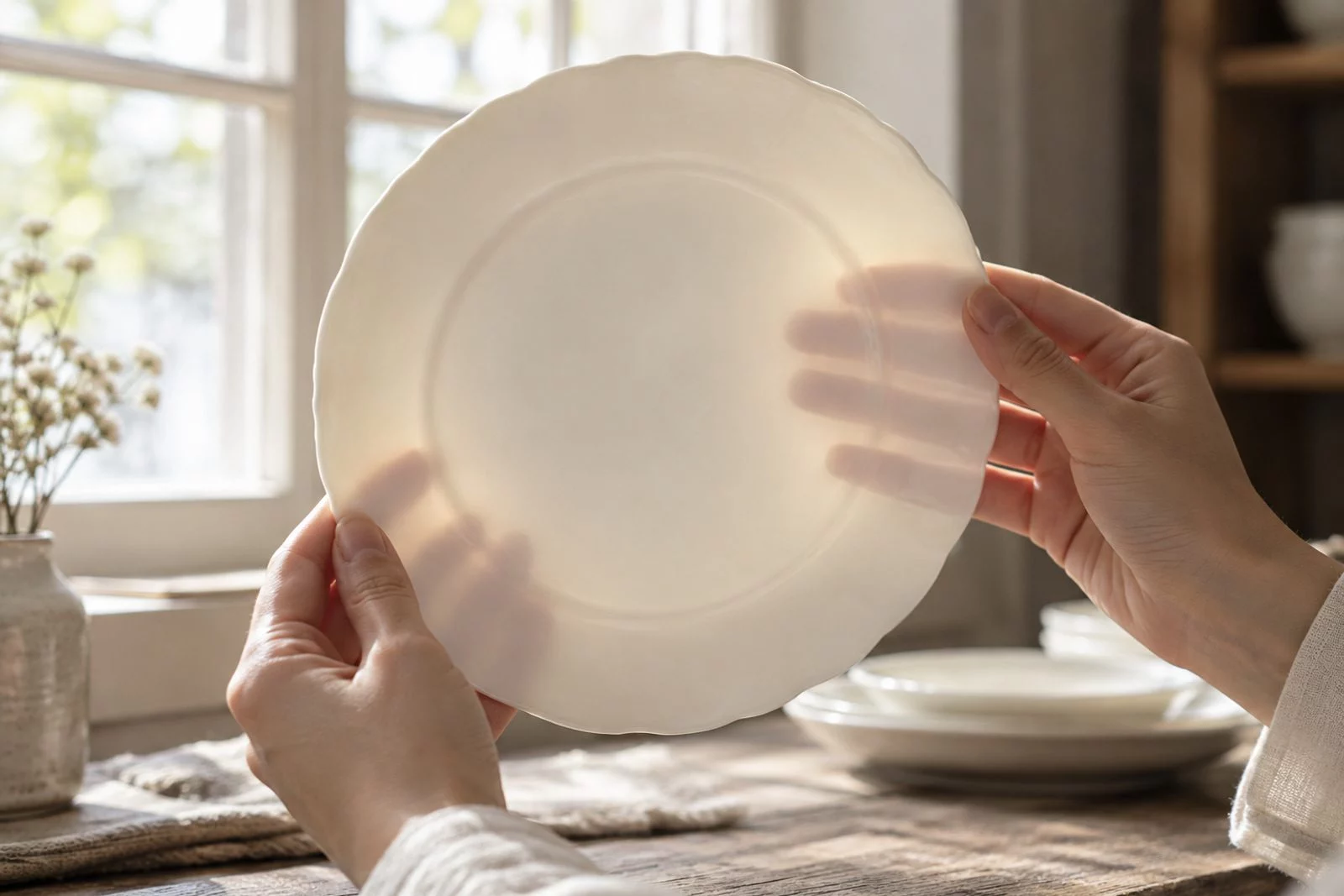
The shape of the edge matters more than most buyers expect. ASTM C368, the standard test method for impact resistance of ceramic tableware, includes a chipping test at the rim of flatware, and its summary notes that chipping resistance depends on the strength of the body and greatly on the rim contour, and to a lesser extent on rim thickness and glaze fit. A knife-thin edge looks refined at the tasting and chips first in service. A rolled or rounded edge spreads an impact over more material. For our commercial white porcelain series and the coordinated plate and bowl sets we make for daily service, we use a rolled, rounded and reinforced rim, with the rim wall at 3.2 to 4.0 mm.
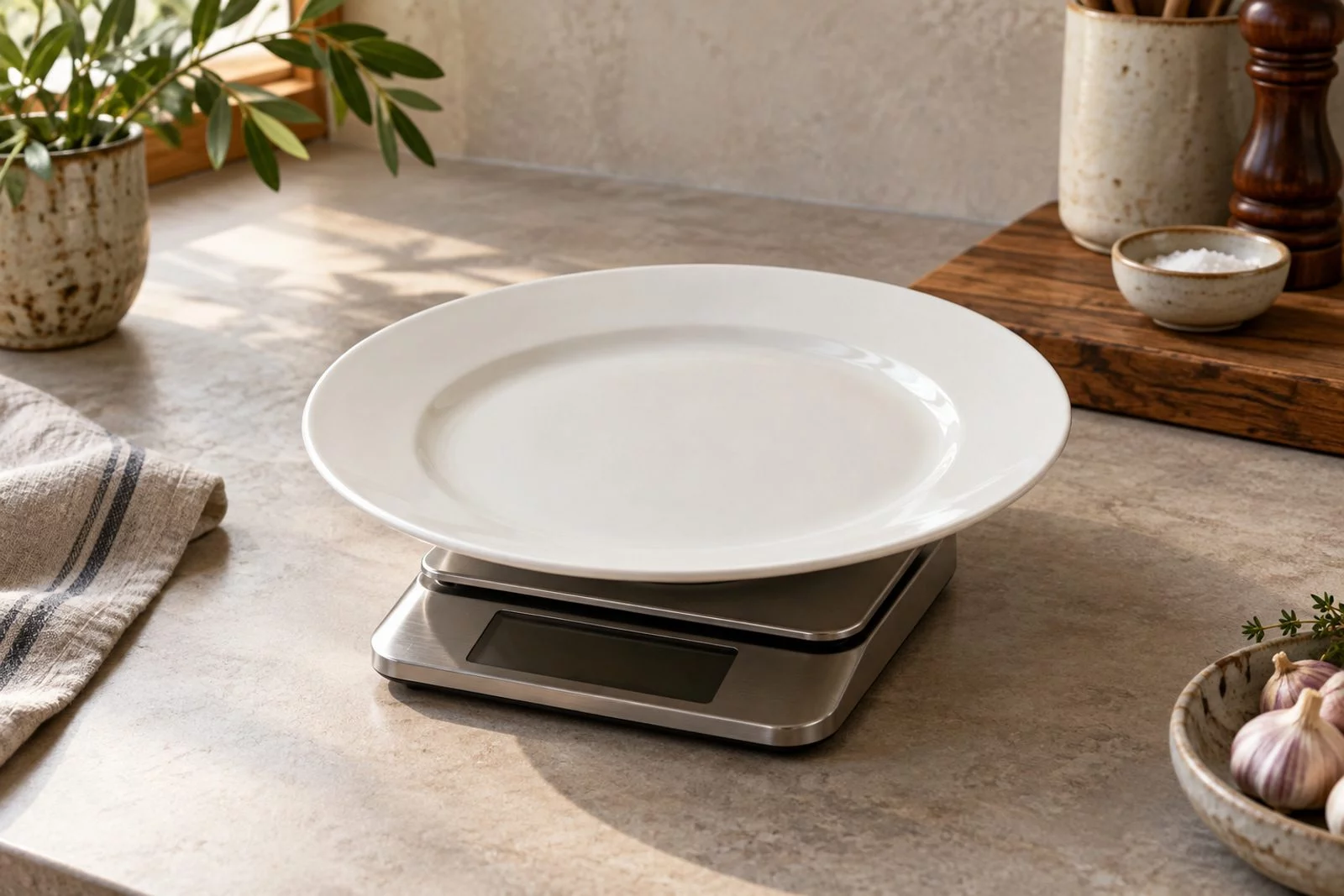
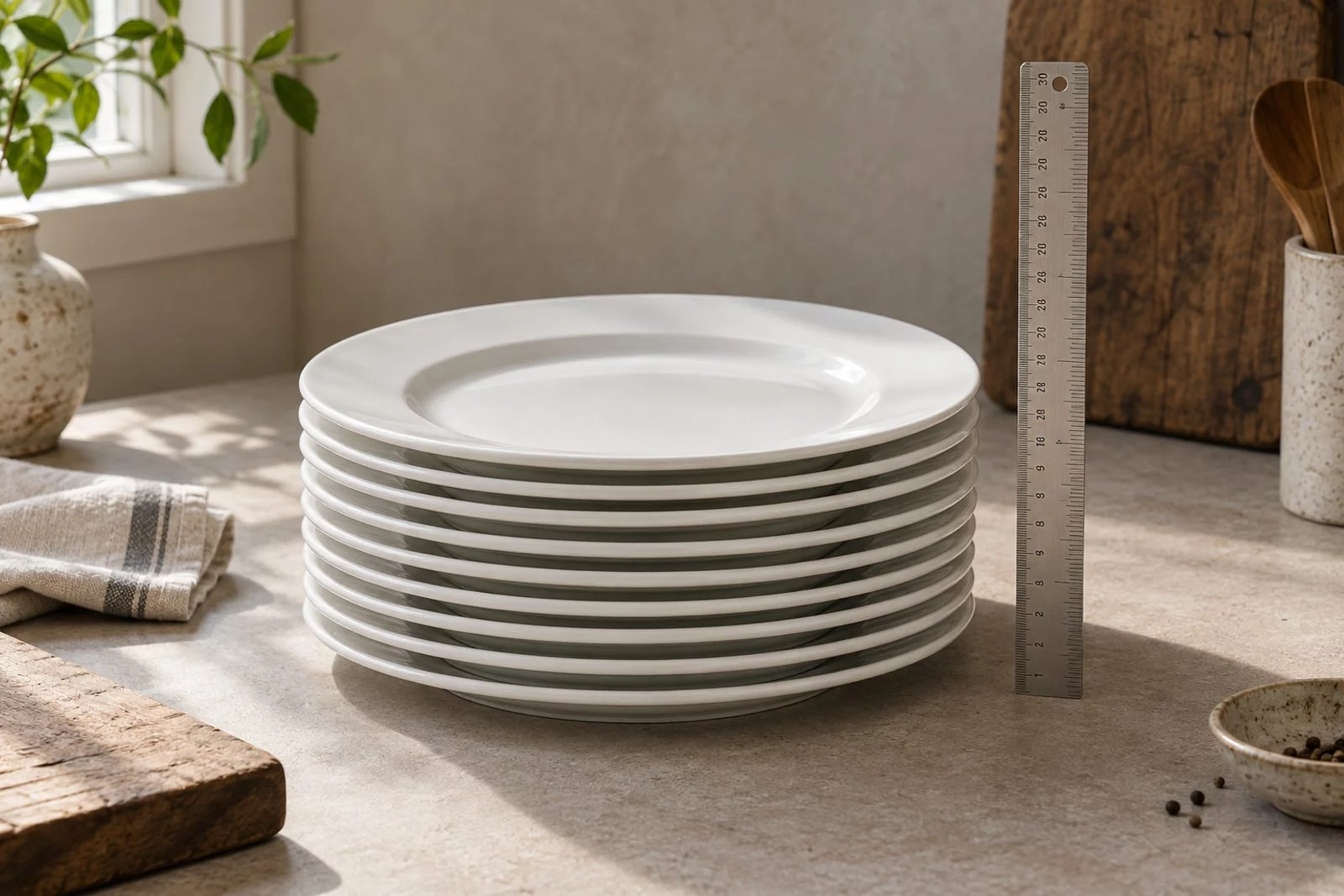
Thicker is not automatically tougher, though. Weight helps up to a point, then it makes a plate harder to carry three at a time, slower to stack and more likely to break when it does fall. Our 27 cm (10.5 in) dinner plate weighs about 760 g (roughly 1.7 lb), within a 720 to 820 g design range. A plate much heavier than that is worth questioning before it reaches a server’s arm. The body matters too. A porcelain body fired dense at high temperature absorbs very little water and resists chipping and crazing better than an underfired one. Our kilns fire at 1,280 to 1,330 °C, hot enough to vitrify a Jingdezhen porcelain body. The foot should sit flat and stack without rocking, because a plate that rocks in the stack chips at the point where it touches the plate below.
Then there are the tests. Ask for a test method, not an adjective like “chip-resistant” or “hotel grade”. BS 8654, the British standard for domestic and hospitality ceramic tableware, sets performance requirements for tableware and includes separate test methods where hospitality use needs a higher level. The EN 12875 series covers resistance to mechanical dishwashing. Its parts include a rapid test for domestic ceramic articles and another for ceramic catering articles, and the standard doesn’t set a required number of cycles, so ask how many cycles were run. ASTM C554 covers crazing resistance by thermal shock. Our hospitality range is tested by an independent accredited lab: to BS 8654 for mechanical strength and chip resistance, and to EN 12875-5 for commercial dishwasher cycling, with thermal shock and microwave use tested as well. The reports are internal records, so we don’t publish them, but they are available on request and we share the full documentation privately once a project inquiry is opened. When a project needs more, such as extended cycle counts or a test its own market requires, we arrange targeted testing and pass on those reports too. Lead and cadmium release is a separate question with its own methods, ISO 6486 among them, and our guide to lead and cadmium reports covers how to read one.
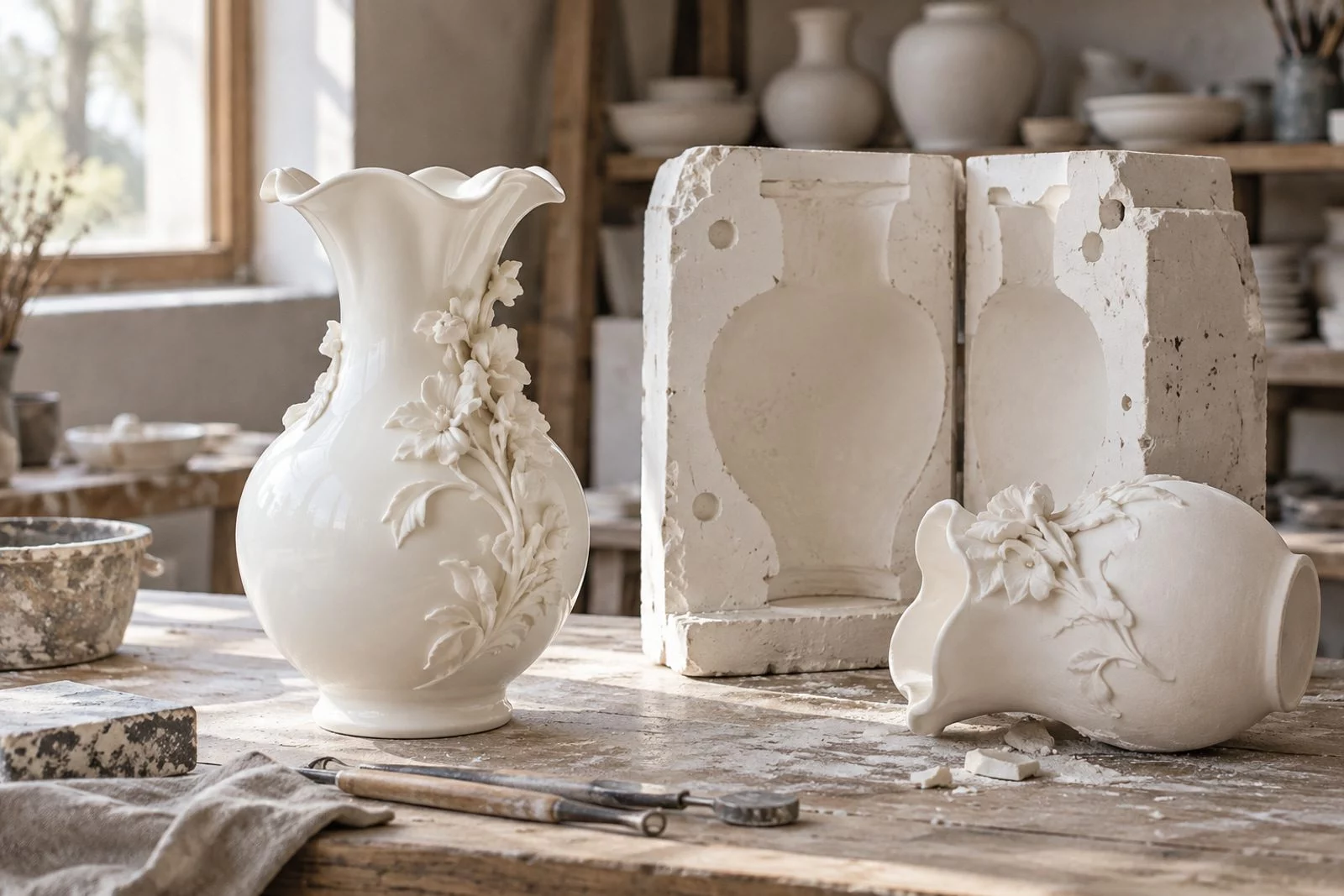
Hand-thrown and hand-painted pieces belong mostly on the signature side. They are beautiful and they last on a lounge table, but for a dish room that washes 400 plates a night, a molded form with a controlled edge repeats better, piece after piece and order after order.
Six lines for the durability section of a tableware spec:
- Edge profile: rolled, rounded or flat, with a drawing or a reference sample.
- Rim and wall thickness in millimeters, with a tolerance.
- Weight per piece in grams, with a tolerance.
- Stack height and how many pieces stack without rocking.
- Glaze coverage on the rim and the foot, and which surfaces are left unglazed.
- The named tests (method, lab, number of cycles) and the batch they were run on.
Will the logo survive the dish room?
A hotel logo on a plate fails in one of two ways. It fades and scratches until the guest sees a grey ghost of it, or it survives but sits where knives and stacking wear it down. Both come down to where the mark sits relative to the glaze, and where it sits on the piece.
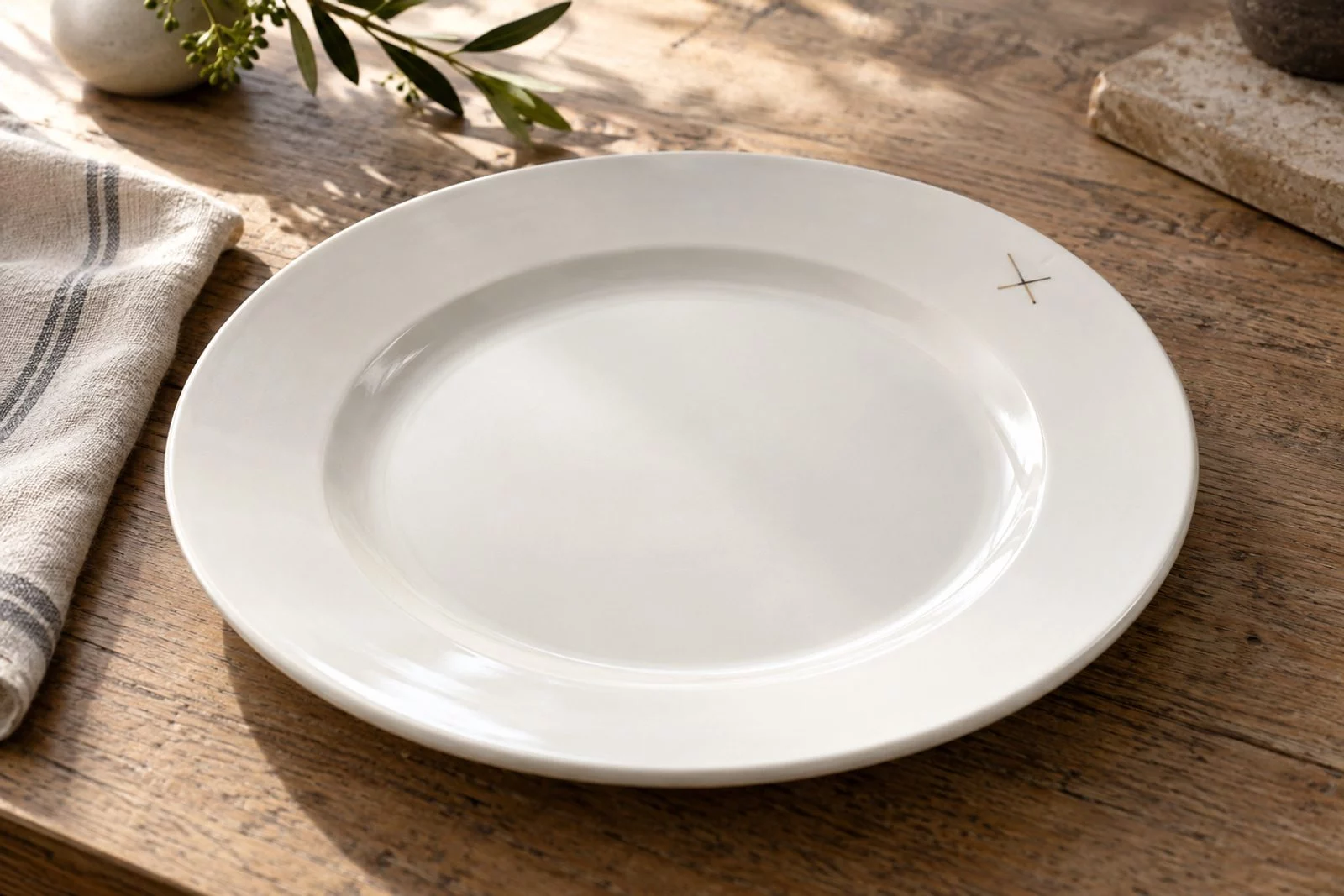
There are four common methods, and they wear very differently.
| Logo method | Where it sits | How it wears in service | Best for |
|---|---|---|---|
| Painted under the glaze | Sealed under the glaze, fired once at about 1,300 °C | As long as the glaze itself | Painted motifs, signature pieces |
| In-glaze decal | Fused into the glaze at 1,220–1,280 °C | Strong against scratching and dishwashing | Hotel logos on workhorse pieces |
| Overglaze decal or enamel | On top of the glaze, fired at about 780–850 °C | Most exposed to abrasion and detergent | Decorative, low-turnover pieces |
| Engraved or molded | Cut or formed into the body | Doesn’t fade; quiet, no color | Base marks, tone-on-tone branding |
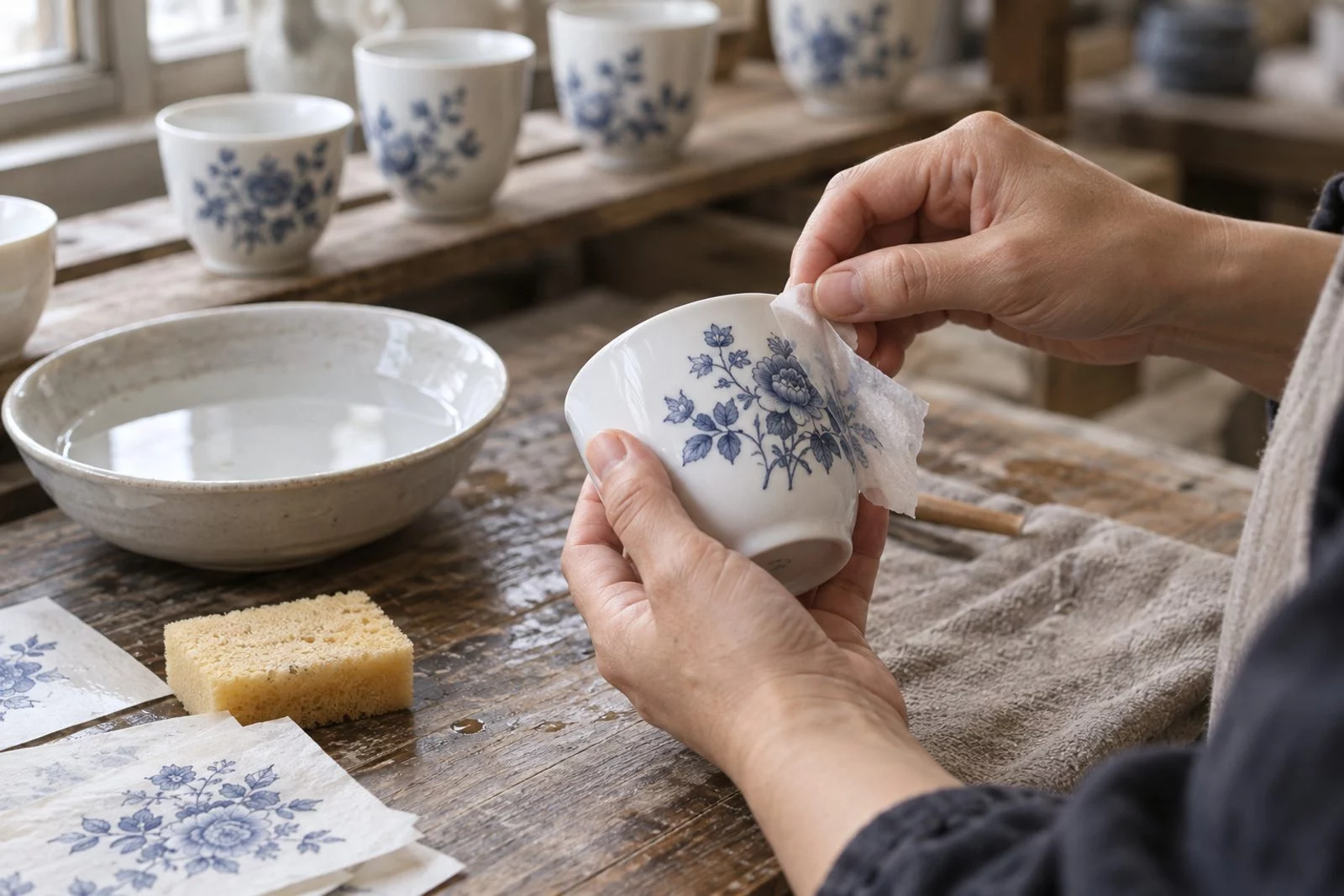
For hotel logos we prefer the in-glaze decal. It is printed like any decal, so it repeats closely across thousands of pieces, but it is fired hot enough at 1,220 to 1,280 °C for the pigment to sink into the glaze, which is what gives it scratch and dishwasher resistance. Overglaze decals and enamels fire at much lower temperatures and stay on the surface. They allow brighter colors and finer detail, and we use them for decorative pieces that see little washing, but I wouldn’t put one on a breakfast plate.
Placement matters nearly as much as the method. The well of a plate meets knives, the rim meets the next plate in the stack, and the base meets the dishwasher rack. Many properties put a painted motif on the signature pieces and a small decal mark on the rim edge or the base of the workhorse plates, where it identifies the hotel without taking the wear. Metallic trim is another question. Our in-glaze decal pieces can go in a microwave as long as they carry no gold, platinum or metallic luster. We offer gold trim only as a custom option, and any metallic trim or decal is marked as not for microwave use on our specification sheets, so I’d keep it off anything that room service or a breakfast buffet might reheat.
Whatever the method, ask how the mark was tested. A wash trial in your own dish room, on a few sample plates before the run, is cheap and tells you more than any brochure. Our custom porcelain product development guide compares logo and base-mark methods for every kind of product.
Color, shape and the food on the plate
Chefs choose plates for the food, and that choice has consequences buyers sometimes miss. A white well shows color and makes portions look generous. A wide rim frames fine-dining plating but takes space on the pass and on a tray, so fewer plates fit a run to the dining room. A deep coupe shape suits sharing menus and sauces. Celadon and blue and white sit naturally with tea service and many Asian menus. Our celadon dinner service is built from thrown and molded forms sized to nest, which is the kind of detail that matters when a kitchen stacks a hundred bowls on one shelf.
Color carries a matching cost. A plain white varies little from one firing to the next. A colored glaze, especially a reduction-fired one like celadon, shifts more with the kiln, so a colored program needs an approved color range rather than a single swatch, and a larger reserve, because a reorder that lands at the dark end of the range will show beside plates from the light end. We approve color on fired test tiles in a light, target and dark version. The custom development guide linked above explains how that works.
Year three: keeping replacement tableware matched
Mismatch comes from three places: the body or glaze batch changed, the firing changed, or the pattern was redrawn. A reorder matches when the maker keeps a record of all three and builds to it. At KKCN, the approved sample for every order stays at our Jingdezhen headquarters with a craft file that records the body, the glaze, the pattern drawing and the firing record. We keep molds, glaze records and design files free of charge for three years after the last order, and longer on request, or we return the molds to the buyer. That record is why the restaurant in the opening now reorders by its own code rather than by sending us a plate. It is also a large part of why about 72% of our active business clients reorder, over an average relationship of about 4.8 years (KKCN production and sales records, 2025–2026).
The buyer’s side matters as much as the maker’s. Keep your own signed sample, and don’t store it in the outlet where it might go into service. Reorder by the same code, and resist changing the specification between orders, because even a small change to the size or the logo position turns a reorder into new development. When replacements arrive, mix them into service across the outlet rather than setting one table entirely with the new plates. A small shift in white is invisible across a mixed stack and obvious on a table of six.
Ask any maker how long it keeps your molds and records, and what happens when it stops. A supplier that drops a pattern after two years leaves a hotel replacing a whole outlet at once, which costs far more than a matched reorder. Al Masa has reordered from the same records every year for four years.
If you’re replacing plates made by someone else, as the restaurant in the opening was, matching is still possible, but it is development work rather than a reorder. Send a few of the existing pieces, not photos, and expect test tiles and at least one pre-production sample before the run.
Plan back from the opening date
Pre-opening teams usually ask when to order. A better question is when the sample has to be signed, because everything else follows from that date. For a custom pattern, the calendar runs backward from the opening like this.
| Weeks before opening | Step (KKCN custom-pattern example) | What has to be decided |
|---|---|---|
| 24–26 | Brief and quotation | Piece list by outlet, counts, logo files, tests, delivery address |
| 20–24 | First sample, 15–30 business days | Form, color range, logo method and position |
| 16–20 | Second sample if needed, then sign-off | The signed standard: sizes, tolerances, packing, carton marks |
| 10–16 | Production, 30–45 days | Nothing new; changes now restart the clock |
| 9–10 | Inspection and packing | Independent inspection if the project needs it |
| 3–9 | Sea freight, 30–45 days door to door | Customs broker and delivery booking |
| 0–3 | Delivery, unpacking, washing | Who receives, where cartons go |
Most of our custom projects settle in two sample rounds, so the table allows for two. Add five to ten days of production if the run falls between August and December, our busiest season, and book capacity early: we lock peak capacity about three months ahead, and existing clients come first. A 15% rush fee buys priority scheduling and shortens the production cycle by about 30%, but it can’t shorten the sea crossing. Stock forms with an in-glaze decal mark take far less time, because the form and its firing are already known. In-stock samples ship in three to seven business days.
Volume is rarely the problem. Our largest single order was about 48,000 cups and small plates in one 40-foot high-cube container for a hotel project. A run that size is fired across many kiln loads to the same curve and checked against the same approved sample, so the container reads as one order. The calendar is what slips. When it does, split the shipment the way we did for the restaurant in the opening: air freight a small allotment for the first weeks of service, and send the balance by sea.
Pack for the opening as well. Cartons marked by outlet, floor or room type save the installation team from sorting thousands of pieces on site, and our packaging guide by sales channel explains what to send for hotel cartons. Many hotel projects add an independent inspection before the cartons are sealed. Every Al Masa batch is inspected on site by Intertek before it leaves Jingdezhen. Our samples and quotations page has the current lead times.
Where the budget shows, and where it doesn’t
Spend where guests hold and look: the lounge tea service, the pieces in the suites, the signature plate on the tasting menu, the vases in the lobby. Save on the high-breakage, low-visibility lines: banquet backups, staff tableware and the basics of room service. A plain white plate with a small in-glaze base mark carries the brand for little extra cost, while a hand-painted pattern on every banquet plate multiplies the cost by the breakage rate.
Decoration moves the unit price more than size does. The order is usually decal first, then underglaze painting by hand, then overglaze enamel, and the gaps between them are wide. Our sourcing guide shows the spread for one small cup, with the basis for each range. The same logic applies to a hotel program: put the painting where it will be seen.
Small properties have more options than they think. In-stock pieces start at a single piece and mixed orders at 10, so a restaurant can run a stock reference in service for a few weeks before ordering the full count. Custom designs start at 50 pieces per style at KKCN. For a boutique hotel, starting from an existing form with its own mark is usually better value than a new form, because a new mold adds tooling cost that only pays back over reorders.
What to send a porcelain maker for a hotel quote
A useful brief answers the questions the maker would otherwise have to ask, and it is usually a spreadsheet and a few photos. Here is one that would let us quote in a single reply. A 180-room hotel opening in September needs tableware for an all-day restaurant of 140 seats and a 40-seat lounge, plus tea service for 30 suites. The brief lists every piece by outlet with its size and count, including a 25% reserve. It attaches the logo as a vector file, marks where it goes (a small in-glaze decal on the rim edge for the restaurant plates, a painted motif on the lounge tea set), and names the markets and tests required (EU, with the dishwasher test the operator uses). It gives the delivery address, the opening date and the date the pre-opening team can receive goods, and says how cartons should be marked: by outlet for the restaurant, by floor for the suites. It includes photos of the designer’s mood board and, because two existing banquet plates must be matched, says that three of them are on their way by courier.
That brief takes an afternoon to write and saves two weeks of questions. My team replies to briefs within one to two business days with sample options, a timeline worked back from the opening and a priced quotation.
Quick answers
How much tableware does a hotel restaurant need per seat? US foodservice suppliers suggest about two to three of each plate size and three cups per seat for casual service, fewer for formal service, plus a reserve of at least 25% of the stock in active service. If you buy custom pieces from overseas, buy that reserve with the opening order, because a reorder takes weeks plus a sea crossing.
Is hotel porcelain dishwasher-safe? It depends on the body, the glaze and above all the decoration. A dense, fully vitrified body with the mark under or in the glaze handles commercial washing well. Overglaze decoration and metallic trim wear faster. Ask which test was run and how many cycles. EN 12875-5 is the European rapid test for ceramic catering articles. Our hospitality range has been tested to it by an independent accredited lab, with reports available on request, and we arrange extra testing when a project needs it.
How long does custom hotel tableware take? For a new pattern, plan on about five to six months from brief to delivery, including sample rounds, production and sea freight. At KKCN, new samples take 15 to 30 business days and custom production 30 to 45 days, with sea freight of 30 to 45 days door to door. Stock forms with a decal mark take much less.
Can a small restaurant get its own logo on plates? Usually, yes. The easiest route is a stock form with an in-glaze decal mark. Minimums vary by maker. At KKCN, a first run of a new custom decal design starts at 50 pieces per shape, and reorders of that approved artwork start at 300 pieces.
Where to start
Split the porcelain first: workhorse pieces bought for durability and replacement, signature pieces bought for design and identity. Then write down the three things that decide year three: the edge and the tests, the logo method and its position, and the record that the maker will match against. Our page for buyers looking for a hotel porcelain supplier shows how a property order runs with us, from the piece list to the cartons, and our Custom Development page explains how we develop and protect a pattern made for one property.
Lin Wan leads foreign trade at KKCN in Jingdezhen, coordinating buyers’ requirements, samples, orders and after-sales across Europe, North America, the Middle East and Southeast Asia. Ten years in ceramic export, working in English and Chinese.