By Lin Wan, Foreign-Trade Lead at KKCN, Jingdezhen
If you’ve bought a ceramic Christmas figurine, a licensed character mug or a white porcelain tea set in the last few years, there’s a fair chance it came from Dehua. This county in Fujian province, in southeast China, is one of the world’s largest centers for porcelain gifts and figurines, and it has a white porcelain tradition that European collectors have prized for three centuries. Dehua porcelain suppliers range from export groups with hundred-strong design teams to carving masters with a single studio. This guide explains what Dehua is built for, who you’ll meet there, and what to check before you place a licensed or seasonal order.
Who wrote this. KKCN is a porcelain factory in Jingdezhen. We work with partner factories in Dehua for white porcelain bodies and complex slip-cast forms, so we know the county as a customer as well as a neighbor.
What Dehua makes
Dehua has made white porcelain since at least the Ming dynasty. Its clay contains very little iron, so it fires to a warm white or pale ivory without the reduction firing Jingdezhen’s clay needs to stay white. In the West this ware became known as blanc de Chine, “white from China,” and it reached Europe in quantity in the early 18th century, where Meissen and other makers copied it. Dehua’s best-known historical pieces are figures, especially Guanyin and other Buddhist subjects, modeled with a softness that the body’s warm white suits well.
Today the county works at a very different scale. According to Fujian provincial reporting from August 2025, more than 4,500 porcelain companies operate in Dehua, porcelain-related work employs more than 100,000 people, about a third of the county’s population, and its products reach more than 190 countries and regions. Porcelain exports from January to July 2025 were worth 2.14 billion yuan, about $298 million. The product mix runs from Halloween and Christmas figurines to everyday tableware, tea sets and master-carved art pieces.
Who you’ll find there
Large export groups. The biggest Dehua makers run design, production and export under one roof and work for international brands. Quanzhou Shunmei Group, which we list among China’s top ceramic suppliers, is the best-known example: it has made ceramics for Disney, Coca-Cola, Walmart, Universal and Starbucks, employs more than 100 designers, and was a licensed maker of the Beijing 2022 Winter Olympics mascots in ceramic. Exports make up most of its business. Groups like this are the natural fit for licensed products and large seasonal programs.
Mid-size OEM factories. Hundreds of factories make figurines, gift items and tableware to buyers’ designs. They vary widely in design support and testing experience, so the questions in the next section matter most here.
Carving masters and art studios. Dehua’s figure-carving tradition lives on in master studios that produce sculptural pieces in small numbers. They suit galleries and collectors more than retail programs.
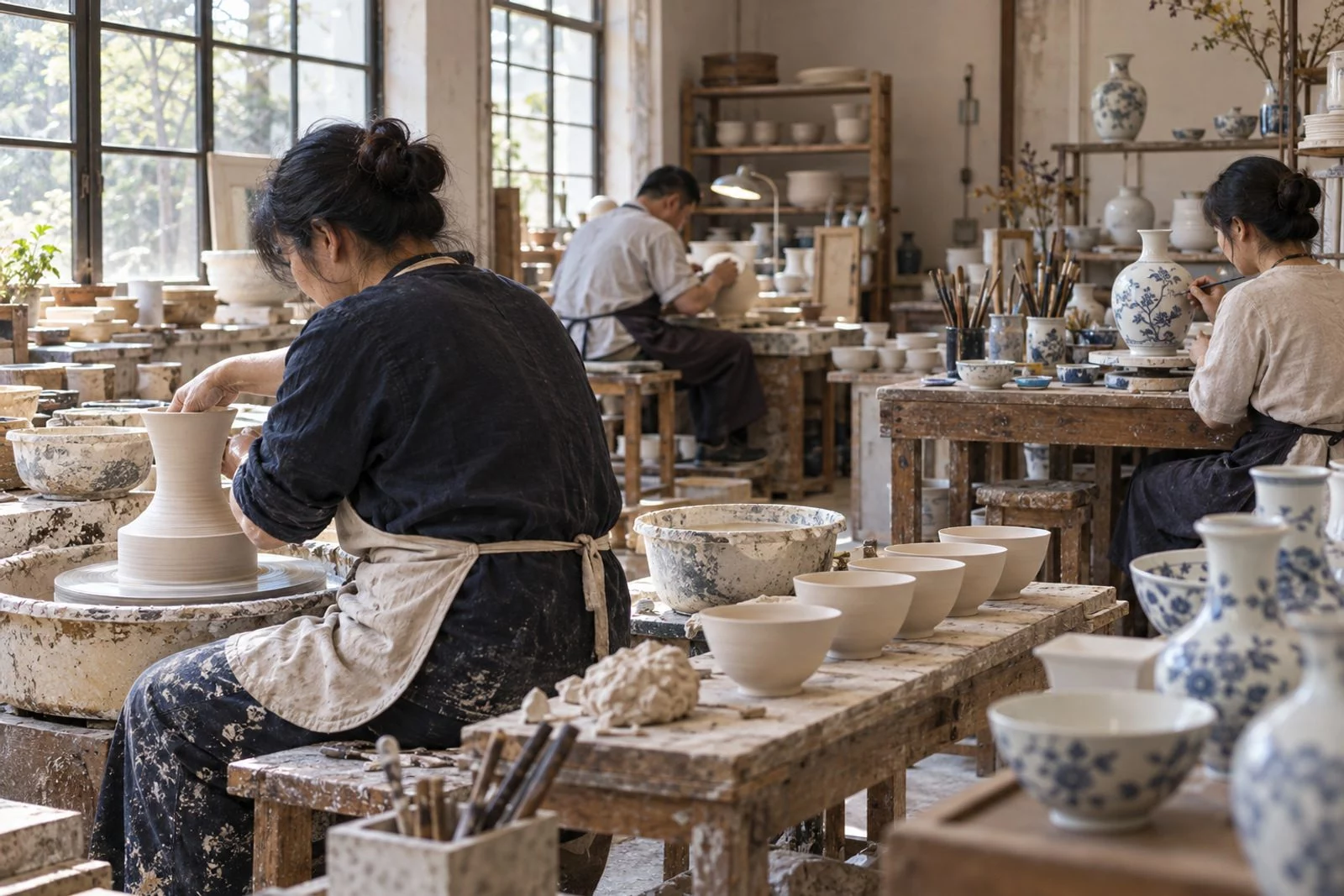
Body, mold and blank suppliers. Many factories in Dehua supply high-white porcelain bodies, molds and bisque blanks to makers elsewhere. Our own Dehua partners make high-white bodies and slip-cast irregular or complex forms, which come back to Jingdezhen for glazing, firing and inspection.
| Supplier type | Best for | Check first |
|---|---|---|
| Large export group | Licensed products, big seasonal programs | Licensing paperwork, design team, booking calendar |
| Mid-size OEM factory | Gift items and figurines to your design | Sampling process, testing for your market |
| Carving master or studio | Sculptural art pieces | Edition size and lead time |
| Body, mold and blank supplier | Makers who need bodies or complex forms | Body whiteness and consistency between batches |
How a figurine gets made
Knowing the steps helps you read a Dehua quote and plan the calendar.
The master model. A sculptor models the figure, by hand in clay or digitally followed by a 3D print. This is where proportions and details are fixed, and it’s the step licensed products usually need approved by the licensor.
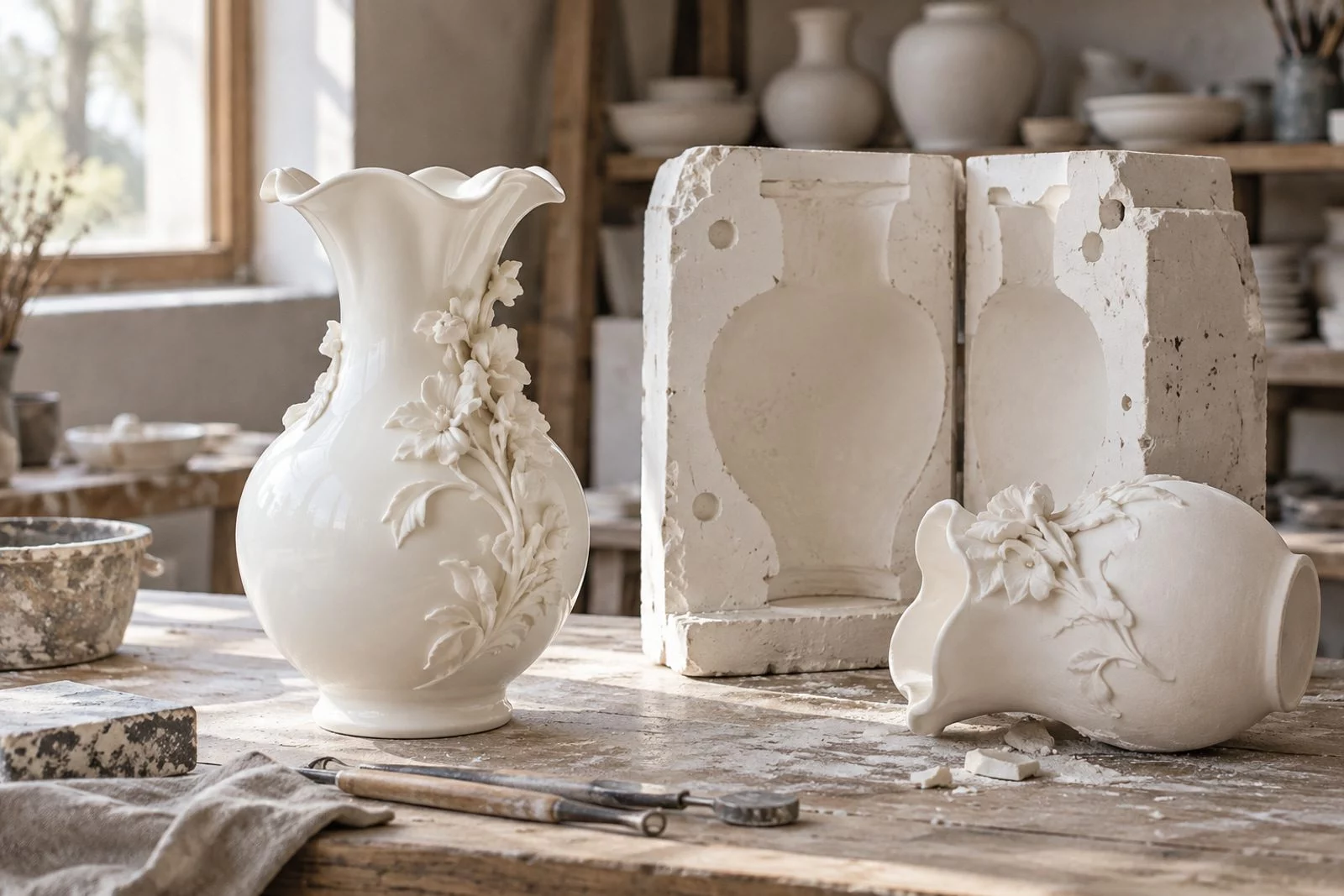
The molds. The master is cut into parts and a plaster mold is made for each. A figure with arms, a hat and a base may need several molds, each producing a part that is joined by hand later. More parts mean more cost and more chance of a visible seam.
Casting and assembly. Liquid clay slip is poured into the molds, left to form a wall, and drained. The parts are removed, trimmed, joined and cleaned by hand. The seams are smoothed in this step, and it’s where much of the finish quality is decided.
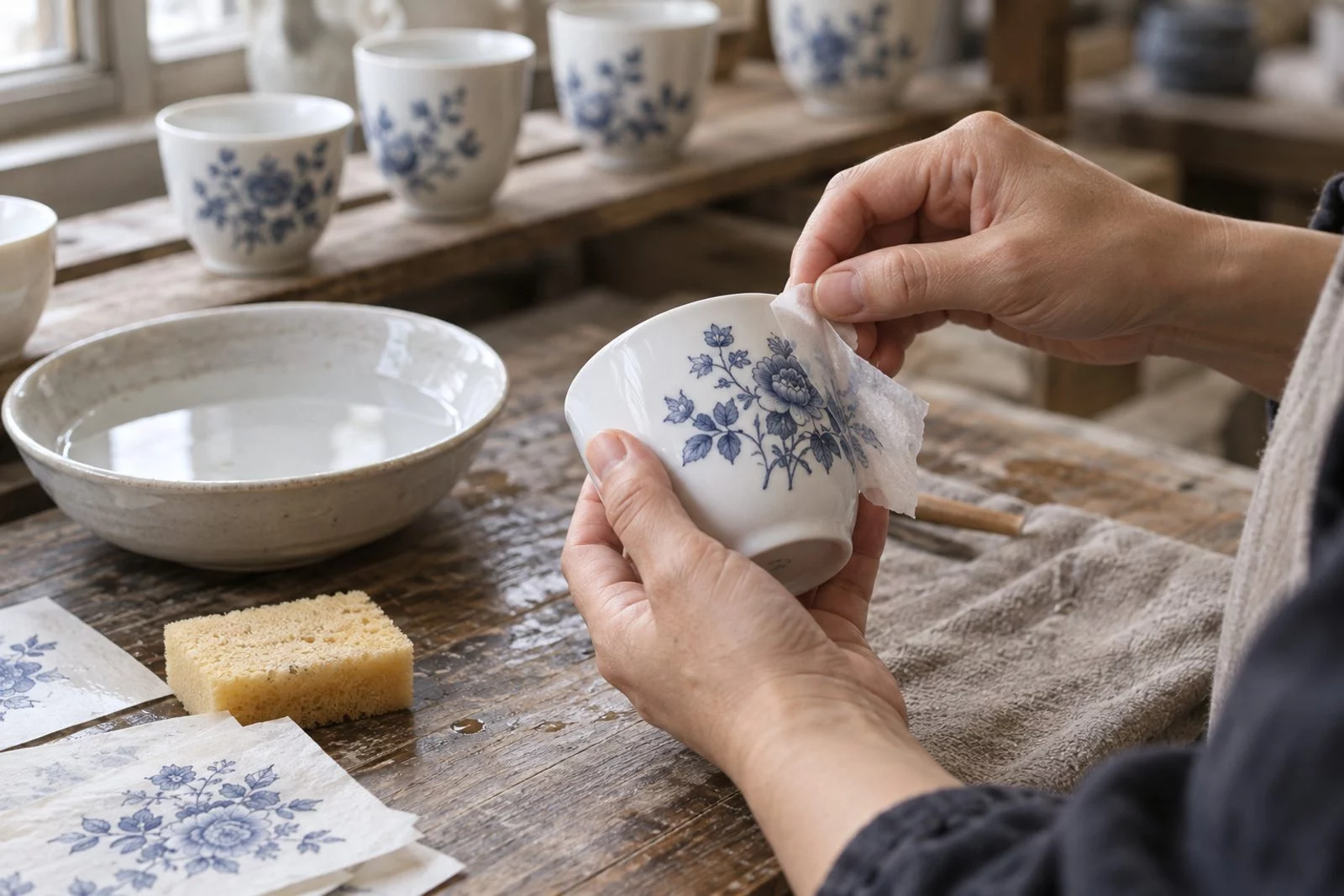
Firing and decoration. The pieces are dried, glazed and fired. Colored figurines are often painted or decorated after firing and fired again at a lower temperature, and some decoration is cold-painted without firing at all. Ask which method is used for each color, because it decides how the piece should be cleaned and what it may be used for.
Packing. Figurines with thin parts need fitted inner packing. For retail, agree the gift box and its print proofs at the same time as the sample, not after.
Licensed and seasonal work: what to check
Seasonal and licensed products have one thing in common: a date you can’t move. A Christmas figurine that arrives in January is a markdown, and a licensed design that doesn’t match the brand guide is a recall. Four checks save most of the trouble.
Licensing paperwork. If the product carries a character or brand, the factory should be able to show it has produced licensed goods before and understand the licensor’s approval steps. The license itself sits with you or your licensor, but a factory that’s never been through brand approvals will add rounds to your sampling.
Design capacity. Figurines are sculpted before they’re molded. Ask who sculpts the master, how many revision rounds the quote includes, and how long each round takes.
The calendar. Dehua’s seasonal factories book up months ahead of the holidays. Work back from your in-store date, allowing for sampling, approval, production and ocean freight, and book the slot early.
Testing and tariffs. Ask which tests the factory already runs for your destination market, and, if you sell in the United States, how the current tariff situation affects the quote. Provincial reporting in 2025 noted that Dehua exporters’ US business was affected by tariffs while European demand held up, which is one reason some buyers now ask suppliers about production outside China. Ceramic makers producing outside China covers what that changes.
Dehua or Jingdezhen?
The two cities overlap less than buyers expect. Dehua’s strengths are its white body, slip-cast sculptural forms and the scale of its gift and figurine industry. Jingdezhen’s are wheel-thrown and hand-finished forms, a very wide range of high-fired glazes, and hand painting in many styles. A white glazed figurine for a seasonal range points to Dehua. A hand-painted vase series, a celadon tea set or a reactive-glaze tableware line points to Jingdezhen, and our guide to Jingdezhen porcelain suppliers explains how to choose there. Many products use both, which is exactly why our own work combines Dehua bodies with Jingdezhen glazing and firing.
For small first orders in either city, see low-MOQ ceramic suppliers. For the wider picture, see the top ceramic suppliers in China.
Lin Wan leads foreign trade at KKCN in Jingdezhen, coordinating buyers’ requirements, samples, orders and after-sales across Europe, North America, the Middle East and Southeast Asia. Ten years in ceramic export, working in English and Chinese.