Two blossoms at the bottom of a green well
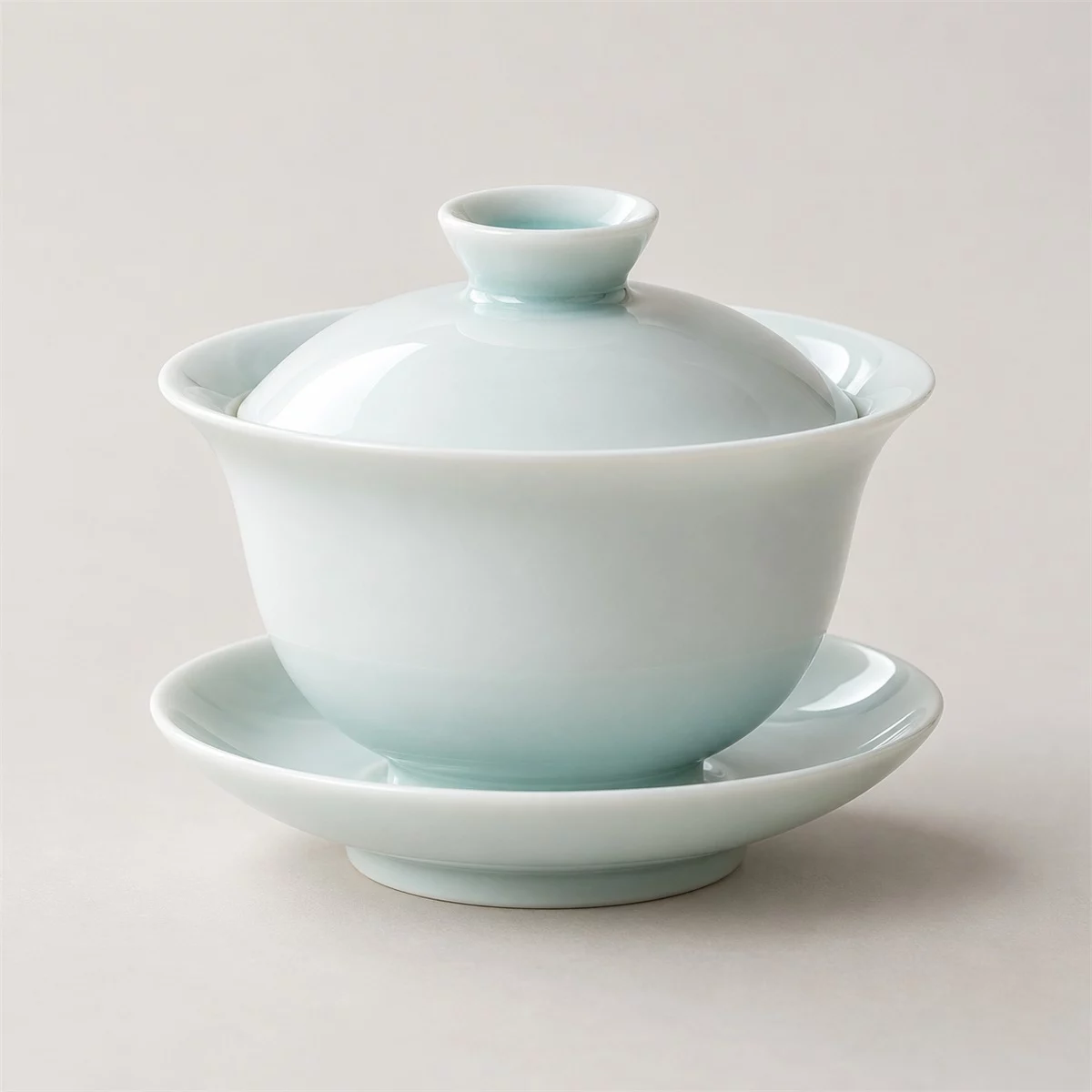
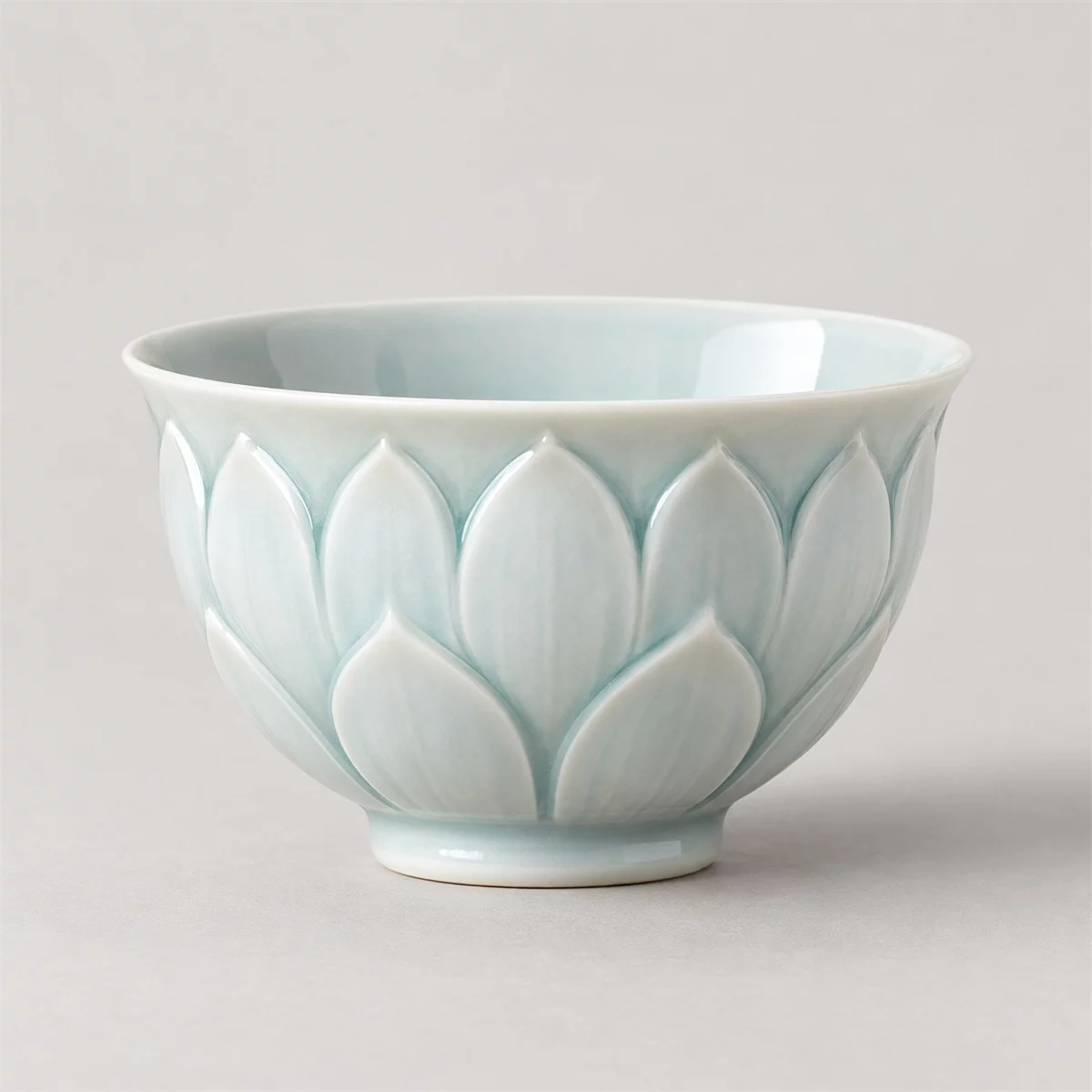
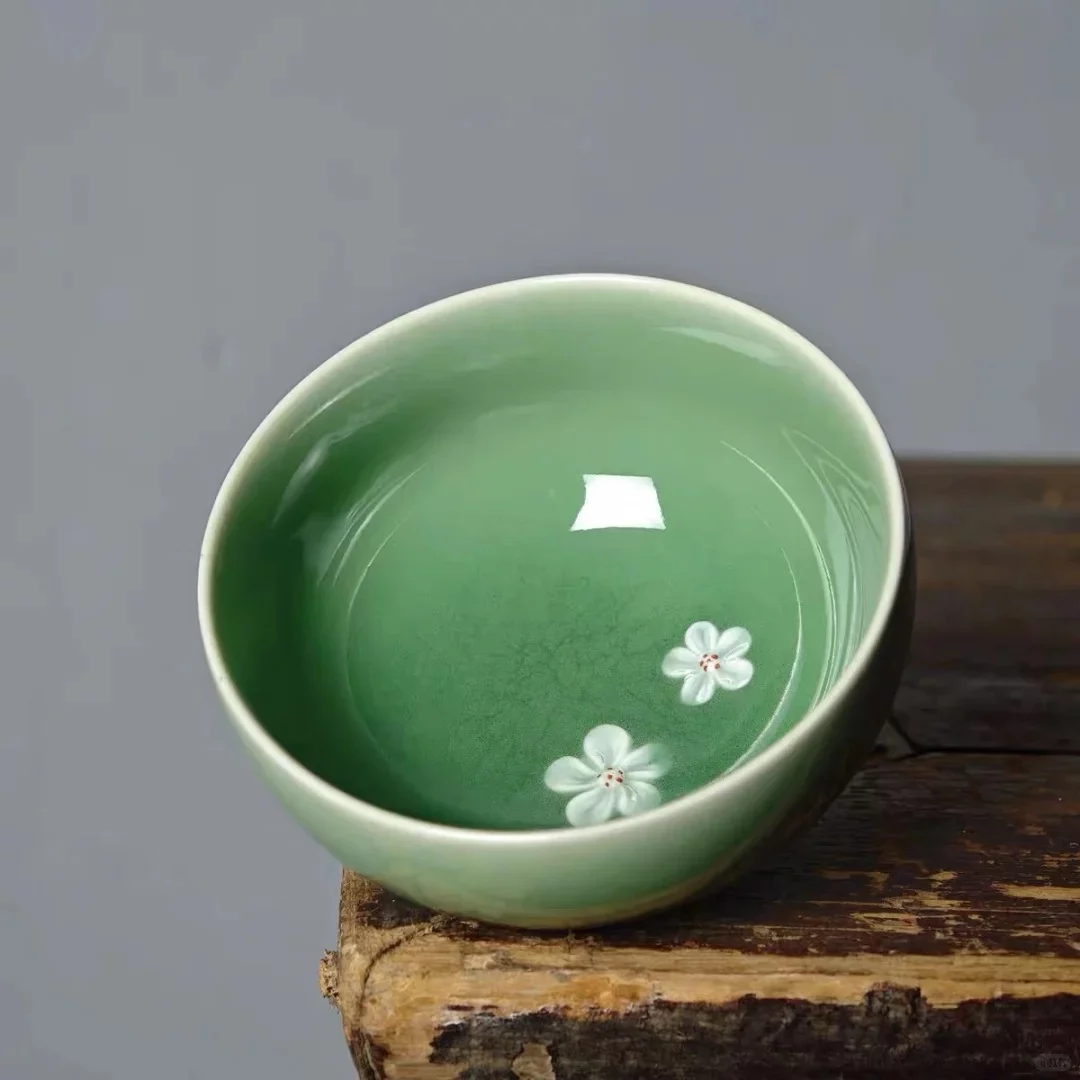
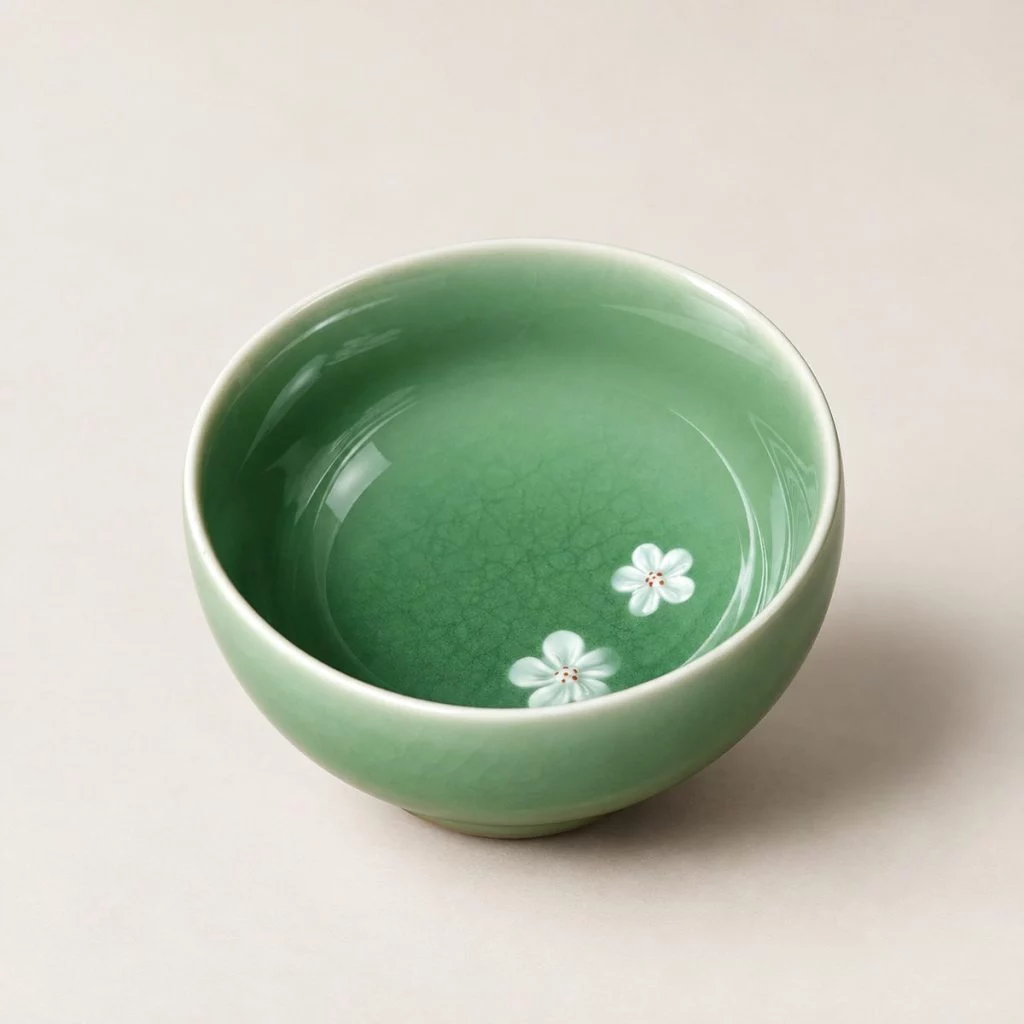
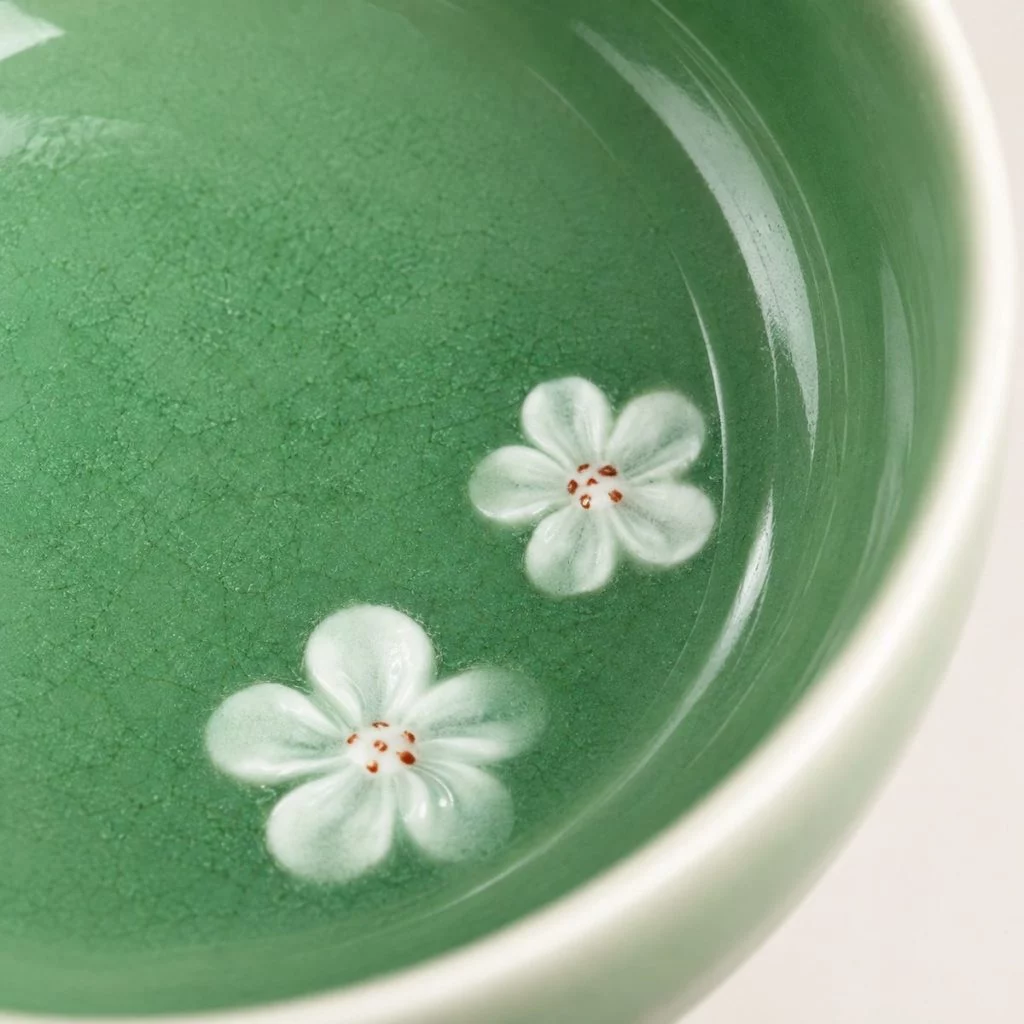
Look into this cup empty and the first thing you see is the pair of plum blossoms at the bottom, white against the green, each with five round petals. Pour the tea and they are still there, softened by its color, like flowers seen through water. That small change is why tea shops like the cup. It looks different full and empty, and customers notice.
The glaze is a jade green with a fine crackle, the kind of celadon that belongs on a tea table more than a dinner table. It deepens slightly at the bottom of the well, where it lies thickest, so the blossoms sit in the darkest green of the cup and stand out the most.
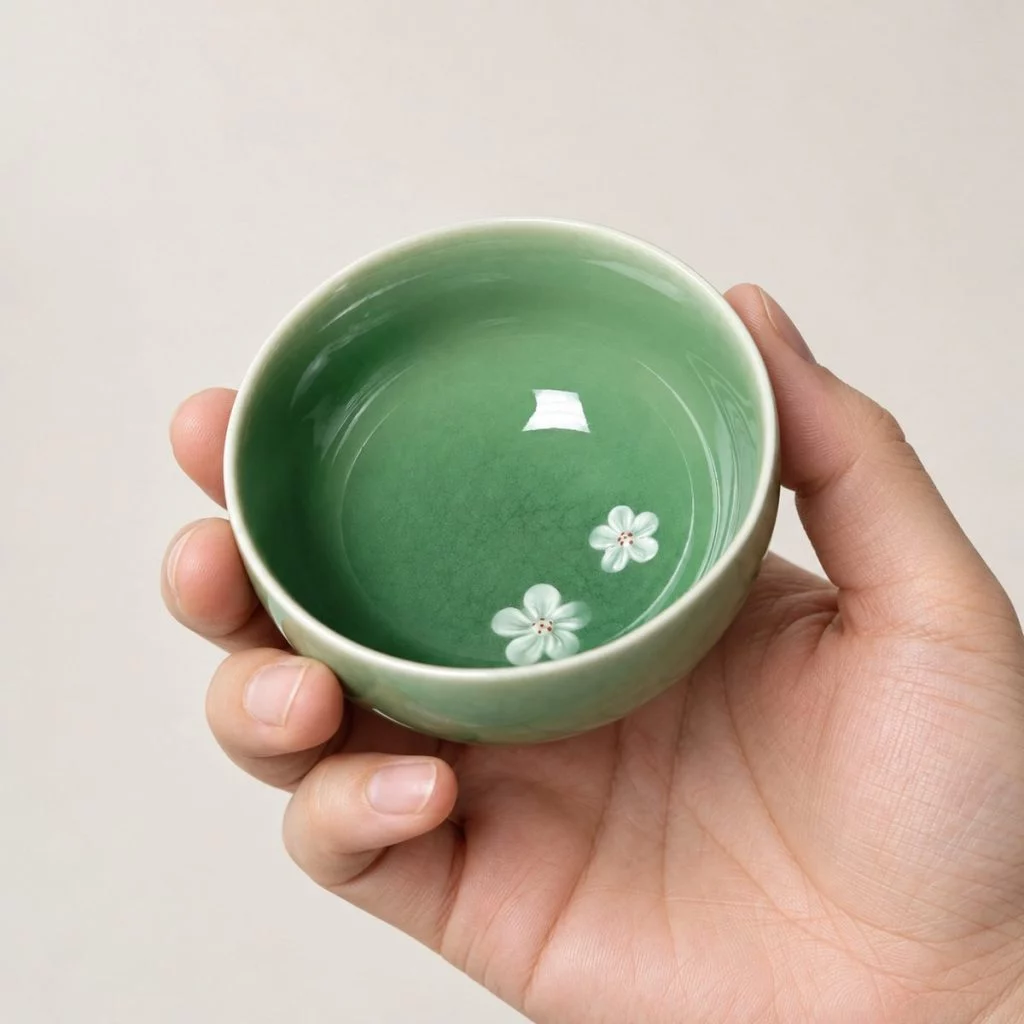
The shape is simple on purpose. A deep, rounded bowl holds a few sips of gongfu tea and keeps it warm, and nothing on the outside competes with the flowers inside.
KKCN makes, glazes and fires these cups in its own Jingdezhen workshops at about 1,300 °C. A shop that sells through a case can reorder the same cup, in the same green, from the same kilns.
Celadon takes its green from iron in the glaze and a reducing kiln; our Chinese porcelain glazes guide explains the range from pale to deep.