A Tang horse in cream, amber and blue
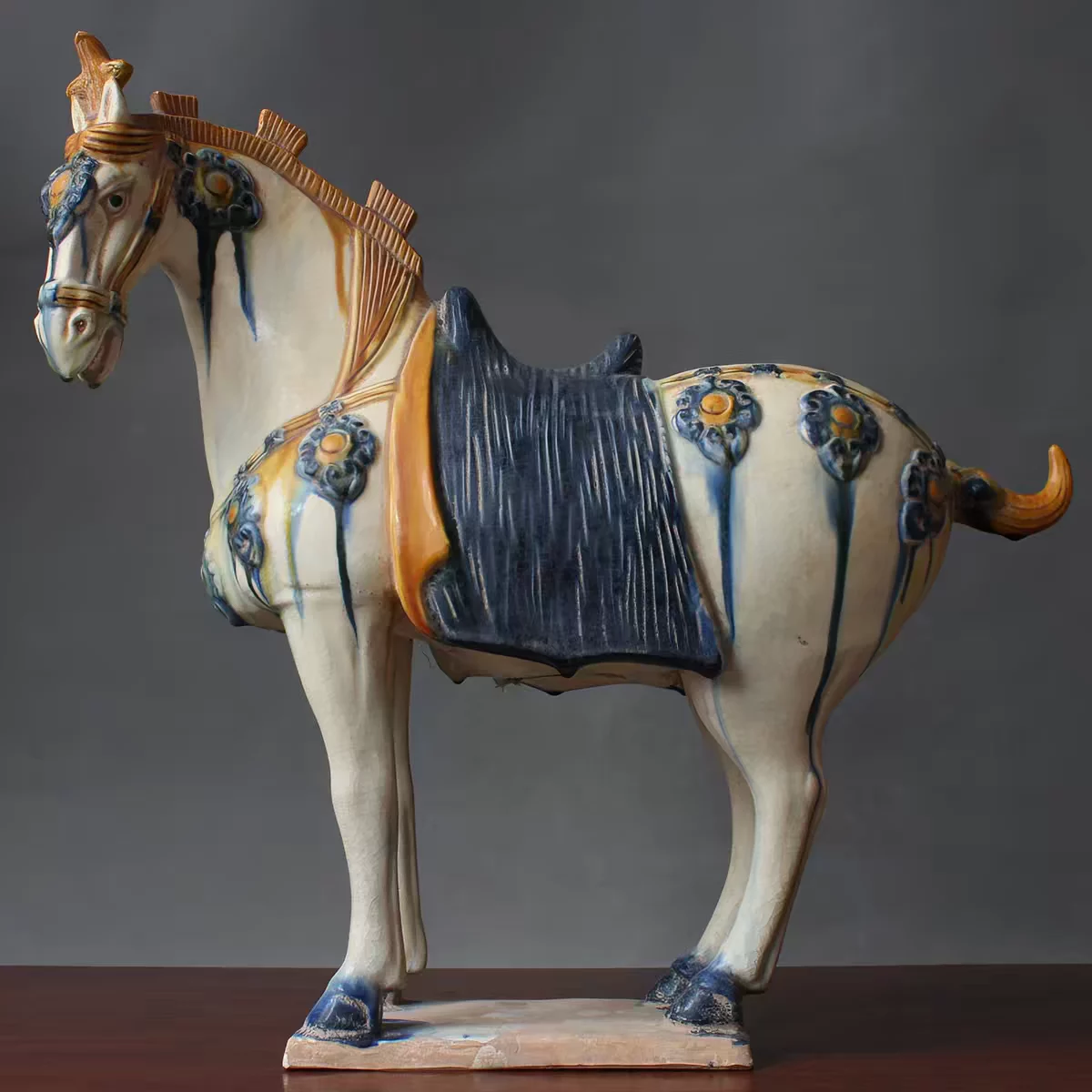
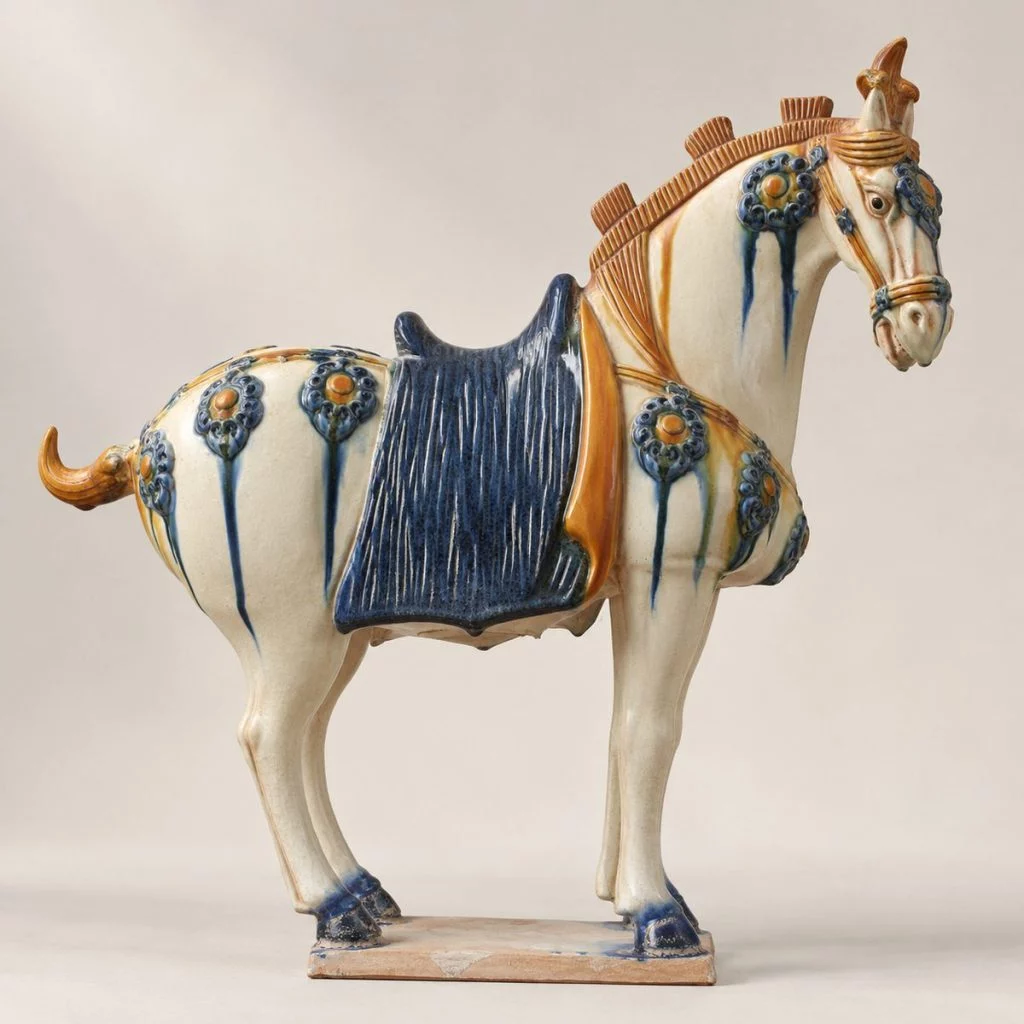
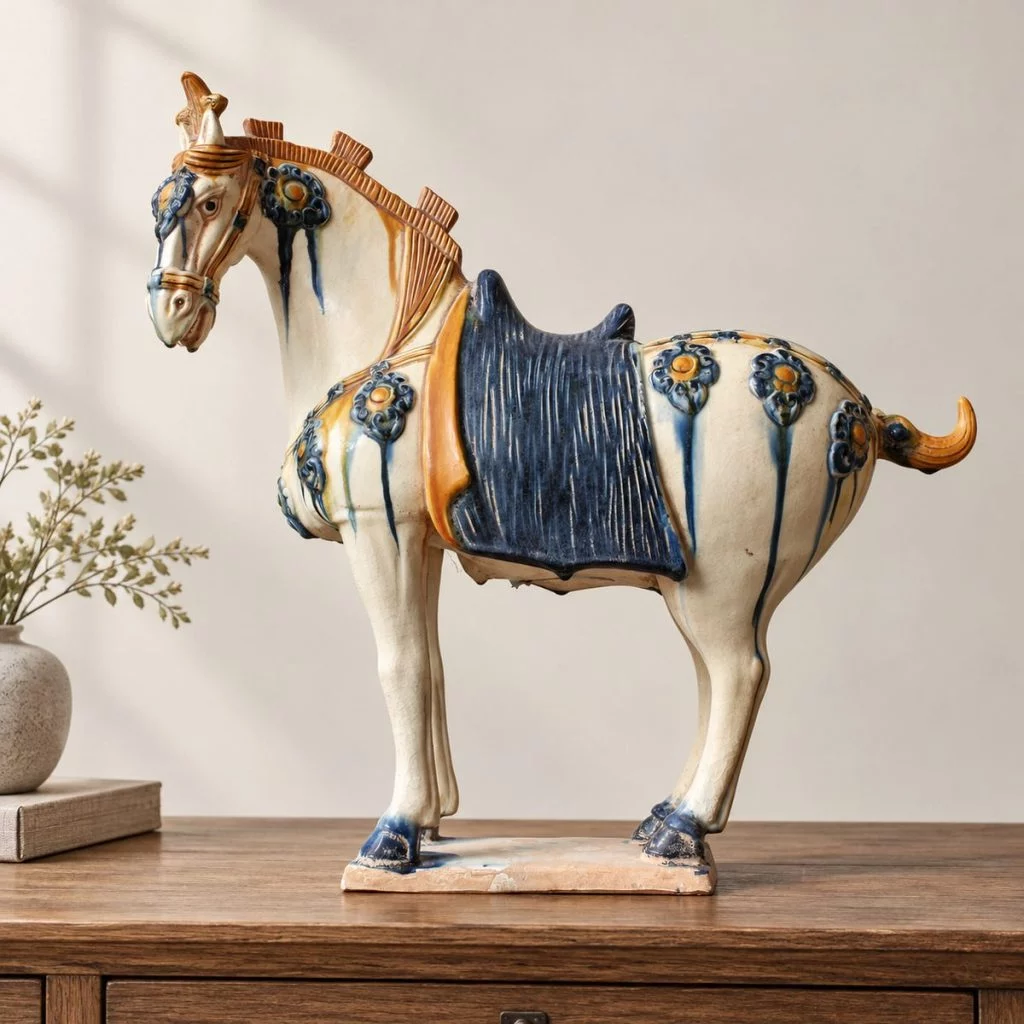
The horse stands four-square on its slab base with its head turned slightly to the left, as if something off to one side has caught its attention. The mane is cropped short in ridged tufts and the tail is tied up, the way grooms in Tang China dressed a fine horse for parade.
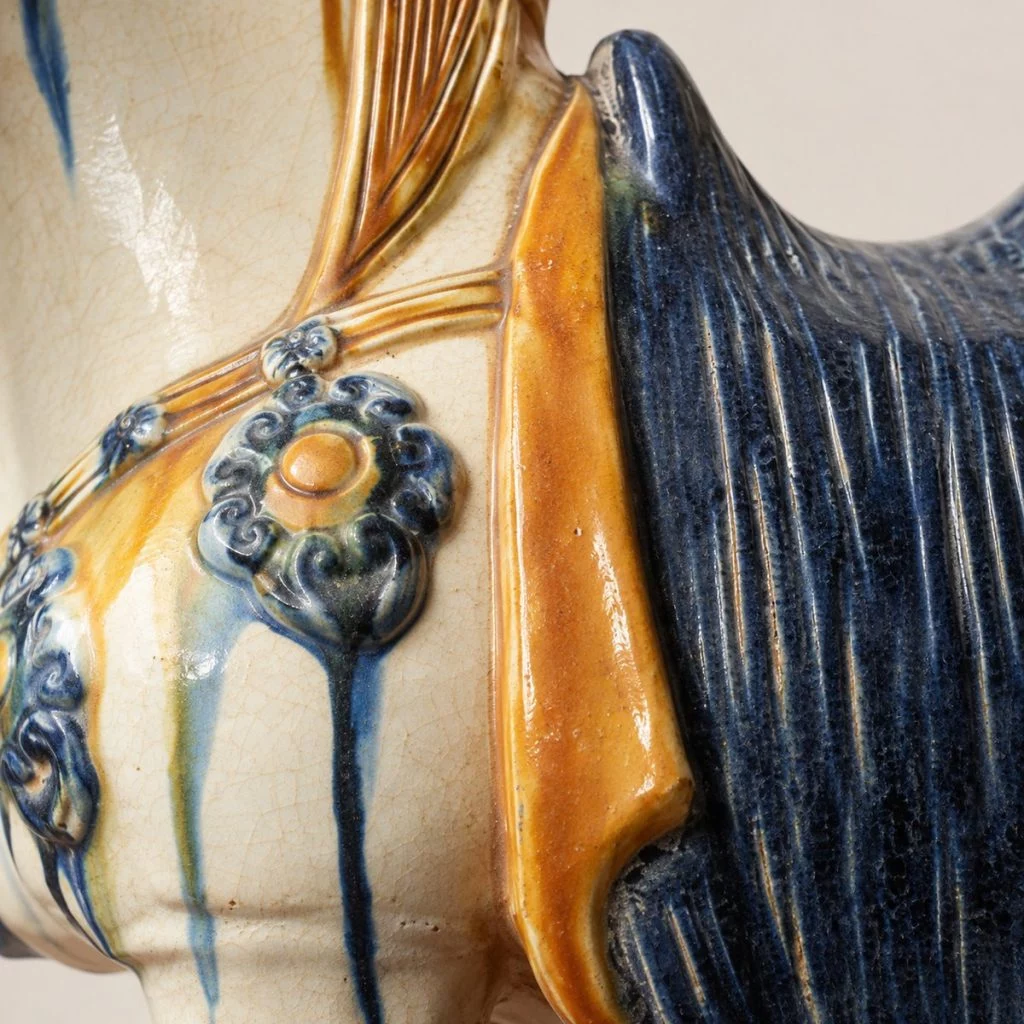
Most of the body is a cream glaze, crazed all over with fine cracks. Amber picks out the mane, the tail and the straps of the harness. The saddle cloth is cobalt, with lines incised into the clay beneath so the blue pools darker in them, and the rosettes on the harness are glazed blue and amber. In the kiln those colors melted and ran, leaving drips down the flanks that stop short of the base, where the pale buff clay shows bare.
The blue matters. In the Tang dynasty cobalt was imported and costly, so sancai with blue in it was the rarer, finer kind, and a blue saddle cloth marked a horse worth showing off.
We make this horse in our own workshops, glazing and firing the sancai in-house, then inspect and pack it at KKCN’s headquarters in Jingdezhen. It is low-fired earthenware, made to be displayed indoors.
How the three-color sancai glaze runs and pools in the kiln is explained in our guide to Chinese porcelain glazes.