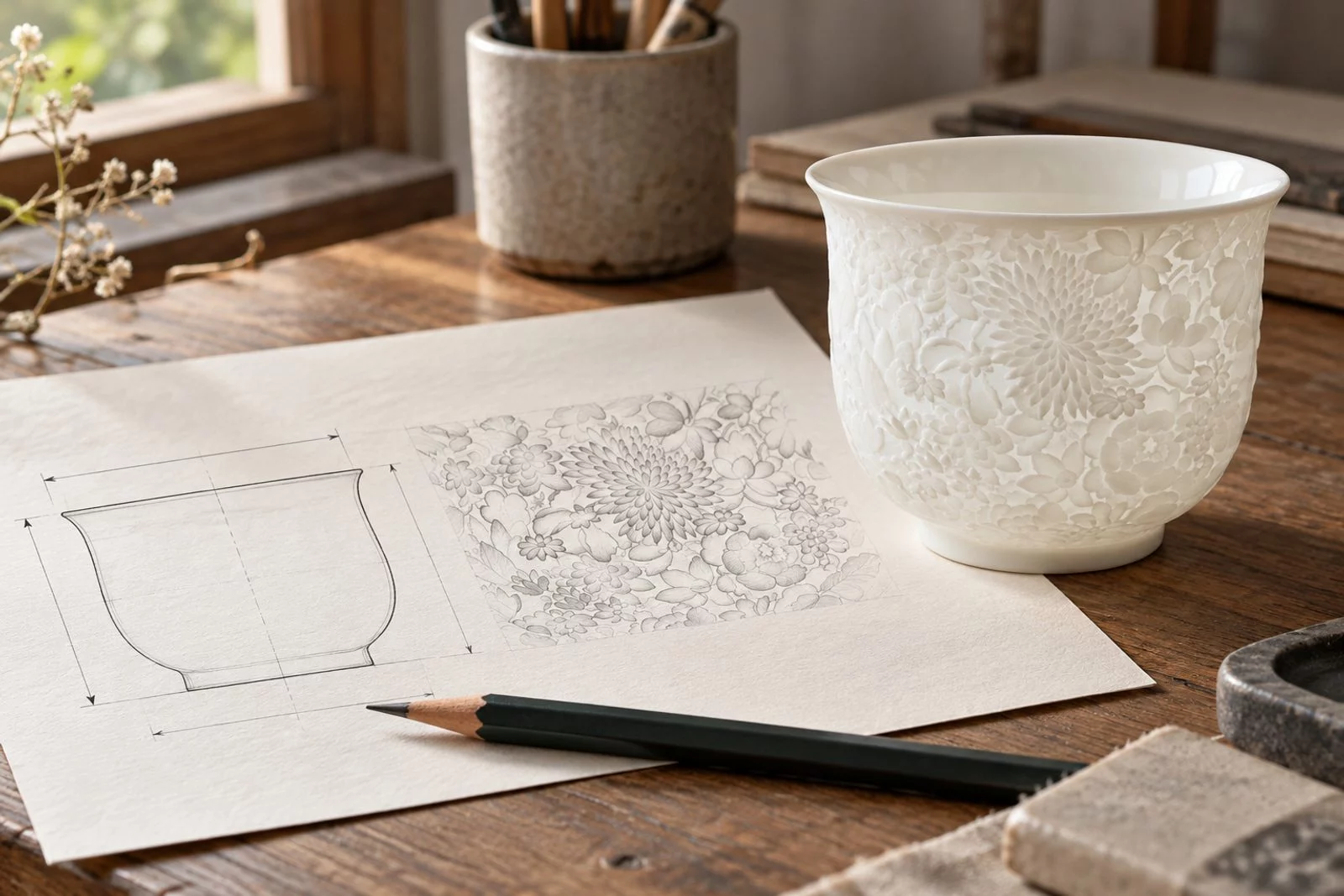
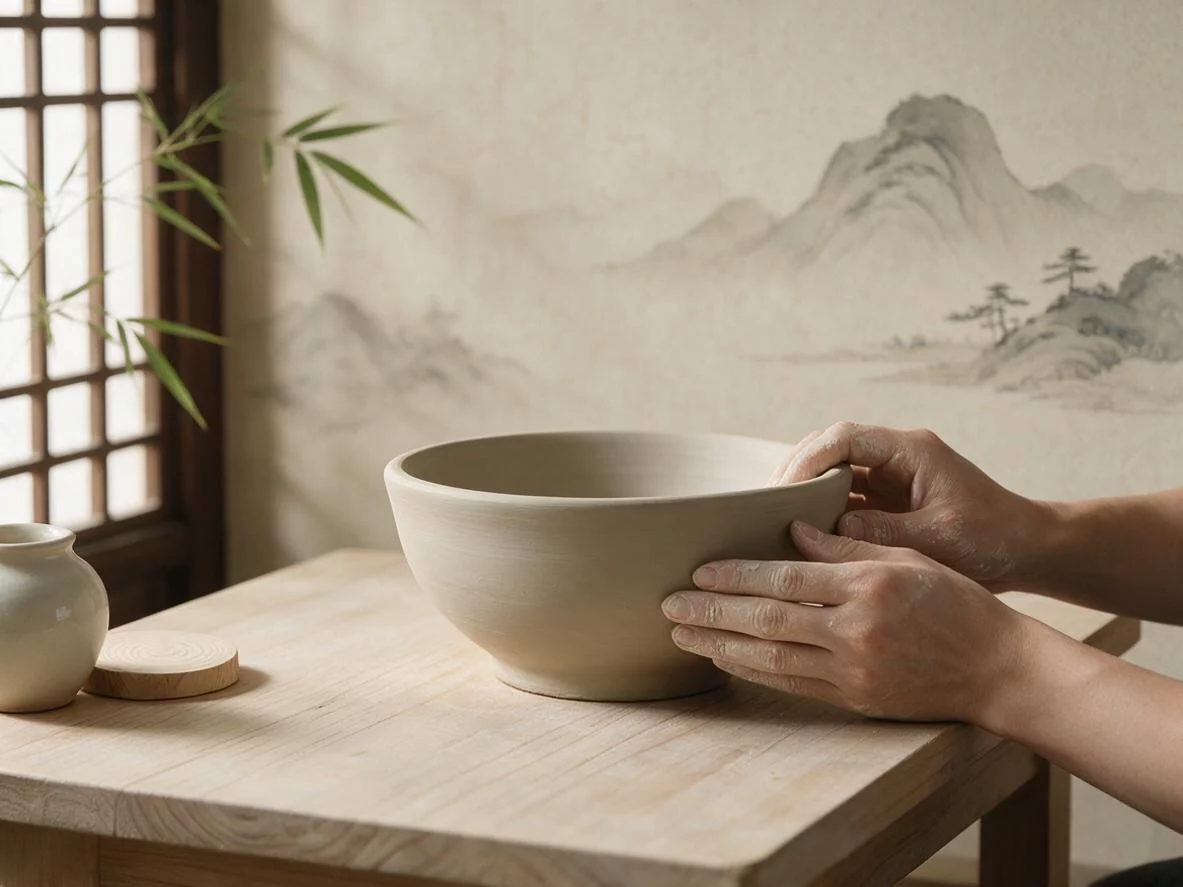
A photograph is a good way to start a custom piece. It shows the mood, the color family and the silhouette you have in mind, and it saves a page of description. It also leaves out most of what a porcelain maker needs to price the piece and make it the same way three hundred times.
This guide covers what a photo hides, what to send with it, how we read it in Jingdezhen, and how the picture becomes a sample you can hold, then a standard you sign.
Five things a photograph keeps from a porcelain maker
Put any product photo on a screen and five questions stay open.
- Scale. Without a hand or a ruler in the frame, a 9 cm tea cup and a 30 cm jar can look the same.
- Wall and weight. Light hides whether a wall is thin enough to glow or thick enough for hotel service, and the weight in the hand follows from the wall.
- True color. Every screen shifts a green or a blue. A glaze color is settled only on a fired piece.
- The foot and the inside. The base, the foot ring and the inner glaze rarely make it into the shot. They still decide how a piece sits and how it is used.
- How the surface was made. A crisp repeat may be hand painting or a fired decal. A crackle may be in the glaze or printed on it, and a blue may sit under the glaze or over it. Each answer changes the route, the price and the minimum.
What to send alongside the picture
Add the details the camera missed, and the first reply can carry a price. Measure the piece if you own it, or send us the object itself; a physical reference settles size and weight at once. Tell us:
- what the piece is for and where it will be sold or used;
- the quantity per style;
- the date it has to arrive.
Then mark what in the photo must stay and what we are free to change: often the color matters and the handle does not, or the reverse. Artwork travels best as vector files (AI, EPS, SVG or PDF), images as JPG or PNG, and drawings of a form as CAD files. Our custom brief walks through each of these in six short steps. Every file you send stays confidential and is never used for another client.
How Lin Wan and Chen Nuo read your photo
Each brief is read by two people. Lin Wan, our foreign-trade lead, checks use, market, quantity and dates. Chen Nuo, our product and procurement lead, reads the object itself: body, glaze, forming and decoration. Their first step is to set your photo against our library of more than 1,200 molds and form references and about 380 stocked references. The closer the match, the shorter the road:
- A covered jar close to one we already make is restyled with your glaze, pattern or mark.
- A vase you like at a different height is reshaped from an existing form.
- A designer’s render of a shape nobody has made becomes a new form, with a mold of its own.
Those are our three development routes. Your first reply names one of them, the sample type and its price, within 1–2 business days.
The sample settles what the photo could not
Your first sample is made in the real body, at the real size, and fired in the kilns that will make the run. A form is thrown or cast larger than its finished size so that it shrinks to the measurement you gave us, and the sample proves it did. Glaze and painted color are judged on the fired piece, beside your photo and, if you sent one, your original object.
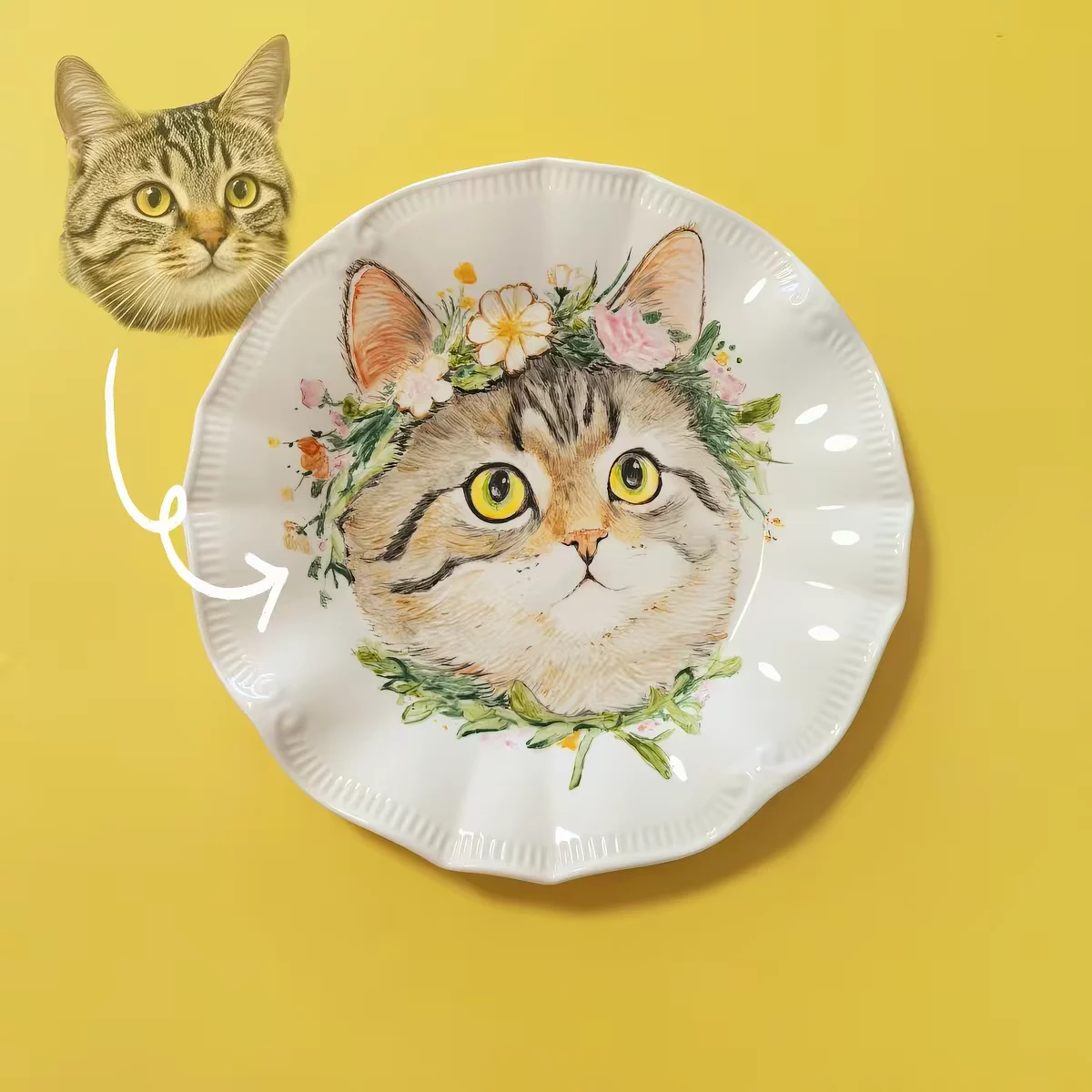
A reference already in stock ships as a sample within 3–7 business days. A new form or pattern takes 15–30 business days, and the sampling fee is credited against the order once it reaches the agreed minimum. Production photos and video follow the sample through the workshop on request, and you can see it in person in our 300 m² showroom by appointment. Some pieces start and finish with a photograph: our pet portrait plate and wedding portrait frame are painted or modeled from each customer’s own picture.
Mark the changes on the sample, not the photo
Once a sample exists, the photo has done its job. Changes go onto the piece itself: a rim to be thinner, a blue a shade softer, a handle set lower. We record each change in writing and make a revised sample or send photos of the adjustment, so the next decision is again made against something you can see. When the sample is right, it becomes the reference for the run. Before production starts, the following are locked in writing and signed by both sides:
- its sizes and tolerances;
- its glaze and color range;
- the logo and the packing;
- the handmade variation you accept.
The approved piece and its craft file stay at our Jingdezhen headquarters, so a reorder next year is made to the same record. Our approval checklist lists every line of that standard.
How long from a photo to a finished order
From your first email, a reply arrives within 1–2 business days. A sample follows in 3–7 business days from stock, or in 15–30 for a new form or pattern. Production of a custom pattern or mold then takes 30–45 days, and fully handmade art pieces take 45–60 days, with 5–10 days added from August to December. Custom work starts at 50 pieces per style; one-of-a-kind art is quoted per piece. To begin, send the photo with a measurement and a quantity.
Start with the picture
Send the reference, one measurement and the quantity. We will name the route and price the first sample.