By Lin Wan, Foreign-Trade Lead at KKCN, Jingdezhen
Ceramic Home MY sells home ceramics on Lazada and Shopee to more than 200,000 followers. When the shop first wrote to us, it didn’t order a container or even a full style. It ordered a mixed trial of 50 pieces, white dinnerware and celadon tea ware, all from stock, and listed them to see what moved. The pieces that sold were reordered. The ones that didn’t were dropped. Three years later the shop places bulk repeat orders every month, still from stock, still shipped by express so its listings never run dry. Nothing about that is glamorous. It is simply the way most retailers who are good at selling Chinese porcelain work: small, measured, and focused on the parts of the business that quietly decide the margin.
Porcelain looks like an easy category. The buying price is modest, customers pay well for handmade pieces with a story, and a Jingdezhen cup sits happily beside candles, tea and books. Then the costs show up in places a retailer isn’t watching: pieces that never sell through, a cup that arrives in three pieces, a return because the glaze looked bluer in the photo, a product card that claimed more than anyone could prove, a holiday range that lands in January. This guide follows a piece from our kiln to your customer’s shelf and stops at each of those points. It is written for independent shops, online sellers, museum and gallery stores, and gift retailers. Where I quote KKCN’s own terms, I label them as ours.
Where the margin on porcelain actually goes
Most retailers set their prices from the invoice. They take the price the porcelain factory quoted, add freight, multiply, and expect the difference to be profit. On porcelain, the difference shrinks in five places.
| Leak | What it looks like | What controls it |
|---|---|---|
| Dead stock | A shelf of a style that never moved | A small, mixed opening order and quick reorders |
| Landed cost | Freight, duty and clearance not priced in | Pricing on landed cost, not on the FOB price |
| Transit damage | Broken pieces in parcels and cartons | Packing designed for your channel, and a supplier’s damage terms |
| Returns | “Not as pictured”, “smaller than expected” | Photos and descriptions that show the piece as it is |
| Claims and compliance | A card that says too much, a listing missing required details | Copy you can back up, test reports matched to pieces |
Each of these is ordinary on its own. Together they can turn a healthy-looking markup into a thin one. The sections that follow take them in the order a piece meets them, starting with the decision that comes before any of them: what to stock.
Build a range you can read within a season
The most expensive porcelain in any shop is the piece that sits there for a year. The way to avoid it is to open with a range small enough that you can tell, within one season, what your customers actually buy.
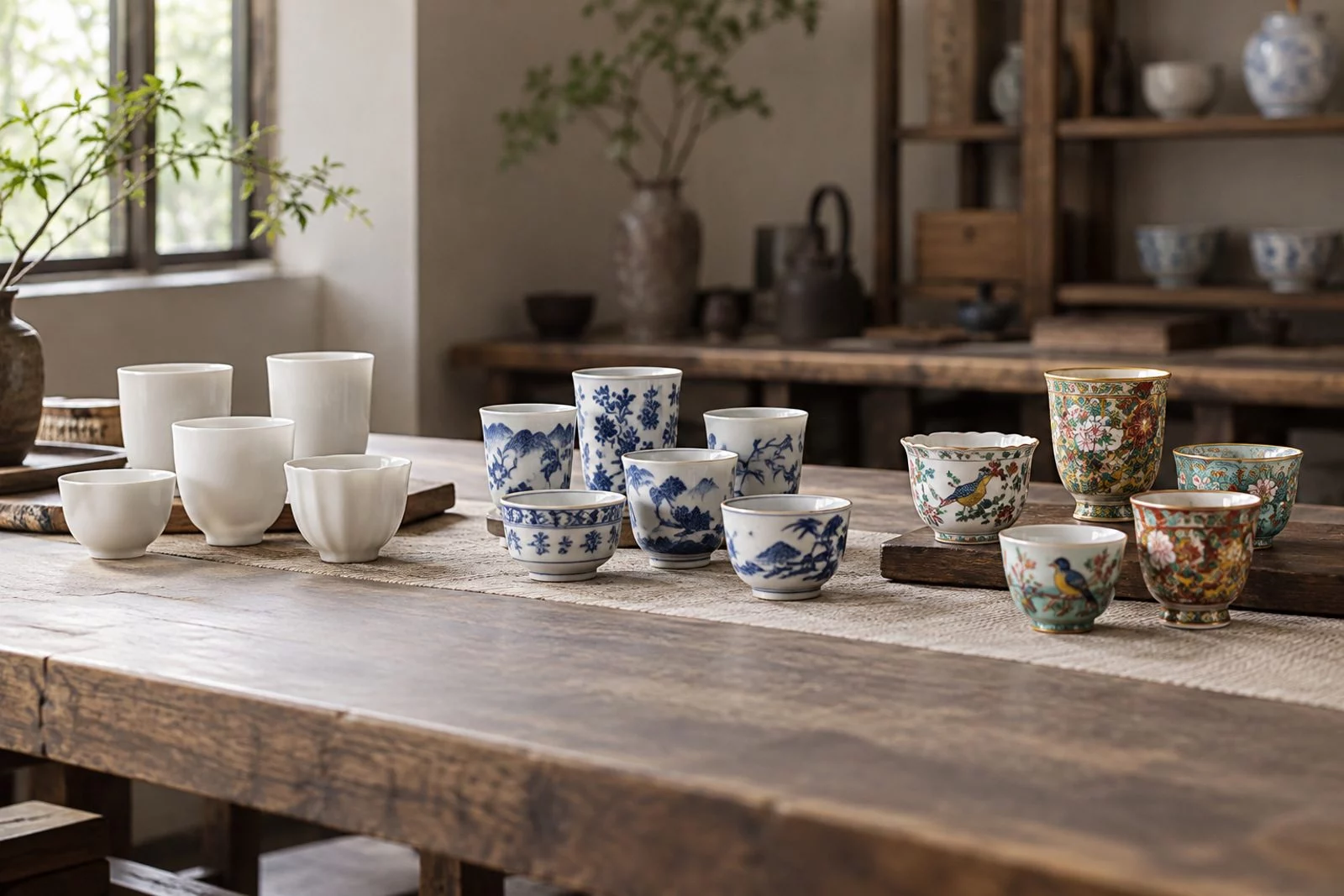
That means fewer references, chosen with intent, rather than one of everything. We usually suggest that a first range is built across three price tiers. The entry tier is a single cup or a small dish that someone buys on impulse or adds to a basket. The middle tier is the gift: a boxed pair of cups, a gaiwan, a small vase. The top tier is the piece that anchors the display, a covered jar or a fully painted set, which sells a few at a time but makes the rest of the shelf look considered. Most of the volume comes from the first two tiers. The third earns its place by making the customer trust the rest.
The buying terms of your supplier in China decide how cheaply you can learn. At KKCN, anything in stock can be bought from one piece, which is how many retailers start: one of each candidate, photographed and handled before committing. A mixed order starts at 10 pieces across as many references as you like, so an opening range can be tested without buying 50 of anything. Once a reference is proven, reorders come from stock, and a version with your own glaze, mark or box starts at 50 pieces per style. Our wholesale Chinese porcelain range lists every reference with the PP number you use to reorder it.
Living Oriental, a German home brand with stores in Munich, Berlin and Frankfurt, shows where this leads once a range is proven. Its annual repeat orders run to 800 to 1,500 pieces of a tightly edited set of monochrome white tea sets and celadon vases, with its own mark engraved, and it has reordered every year for six years. The range is narrow and deep, not broad.
Price on landed cost, not on the quote
The price on a porcelain quote is usually FOB: the goods loaded at a Chinese port, with everything after that on you. A retailer who prices from that number forgets that the piece still has to cross an ocean, clear customs, be unpacked, survive the trip to a customer and sometimes come back.
A worked example makes the gap concrete. The figures below are for reference only: they are illustrative assumptions, not a quote and not a recommended or guaranteed price, and your customs broker will give you the real duty for your market and product code.
| Line | Per cup (USD) | Note |
|---|---|---|
| FOB price, hand-painted blue and white tea cup | 5.00 | Within the $3.80–7.50 FOB range for small hand-painted cups in our sourcing guide |
| Sea freight, clearance and delivery to your door | 0.75 | Assumed 15% of FOB for a mixed LCL shipment |
| Import duty | 0.50 | Assumed 10% of FOB for illustration; the real rate depends on market and product code |
| Allowance for breakage and returns | 0.31 | Assumed 5% of the landed cost so far |
| Landed cost | 6.56 | Roughly 31% above the FOB price |
Priced at three times FOB ($15.00), the cup leaves a gross margin of about 56% on landed cost. Priced at three times landed cost ($19.70), it leaves 67%. The difference across a few hundred cups is the profit of a good month. Markups vary widely by channel, from a boutique on a high street to an online marketplace, so treat these multiples as examples rather than advice. The habit is what holds: build the landed cost first, then choose the retail price.
Two details matter more for porcelain than for most categories. Duty is the first. Ceramic tableware attracts duties and, in some markets, special trade measures that ornamental pieces don’t, so a mixed order can carry different rates for a cup and a vase. Our guide on how to import porcelain from China explains how to find the right line. Express freight is the second. Ceramic Home MY reorders by DHL because keeping listings in stock earns more than the freight costs, but express only pays on fast sellers. Slow movers belong in a sea shipment. Typical FOB ranges by decoration type are in the price section of How to Source Porcelain from China.
Show the piece as it is
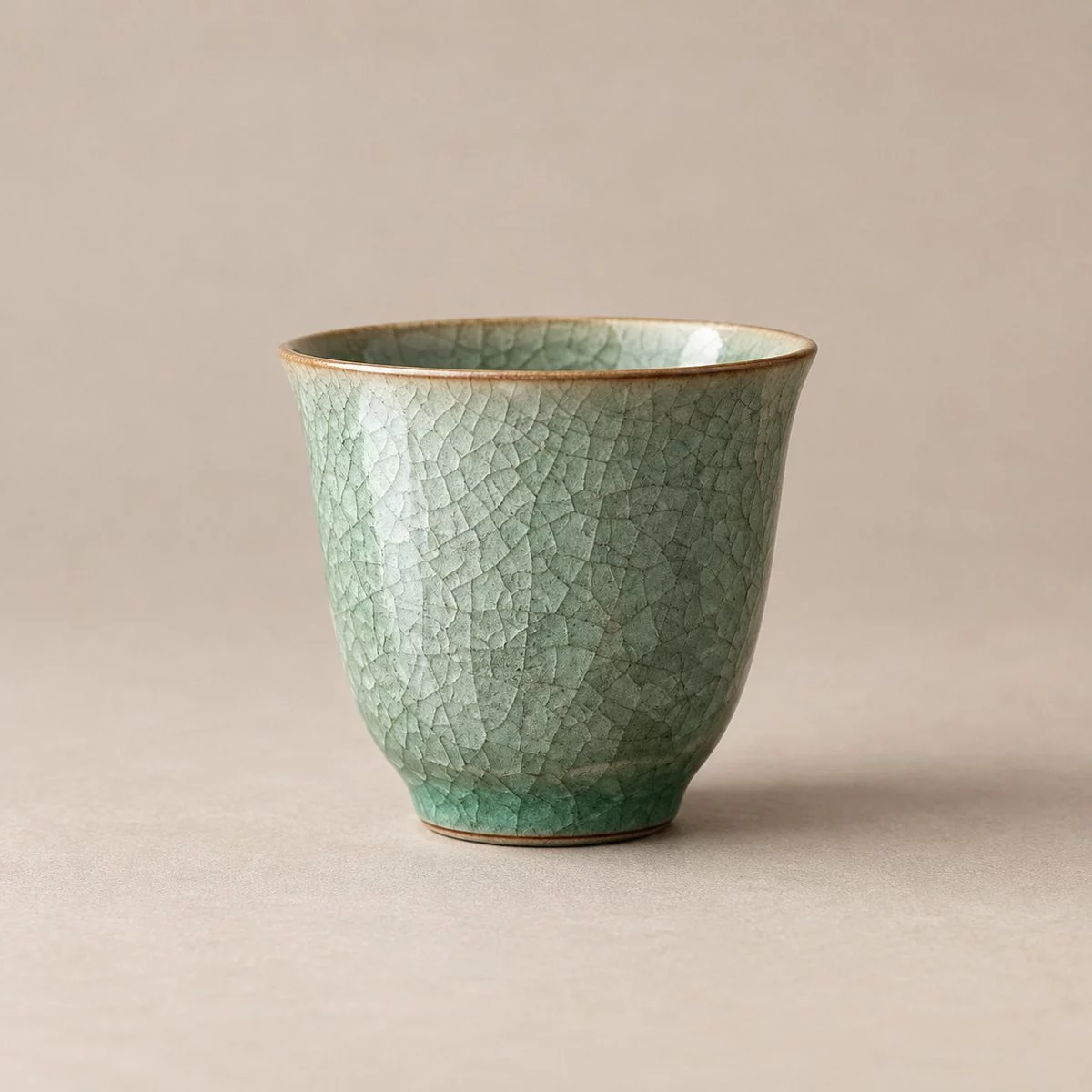
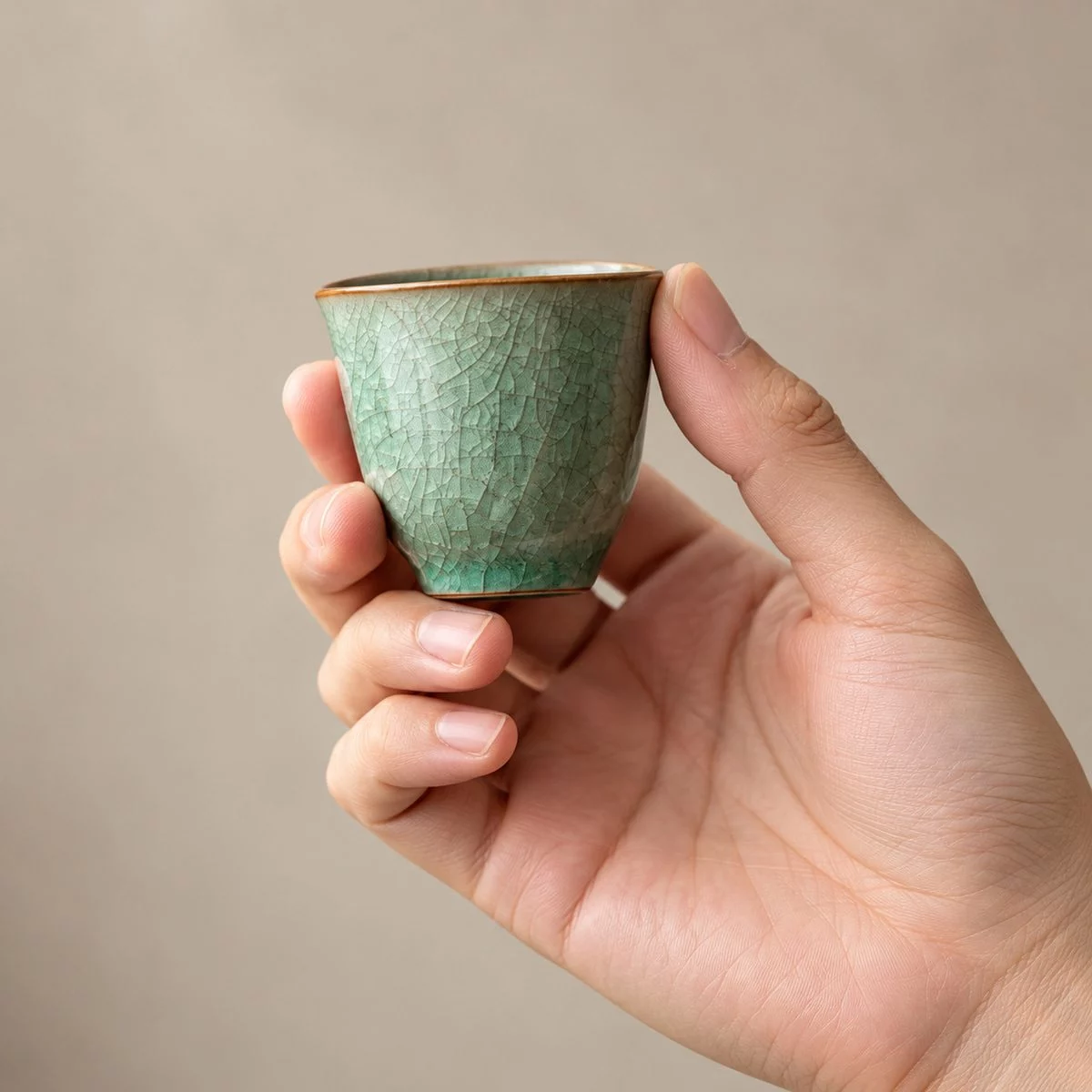
Porcelain sells on its surface, and the surface is the hardest thing to photograph honestly. A celadon can look blue under one light and green under another. A white porcelain cup can look gray or cream depending on the white balance. A piece shot close up on a plain background has no scale, so a 7 cm cup can look like a mug. Every one of those gaps is a return waiting to happen.
Returns are expensive in any category. Appriss Retail and Deloitte’s 2024 consumer returns report put the overall retail return rate at 13.21%, and estimated that 15% of returns and claims were fraudulent or abusive. A porcelain seller can’t control all of that, but “not as described” and “smaller than expected” are almost always within reach.
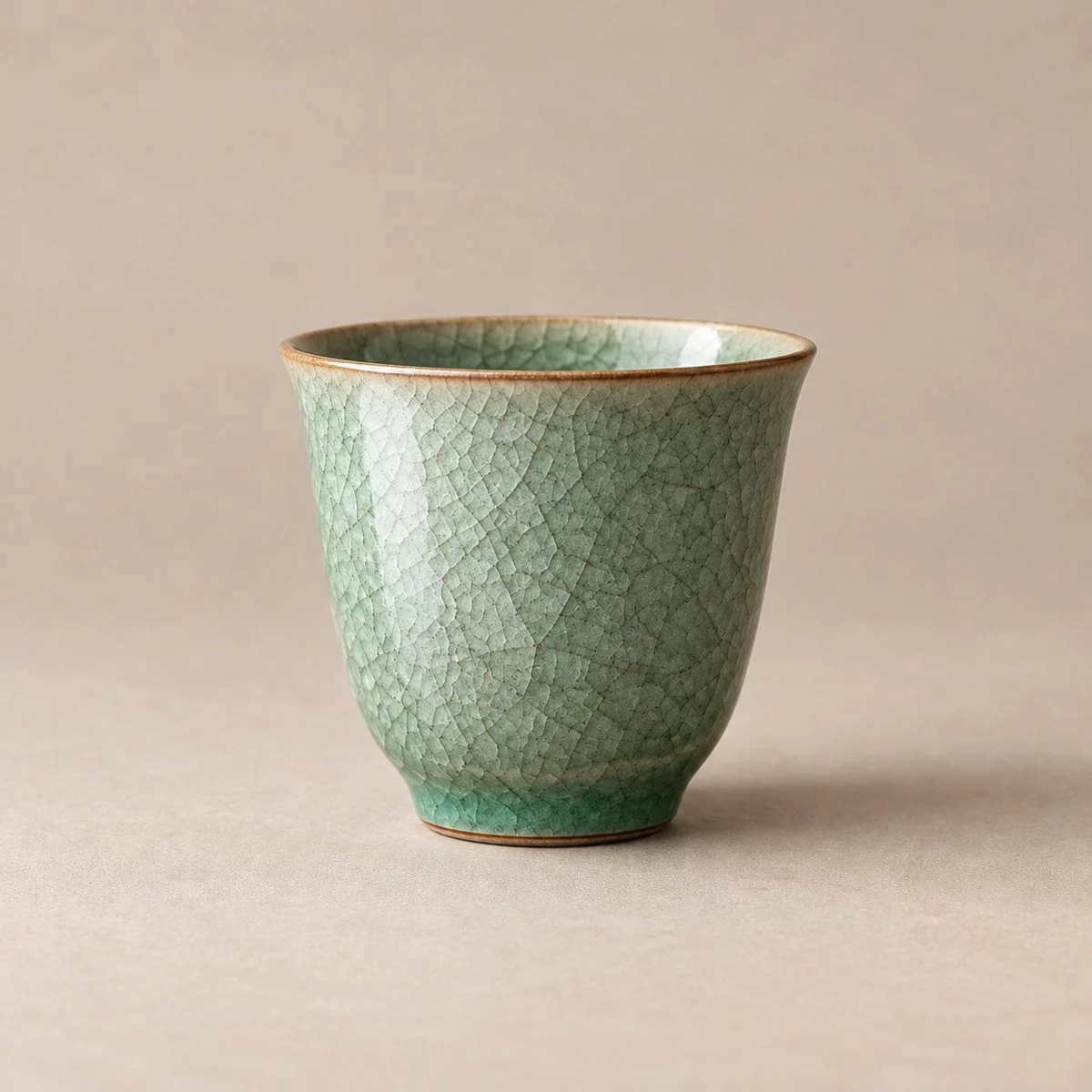
Four habits cut most of it. Photograph in daylight-balanced light and check the color on the piece in your hand, not on the screen. Show scale in at least one image, with a hand, a teaspoon or a standard object beside the piece, and give the dimensions in both centimeters and inches. Show the foot and the inside, because that is where buyers of handmade porcelain look for quality, and where a crackle glaze or a hand-trimmed foot shows its character. And for any piece that varies by nature, such as a hand-painted cup or a Jun glaze, say so beside the photo: “each piece is painted by hand, so the brushwork and depth of blue vary slightly from the one shown”. That sentence turns a possible return into a reason to buy.
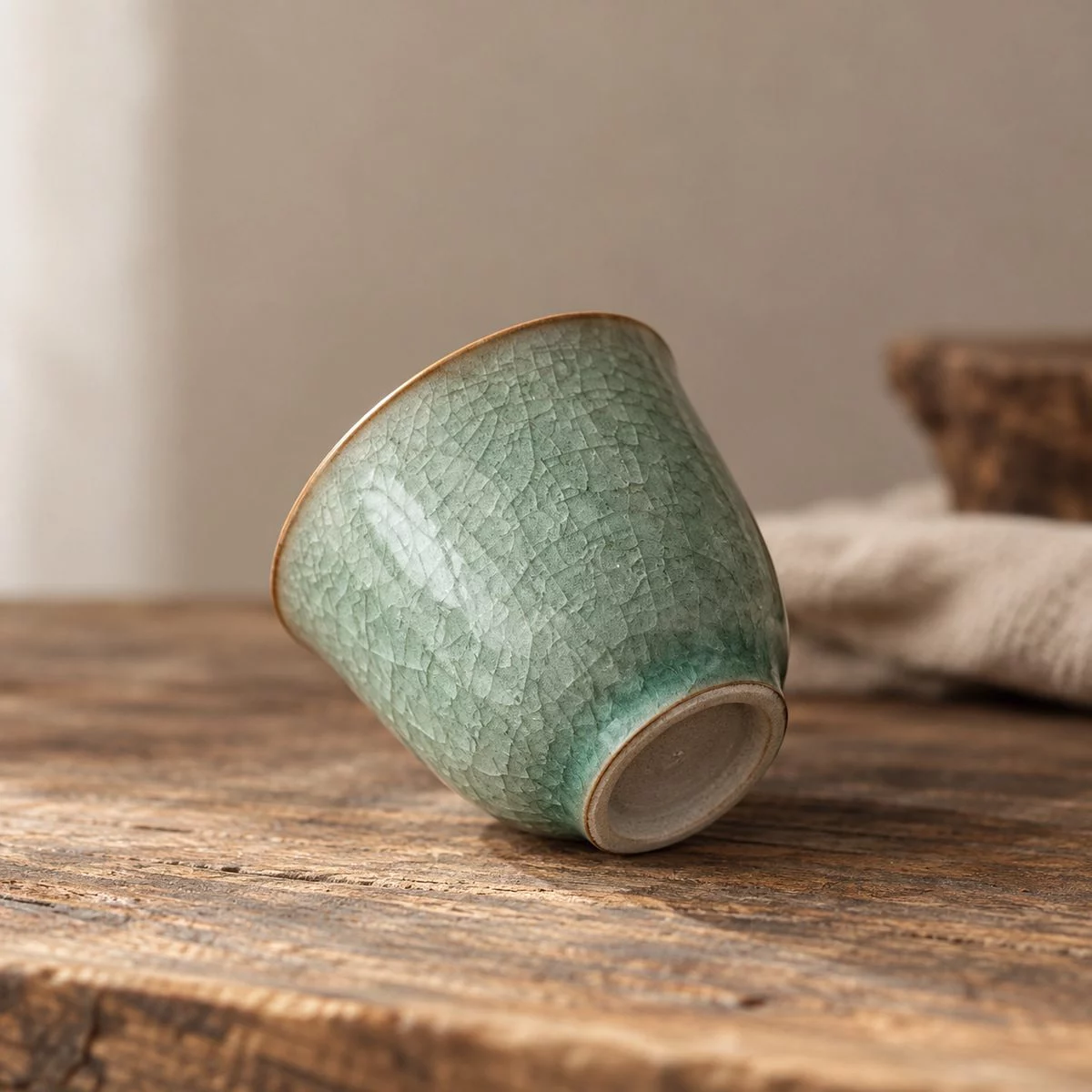
A supplier’s own media can save you much of this work. Retailers who buy from us can use our approved product photos and videos in their listings at no charge, as long as they aren’t resold as stock media. We also shoot angles on request, such as a scale shot, a close-up of the base stamp or the inside of a bowl, scheduled alongside the sample or the bulk production, and production photos and videos help when a customer wants to see how a piece was made.
In a physical store, the same principle applies to display. Porcelain shown in groups, at the height of a customer’s hand, with one piece out of its box for touching, sells better than a row of closed boxes.
The story on the card has to be true
Customers buy Chinese porcelain partly for its story: where it was made, how, and by whom. That story is worth telling, and it has to be accurate, because the claims on a shelf card or a listing are the claims a retailer is answerable for.
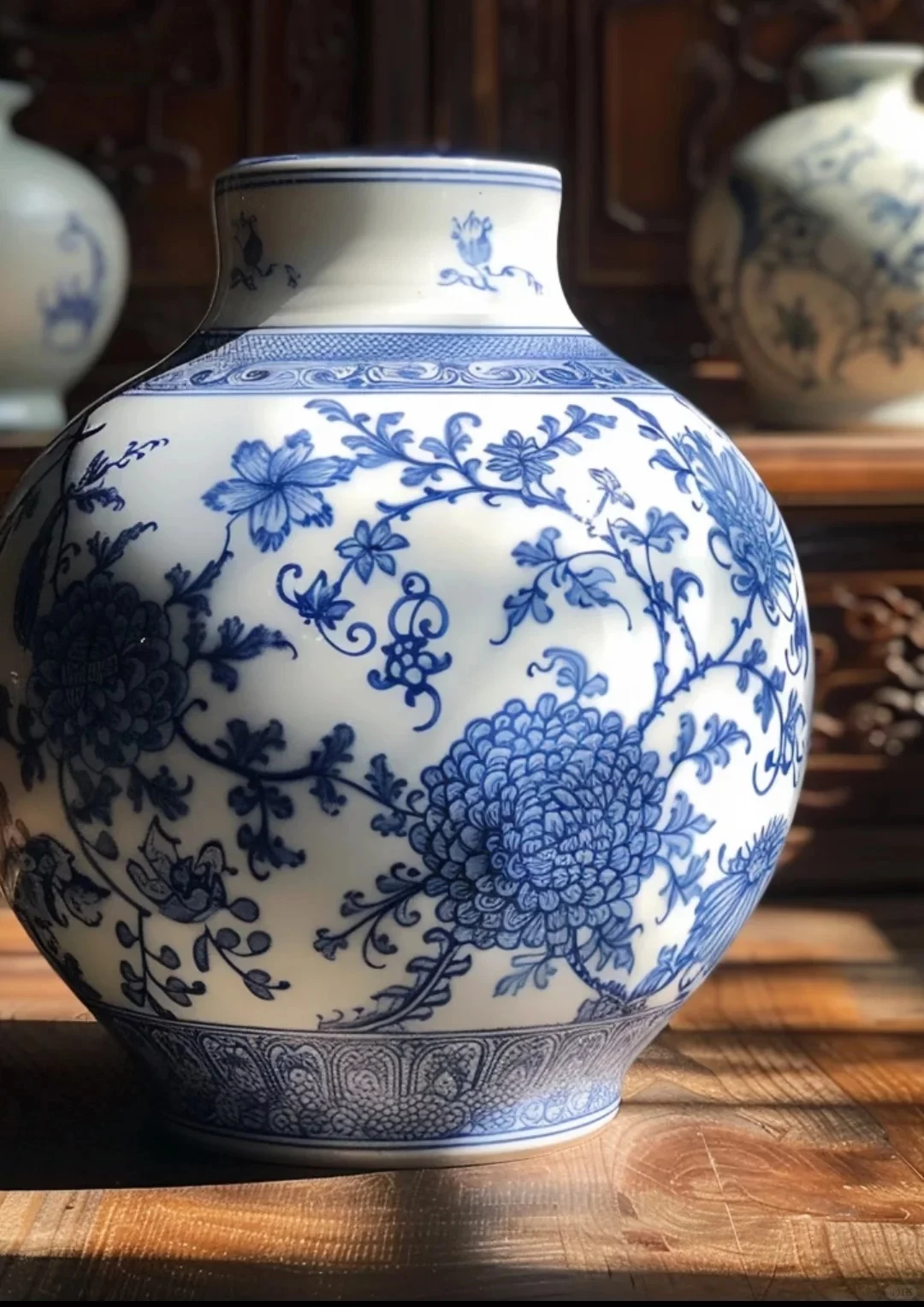
What you can say confidently is what can be checked. “Made in Jingdezhen, China” is true of our pieces and a strong line on its own; the town has made porcelain for more than a thousand years. “Hand-painted” is true of the painted pieces we sell as hand-painted, and worth separating from decal or printed decoration, which is perfectly good but different. “Fired at about 1,300 °C” is true of our high-fired porcelain and explains why it is dense and hard. The name of the glaze or technique, such as celadon, Ge ware or famille rose, is accurate when it describes how the piece was made. The Chinese porcelain glossary gives short definitions that fit on a card.
What to avoid is the claim nobody can back. Words that suggest a piece is old, or a copy of a particular museum object, invite complaints and, in some markets, legal trouble when the piece is newly made, and a bare “Ming dynasty” on a card reads as a date. “In the Ming style” or “after a Song dynasty form” says what is true. Health claims are the other trap. “Lead-free” on a card is a promise about every piece, forever. If a range has been tested, name the test and the report, and make sure the report covers the pieces on the card. Our glaze test reports are listed on Quality Control, and how to check lead and cadmium reports explains what a report does and doesn’t cover.
Two legal details catch new sellers out. In the US, imported goods must be marked with their country of origin in a way that stays on until the piece reaches the final buyer. Under 19 CFR 134, a mark made into the article at manufacture is the most durable, and CBP has accepted securely attached labels on ceramic dinnerware, as in ruling NY 803063. A backstamp under the glaze solves it permanently, and we can add “Made in China” with your own mark at the same time. In the EU, the General Product Safety Regulation has applied since December 13, 2024. Its Article 19 requires an online offer to show the same information as the physical product: the manufacturer’s name and contact details, an identification of the product including a picture, any warnings, and, where the manufacturer is outside the EU, the details of a responsible person established in the EU. A shop that sells Chinese porcelain into the EU, even from outside it, needs those details on every listing. Our guide to porcelain quality, safety and compliance covers the testing side.
Getting it there in one piece
Breakage is the leak that retailers feel most, because it is visible and it costs twice: once in the broken piece and again in the customer’s patience. How porcelain survives depends less on the porcelain than on how the packing matches the route.
A carton going by sea to a shop’s stockroom travels on a pallet, gets handled a handful of times and is opened by staff who know what is inside. A parcel to an online customer is sorted by machine, dropped, stacked under heavier boxes and handled perhaps a dozen times. The International Safe Transit Association’s ISTA 3A procedure exists for exactly that second journey. It simulates parcel delivery for packages up to 70 kg (150 lb) with a sequence of drops, random vibration with and without a load on top, and atmospheric conditioning. A packaging design that passes it is a far better bet in a parcel network than one that has only been shipped on pallets. Our retail e-commerce packing has been validated to ISTA 3A, including temperature conditioning, corner, edge and face drops, and random vibration with and without a load on top, all run on that same retail pack, and our historical in-box breakage rate for that packing is below 0.8% of units shipped (KKCN production and sales records, 2025–2026).
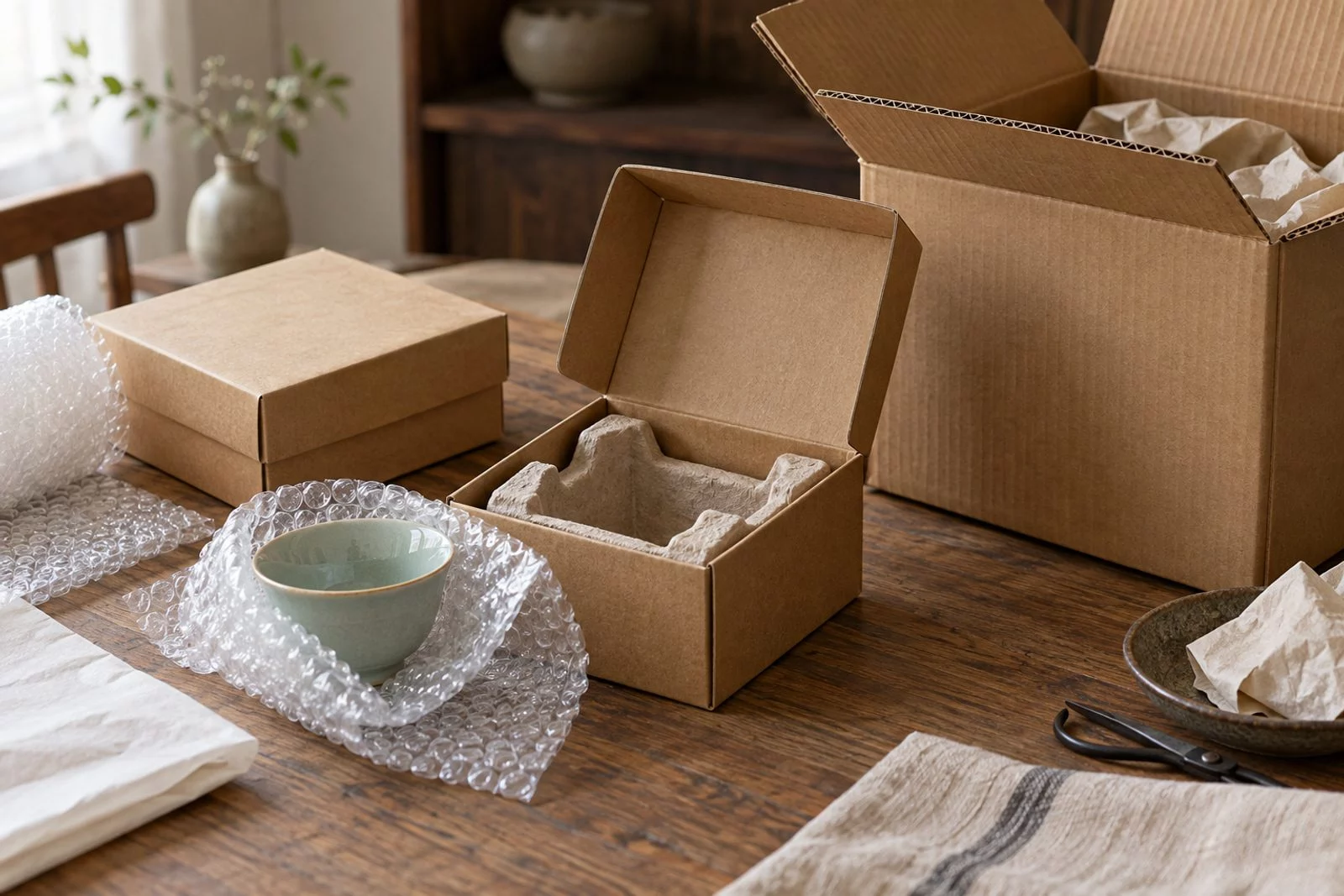
For our part, we pack each piece in its own bubble bag or full EPE wrap, use molded-pulp inserts and reinforced impact zones where a piece is fragile, and ship in five-layer export cartons with corner protectors. Branded gift boxes are sampled with the piece, so the box that reaches your customer has been tested with what goes inside it. Our Packing & Shipping page sets out the options, and our packaging guide by sales channel lists what to specify for a shelf, a marketplace or a gift program.
It is also worth knowing a supplier’s damage terms before the first order rather than after the first claim. Ours are written down: send the shipping label and photos within 48 hours, and damage up to 3% of an order is replaced at equal value in the next order, with anything beyond that credited or replaced free. Factory defects reported within 30 days are returned or exchanged with freight both ways paid by us. The details are on our After-Sales page. Whatever terms your supplier offers, the 48-hour habit matters, because photos taken on the day of delivery are what make any claim work.
Online sellers often ask whether we can ship single orders straight to their customers. We can, as blind drop shipping: the outer packaging carries no KKCN branding, and the packing slip can carry your store’s name. That keeps your stock off your own shelves for slow-moving pieces, at the cost of express freight on each parcel.
Seasons and reorders
Porcelain retail runs on a calendar. Gift sales peak before Lunar New Year, Mid-Autumn and the year-end holidays, and those peaks fall at exactly the time the kilns are busiest. August to December is our high season, and production times stretch by five to ten days. A holiday collection that hasn’t been sampled by early summer is already late.
Work backward from the date the pieces need to be on your shelf. A sea shipment takes 30 to 45 days door to door; custom production takes 30 to 45 days after the sample is approved; a new sample takes 15 to 30 business days per round. For a range built from stock pieces, production drops out of the schedule and the timeline shortens to packing and freight, which is why many retailers plan their seasonal collection around proven stock references with a new box or a small decoration change, rather than new shapes.
Reorders are where a porcelain retailer makes or loses its regulars. A customer who bought four cups in spring and comes back in autumn for two more expects them to match. Quote the PP number on every reorder, keep a photo of the piece you sold, and ask your supplier how they record the approved sample. We make and inspect each reorder against the same reference, under Li Qiusheng’s inspection team, and for hand-painted pieces the approved sample sets the acceptable range of variation. That is how Ceramic Home MY can reorder monthly without its listings drifting.
Sometimes a reorder should not match. A retail partner of ours in Australia stocked a minimalist solid celadon tea cup that sold slowly at first. The feedback was specific: the cup felt too light and narrow for Western hands, and the glaze looked dull under the store’s indoor lighting. We revised the mold for a slightly wider mouth and a heavier wall, adjusted the glaze to bring up a subtle surface iridescence, and released the new version as a second reference, so the first could still be reordered by anyone who wanted it. Within three months, the revised cup was the retailer’s best-selling tea ware line. The lesson is to listen to why a piece is slow before you drop it; sometimes the shape is right and the details are wrong.
When your own design makes sense
Most retailers start with stock pieces and only move to their own design once they know what sells. That is the right order. A design of your own makes sense when a reference has proven itself and you want something competitors can’t buy, when your brand needs a mark on the piece, or when a museum or gallery wants a piece drawn from its own collection.
The route is shorter than many retailers expect. A stock shape with your own glaze color, decoration or mark starts at 50 pieces per style, and custom patterns, logo files and drawings are kept confidential and never reused for another client. East Art Gallery, which supplies museum stores in the Washington, D.C. area, orders about 2,000 pieces a quarter under its own label, with exclusive packaging and delivery duty paid to its door; our guide to Chinese porcelain for museum stores explains how that kind of program is built. A completely new shape is a bigger project, with its own mold and sample rounds, which Custom Porcelain Product Development walks through. Our Custom Products category shows the private-label and personalized references a design usually starts from.
Exclusivity is possible too, and it should be written down. We offer exclusivity on a pattern or a territory under a written agreement with three core terms: a committed annual volume, a minimum reorder rhythm, and a defined boundary, either a region or a sales channel. If the agreed purchasing commitment isn’t met, the exclusivity lapses automatically. Those terms protect both sides: you know no competitor down the street will stock your design, and we know the design is earning its place in the kiln.
The short version
Selling Chinese porcelain well is mostly about the unglamorous parts. Open small and mixed, and reorder what sells. Price from landed cost. Photograph and describe each piece as it is, including the variation that makes it handmade. Put only checkable claims on the card, and the required details on every listing. Pack for the route the piece will take, and know your supplier’s damage terms before you need them. Do that, and the margin porcelain promises is the margin you keep.
Our wholesale Chinese porcelain range shows what we keep in stock, and the custom order page is where to start a piece under your own name.
Sources
- Appriss Retail and Deloitte, 2024 Consumer Returns in the Retail Industry
- ISTA 3A overview, parcel delivery shipments
- Regulation (EU) 2023/988, General Product Safety Regulation
- 19 CFR Part 134, country of origin marking
All read October 2026. Test reports for KKCN products are available on request.
Lin Wan leads foreign trade at KKCN in Jingdezhen, coordinating buyers’ requirements, samples, orders and after-sales across Europe, North America, the Middle East and Southeast Asia. Ten years in ceramic export, working in English and Chinese.