A museum store ceramics supplier has to do three things a general importer doesn’t: make pieces that belong in the same building as the collection, give the shop a true story to print beside them, and deliver on an exhibition date that won’t move. KKCN does all three from its Jingdezhen workshops, with in-stock pieces from 1 piece, mixed orders from 10 pieces and pieces developed for your exhibition from 50 pieces per style.
For five years we have supplied East Art Gallery, which stocks museum stores in the Washington, D.C. area, with miniature wucai ornaments, blue-and-white covered jars and heritage tea ware, about 2,000 pieces a quarter under its own label. The case is on About KKCN. This guide covers what that kind of program is built from: a range a visitor can buy into at any price, a piece drawn from your own collection, a shelf card that is accurate, and a calendar that works back from the opening.
Three price points on one shelf
A museum visitor decides in a few minutes, usually on the way out, and the same shelf has to work for a student, a family and a member who has just walked through the exhibition twice. Porcelain covers that range well because the same technique scales. A single hand-painted cup or a small ornament sits at the impulse price. A gaiwan, a boxed pair of cups or a small vase sits in the middle, where most gifts are bought. A covered jar or a fully painted set is the piece the shop shows in the case and sells a few of each month.
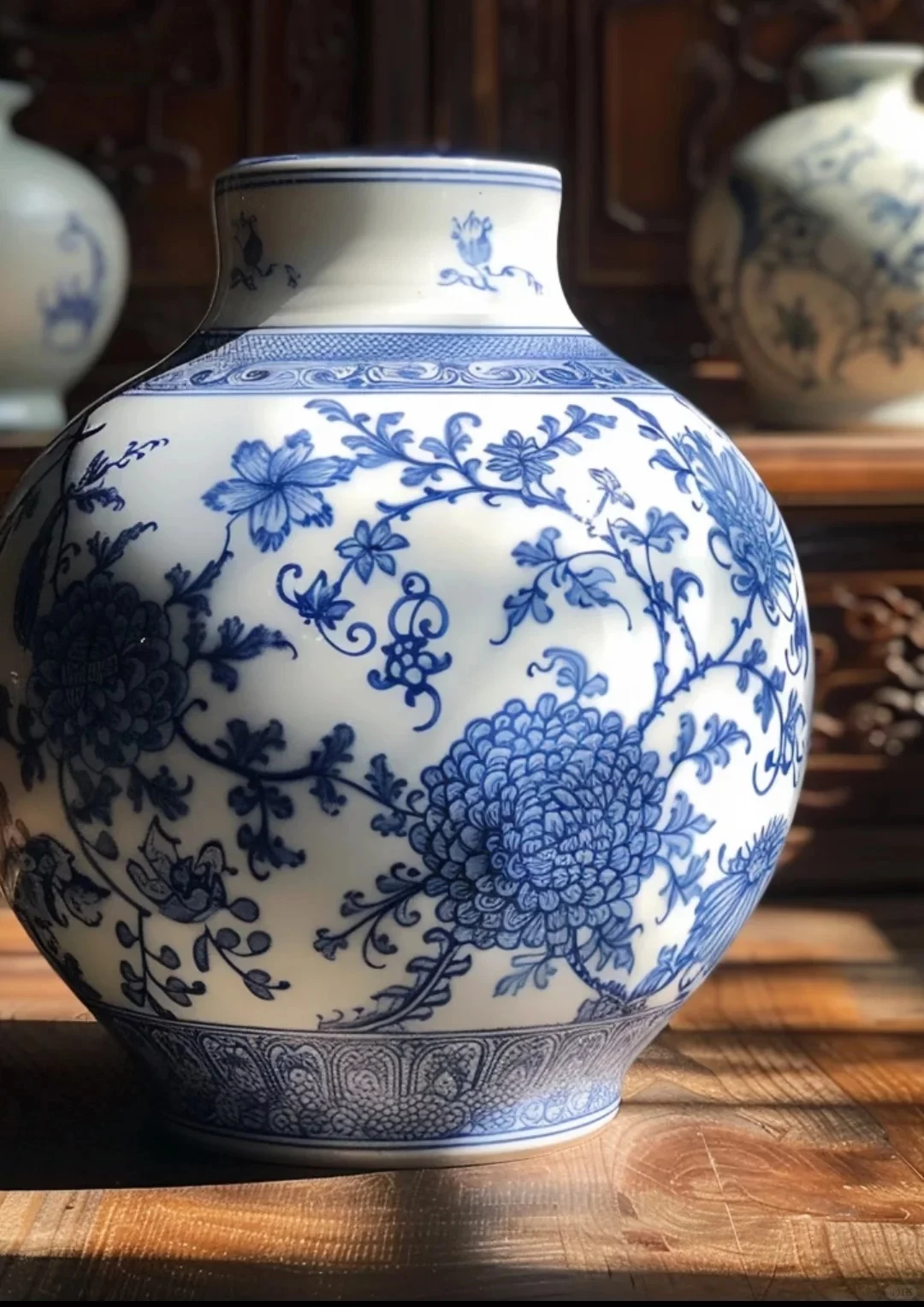
Our references show what each tier looks like in practice. The Falangcai Peony Panel Cup and the Plum Blossom Celadon Tea Cup are single pieces that read clearly at arm’s length. The Mottled Pink Gaiwan boxes well as a gift. The Blue and White Chrysanthemum Scroll Jar and the Flying Apsara Tea Set hold the case. A first order can mix all of them from 10 pieces, so a shop can find out which tier its visitors buy before committing to a style.
A piece drawn from your own collection
The pieces that sell best in a museum store are usually the ones a visitor has just seen in the galleries. You send photographs, measurements and the catalog entry for an object in your collection, and our designers redraw it for a form that can be made in numbers and sold at your price: a vase border carried onto a cup, a painted figure on a gift-box lid, a bowl’s motif on a set of small plates. A large object can become a miniature, and a fragile one can become something a visitor can use at home.
Each new form or pattern is sampled on a fired piece in 15–30 business days, so your curators approve the color and line on porcelain, not on a screen. Drawings made for your museum are kept confidential and are never painted for another client. Development routes and design protection. The piece is newly made in Jingdezhen, and your label can say so plainly: “after” or “inspired by” the object, in your own house style.
The story on the card has to be true
Museum visitors read labels, and they notice when a shop card promises more than the piece delivers. So the card should say only what can be checked: the technique, where the piece was made, whether it was painted by hand, and how it was fired. We will write or check that technique paragraph for you, so the words on your shelf match how the piece was actually made. The Chinese porcelain glossary gives the one-sentence definitions most cards need.
The people behind the work can be part of the story too. Our team and long-term partner artisans include two provincial-level intangible-heritage inheritors, and every order is inspected under Li Qiusheng, a municipal-level intangible-heritage inheritor of traditional firing techniques. Who makes the pieces.
Shelf-ready from the carton
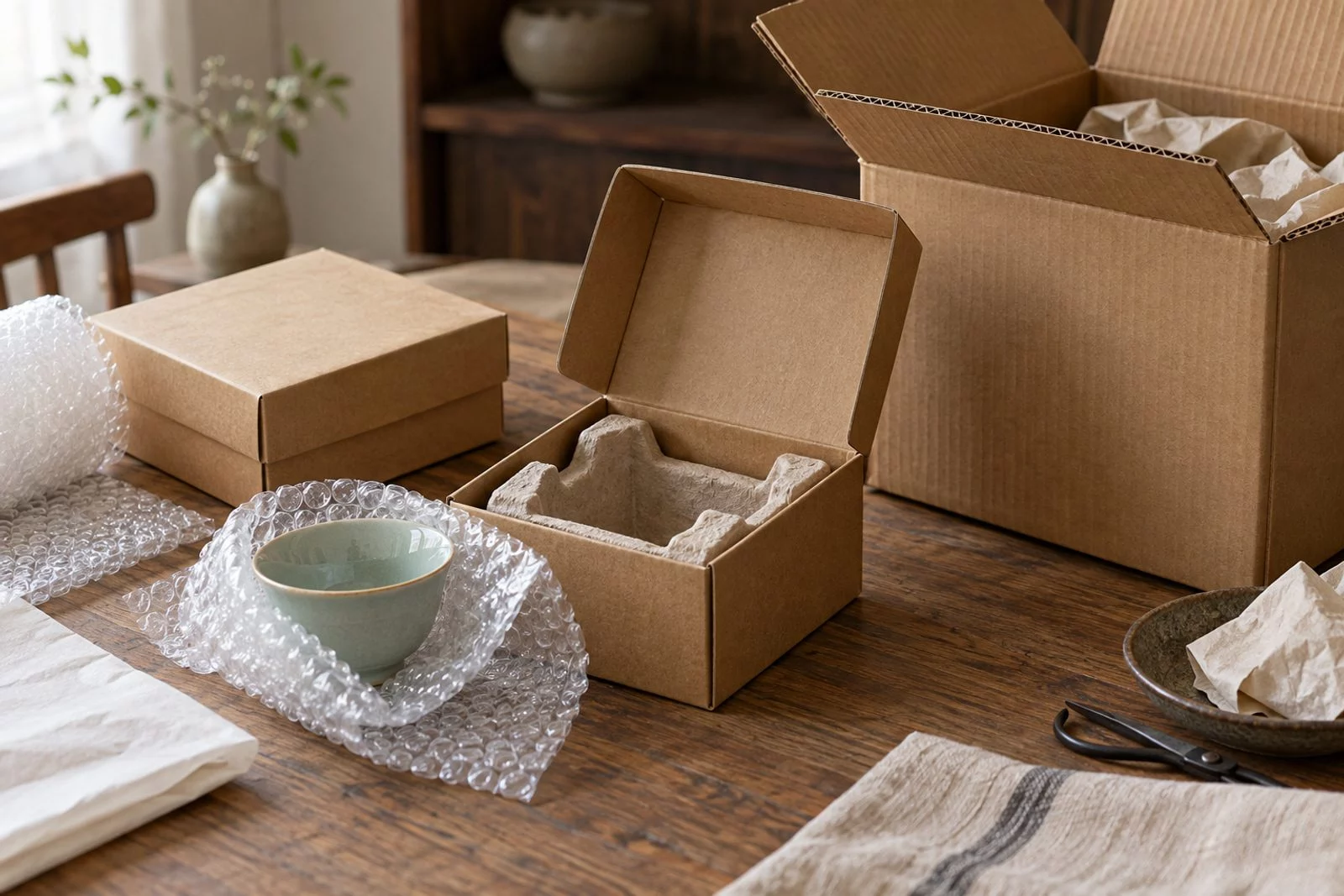
A museum store has little back-of-house space, so pieces should arrive ready to put out. Retail boxes, item codes and barcodes, story cards in the languages your visitors read, and the number of units in each master carton are settled before the sample is approved, and a branded box is sampled together with the piece. The Packaging by sales channel guide lists what to send.
If the range includes cups or tea ware, daily-use glazes are tested for lead and cadmium release to LFGB and ASTM C738 limits (SGS reports SGS-CER-2026-0418-14567 and LFGB-20260318-036). Ask which report covers the pieces on your list, and we will name it; the reports are listed on Quality Control. Ornaments and display pieces are sold for display.
Work back from the opening
An exhibition opening is the one date in retail that never slips, and a store that receives its stock a week late has missed the busiest weeks of the show. A new piece needs its fired sample approved first, then production, then 25–45 days at sea depending on the port, and August to December is our busiest season in the kilns. Send the opening date with your first brief, and we will tell you the last day the sample can be signed. Shipping DDP to your receiving dock keeps duties and customs off your desk, which is how East Art Gallery orders.
Between exhibitions, a shop usually keeps its best sellers in stock. In-stock references reorder from 1 piece and ship by express in 3–7 business days, and a reorder of your own piece is made to the same approved sample.
Send the exhibition and the objects behind it.
An exhibition title, the opening date and a few images from the collection are enough to start. Lin Wan replies within 1–2 business days with a range by price tier, sample options and a timeline worked back from your opening.