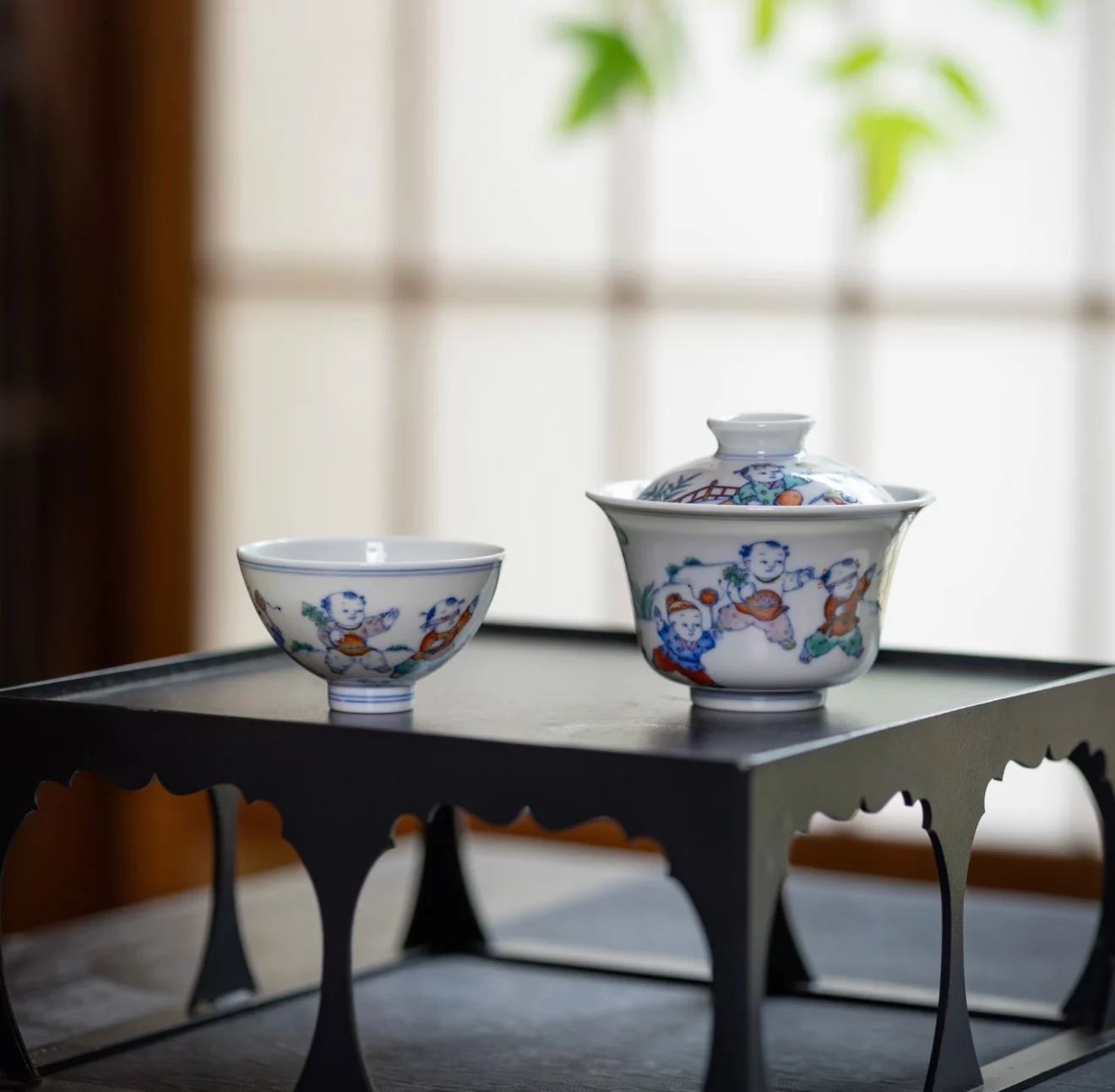
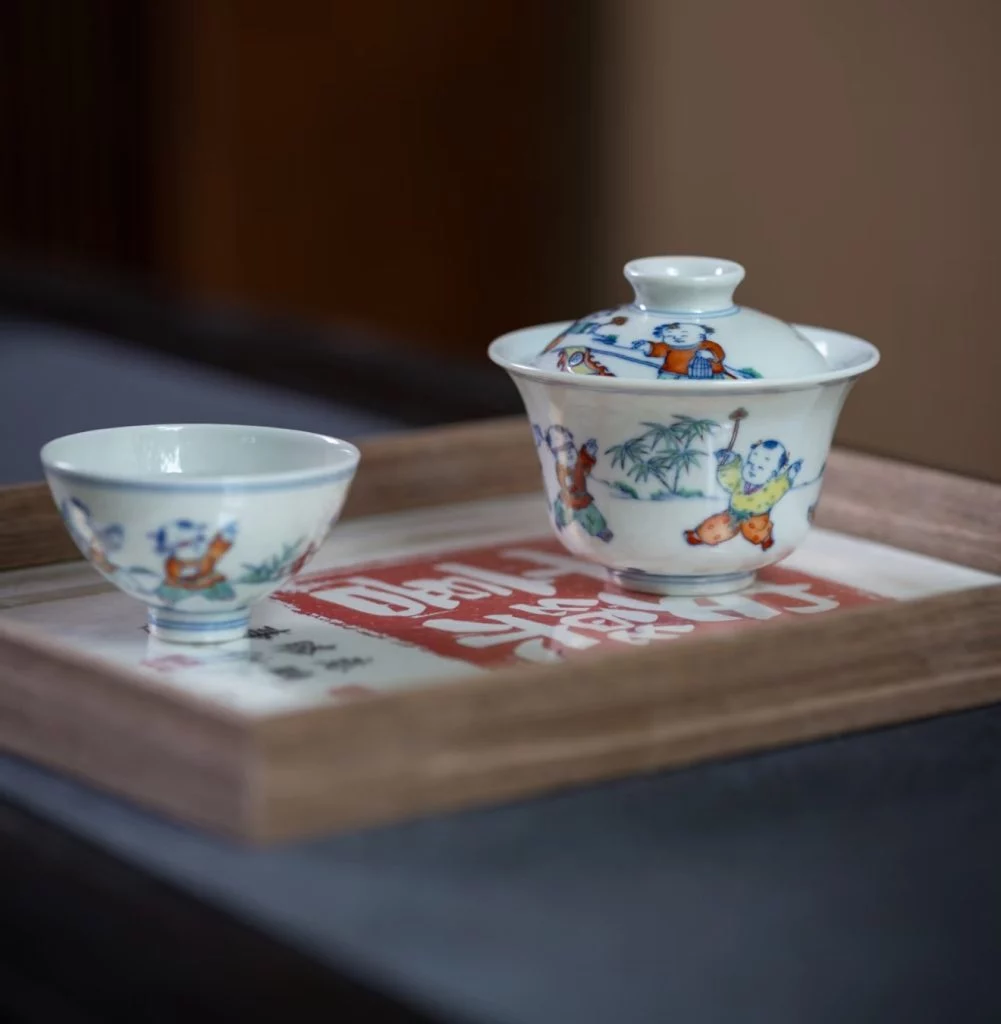
Boys at play, drawn in blue and filled with color
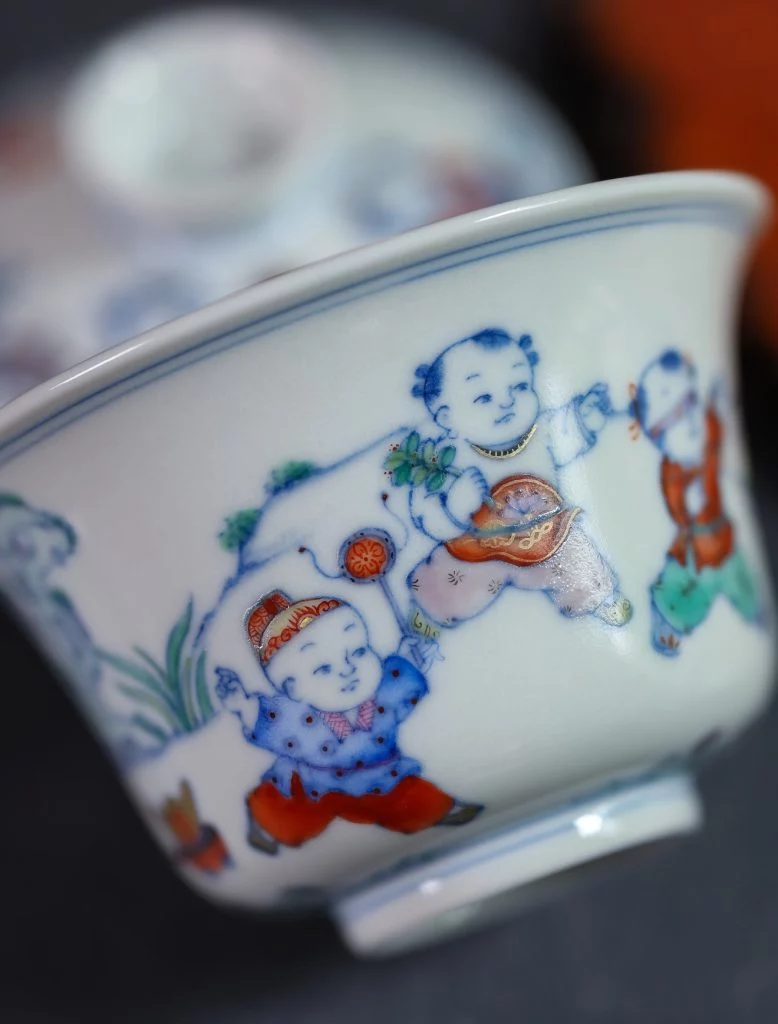
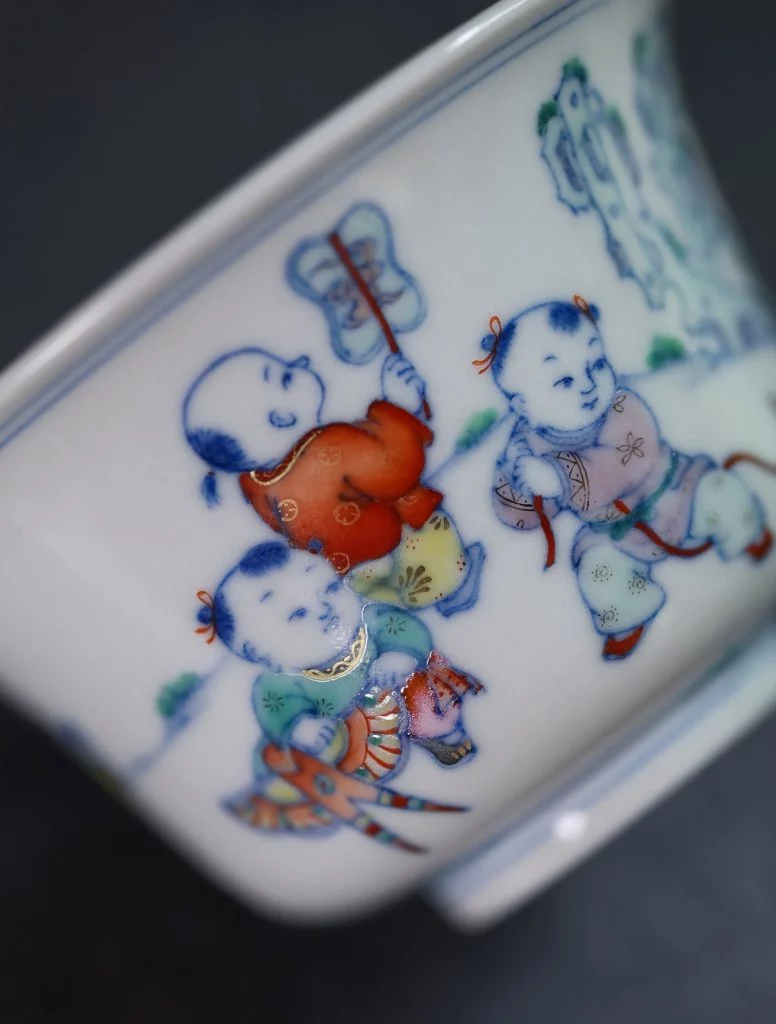
Count the children and you will find them all around the gaiwan, on the lid as well as the bowl. One holds up a branch, one carries fruit, another swings a round rattle or lantern on a stick, and between them grow bamboo, tufts of grass and rocks. Nobody stands still. That small crowd of busy boys is one of the most loved subjects in Chinese porcelain, a picture of a home full of children.
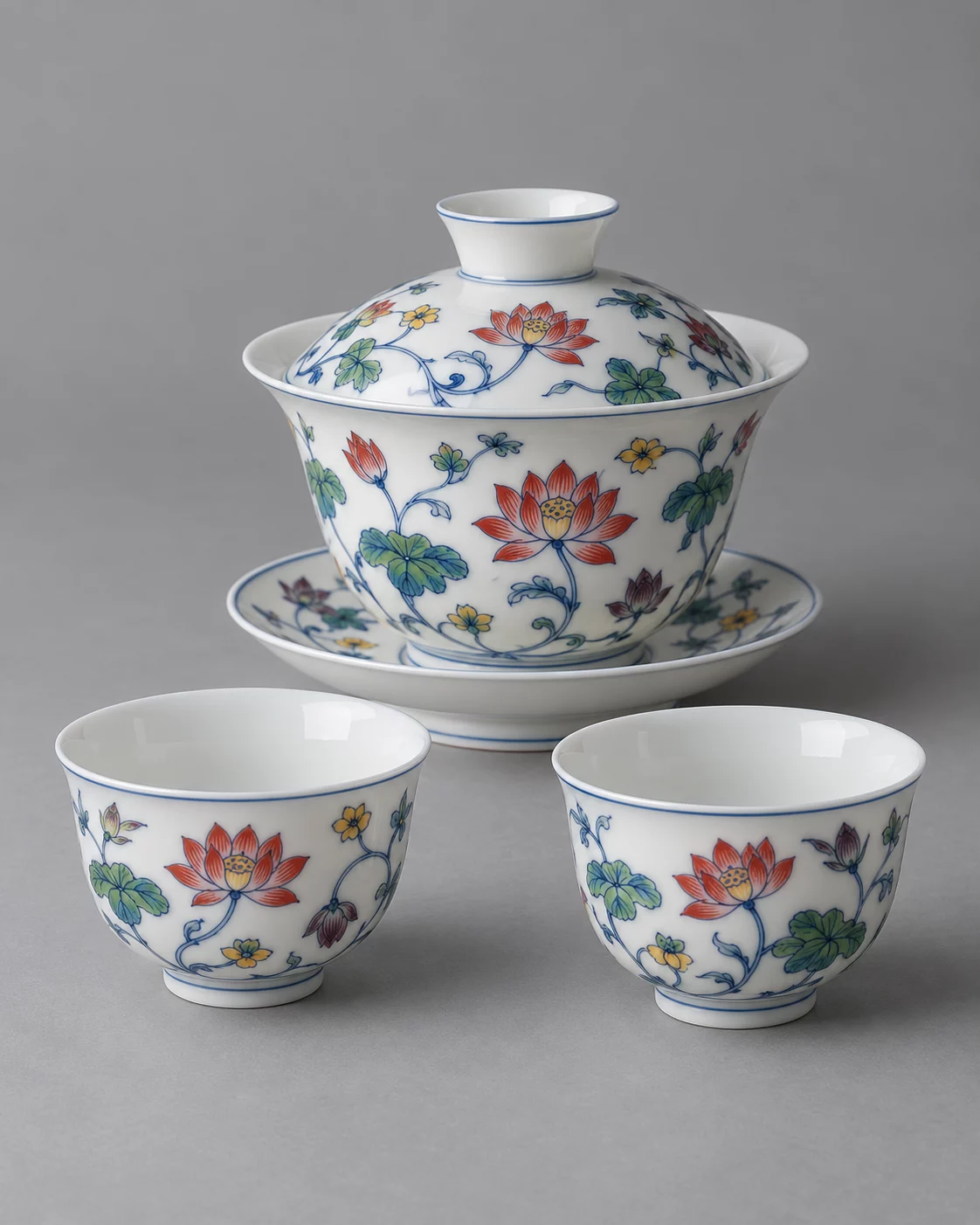
Every figure begins as a fine cobalt outline on the raw porcelain, fired under the glaze at about 1,300 °C. Then the outlines are filled with red, green, yellow, purple and turquoise enamels and fixed in a second firing at about 780–850 °C. The blue line stays visible around each jacket and leaf, which is what makes this doucai rather than ordinary enamel painting.
The gaiwan has a flared rim that is easy to hold by the edge when it is hot, and a lid with a small cup-shaped knob. The cup is deeper than most, a conical bowl lifted on a tall foot ring circled with double blue lines, and the same double lines ring every rim and foot in the set.
Both pieces are painted in Jingdezhen and fired together, so the colors match. The lid is checked in its own bowl before the set is packed in fitted inserts.
For gaiwan sizes and how a tea set is put together for retail, read our Chinese tea ware guide.