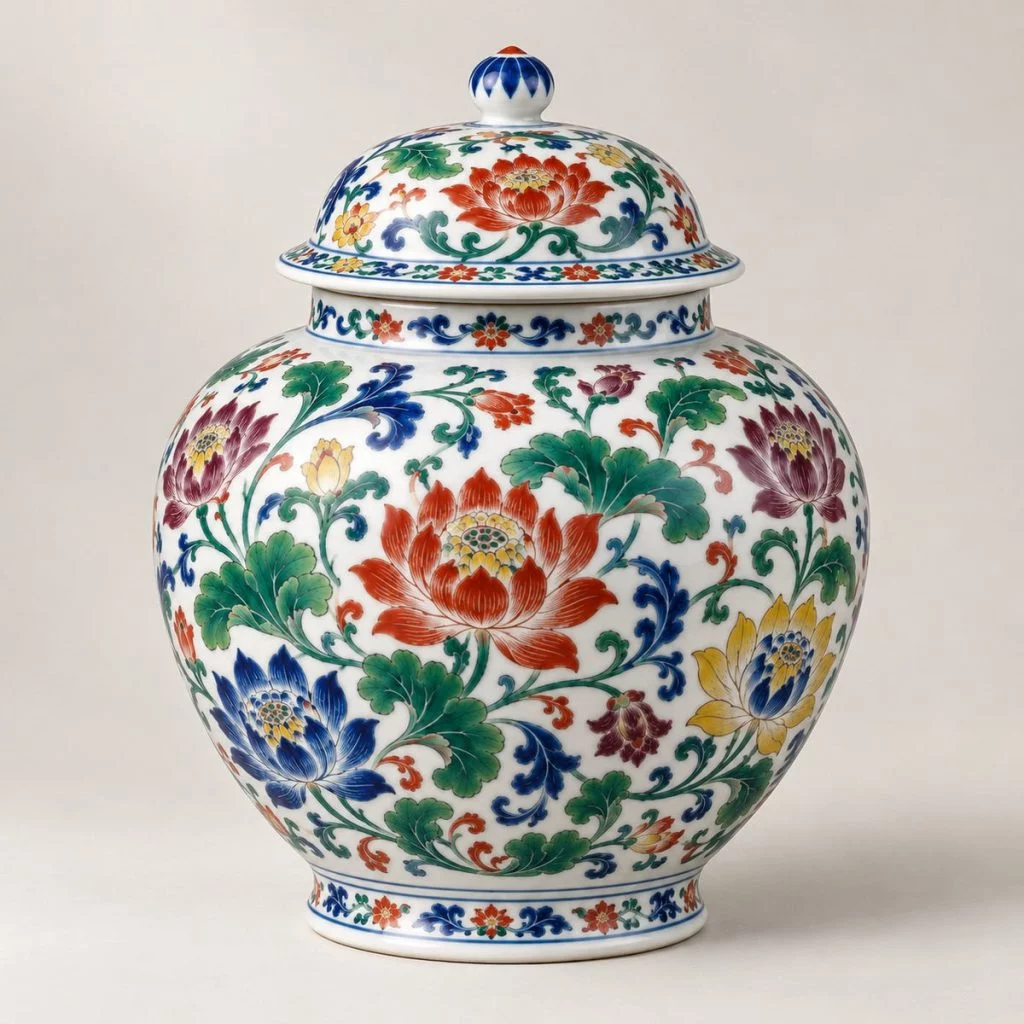
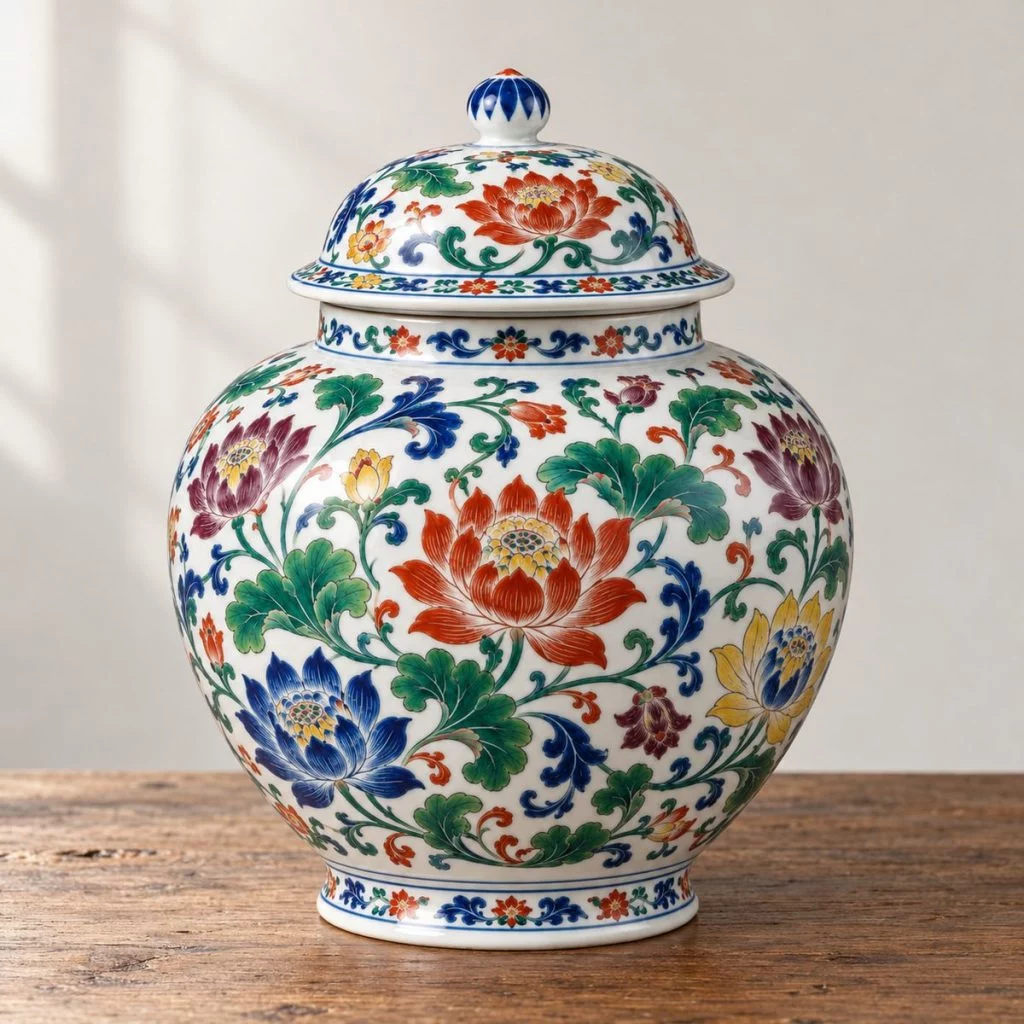
Lotus from the foot to the top of the lid
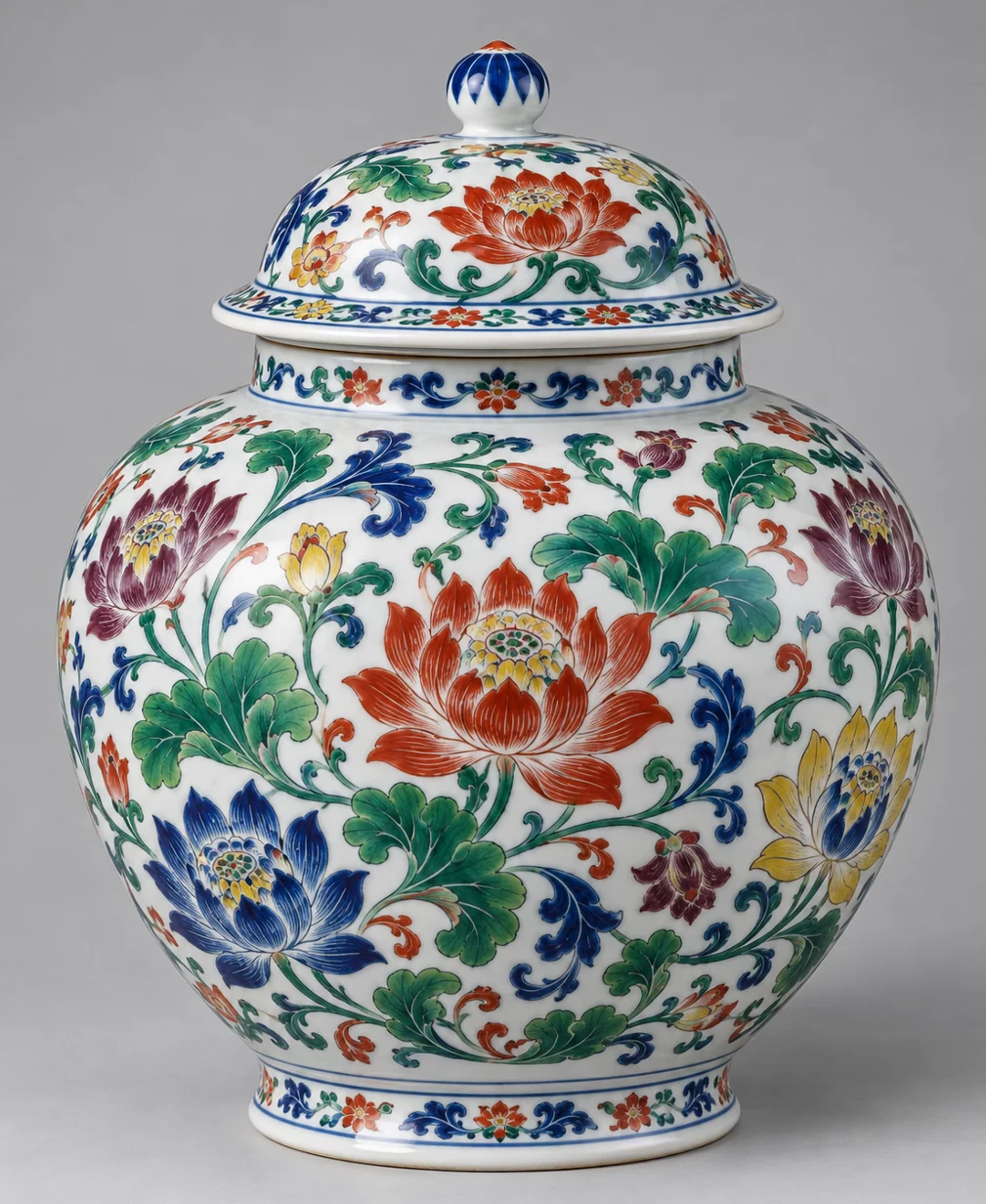
The jar has the classic baluster shape: a body that swells to rounded shoulders, a short neck, and a domed lid crowned with a ball knob painted in blue petals. It is a shape made to be seen from every side, and the painting treats it that way.
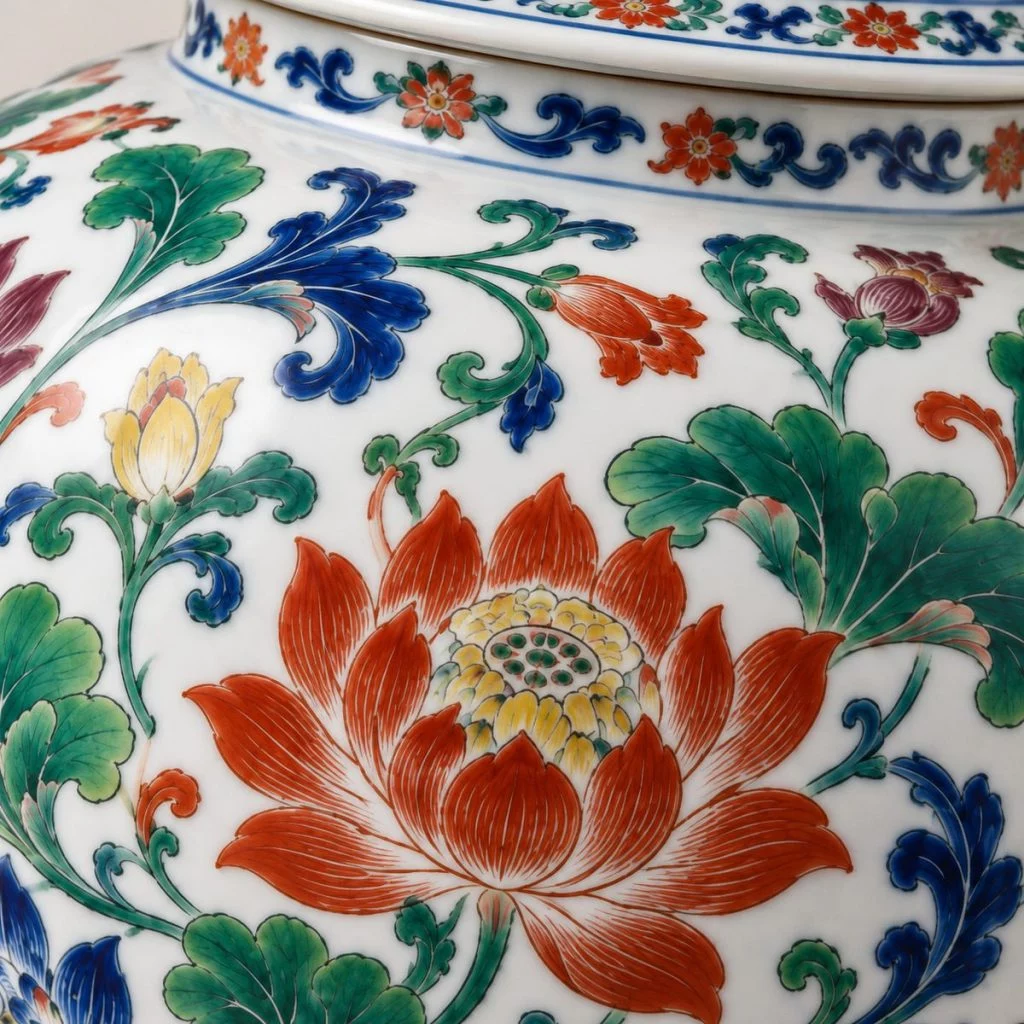
Large lotus blooms in red, cobalt blue, purple and yellow open all over it, with green leaves and curling blue and green stems filling the spaces between. Narrow bands of small flowers mark the shoulder, the rim of the lid and the foot, and almost no white is left anywhere. That density is the wucai way of working, and it is why a jar like this holds a large room on its own.
The color goes on in two stages. The blue parts of the design are painted on the raw porcelain and sealed under the glaze in the first firing at about 1,300 °C. The red, green, yellow and aubergine enamels are painted after that and fixed in a second firing at about 780–850 °C.
The lid goes through both firings with its own jar, and the scroll is laid out so that it carries on from the shoulder over the lid when the two are together. The jar is painted in Jingdezhen and packed with its lid beside it.
Ideas for placing a covered jar on a console or shelf, alone or as a pair, are in our guide to decorative Chinese porcelain for interiors.