Blossoms you can feel with a fingertip
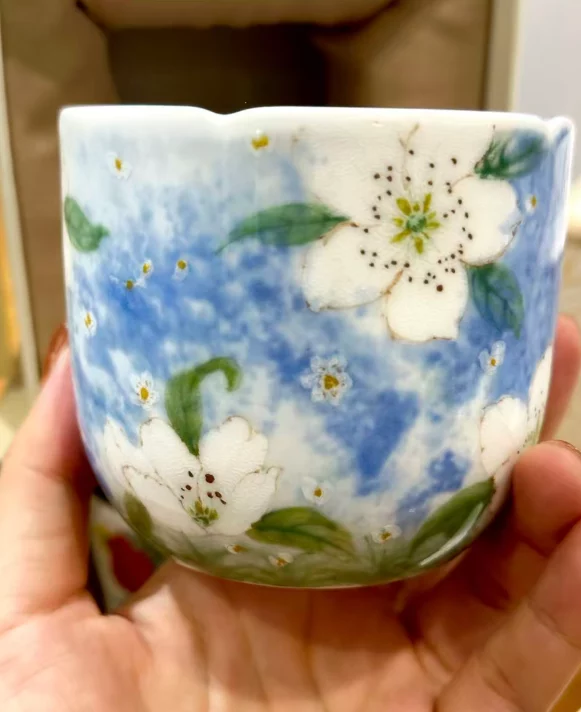
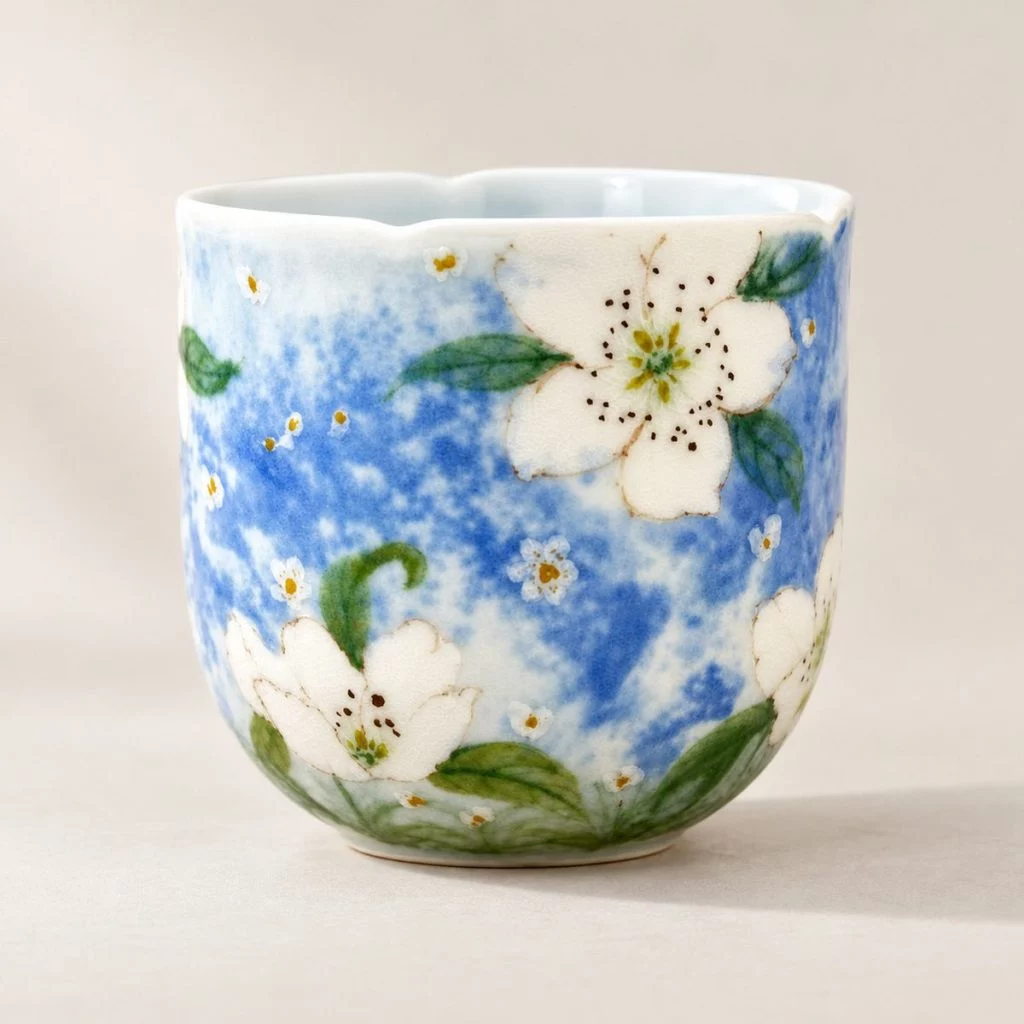
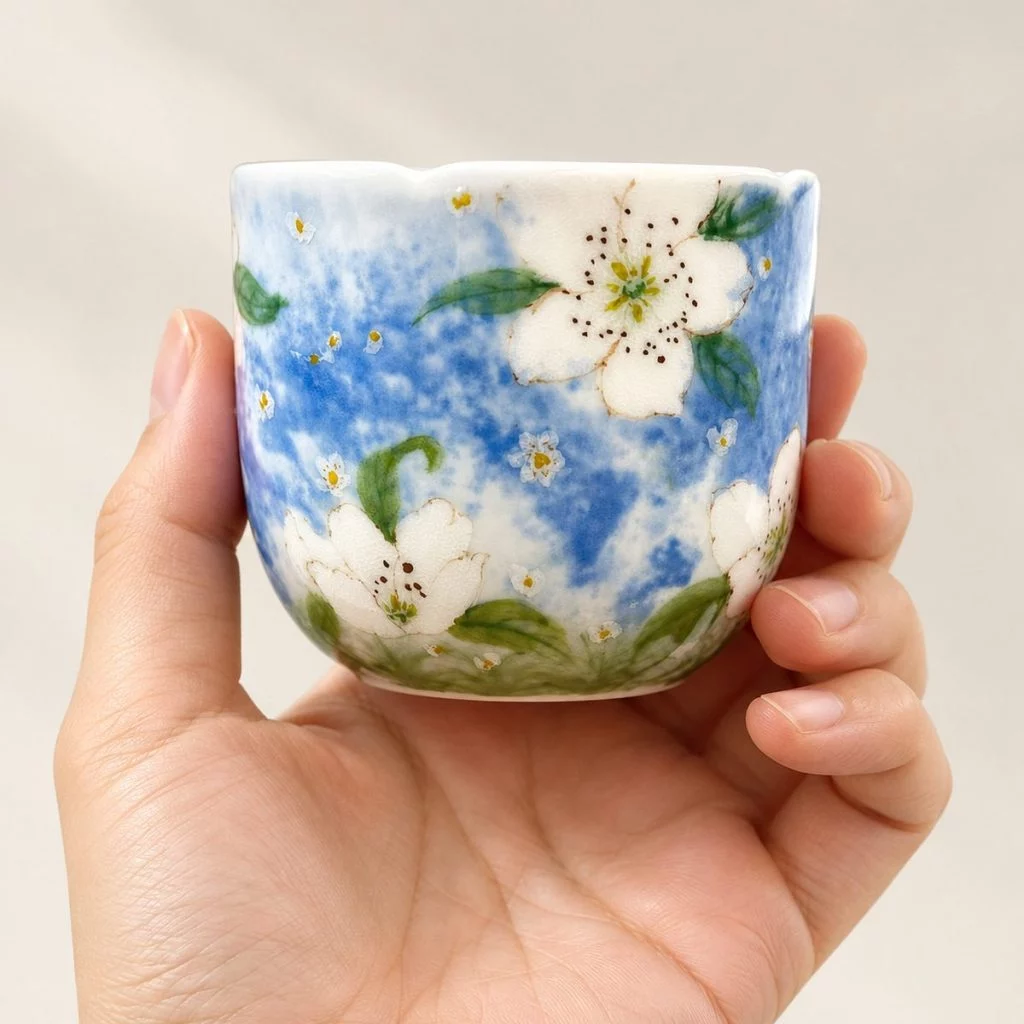
The cup is simple in outline: straight sides and a rim worked into soft, slightly uneven lobes, like the edge of a petal. All of the decoration is in two layers of color, and the second one stands up from the surface.
The first layer is the ground, a sky blue laid over the whole outside. It is not flat. The color is mottled, lighter in some places and deeper in others, so the cup looks a little like a spring sky with thin cloud across it.
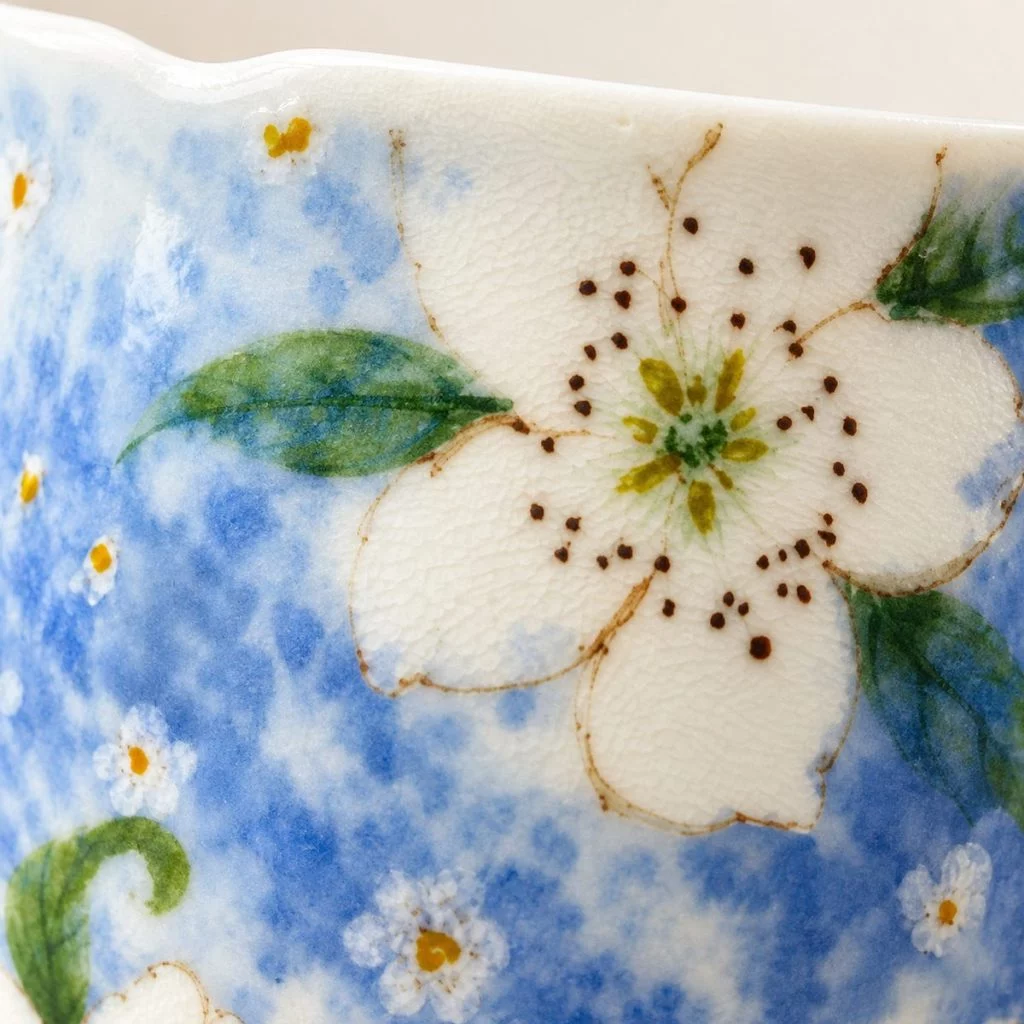
The second layer is white. Large open blossoms with dotted stamens are built up in thick white enamel, laid on with the brush so each petal stands slightly proud, and small white star flowers are scattered between them above a ring of green leaves at the base. Run a finger around the cup and you can feel every flower. As the enamel cooled after its firing, a fine network of crackle formed in the white, which gives the petals texture and a softer, older look.
The cup is fired first at about 1,300 °C, then the blue and the white are added in Jingdezhen and fixed in a second firing at about 780–850 °C. Because the enamel is raised, every cup is checked by hand for chips in the petals before it is boxed.
Ground colors, reserved panels and the other painted techniques are compared in our Chinese porcelain decoration techniques guide.