Dancers from the cave walls, painted in pink
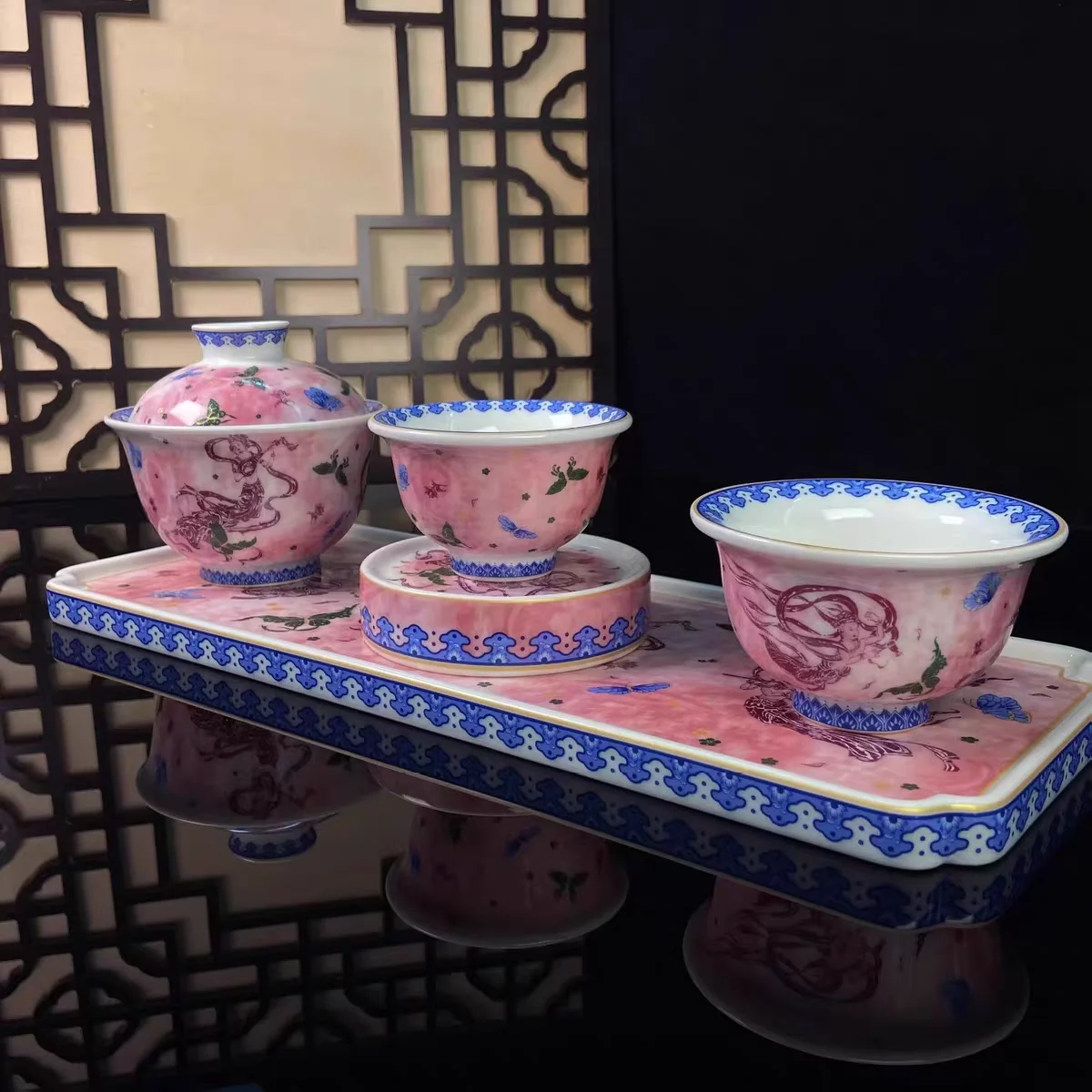
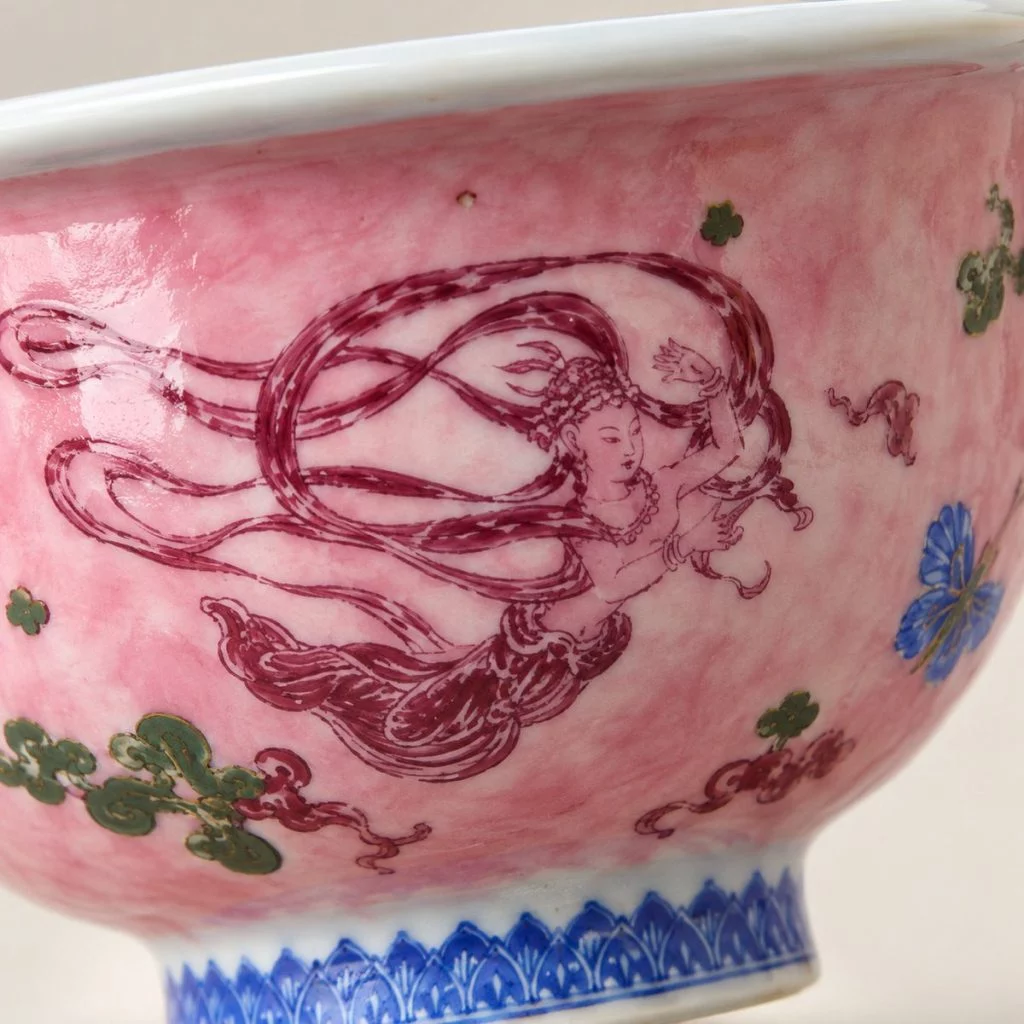
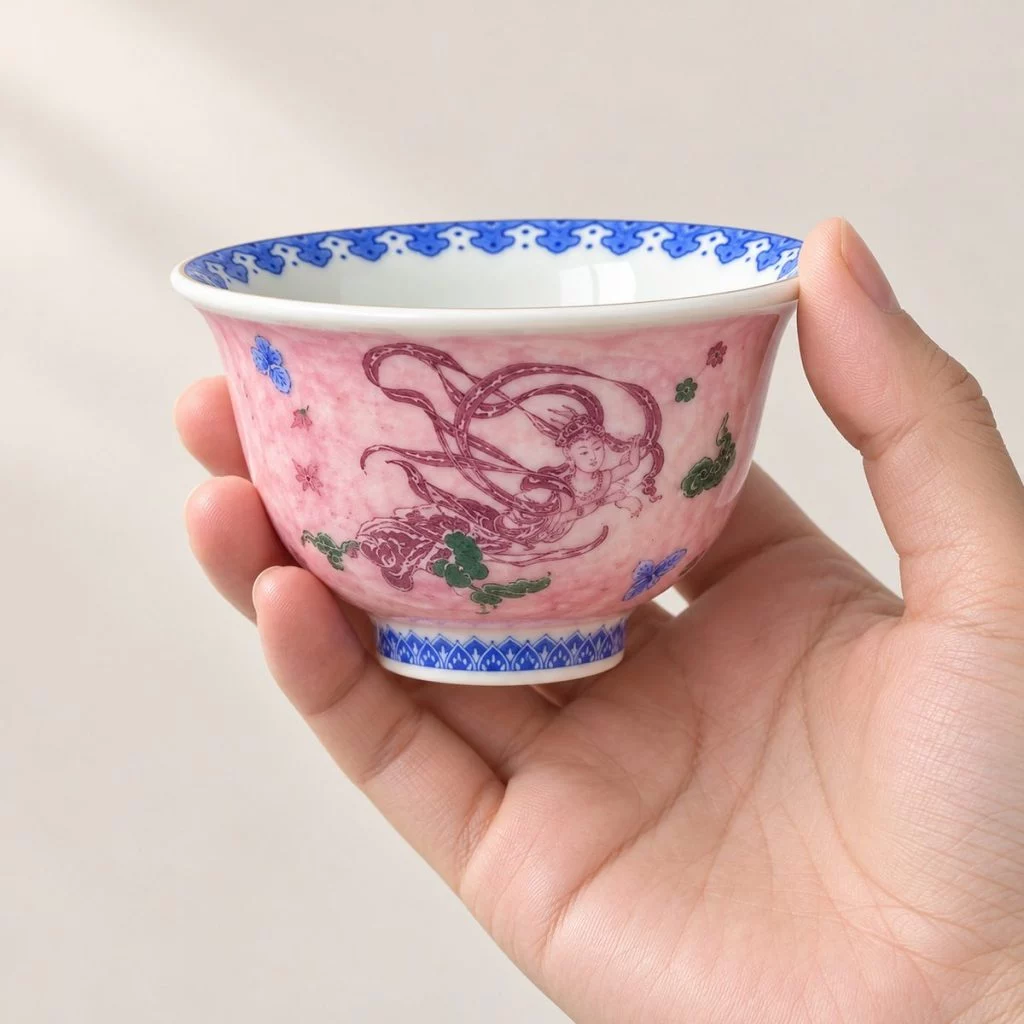
Apsaras are the heavenly dancers and musicians of Buddhist art. The best known fly across the walls of the Mogao caves at Dunhuang, the old Silk Road oasis, and they fly without wings, carried by long scarves that stream out behind them. Painters have borrowed them ever since, because nothing else says lightness quite so well.
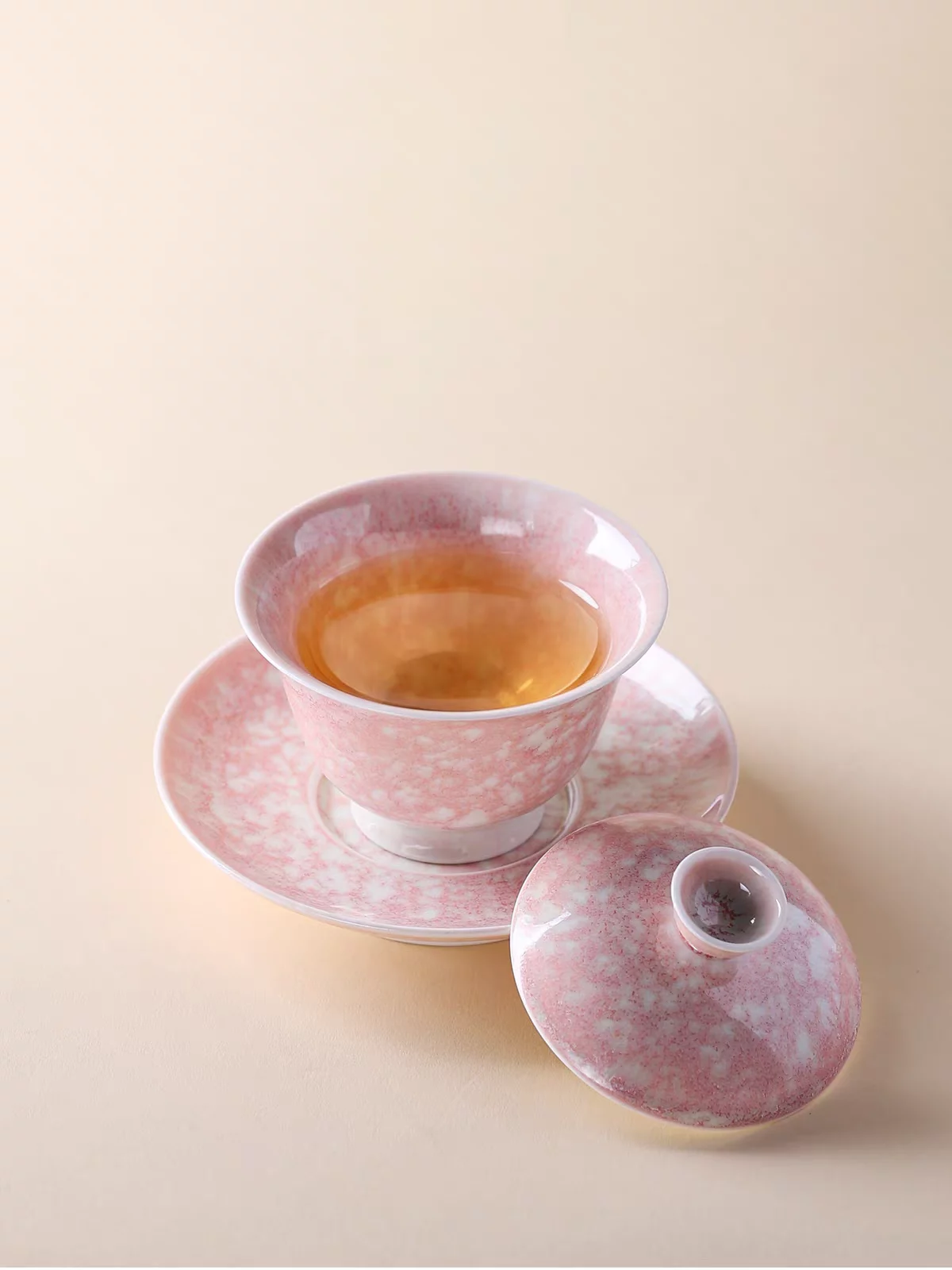
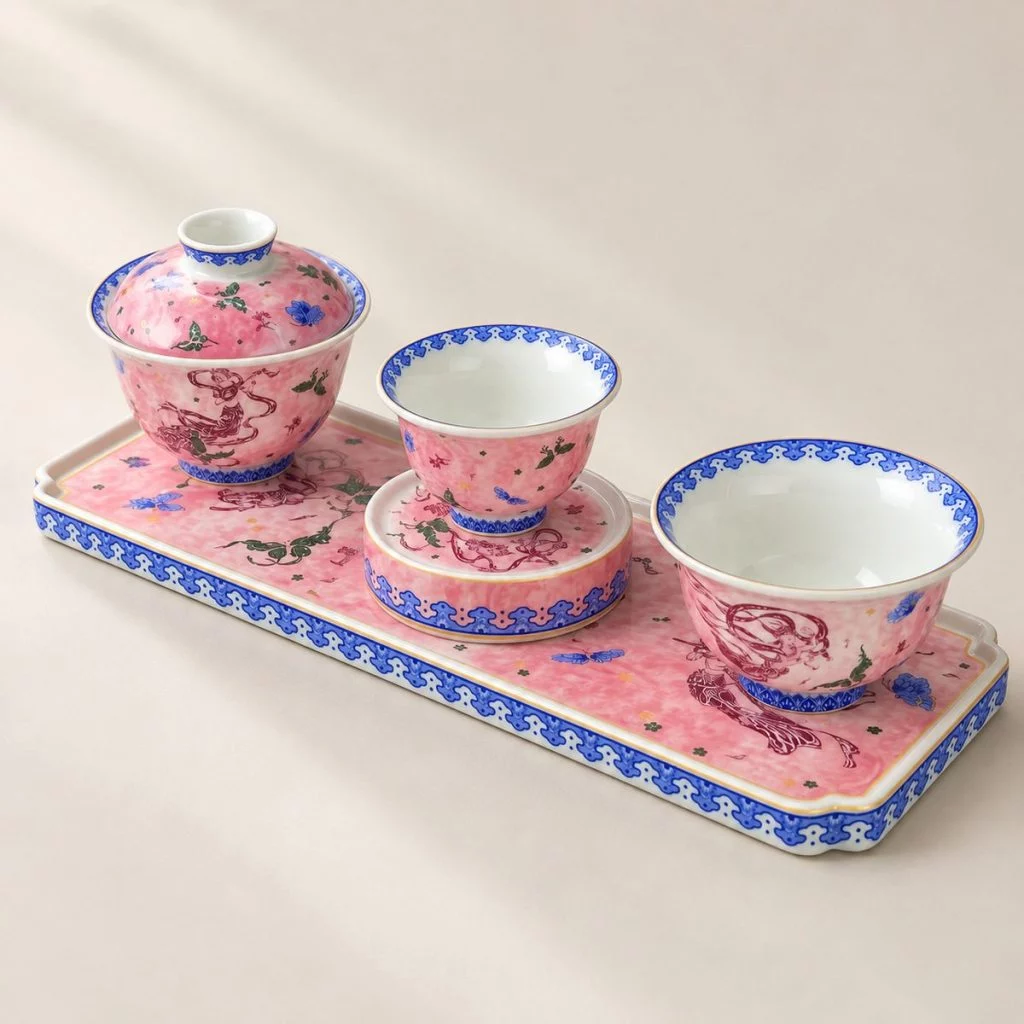
On this set they share the sky with butterflies. The ground behind them is not a flat pink but a clouded one, laid on in soft, uneven layers so it brightens and deepens like evening light, and every figure is outlined finely before its enamel is shaded in. Blue cloud-head borders hold the pink at the edges, and the cool blue makes the rose look warmer.
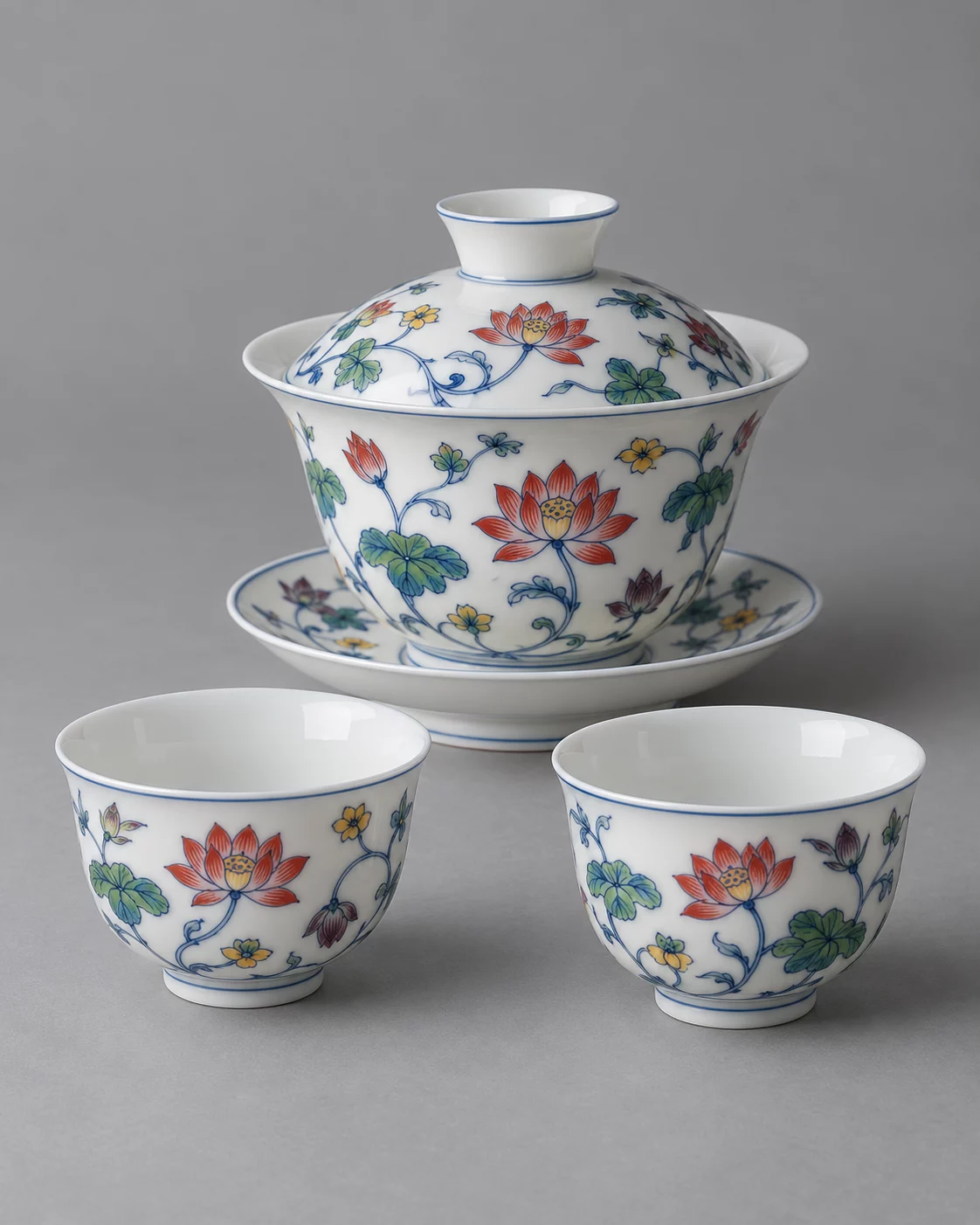
The set is small and complete. A gaiwan brews the tea, a cup raised on a round stand and an open cup serve it, and the tray keeps all three together, whether on a tea table or inside a gift box.
KKCN paints the set at its Doufunong workshops in Jingdezhen on porcelain first fired at about 1,300 °C. The enamels are then fixed in a second firing at about 780–850 °C, with every piece of one set fired together so the pinks agree.
Our Chinese tea ware guide walks through what goes into a tea set and how tea shops sell them.