Why are the flowers packed so tightly?
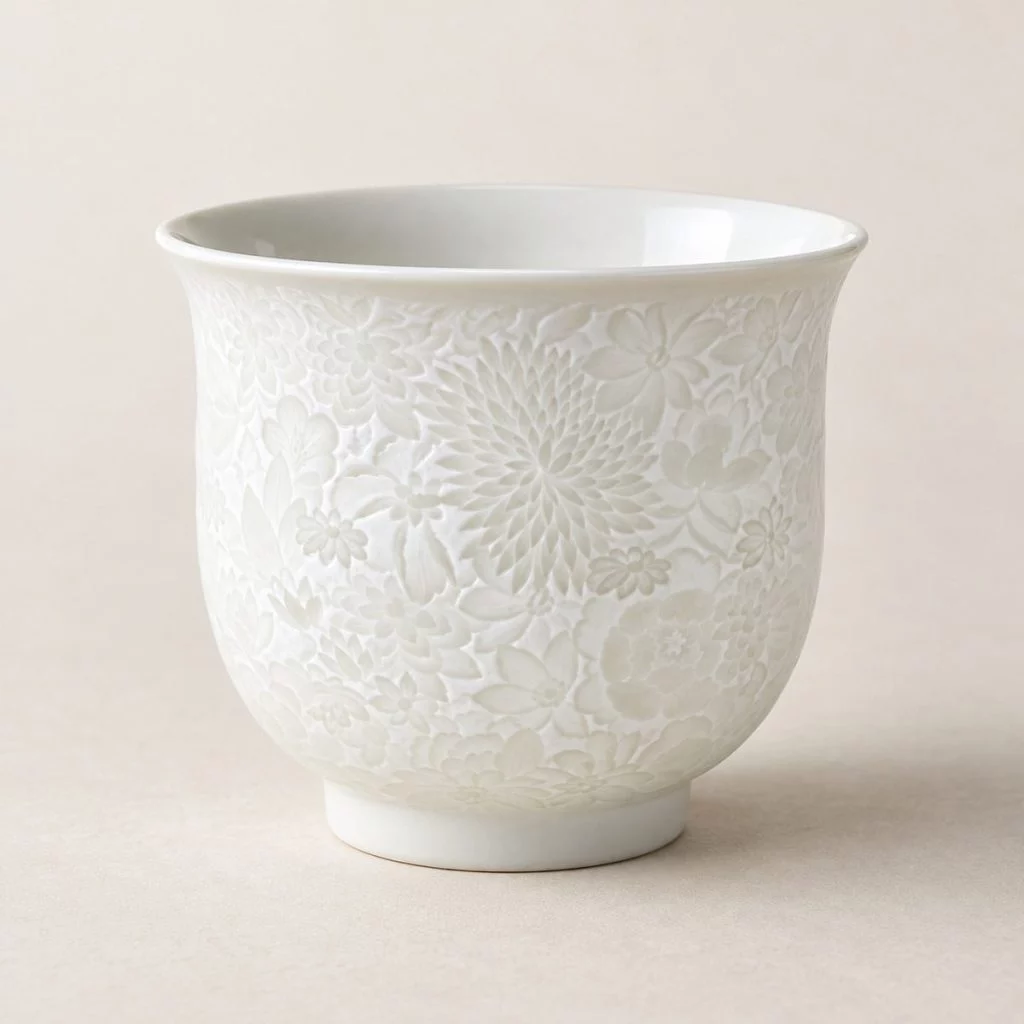
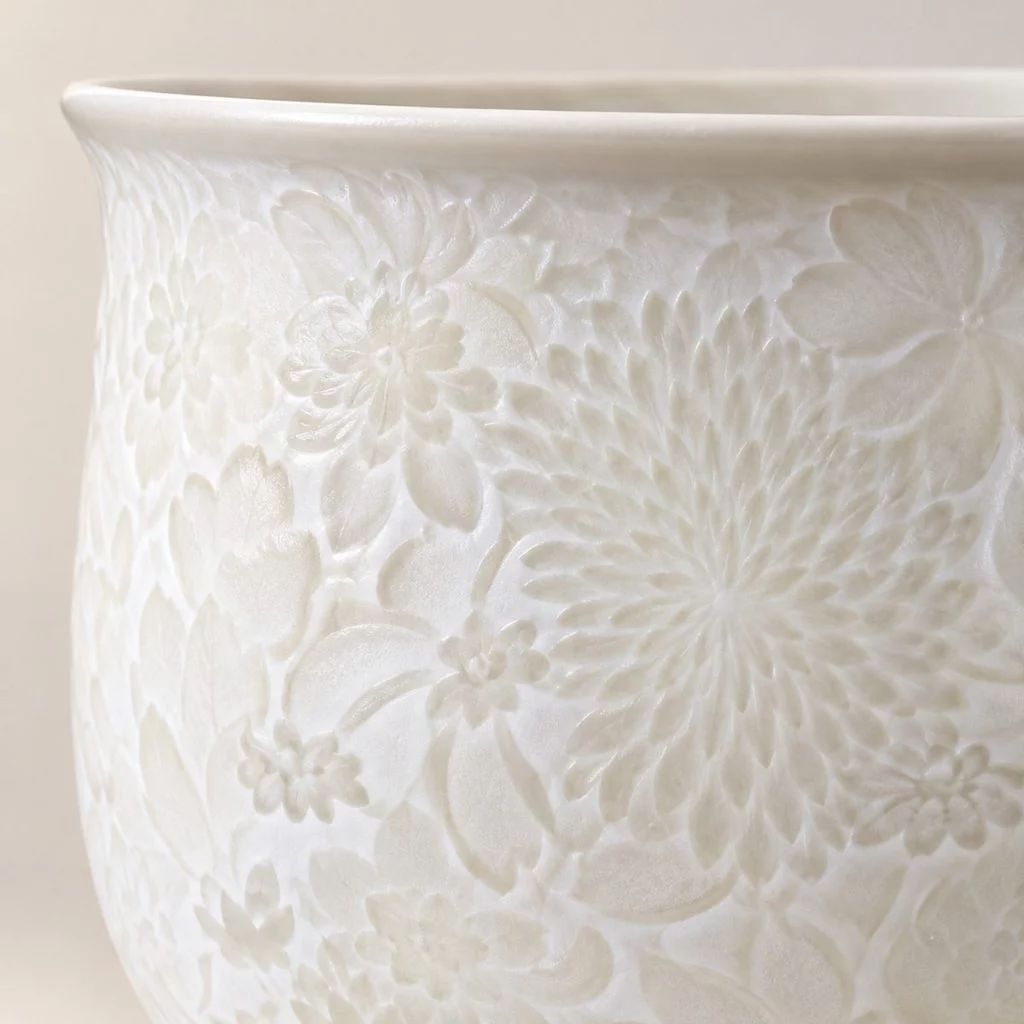
Most carved porcelain leaves room around its motif. This cup does not. A large chrysanthemum opens at the center of the wall, peonies spread out on either side, and small five-petal flowers and leaves fill every gap down to the foot ring. There is almost no plain ground anywhere on it.
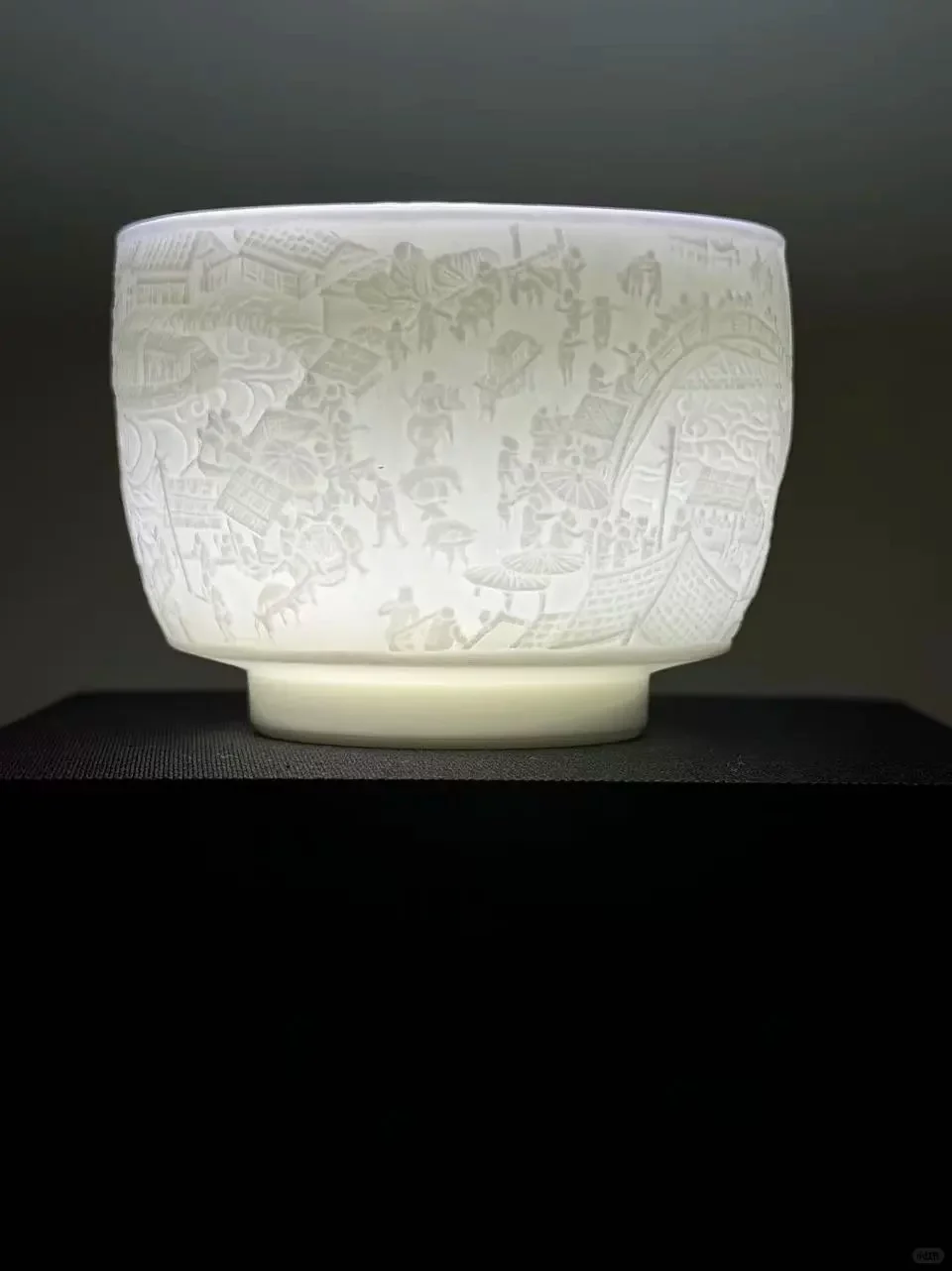
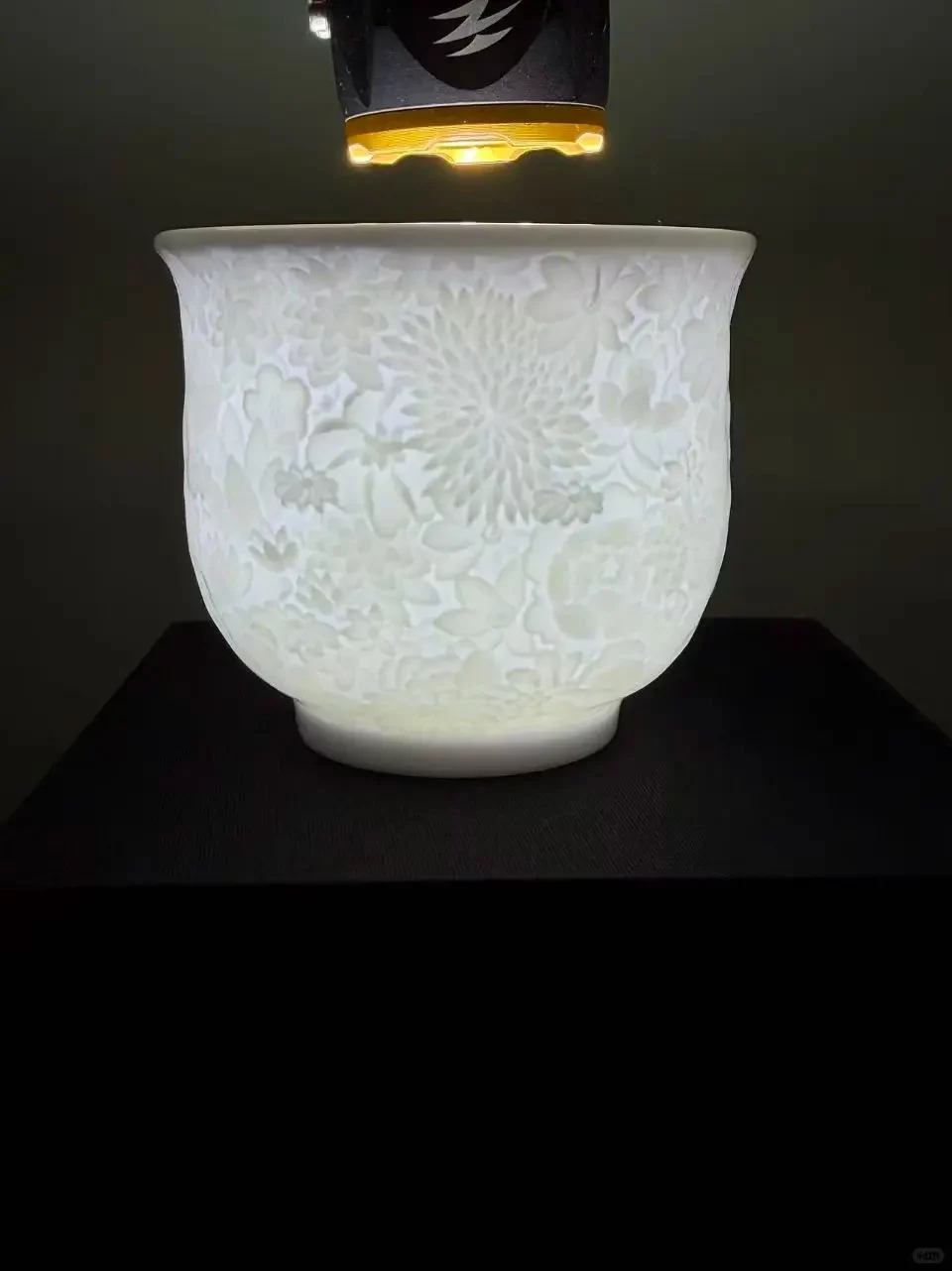
That density is about light. On a carved cup, only the cut-away parts glow, and any plain stretch of wall stays a flat, milky white. Cover the surface with flowers and the light has something to do wherever it falls, so the cup shows its pattern from every side. Put a small lamp inside it in a display case and the whole wall turns into a lantern of flowers.
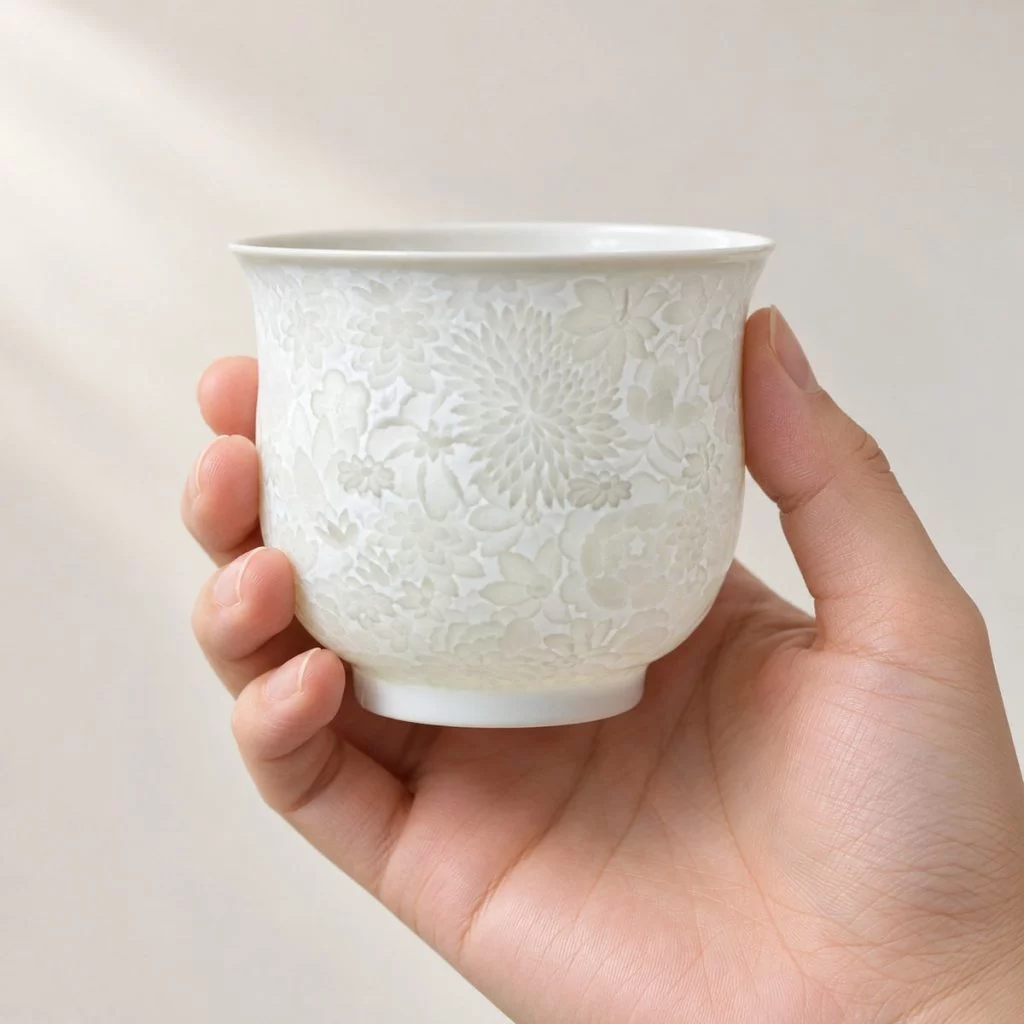
Under everyday light from above, the effect is quieter: a white cup with a soft, raised texture you can feel under your thumb. The flared rim is left smooth, so it drinks comfortably.
KKCN makes the cup in its own Jingdezhen workshops. The wall is trimmed thin, the flowers are cut in relief, and the cup is covered in a clear glaze and fired once at about 1,300 °C.
How carved decoration compares with painted decoration, and what each costs, is set out in our porcelain decoration techniques guide.