KKCN ceramic logo
Request a Quote

Packing & Shipping

How we pack and ship ceramics:
six layers from the kiln to your dock.

Every KKCN order is wrapped, cushioned, boxed and sealed at our Jingdezhen headquarters, to a packing spec you approve together with the sample. We ship by express courier, air or sea to 36 countries and regions, on EXW, FOB, CIF or DDP terms, with export documents filed under our own customs-declaration qualification.

Layers in our standard export pack
6
Of orders packed at our Jingdezhen headquarters
100 %
Trade terms: EXW, FOB, CIF and DDP
4
Countries and regions shipped to
36
From miniature tea ware to floor pieces
3– 130 cm
Approved with the sample

The box is approved with the piece inside it.

A celadon bowl with soft crackle, a teapot with a slender spout and a set of twelve plates that has to arrive as twelve: each asks something different of its carton. We look at shape, weight, glaze and finish first, then at the route and how many hands the cargo will pass through.

That is why packing is settled while the sample is still on the table. When you approve the reference piece, its inner protection, presentation box, units per carton and shipping marks go into the same written standard. Product and packing enter production as one specification.

Retail buyers receive cartons they can shelve by the case. Hotel and project teams receive cartons marked the way their installers work. Galleries receive pieces framed one at a time.

Where it is packed

Dehua bodies, Chaozhou boxes, Jingdezhen cartons.

Pieces from our three workshops, our heritage kiln partners and our Dehua partners all return to the finished-product inspection and warehousing center at our Jingdezhen headquarters before anything is packed. Chaozhou partners supply our export packaging, so the cartons come from the same network that makes the porcelain.

However many sources an order draws on, it leaves from one warehouse, packed by one team to one spec. Carton numbers match the packing list line by line.

Who makes each part of an order

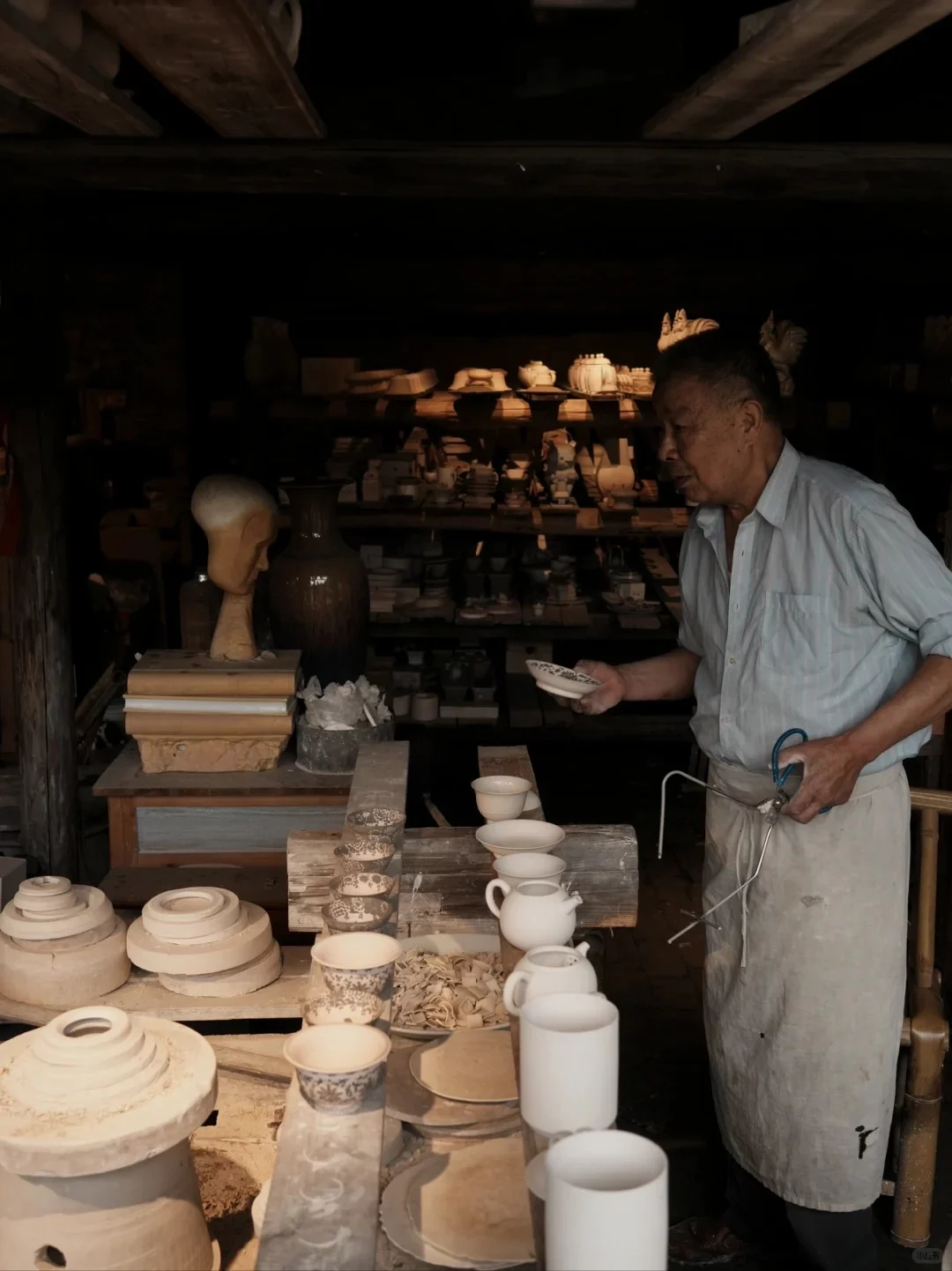
Craftsman in an apron working among unglazed porcelain pieces in a dim workshop

Six layers

Six layers between your glaze and the container wall.

Our standard export pack starts from six layers and scales from a 3 cm teacup to a 130 cm floor vase. Fragile sets, hand-painted enamels and very large pieces get extra protection on top. Each layer has one job, and each is written into your packing spec, so the tenth order is packed the way the first one was.
Molded-pulp insert holding ceramic pieces in separate compartments
03 / 06Keep pieces apart
01SURFACEProtect the finishEvery piece goes into its own bubble bag before it touches anything else. A matte glaze, a crackle surface or a hand-painted enamel reaches you exactly as it left final inspection.
02CUSHIONINGAbsorb the impactFull EPE foam wraps the whole body. Padding is reinforced where a drop lands first: rims, spouts, handles, knobs and feet, the parts a customer notices before anything else.
03POSITIONKeep pieces apartMolded-pulp inserts hold each piece in its own cavity. Lids travel apart from their bodies, and no piece in a set touches another, however many times the carton is handled.
04PRESENTATIONInner and retail boxesPlain inner cartons for wholesale, printed color boxes for retail, branded gift boxes with your logo for gift and hotel programs. The box is chosen at sample stage, together with the protection inside it.
05EXPORTThe outer cartonFive-layer export corrugated cartons, packed to a fixed count with no loose space, finished with paper corner protectors and fragile, this-way-up and moisture labels on the outside.
06HANDLINGBuild the shipmentLarge and high-value pieces travel in solid-wood frames. Sea cargo goes onto standard export pallets, stretch-wrapped so each pallet moves through the port as one stable unit.
By type of order

Tableware, gift sets, floor vases, art and hotel orders.

A dinnerware program and a one-of-a-kind vase travel differently. The six layers stay; their order, thickness and frame change with the piece.

Everyday tableware and tea sets

Nested by size in molded-pulp trays and counted per carton, so your warehouse receives by the case. The count is fixed in the spec, which keeps every replenishment order identical on arrival.

Gift sets and retail lines

Each set sits in its own color box or gift box, then goes into an export carton sized to hold the boxes snugly. Barcodes, SKU labels and your private-label branding go on before sealing.

Large vases and floor pieces

Foam-wrapped and held inside a solid-wood frame so the piece never touches the frame wall. We build each frame around the piece’s weight and balance, for pieces up to 130 cm.

Art porcelain and glaze-led pieces

Kiln-transformation glazes, crackle surfaces and multi-fired colors get custom foam and a solid-wood frame of their own. Most are one of a kind, so they are packed one at a time, by hand.

Hotel and project orders

Cartons are marked by room type, floor or zone, with packing lists that follow your installation schedule. Your installers unpack in sequence instead of searching through pallets on site.

Before the carton closes

Five lines your packing spec fixes in advance.

Packing is the last stage of inspection, and it is checked against the spec the same way the glaze is checked against the sample. Li Qiusheng’s team works through five lines before any carton is sealed, and photos of packed cartons are yours on request.

Craftsman in an apron working among unglazed porcelain pieces in a dim workshop
Choose the route

Express, air, LCL or FCL, matched to the order.

Volume, value, timing and destination decide the route. Each quotation recommends one and says why, with the alternative if it is a close call. Transit times below are typical; production comes first, and the lead times for each kind of order are on Samples & Quotations. The largest single order so far was about 48,000 cups and small plates in one 40-foot high-cube container for a hotel project.

Samples and small shipments

Express courier

Express courier

DHL, FedEx or UPS for samples, trial orders and urgent replenishment, tracked door to door.
Transit: 3–7 business days
Plan around: parcel-grade protection
Time-sensitive orders

Air freight

Air freight

For small and mid-size custom orders, seasonal launches and high-value art pieces that need to land quickly.
Transit: 7–10 days
Plan around: weight, volume and timing
Shared container space

Sea freight, LCL

Sea freight, LCL

For bulk orders below a full container. Your cartons share space with other cargo, so they are packed for the extra handling at consolidation.
Transit: 25–45 days, by port
Plan around: consolidation and carton strength
Container-scale orders

Sea freight, FCL

Sea freight, FCL

For container-scale orders and distributor replenishment, with a loading plan that uses the full space.
Transit: 25–45 days, by port
Plan around: loading plan and volume

Already working with a forwarder?

Plenty of our buyers do. Send your forwarder’s contact, pickup requirements and agreed terms, and Lin Wan’s export team will coordinate collection, share carton dimensions and the packing list in advance, and prepare the paperwork to match. You keep your logistics partner; the handover stays simple.

Transit and breakage

How long sea freight takes, and how much arrives broken.

These are the figures behind our sea quotes. Sailing times are from Ningbo, Shanghai or Shenzhen; production time comes first. Between August and December, book container space about three weeks ahead.

Our guide to shipping porcelain from China covers routes, packing and landed cost in more detail.

Sea freight times and breakage
FigureValue
At sea to the US West Coast22–30 days
At sea to the US East Coast32–40 days
At sea to the main European ports28–35 days
Customs and final deliveryAdd 5–10 days
Breakage, full container0.6% of pieces or less
Breakage, shared container (LCL)1.8% of pieces or less
If pieces arrive brokenUp to 3% replaced at equal value in your next order; above 3%, replaced free or credited
Trade terms

EXW, FOB, CIF or DDP, and who carries what.

Most long-term distributors ship FOB with their own forwarder. Hotel and project buyers often choose CIF to their nearest port, and many US retailers choose DDP, so the order arrives duty-paid with nothing to clear on their side. If you are new to importing ceramics, we will talk through which term fits.

EXW (Ex Works)

We handle packing and having the order ready in Jingdezhen.
You handle export clearance, freight, insurance and import.
Best for buyers with their own China logistics.

FOB (Free on Board)

We handle packing, delivery to the port, export clearance and loading.
You handle ocean freight, insurance and import.
Best for distributors with a nominated forwarder.

CIF (Cost, Insurance & Freight)

We handle everything under FOB, plus ocean freight and cargo insurance to your port.
You handle import clearance and final delivery.
Best for project and hospitality buyers.

DDP (Delivered Duty Paid)

We handle the whole shipment to your door, including import duties and customs clearance.
You receive the goods.
Best for US retailers, online sellers and first-time importers.
Paperwork

Six documents, filed under our own customs qualification.

Customs paperwork is where many first shipments stall. We hold our own export customs-declaration qualification, so the documents your broker asks for come from the same company that made and packed the goods, and every batch keeps its own file.

Commercial invoice

Packing list

Sales contract

Certificate of origin

Export customs declaration

Inspection report for the batch

Test reports are cited by number on Quality Control; EU-bound daily-use tableware can travel with our EU food-contact Declaration of Compliance (EU-FC-DOC-20260122-019).

See every test report by number

Insurance

Who insures the cargo is set by the term.

CIF and DDP shipments are insured under KKCN’s PICC blanket cargo policy. On EXW and FOB the cargo travels on your insurance, and we supply the documents your insurer needs.

CIF and DDP: on our PICC policy

Cover is arranged by us under policy No. PY2026-CER-001 with the People’s Insurance Company of China. If a carton arrives damaged, we prepare the claim with you.

EXW and FOB: your policy, our paperwork

Your forwarder or insurer covers the cargo from pickup or loading. We send the invoice, packing list, packed-carton photos and inspection record to support any claim.

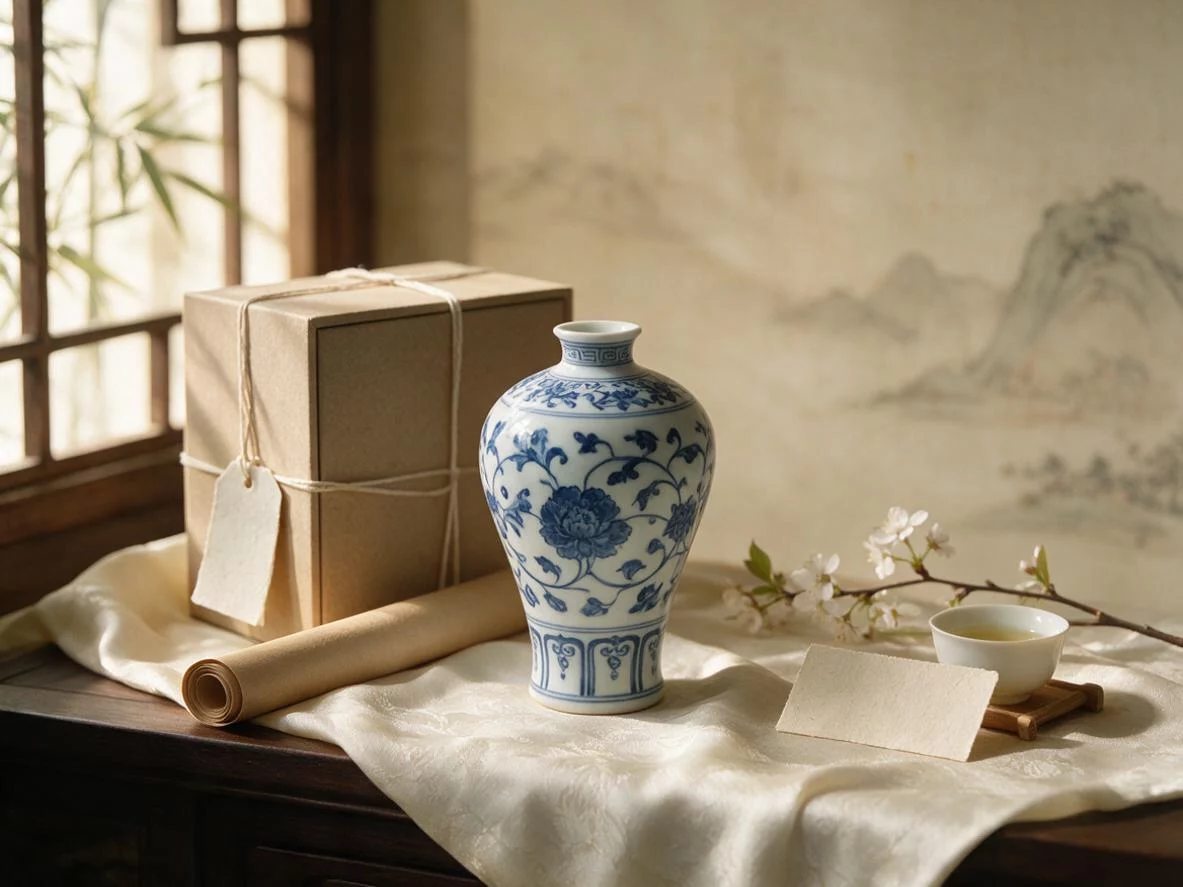
Ceramic set and presentation packaging prepared for review

Before dispatch

Four things you confirm before cargo leaves Jingdezhen.

Before anything leaves the warehouse, four things are confirmed with you in writing. It takes a few minutes and saves weeks of back-and-forth later.
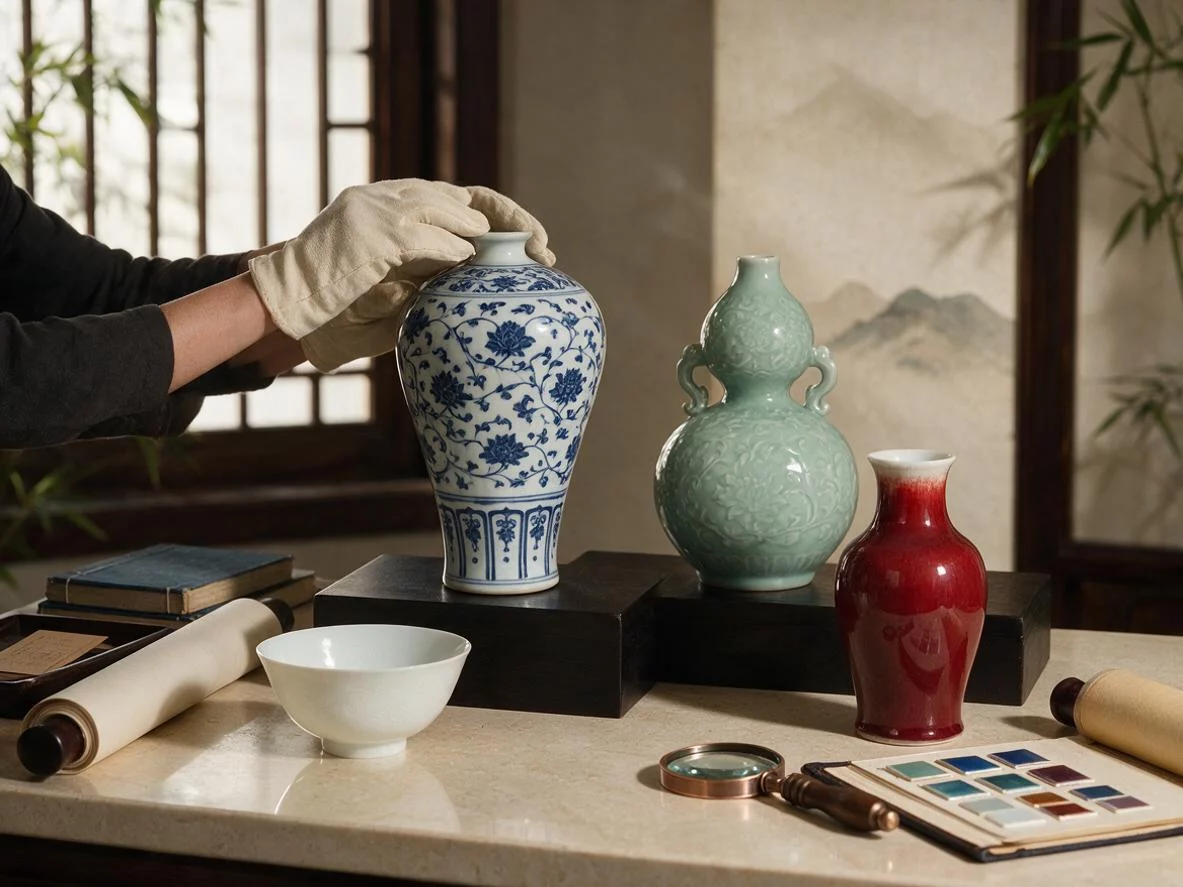
Product and quantity
approved items, sets and carton counts, checked against your order and the signed reference sample.
Packing and labels
inner protection, gift or retail boxes, carton marks, barcodes and any private-label branding.
Delivery details
destination, consignee, trade term and the forwarder who will collect.
Shipment file
documents, inspection results and your written confirmation, filed together so repeat orders ship the same way.
Plan packing and deliveryReport a delivery issue
Shipping questions

What importers ask before booking ceramic freight.

Yes. On DDP we arrange freight, import duties and customs clearance, and the order arrives at your door duty-paid. It is the simplest choice for a first import, and the cargo is insured under our PICC policy on the way.
Yes. Send the forwarder’s details and we coordinate pickup, share carton dimensions and the packing list in advance, and prepare documents to match your agreed term.
On CIF and DDP, yes, under KKCN’s PICC blanket cargo policy. On EXW and FOB the cargo travels on your own insurance, and we supply the documents and photos your insurer needs.
Yes. Gift boxes, color boxes, labels and shipping marks can carry your logo. The box is approved with the sample, so it is fixed before production starts.
One piece at a time, in custom foam inside a solid-wood frame built around its weight and balance, for pieces up to 130 cm. Large pieces usually go by sea, or by air when the date matters more than the cost.
Yes. Pieces from our workshops, heritage kiln partners and Dehua partners all return to our Jingdezhen headquarters, and the order leaves from one warehouse on one packing list.
The commercial invoice, packing list, sales contract, certificate of origin, export customs declaration and the batch inspection report. Test reports for daily-use tableware are listed by number on Quality Control.
By room type, floor or zone, with packing lists that follow your installation schedule, so installers unpack in order. Send the room schedule or zone plan with the order. How a hotel order runs, start to finish
Every piece gets its own bubble bag and full EPE wrap, sits in a molded pulp insert and travels in a five-layer export carton with corner guards. Large pieces go in solid wood frames. On full containers that keeps breakage at 0.6% of pieces or less.
22–30 days at sea to the West Coast and 32–40 days to the East Coast, plus 5–10 days for customs and delivery. From August to December, book space about three weeks ahead.

Every quote comes with a packing plan and route.

Send the product, quantity, destination and target date. Lin Wan’s export team replies within 1–2 business days with a packing plan, a recommended route and a priced quotation.