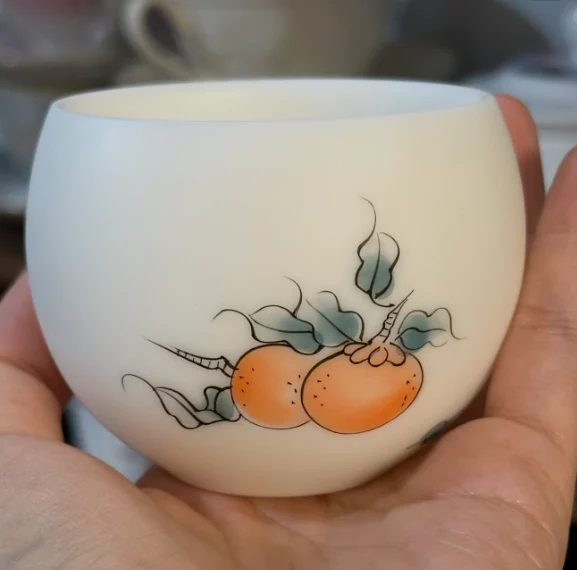
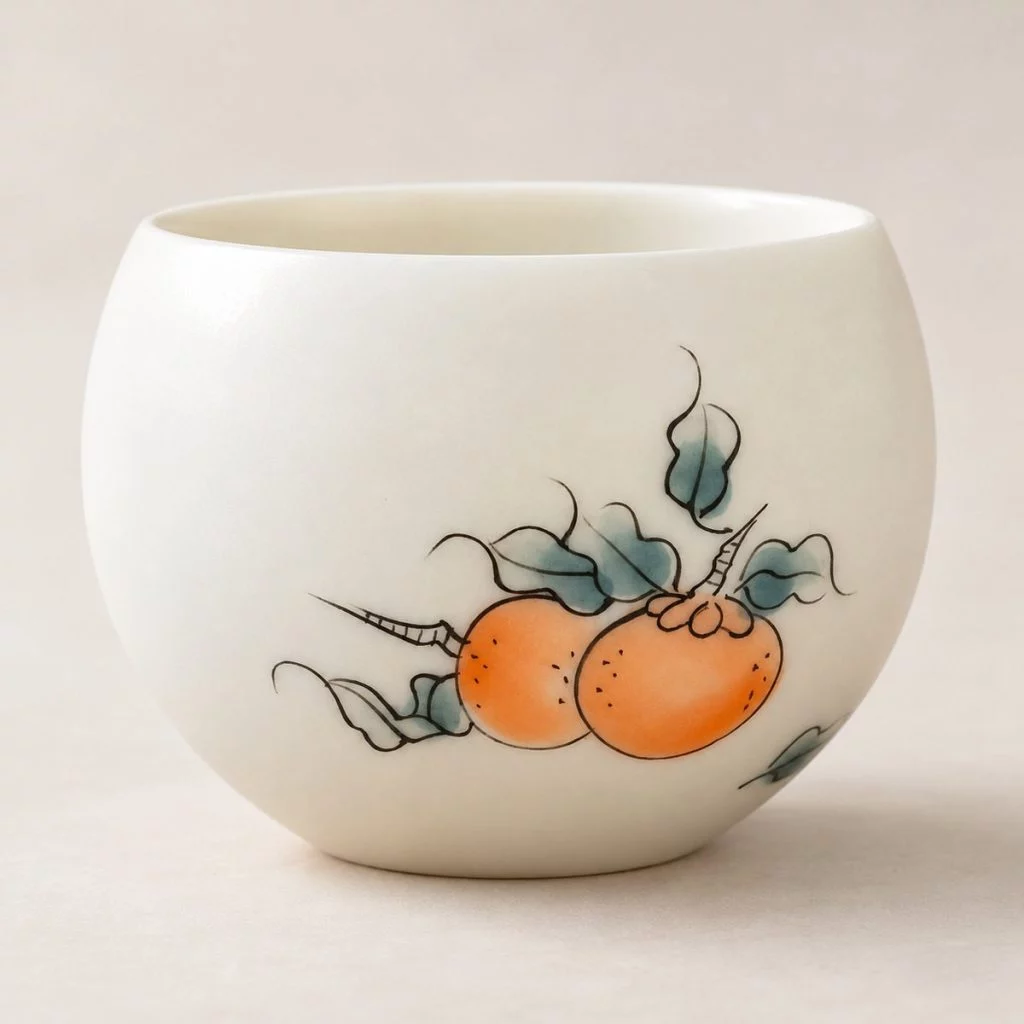
Why paint persimmons on a tea cup?
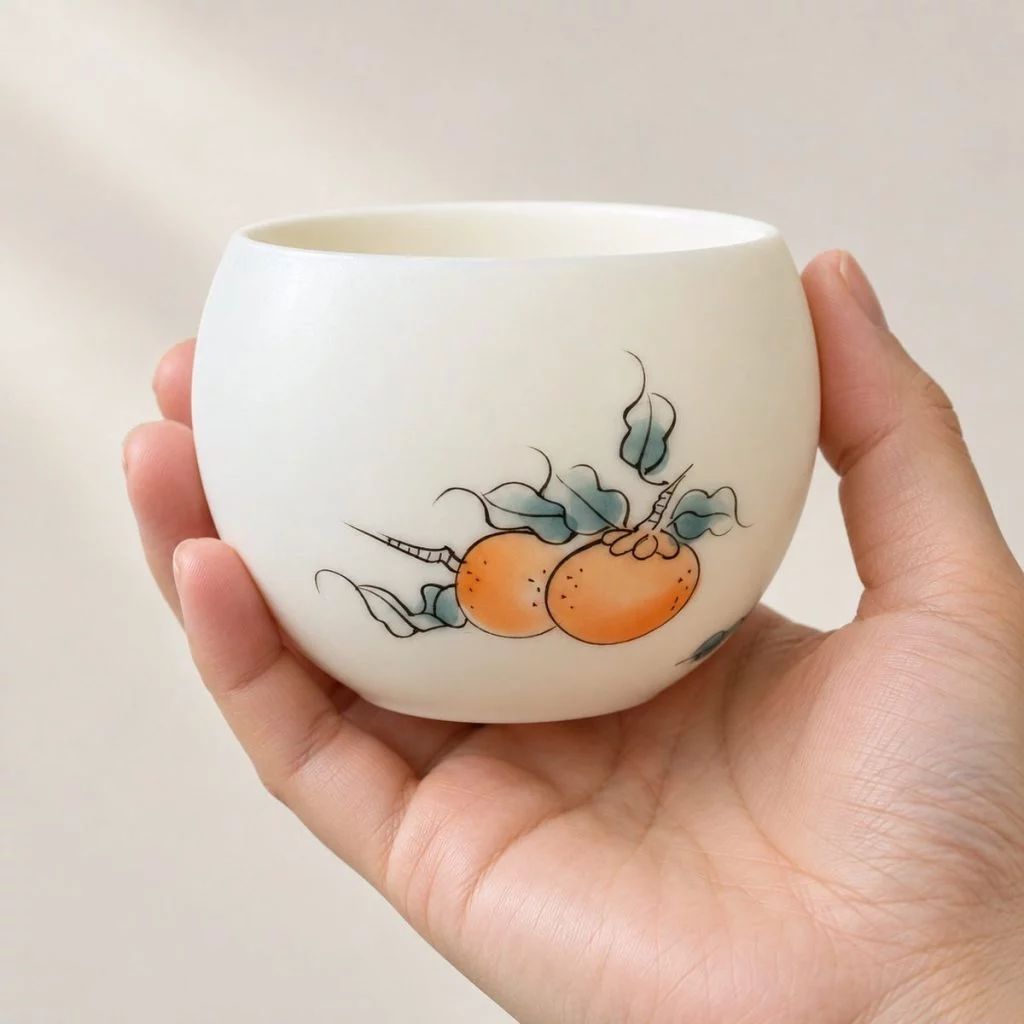
Because in Chinese the word for persimmon, shi, sounds like the word for affairs or things, and two persimmons together make the first half of a phrase every gift buyer knows: shi shi ru yi, may all things go as you wish. A cup with two of them is a small wish you can hold in one hand.
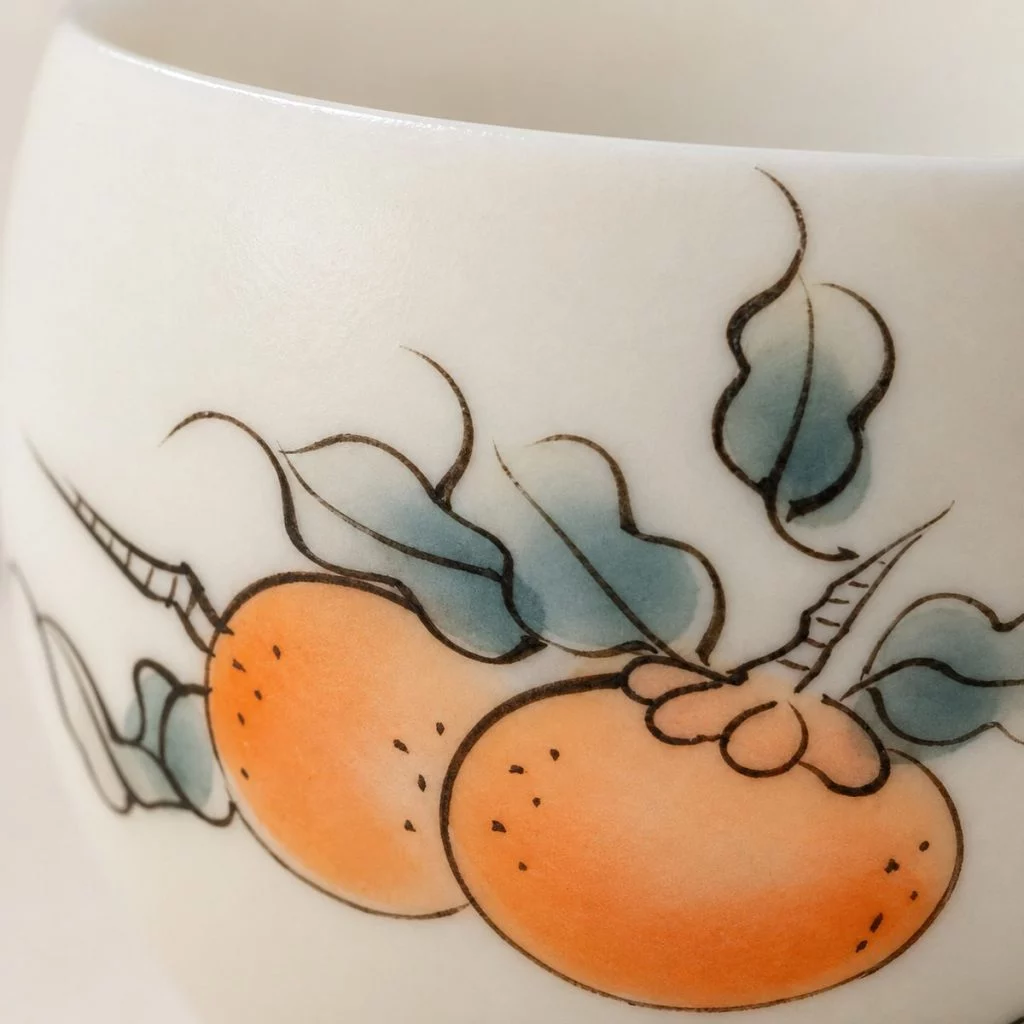
The painting is spare. Each fruit is outlined in a fine black line and filled with orange enamel, with its four-lobed calyx on top, and both hang from one branch among a few blue-green leaves. There is no blue under the glaze at all, which is unusual for wucai and gives the cup a lighter, almost botanical look. Most of the ivory surface is left empty, so the two fruits have room.
The shape helps. The cup swells like an egg and then turns inward at the rim, so it fits the curl of your fingers and holds the warmth of the tea a little longer. The ivory-toned glaze has a soft, low sheen, gentler than bright white, and it makes the orange look riper than it would on a cold background.
The cup is thrown and fired first at about 1,300 °C, then painted in Jingdezhen and fired again at about 780–850 °C to fix the enamel. Each one is checked against the approved sample and boxed on its own.
To see how a single painted cup fits into a wider tea range, read our Chinese tea ware buying guide.