KKCN ceramic logo
Request a Quote

Home / Custom Development

OEM · ODM · Private label

Custom ceramics, developed in Jingdezhen.
Your form, glaze, mark and box.

As a custom porcelain manufacturer in China, we turn a sketch, a reference photo or a piece you already sell into an approved sample, then into a production run that matches it, from 50 pieces per style. One project contact keeps every decision on file, from the first drawing to the export carton.

6In-house designers
About 50New forms or pattern adaptations a year
3,000–5,000Handmade custom pieces a month
50 piecesMinimum per custom style

The development team

The designers and artisans behind a custom piece.

Custom work at KKCN is led by Chen Nuo, a ceramic designer and raw-material specialist with 12 years in product development. Chen Nuo works directly with the Yaoli kaolin area and our partner workshops, so the clay is chosen alongside the shape. Six in-house designers create about 50 new forms or pattern adaptations a year. Throwing, painting and carving draw on 86 partner artisans in long-term cooperation, 15 of them with more than 30 years at the wheel or brush. Our founder He Jiang, a fourth-generation porcelain maker and registered intangible-heritage inheritor, reviews high-end handmade and custom orders himself. Lin Wan, our bilingual foreign-trade lead, is your single contact throughout.

Meet the full team
Ceramic forms at the size-development stage

Where custom work begins

A bestselling mug, a mood board or a single photo.

Some clients send a mug they already sell and ask for it in their own glaze. Others arrive with a hotel floor plan, a mood board or one photo of a Song bowl. Each is a workable start, and our library of more than 1,200 molds and form references often supplies a proven base. How much has to change decides the project. A new glaze on an established shape is short and predictable. A new form with its own mold, a balanced handle and a gift box built around it takes longer. Our first reply tells you which kind of project you have, what it will take and where the time and cost go.

See the four layers we customize

What we customize

Form, surface, mark and packing, reviewed one by one.

A custom ceramic is four decisions that have to agree. The shape decides how the glaze pools. The glaze decides how a logo reads. The logo and the box decide how the piece feels when your customer opens it. We review each layer on its own, then bring all four into one approved production reference.

01 / Product

Form & function

Each piece is shaped around its use: a tea bowl that sits in two hands, a lobby vase that stays put, a plate that stacks in a busy kitchen. Sizes run from 3 cm tea ware to 130 cm floor pieces.

  • Existing, modified or new forms
  • Dimensions, capacity and wall thickness
  • Handles, lids, spouts and stacking
  • Coordinated sets
02 / Surface

Glaze & decoration

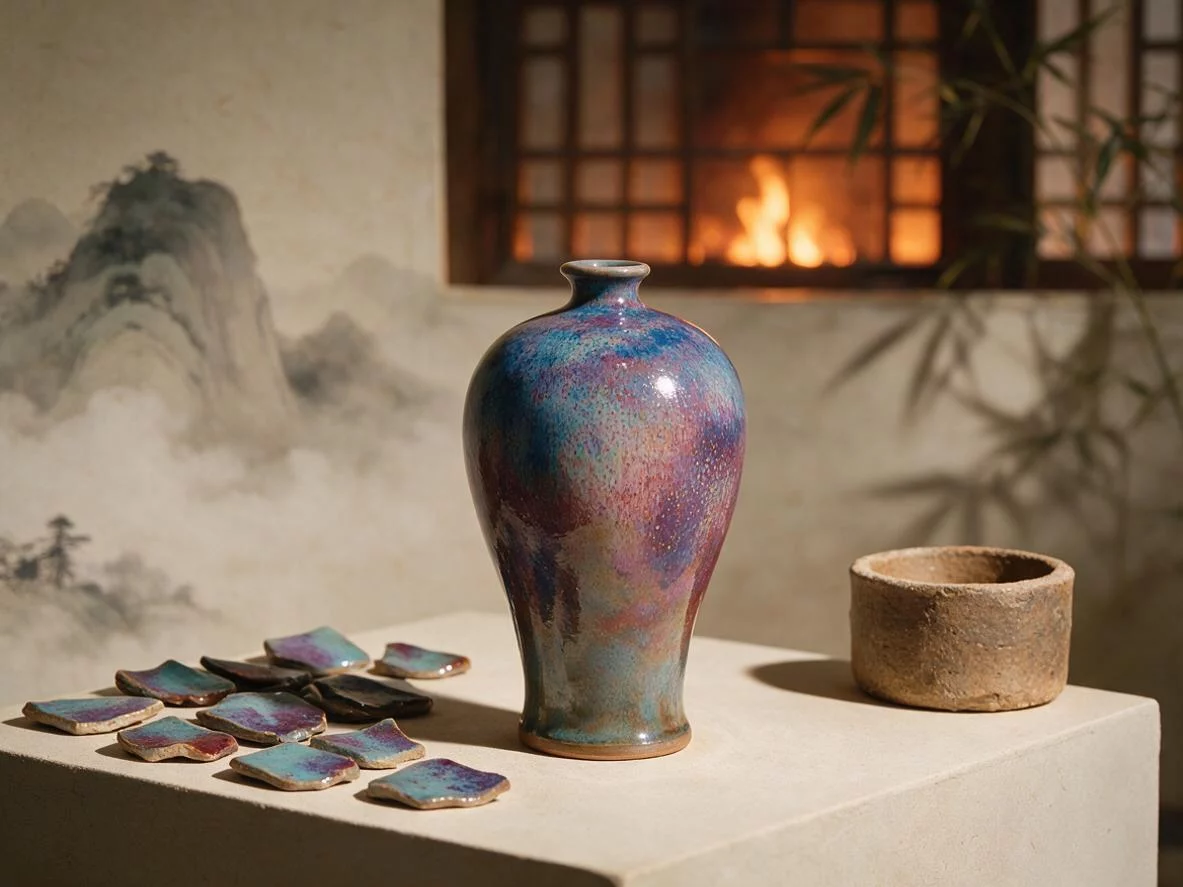
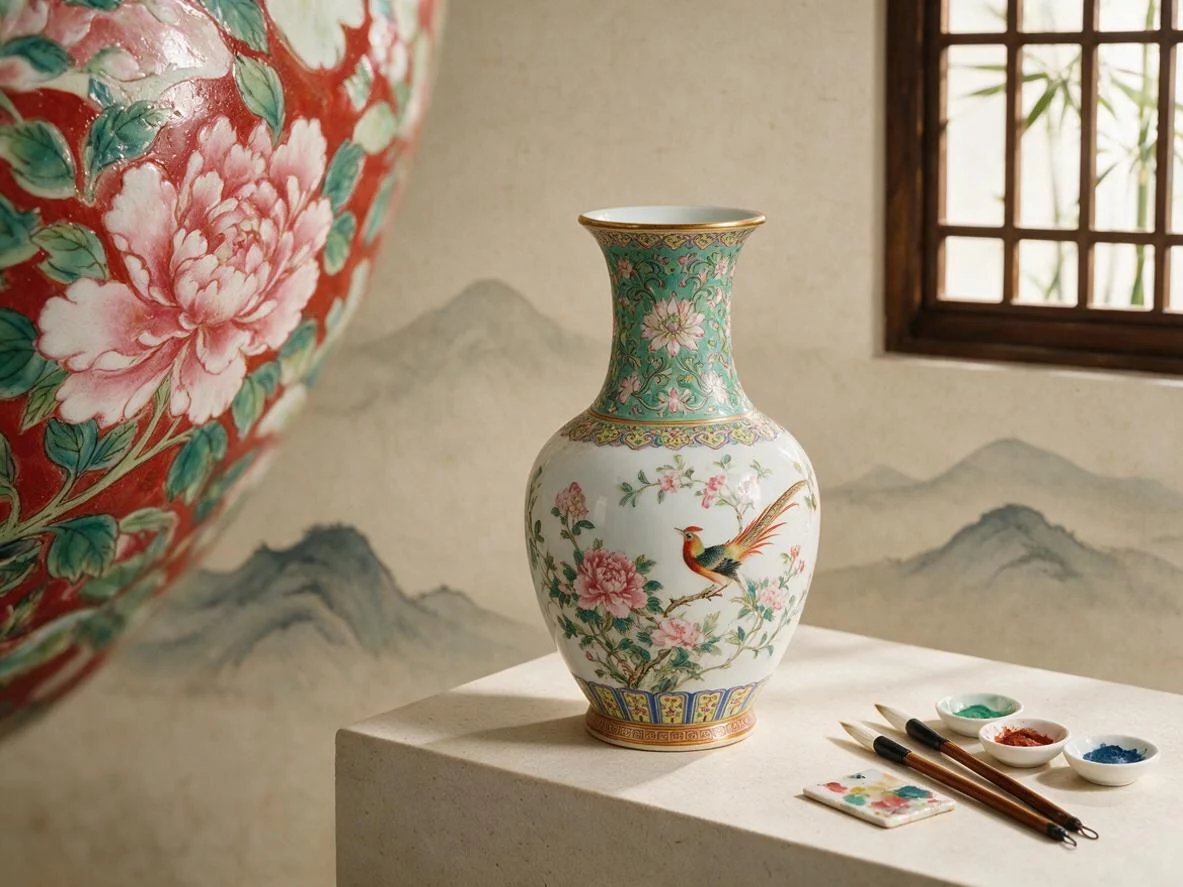
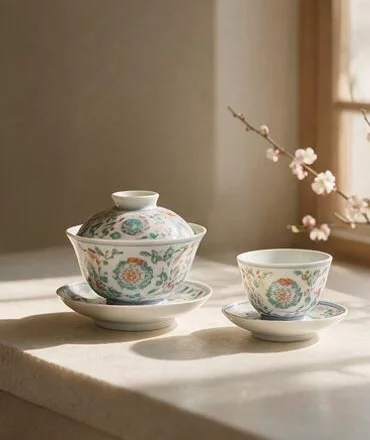
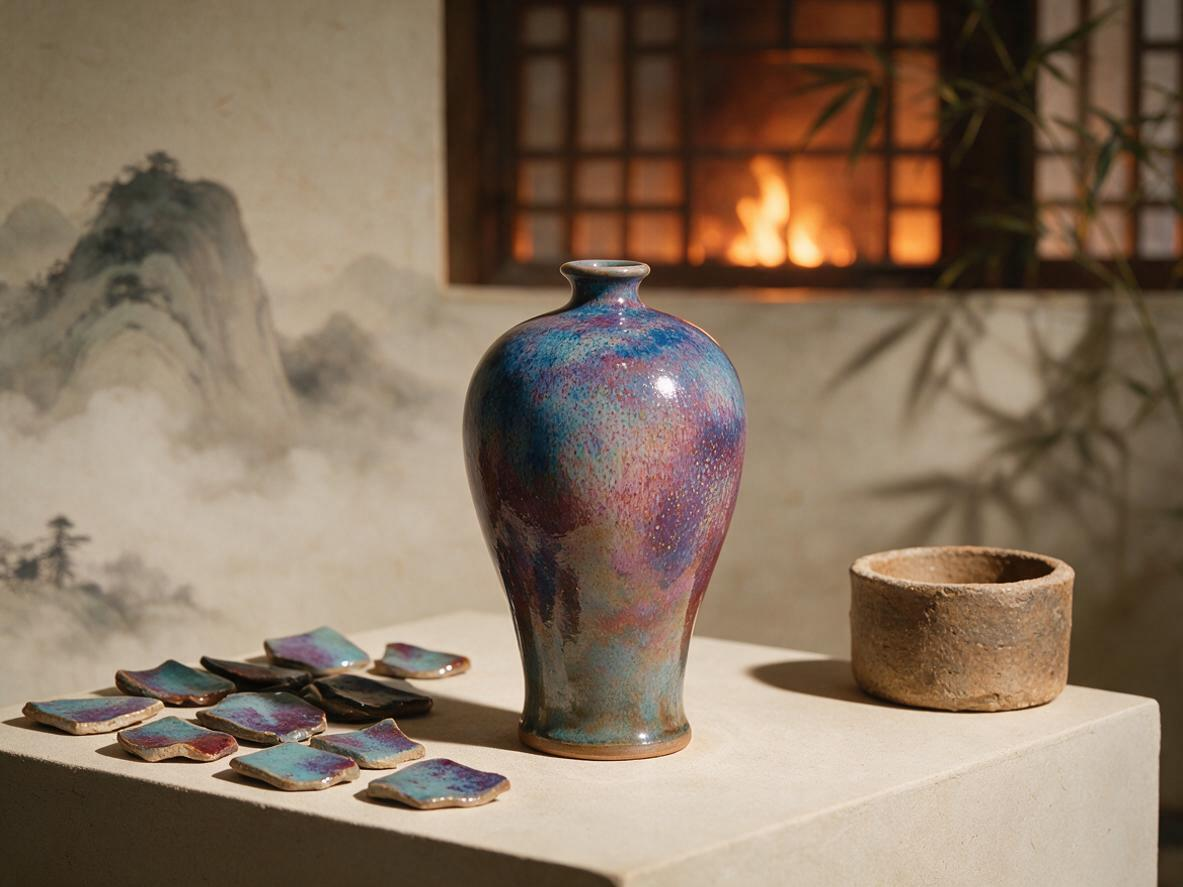
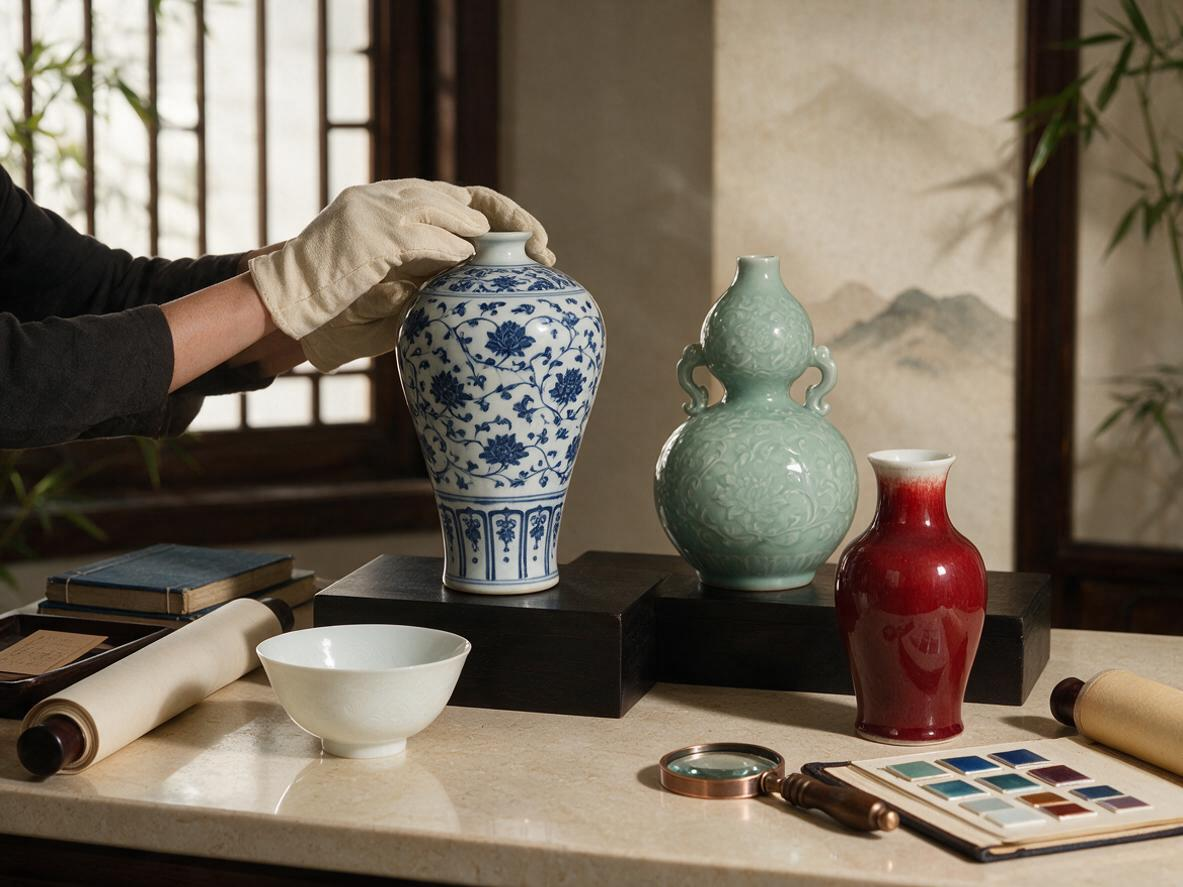
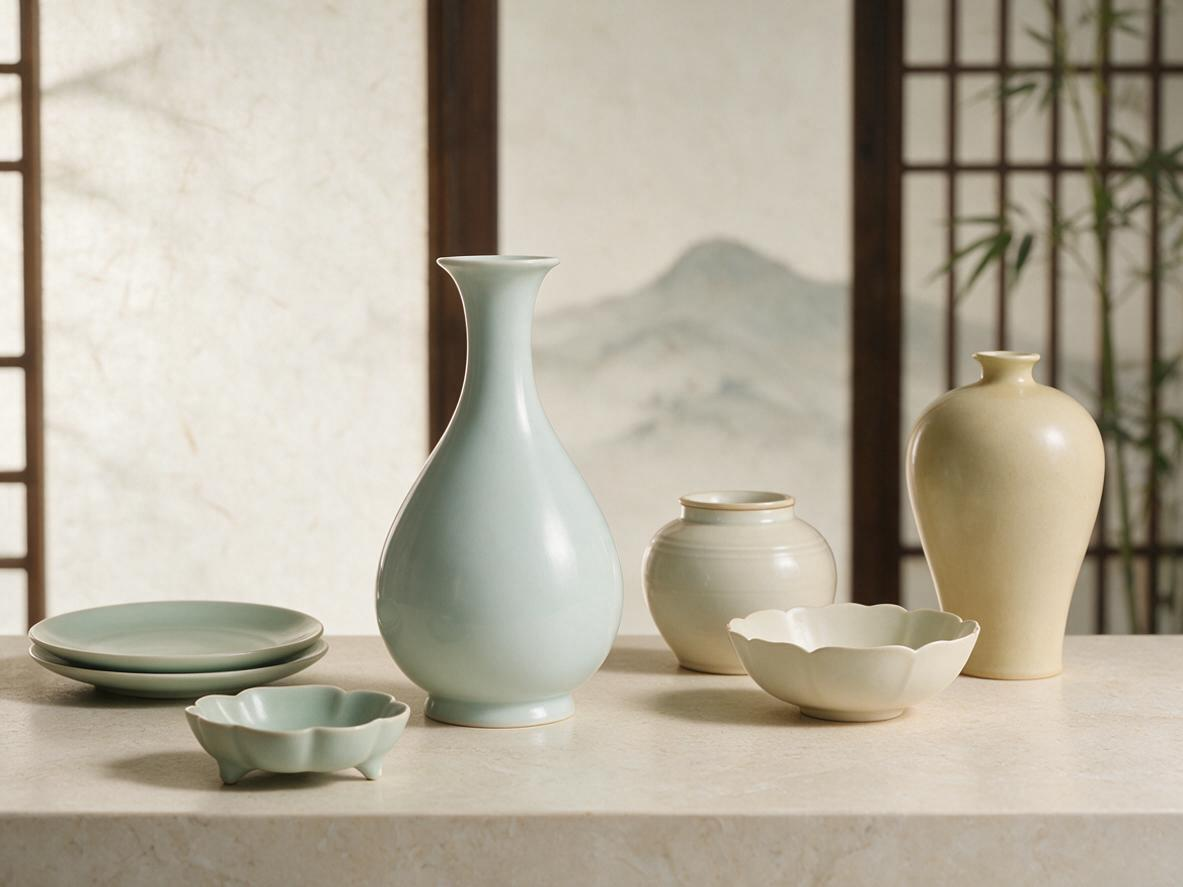
Hand-painted blue-and-white, underglaze red, Song-style celadon, famille rose, Wucai, monochrome glazes, relief carving, sgraffito and refined decals, each matched to the right body and firing. The variation range is agreed with you.

  • Custom glaze colors and textures
  • Hand painting or refined decals
  • Relief carving and sgraffito
  • An agreed variation range
03 / Branding

Product identity

Your mark belongs to the piece: a stamp on the foot, an engraved logo or a fired decal, sized to the form. Patterns drawn exclusively for you are never reused for another client.

  • Base stamps and foot marks
  • Logo engraving
  • Private-label labels and inserts
  • Exclusive pattern design
04 / Packaging

Protection & presentation

The gift box and the export protection are designed together, with molded-pulp inserts, five-layer export cartons, solid-wood frames for large pieces and your shipping marks on every carton.

  • Branded gift and retail boxes
  • Molded-pulp or EPE inserts
  • Custom labels and shipping marks
  • Solid-wood frames for large pieces

Three routes

How much of the piece needs to change?

Complexity, quantity, timing and budget decide the route, and we recommend one in our first reply. Routes connect: you can test a market with a restyled form from our range and return for an original once the line is selling. The approved sample and craft file from the first program stay on record, so the next piece starts from a known standard.

Ceramic form and size development for a custom piece
01 / Route A

Restyle a proven form

Keep one of our established forms and change the glaze, pattern, logo or box. The shape and firing are already proven, which makes this the quickest and lowest-cost way into custom work.

  • Best for: retail brands, e-commerce sellers, corporate gifts
  • You bring: a reference piece plus your logo or artwork
  • Sample: 3–7 business days for a stock reference; 15–30 with a new exclusive pattern
  • Production: 15–25 days; 30–45 with a new pattern
  • Minimum: 50 pieces per style
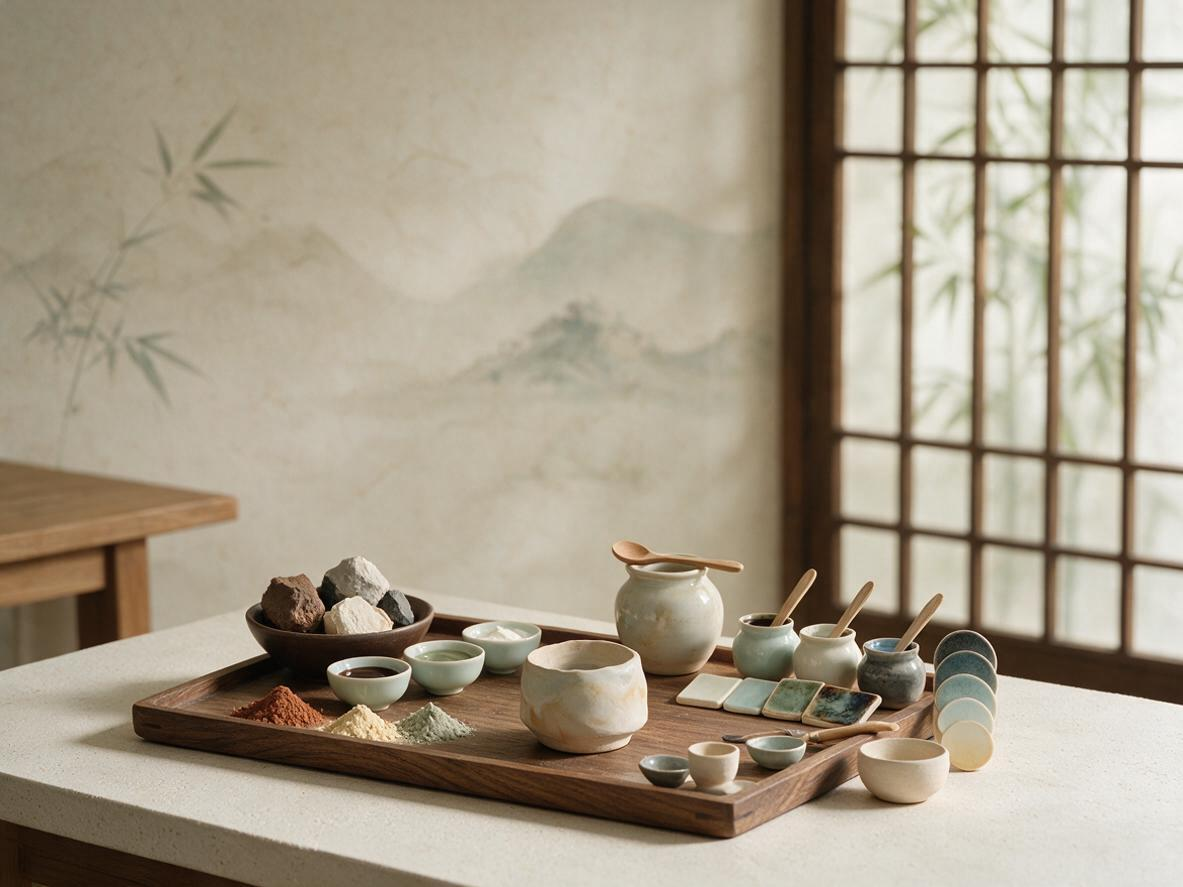
Clay and glaze selection for a modified form
02 / Route B

Reshape an existing form

Change what does not suit your use: a taller cup, a wider rim, a new handle, a plate sized for your service. Models and molds are adjusted from an existing form, so tooling stays lighter than a blank-page design.

  • Best for: hospitality programs, tableware lines, design studios
  • You bring: the base piece and the changes you need
  • Sample: 15–30 business days
  • Production: 30–45 days after approval
  • Minimum: 50 pieces per style
Finished porcelain with custom decoration and branding
03 / Route C

Build a new form

A new form, mold, sculpture, glaze or packaging structure, developed with our designers and master artisans from first sketch to prototype. This route produces signature lines and one-of-a-kind commissions.

  • Best for: signature brand lines, galleries, collectors, hotel projects
  • You bring: sketches, CAD files, mood boards or a written brief
  • Sample: 15–30 business days
  • Production: 30–45 days; fully handmade art 45–60 days
  • Minimum: 50 pieces per style; one-of-a-kind art quoted per piece
Sample fees, payment and lead times

Costs and tooling

What custom porcelain costs, and who owns the tooling.

As a custom ceramic manufacturer, we put the figures behind most first quotes on the table before you brief us. Your quotation confirms the exact numbers for your piece.

Mold, simple shape$450–800
Mold, complex or multi-part$800–1,600
What the mold fee covers3D CAD model, master mold and one set of working molds
Replacement working molds$120–300 per set
Sampling, simple shapesFrom $80–180 per revision round
Rounds to an approved sampleUsually 2; a third is most often for glaze color
Shrinkage, wet to fired14–16%, built into the CAD model
Brand color matchΔE00 ≤ 2.5 on stable solid glazes, approved on fired test tiles
Records kept freeMolds, 3D files and glaze records, 3 years after your last order
  • The physical mold is yours once it is paid for
  • We store it in Jingdezhen and never use it for another brand
  • 3D source files stay with us by default; releasing them is a separate, negotiated add-on
  • Reactive and crystalline glazes vary more than solid ones, and we give you the expected range before sampling
The full path from sketch to repeat order

Development process

Six sign-offs between your brief and the first carton.

Handmade porcelain changes in the kiln. Clay shrinks, glazes move, and no two brushstrokes match. That is the character of the material, and it is why we confirm decisions in order. Each step ends with something you have seen and approved, whether a photo, a measurement or a physical sample, before the next one begins. By the time production starts, a signed reference sample, written specifications and an agreed range of handmade variation are on file.

01 · Requirement review

Define the brief

Use, market, look, dimensions, quantity, budget and quality standard, studied against your references. A real person replies within 1–2 business days with questions and a first recommendation.

02 · Feasibility

Select the route

Chen Nuo's product team checks the brief against clay bodies, forming methods, decoration and tooling, then sends the recommended route, a sample plan and the basis of your quotation.

03 · Prototype

Develop the form

The shape comes first. You review proportion, capacity and function through photos, video or a physical prototype, and mold or structural decisions are settled before any glaze goes on.

04 · Surface sampling

Refine the finish

Glaze, color, pattern and logo are tested on the approved form and photographed in natural light. You see the handmade variation range and choose how much character the run carries.

05 · Approval

Lock the standard

Your signed sample is recorded with dimensions, glaze references, packaging specification and variation limits. A matching sample stays in our archive for every repeat order. The sign-off record, in detail

06 · Production preparation

Prepare to scale

Quantity, schedule, checkpoints, packing, documents and shipping terms are confirmed. Li Qiusheng's quality team reviews the first production piece against your sample before the batch continues.

Custom programs

Logo, pattern, private label, original form: four programs.

Every custom program changes something different. These four clients agreed to be named, and each story is told in full on the page linked under its card.

Living Oriental · Germany

Form fine-tuning and logo engraving

ODM changes to white monochrome tea sets and celadon vases, with the brand's logo engraved. Repeated in batches of 800–1,500 pieces a year for six years.

Read the full case
East Art Gallery · USA

Private label and exclusive packaging

Miniature Wucai ornaments, blue-and-white covered jars and heritage tea ware under the client's own label, for museum stores in the Washington, D.C. area.

Read the full case
Art Space Milano · Italy

Original forms and exclusive glazes

Thirty one-of-a-kind large colored-glaze pieces and sculptures, each with an original form, reviewed by our founder and master artisans before shipping.

Read the full case

Design protection

Your drawings, logo files and patterns stay yours.

Custom patterns, logo files, design drawings and purchasing plans are archived as confidential company information. Nothing is shared with a third party without your written authorization, and a design made exclusively for you is never reused for another client. Production photos and workshop video of your batch are yours to request at any stage, so you can follow the work from Jingdezhen without travelling.

  • Confidential archive: drawings, logo files, patterns and purchasing plans
  • No disclosure without your written authorization
  • Exclusive designs never reused for another client
  • Production photos and video of your batch on request
  • Sampling fee credited once your order reaches the agreed MOQ
Payment, lead times and trade terms
Clay and glaze test pieces for a custom sample

Custom questions

Routes, costs, molds, visits and tests, answered.

How much does a custom ceramic mold cost?

$450–800 for a simple shape and $800–1,600 for a complex or multi-part one. That covers the 3D model, the master mold and one set of working molds. Extra working molds for a long run are $120–300 a set.

Who owns the mold?

You do, once it is paid for. We keep it in Jingdezhen for your reorders and never use it for another brand. The 3D source files are not released by default, but we can agree that separately.

How close can you match our brand color?

On a stable solid glaze, within ΔE00 2.5, judged on a row of fired gradient tiles you approve. Reactive glazes move more in the kiln, and we give you the expected range before the first sample.

Can you develop a piece from a photo or a sketch?

Yes, and many custom programs begin that way. Send the image with a rough size, the use and the quantity. We reply with the route that fits, what the form will need and how closely the finished piece can match your reference, then confirm all of it with a sample.

Can I begin with Route A and develop an original form later?

Yes. You can test a market with a restyled form from our range, then commission an original once the line sells. The approved sample and craft file from the first program stay on record, so the new piece can share its glaze, logo and packing standard from the start.

Can I follow my piece through production?

Yes. Ask Lin Wan at any stage for production photos, workshop video or the inspection record of your batch. Buyers can also visit the workshops and the 300 m² sample and R&D showroom in Jingdezhen by appointment and review samples in person.

Who reviews a high-end custom piece before it ships?

He Jiang, our founder, reviews high-end handmade and custom orders himself. He is a fourth-generation Jingdezhen porcelain maker and a registered intangible-heritage inheritor of traditional porcelain-making techniques, with 30 years in porcelain. Every piece also passes three-level inspection led by Li Qiusheng before packing.

Can custom tableware be tested for food contact?

Yes. Custom tea ware and dinnerware are built on our tested daily-use glaze lines. Our white and celadon tea ware, for example, was tested by SGS for lead and cadmium migration from body and glaze in report SGS-CER-2026-0112. Tell us your market and we match the report to your product.

Start a custom piece

A sketch and a quantity are enough to start.

Send whatever you have: sketches, photos, a product you love, dimensions, quantity, your market and your date. Lin Wan replies within 1–2 business days, Monday to Friday, China time, with questions, a recommended route and the next step toward your first sample. To talk it through first, email hejiang@knockingcn.com or message +86 197 1171 3584 on WhatsApp.